
Join Our Newsletter for Cozy Home Inspiration, Family Fun, and Delicious Recipes Every Week
14 Perfect Western Gothic Nursery

At first, creating a Gothic nursery felt challenging. The space came alive and became calm all of a sudden after my husband recommended a rich purple accent wall, and our daughter assisted in choosing a textured rug. For added coziness, I also incorporated do-it-yourself elements from my post on 16 Simple DIY Fall Decorations.
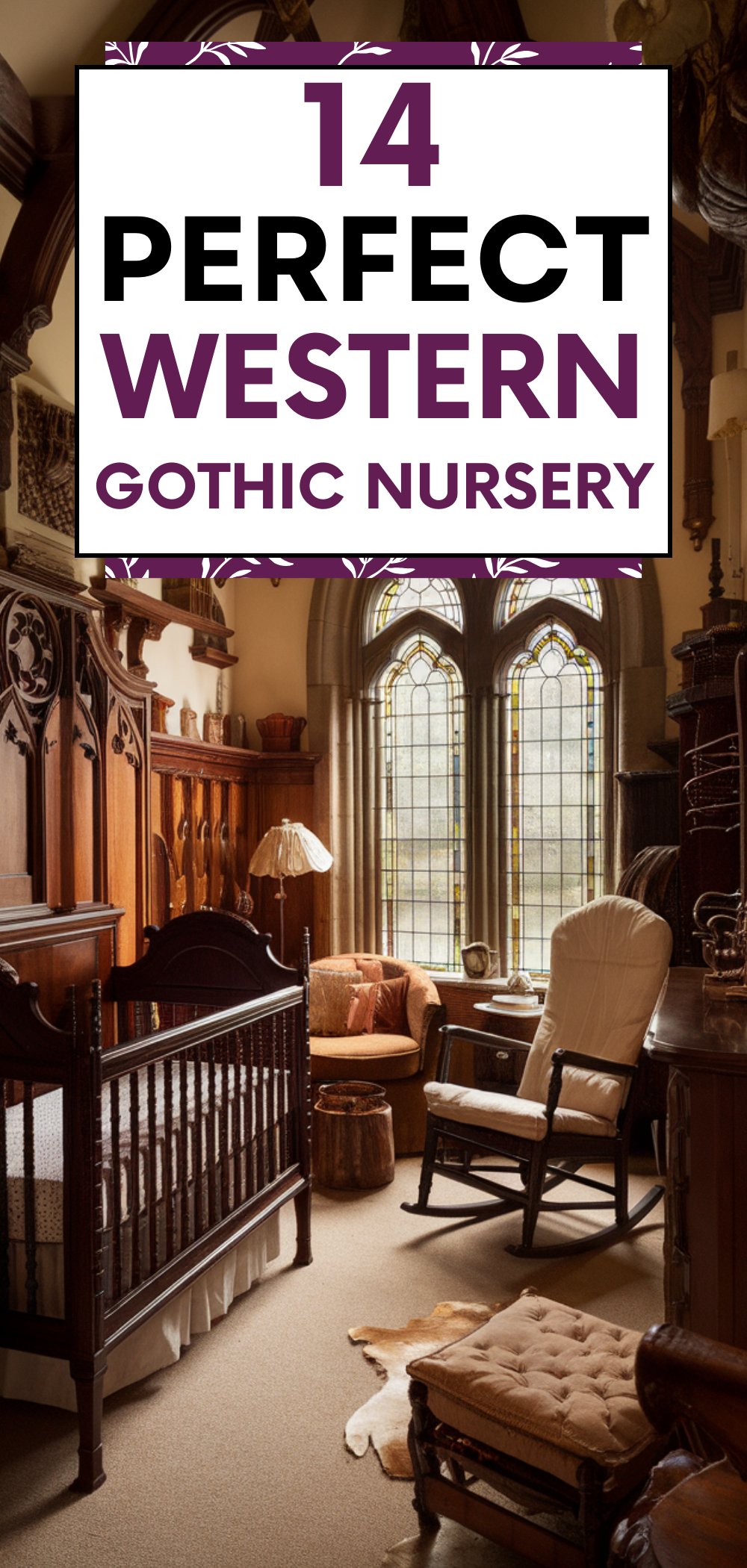
In the center was our son’s reclaimed wood crib, and it became a family project. My husband hung the retro-style mobile, and our kids loved the cozy reading nook. Every small detail made the nursery feel special to my family and me.
With family touches, the Gothic Nursery transformed into a lovely setting. We were reminded by our children’s joy that creativity and collaboration can truly transform a space.
14. Deep, Moody Color Palette
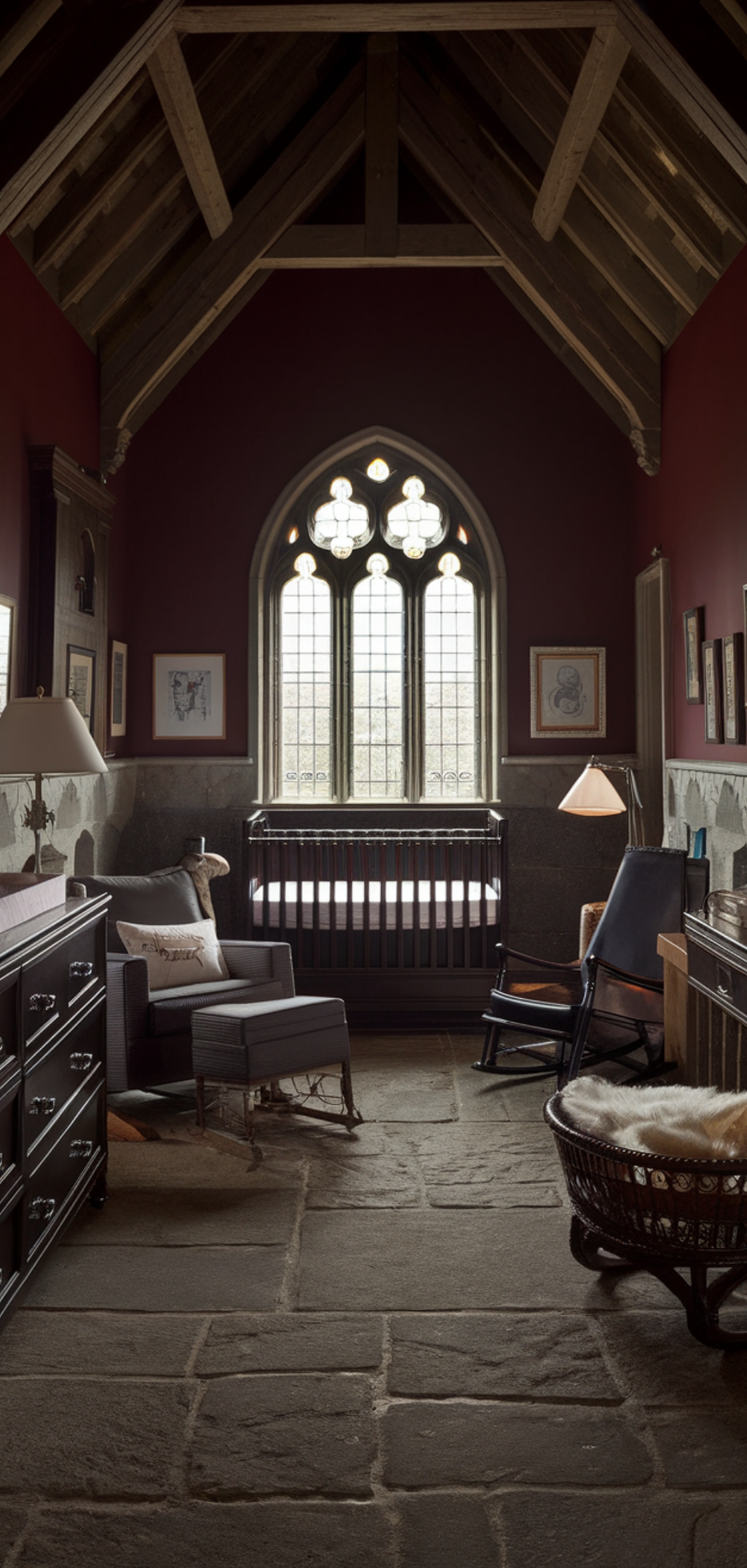
Use rich hues like charcoal, navy, deep burgundy, or forest green for walls or furniture.
Gothic Nursery Tip: Combine darker tones with lighter accents like cream or soft wood to avoid an overly heavy atmosphere.
13. Reclaimed Wood Furniture
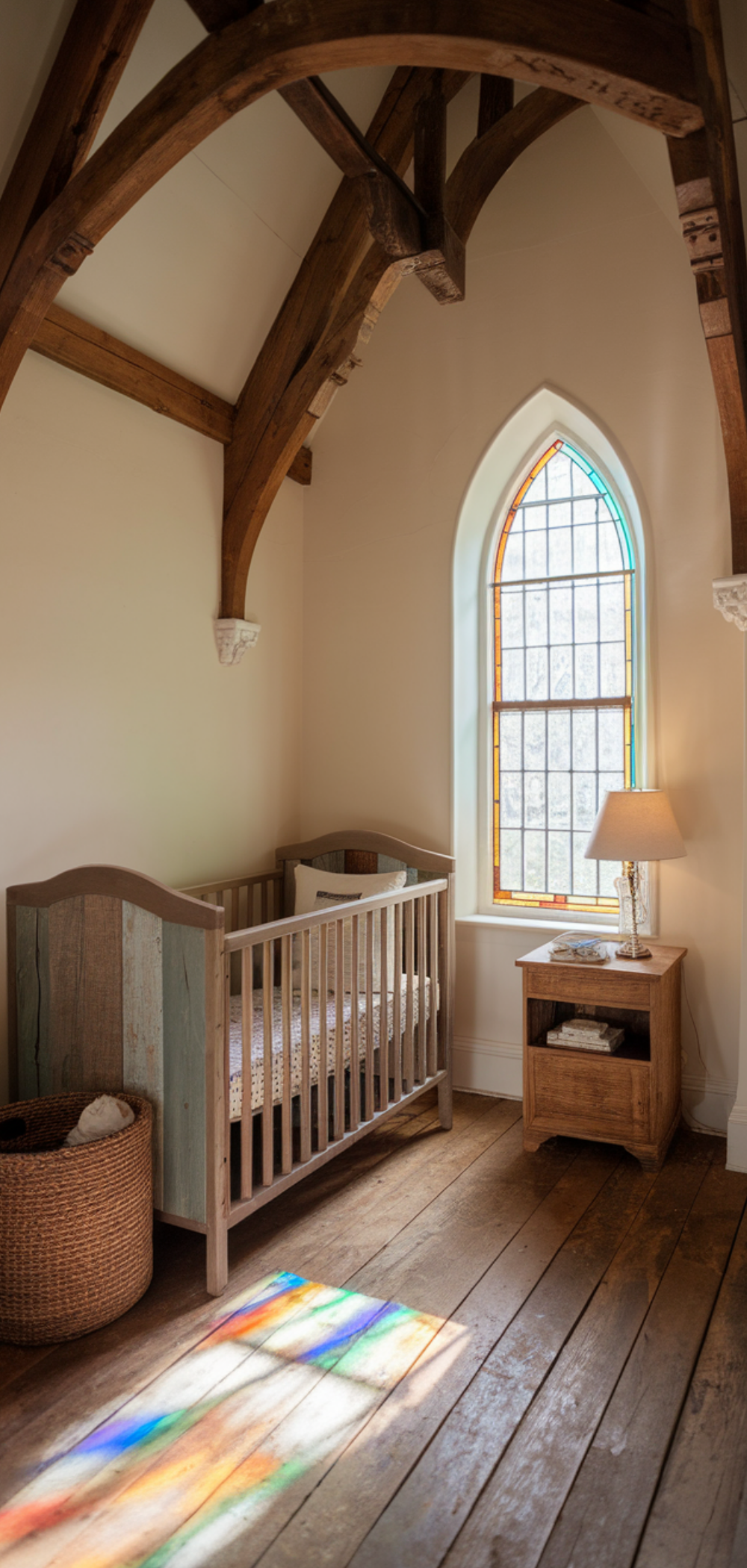
Cribs, dressers, and shelves in reclaimed wood add warmth and authenticity.
Gothic Nursery Tip: Keep the natural imperfections; knots and uneven grains enhance the gothic feel.
12. Gothic-Inspired Lighting
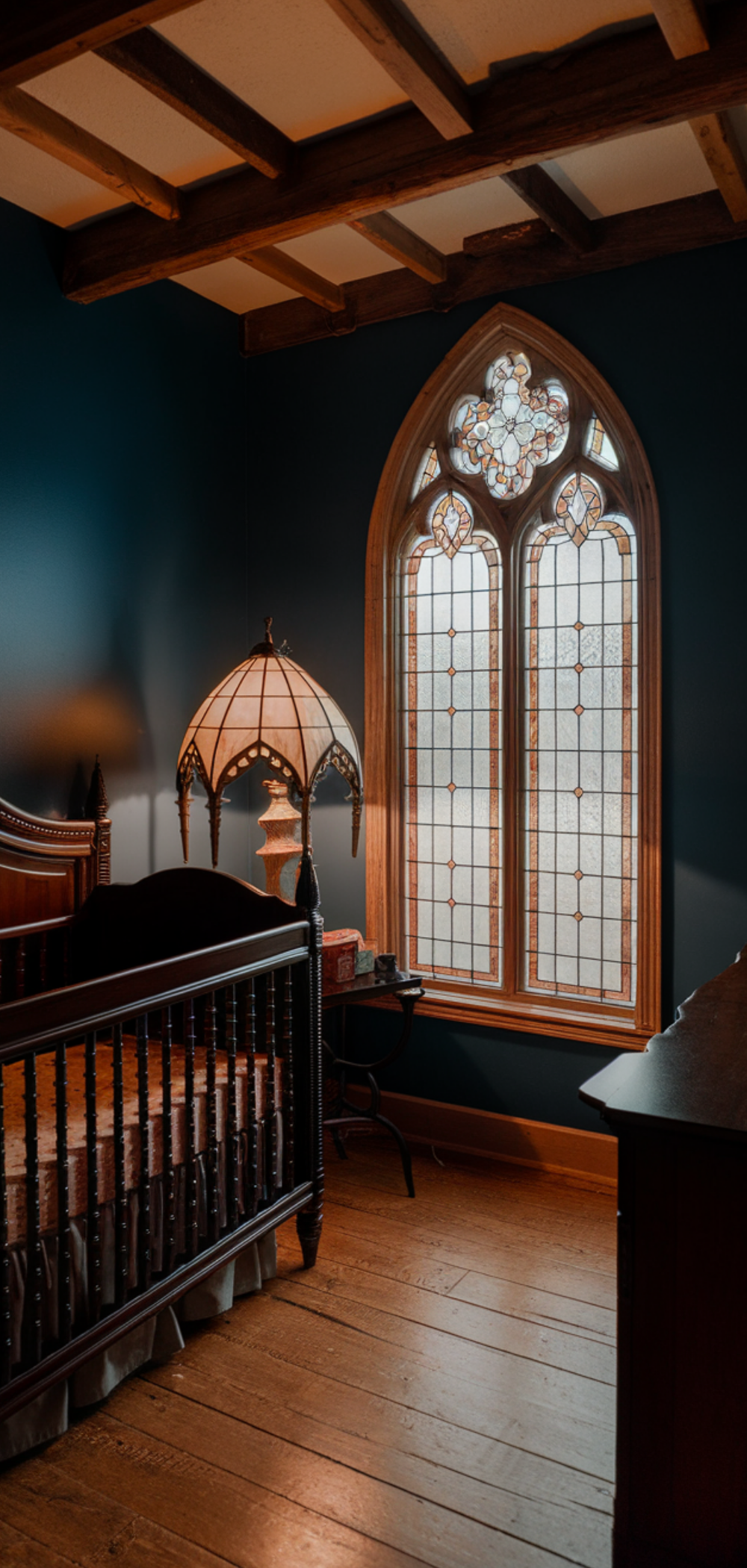
Select chandeliers, pendant lights, or lantern-style lamps with wrought iron or antique finishes.
Gothic Nursery Tip: Soft, warm lighting will enhance coziness while maintaining gothic charm.
11. Textured Bedding
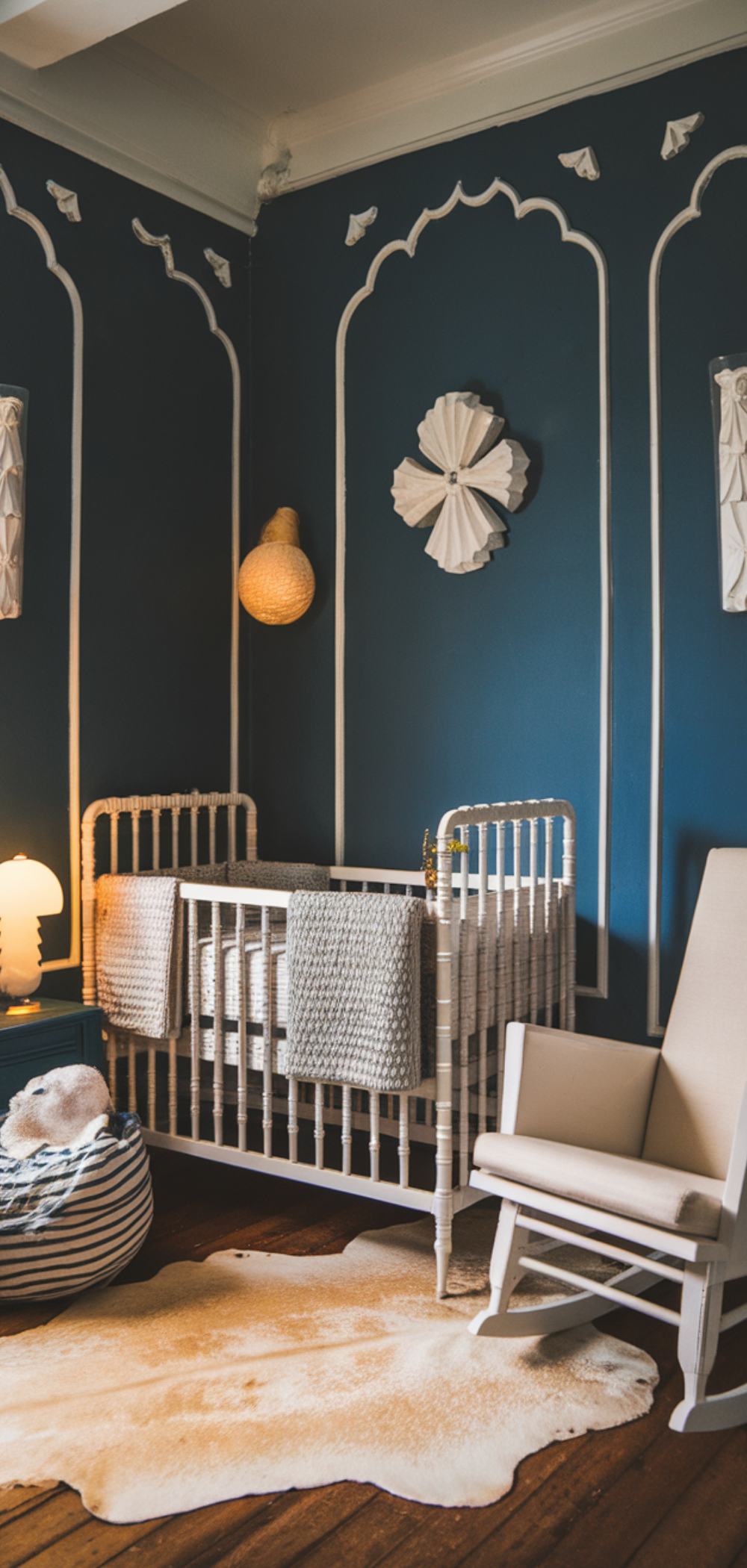
Incorporate bedding with velvet, lace, or damask patterns in deep, muted colors.
Tip: Mix patterns subtly to maintain balance and elegance.
10. Vintage Furniture Pieces
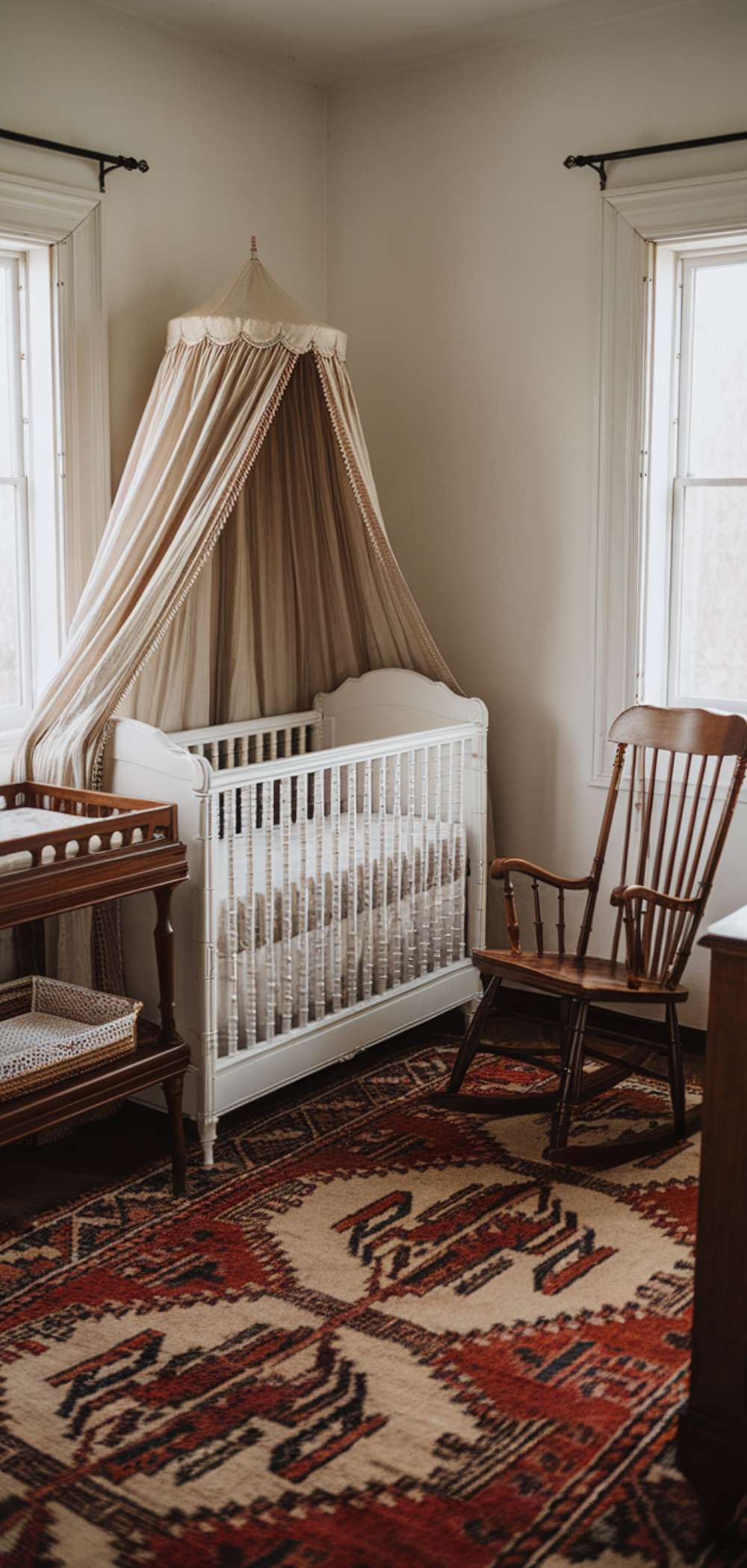
Rocking chairs, armoires, and side tables with antique or distressed finishes complement the theme.
Gothic Nursery Tip: Look for curved lines or ornate detailing typical of Gothic design.
9. Celestial and Nature Motifs
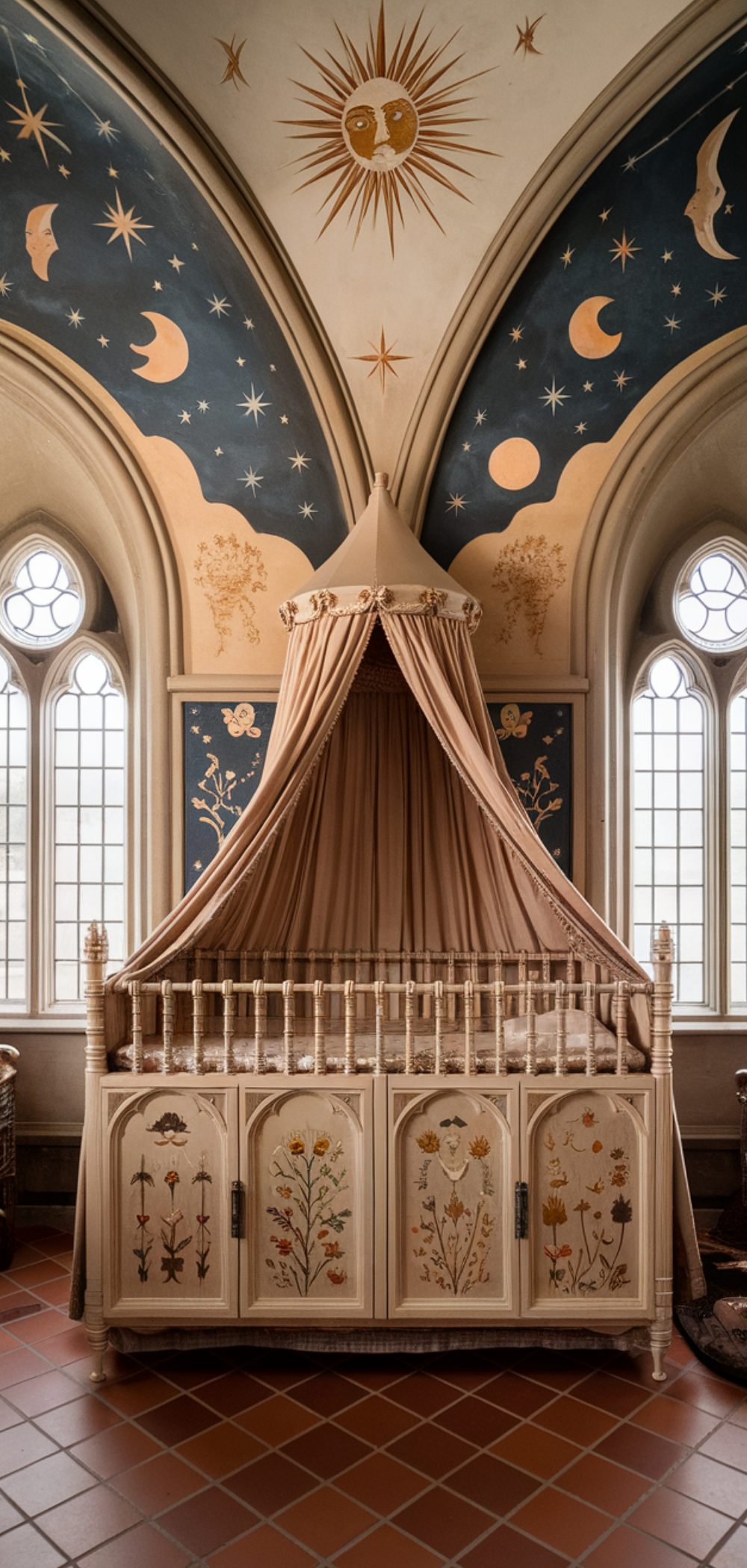
Incorporate moons, stars, feathers, or dried florals for whimsical touches.
Gothic Nursery Tip: Mobiles and wall decals are perfect for adding subtle visual interest.
8. Plush Dark Rugs
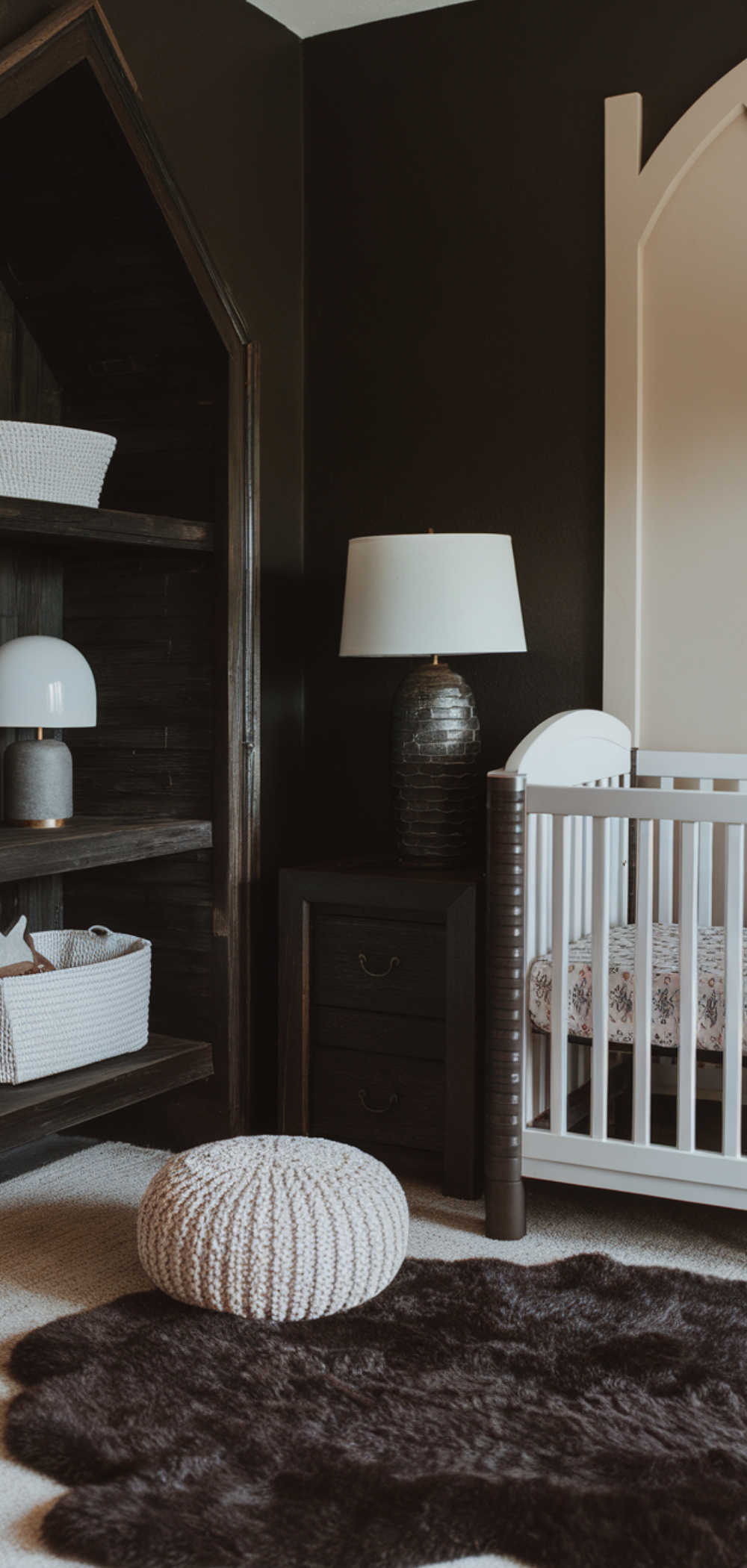
Layer rugs in dark shades like black, deep purple, or burgundy for warmth.
Gothic Nursery Tip: Choose soft textures for comfort while tying the room’s color scheme together.
7. Heavy Drapes or Curtains
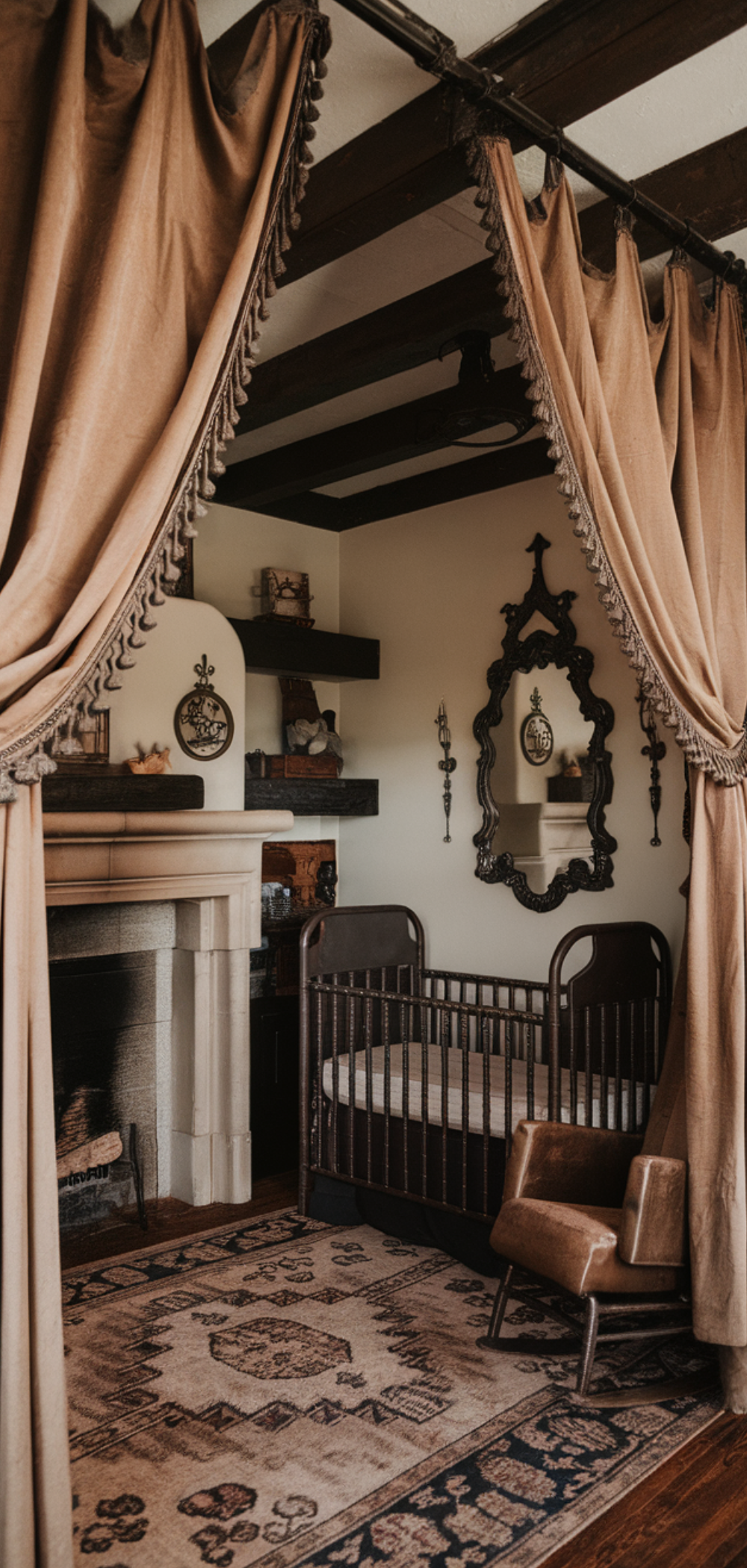
Velvet or brocade curtains in deep hues add drama and control natural light.
Gothic Nursery Tip: Allow some fabric pooling for an effortlessly elegant look.
6. Gothic Art and Wall Decor
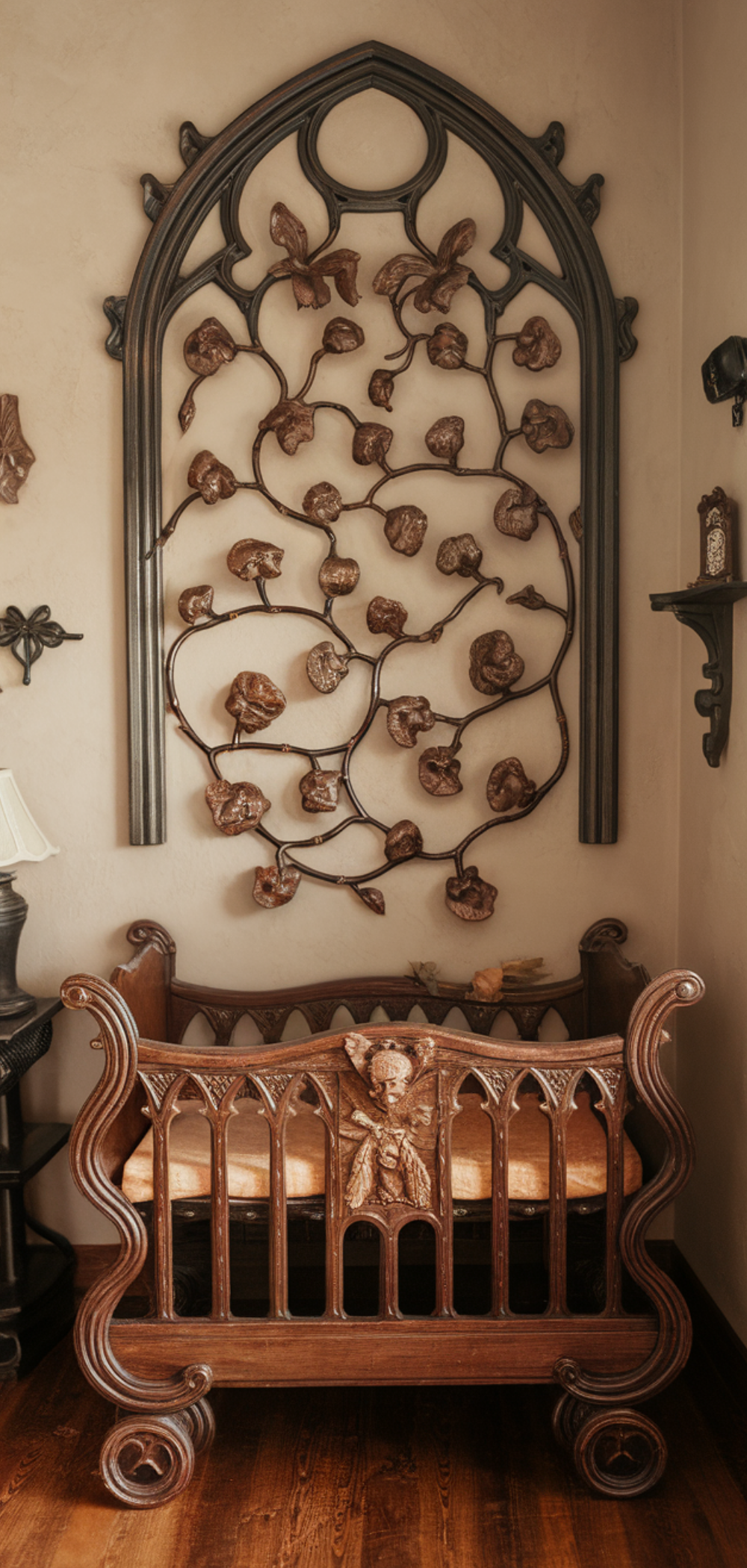
Add framed prints of Gothic architecture, mythical creatures, or vintage portraits.
Tip: One or two statement pieces prevent the room from feeling cluttered.
5. Antique Mirrors
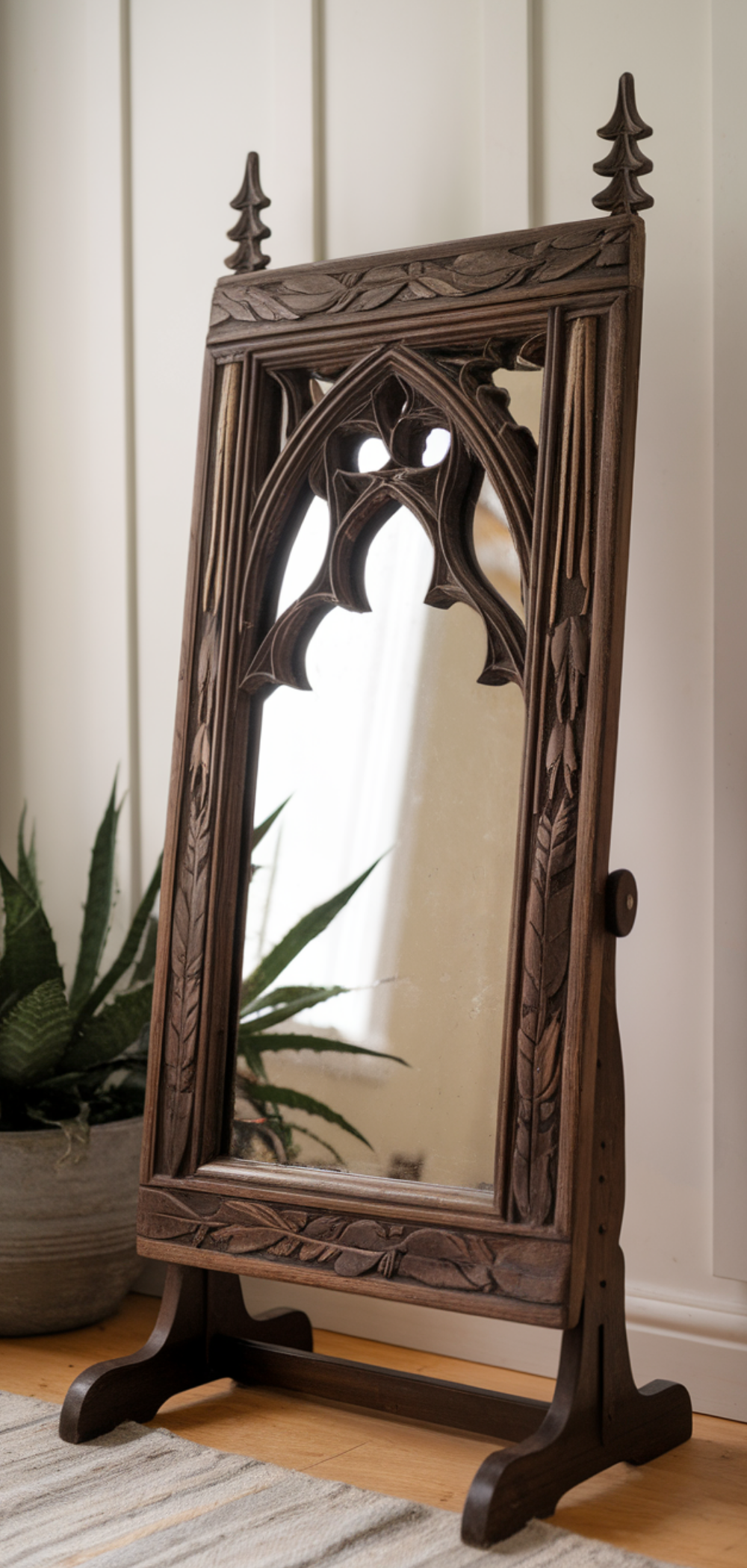
Mirrors with ornate frames reflect light and expand the space visually.
Tip: Slightly tarnished or aged mirrors enhance the gothic vibe.
4. Textured Accent Walls
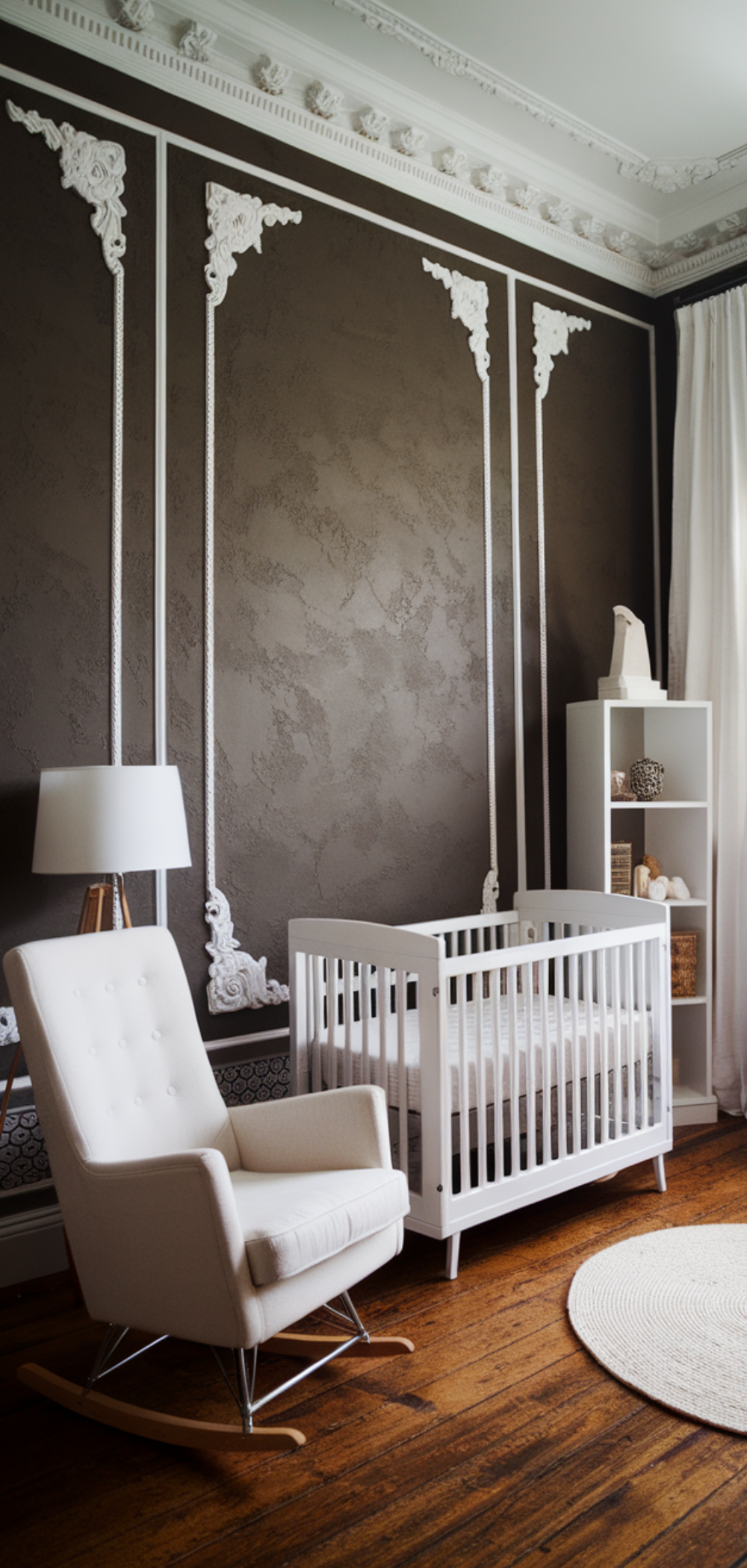
Use stone, brick, or patterned wallpaper for one wall to add depth and interest.
Tip: Keep other walls neutral to balance intensity.
3. Themed Baby Accessories
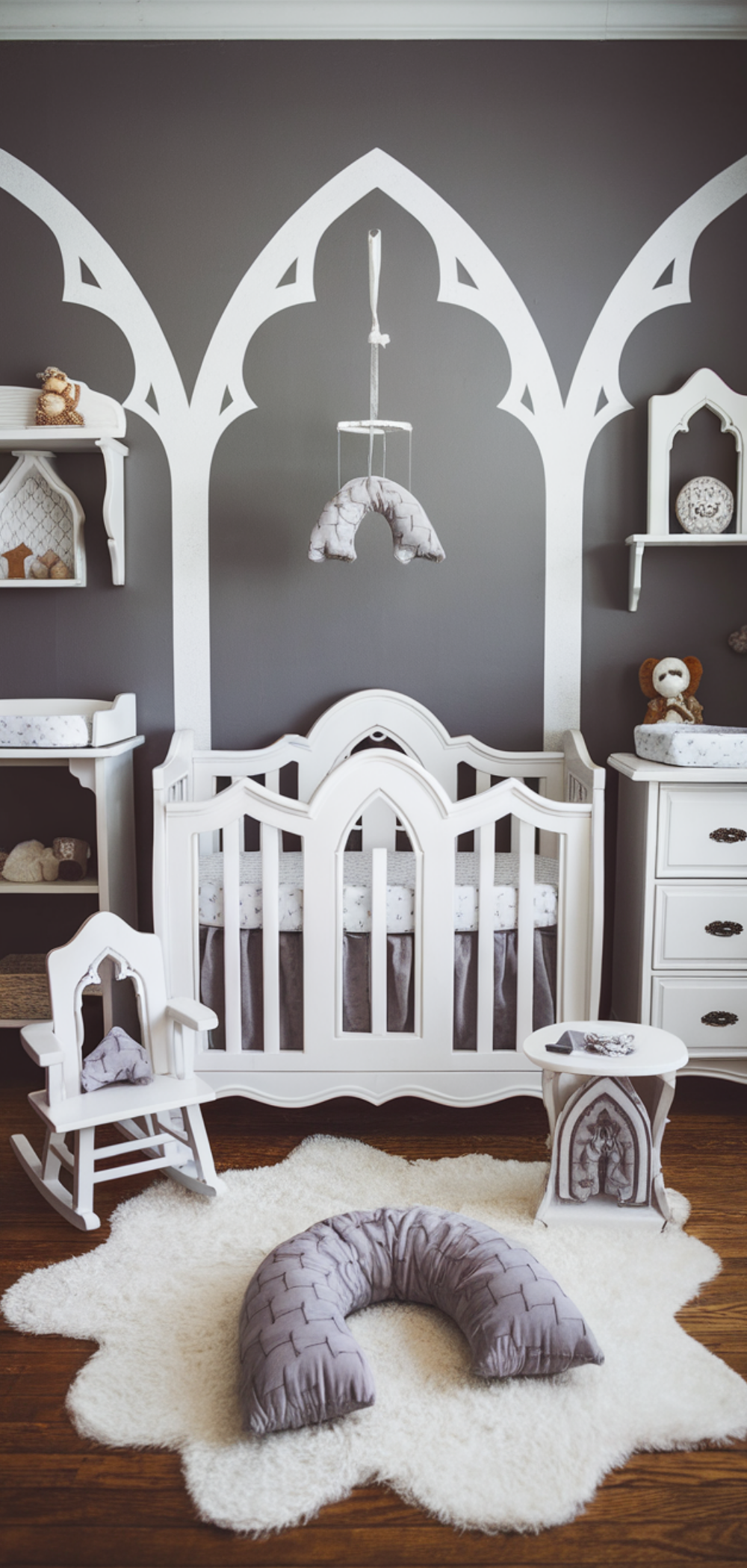
Incorporate gothic-inspired toys and decor, such as bat-shaped mobiles or crow plushies.
Tip: Maintain a playful balance so the room remains child-friendly.
2. Cozy Reading Nook
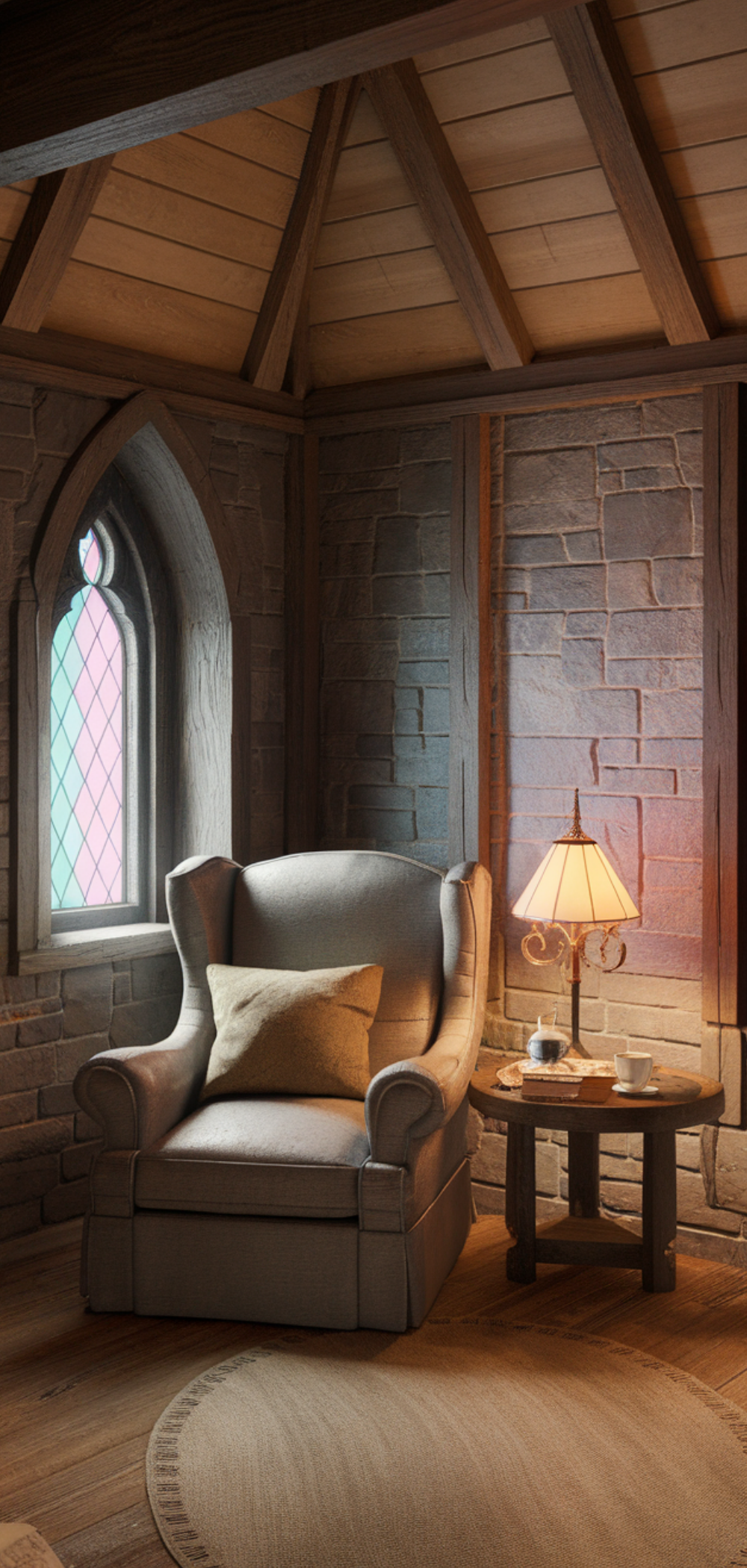
Create a corner with a vintage armchair, soft cushions, and subtle lighting.
Tip: This becomes a serene spot for storytime and quiet moments.
1. Layered Textures and Materials
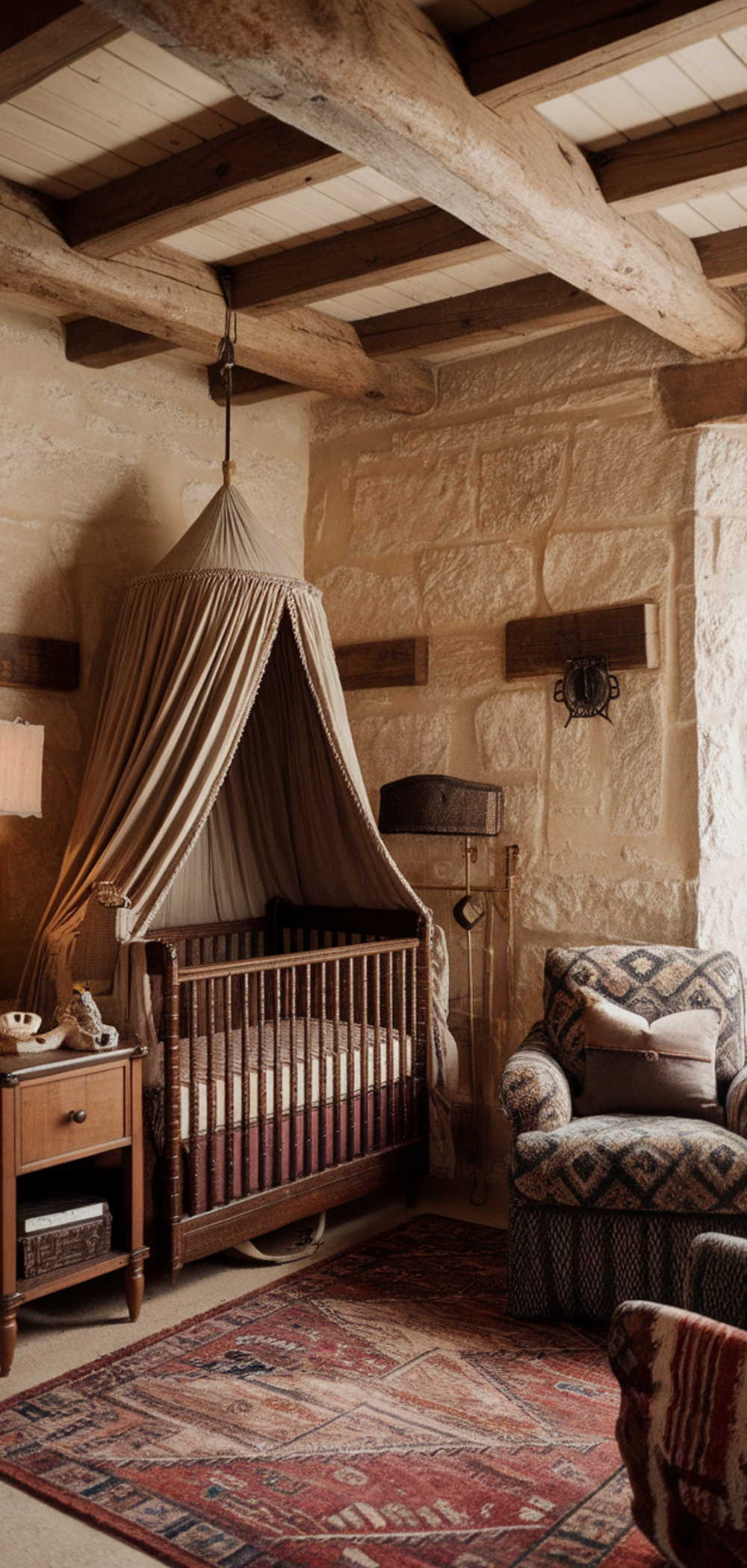
Mix wood, metal, textiles, and natural fibers throughout the nursery.
Tip: Layering adds depth and richness, central to the Western Gothic aesthetic.
Conclusion
A Western Gothic Nursery blends dramatic colors, natural textures, and vintage elements to create a space that is both moody and comforting. By combining deep tones, layered textures, and carefully selected accents, each corner of the nursery tells a story while remaining functional and inviting. Whether through reclaimed wood furniture, celestial motifs, or plush rugs, these 14 ideas offer a comprehensive roadmap to a nursery that balances gothic elegance with child-friendly comfort.