
Join Our Newsletter for Cozy Home Inspiration, Family Fun, and Delicious Recipes Every Week
17 Best Basic Macrame Knots

Initially, playing with macrame Knots felt good. However, that excitement didn’t last long. Beginning with simple macrame bracelets, I rapidly wanted more than basics.
A lovely choker was my goal, inspired by an online guide. Things progressed well; however, the oval shapes proved troublesome. They refused to resemble those flawless loops from the demonstration. Again, again I tried to smooth them, rework them. Each attempt resulted in lumpy distortions, a visible taunt to my efforts.
The instructions seemed clear enough; nevertheless, some hidden factor eluded me.
It took ages of fiddling and a bit of muttering, too, honestly, before I asked others for advice; consequently, things clicked.
It wasn’t simply knot-tying, someone showed me, rather it was the feel of the rope, the way you draw it tight. It wasn’t about strength, though; rather how you guided things, a delicate balance.
I discovered coaxing the tangles upward – letting them settle smoothly on the wood worked best. This slight tug altered everything. The tangled lines smoothed out, turning graceful.
The design seemed to settle, like it had been holding its breath.
Each creation a wristlet, a tapestry, maybe a loop for drapes, brings that memory back.
Macrame isn’t solely about appearances; it’s the repetition, the way rope slips through hands, the subtle pull as each knot forms. New to this?
Imperfection is okay; things won’t always be smooth or flawless at first. This is how things unfold, believe me it pays off.
Speaking of new projects, I also covered storage and laundry room organization in an article featuring 14 great ideas; similar to crafting with rope, everyday areas become beautiful given time plus imagination.
17. Lark’s Head Knot
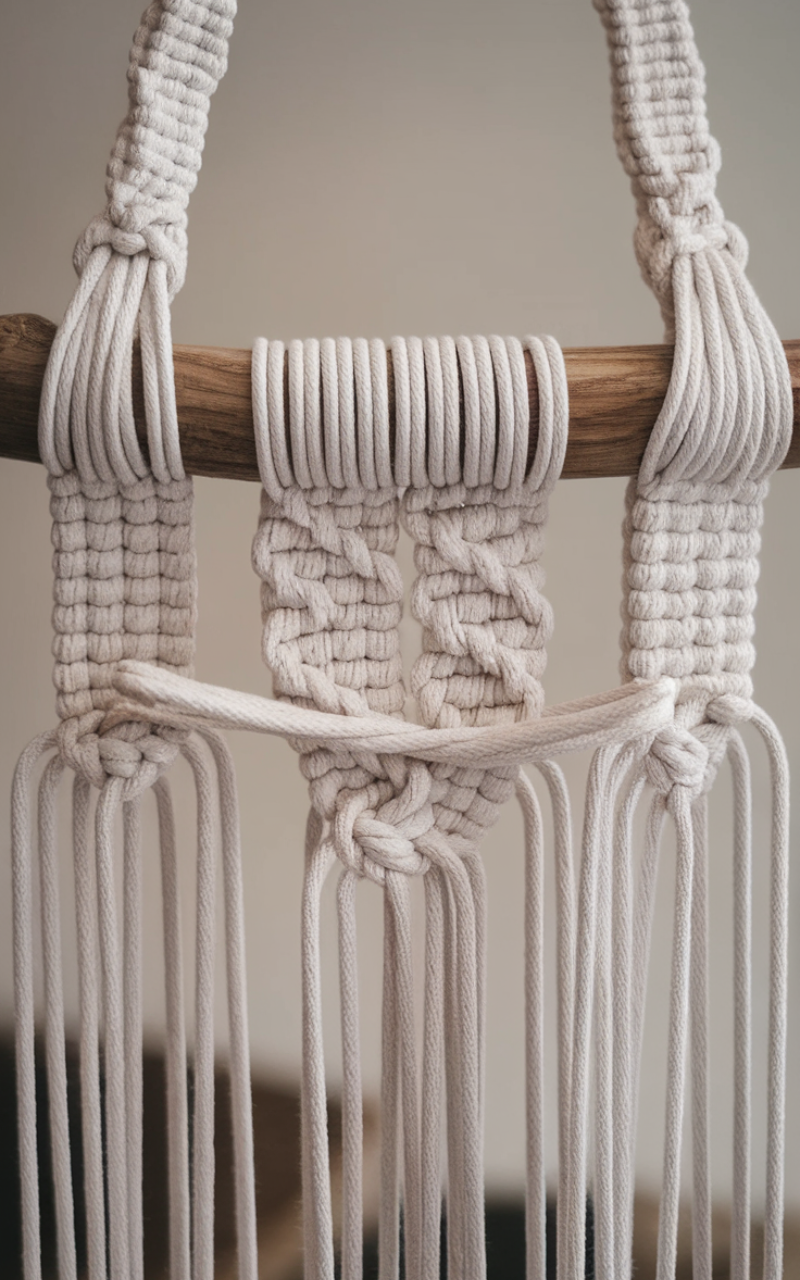
The Lark’s Head Knot is used to attach cords to a dowel or ring.
Macrame knots Tip: Fold your cord in half, place the loop over the dowel, and pull the ends through the loop. Tighten neatly for an even start.
16. Reverse Lark’s Head Knot
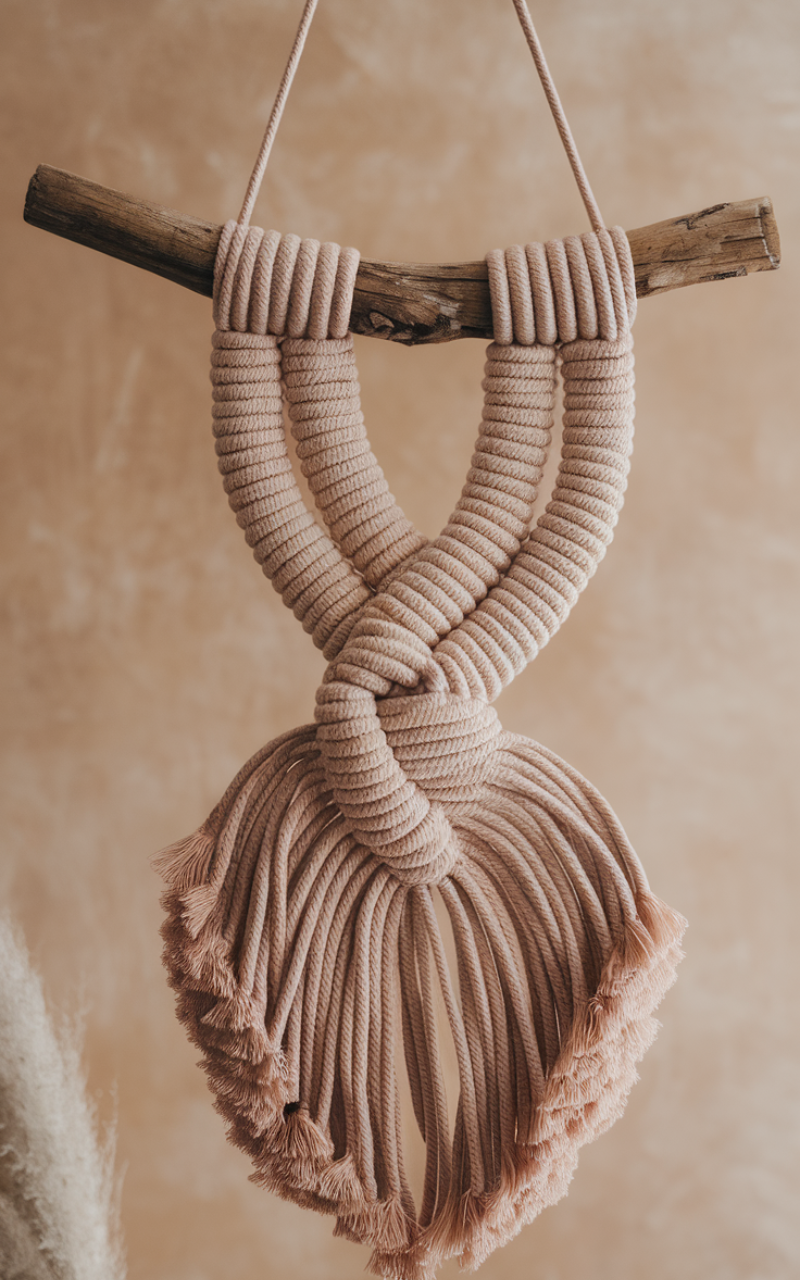
This variation creates a cleaner front.
Macrame knots Tip: Place the loop behind the dowel and pull both working ends over and through it from the front.
15. Square Knot
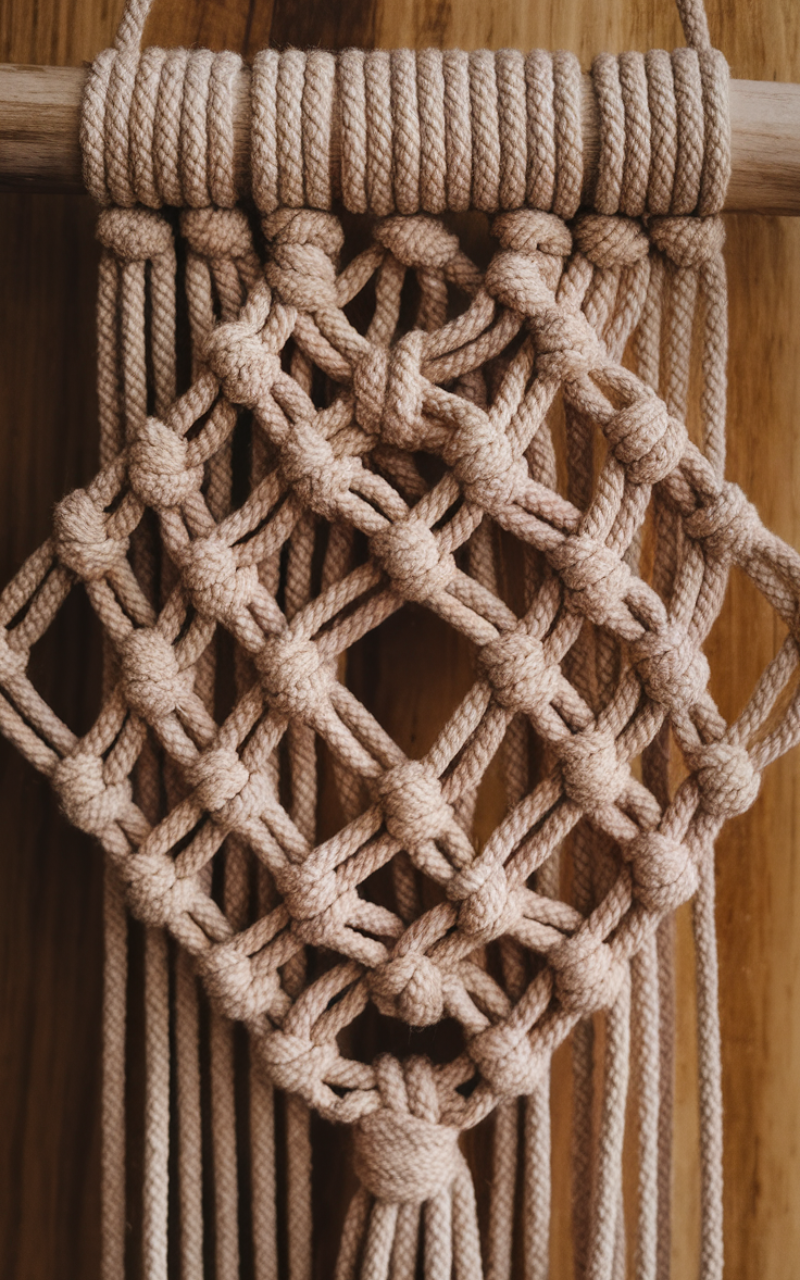
A fundamental knot for macrame patterns.
Macrame knots Tip: Use four cords, two working cords and two filler cords. Make a left and right half to form a balanced square knot.
14. Half Square Knot
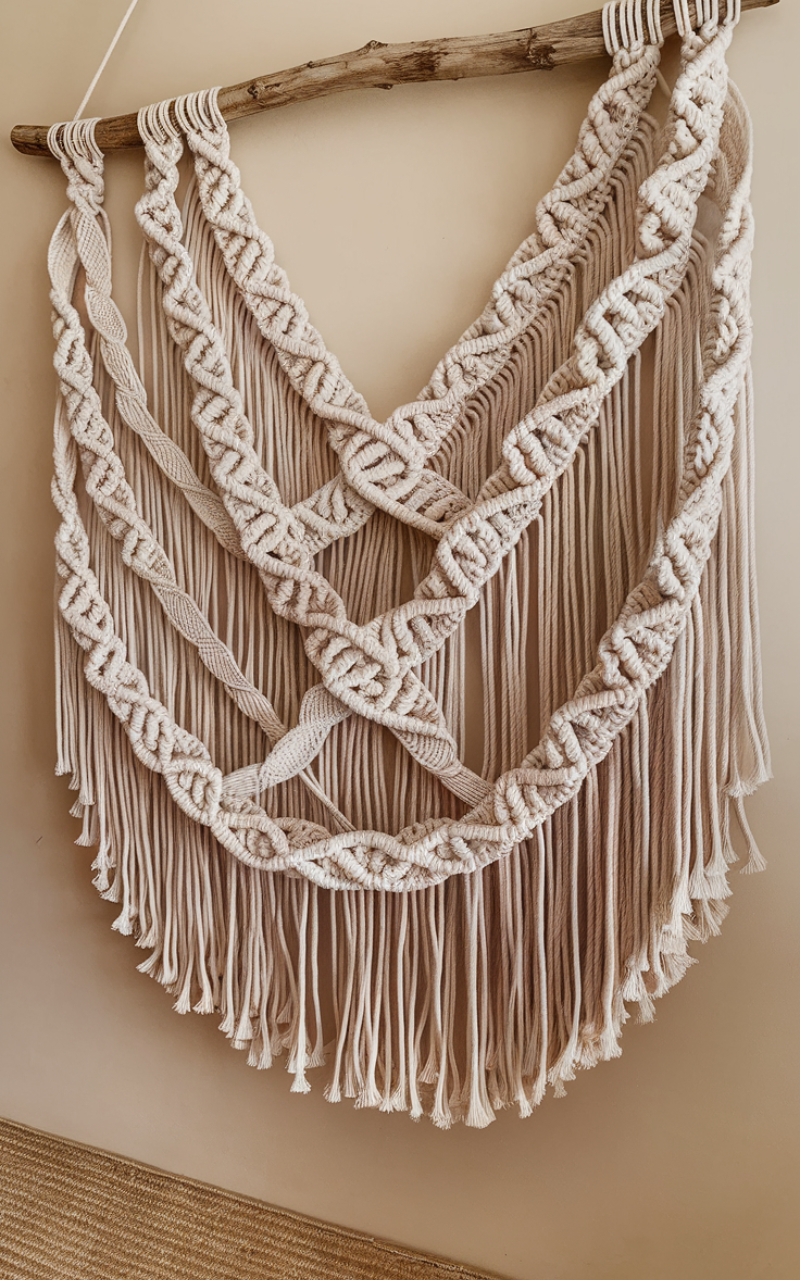
Create spiral designs with this half version.
Macrame knots Tip: Repeat only the left (or right) half of the square knot to achieve a twisted rope look.
13. Alternating Square Knots
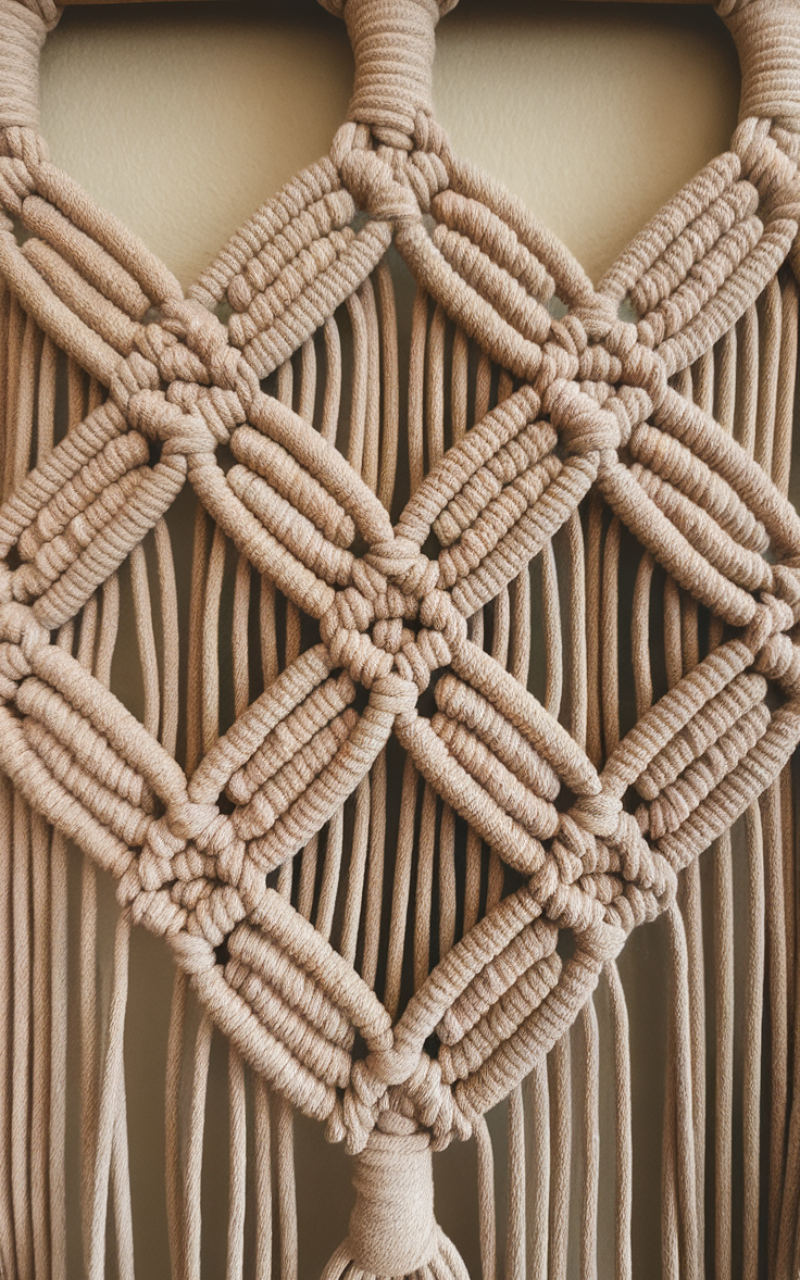
Used for decorative panels and diamond patterns.
Macrame knots Tip: Stagger your knots by starting each new row with cords from two adjacent square knots above.
12. Double Half Hitch Knot
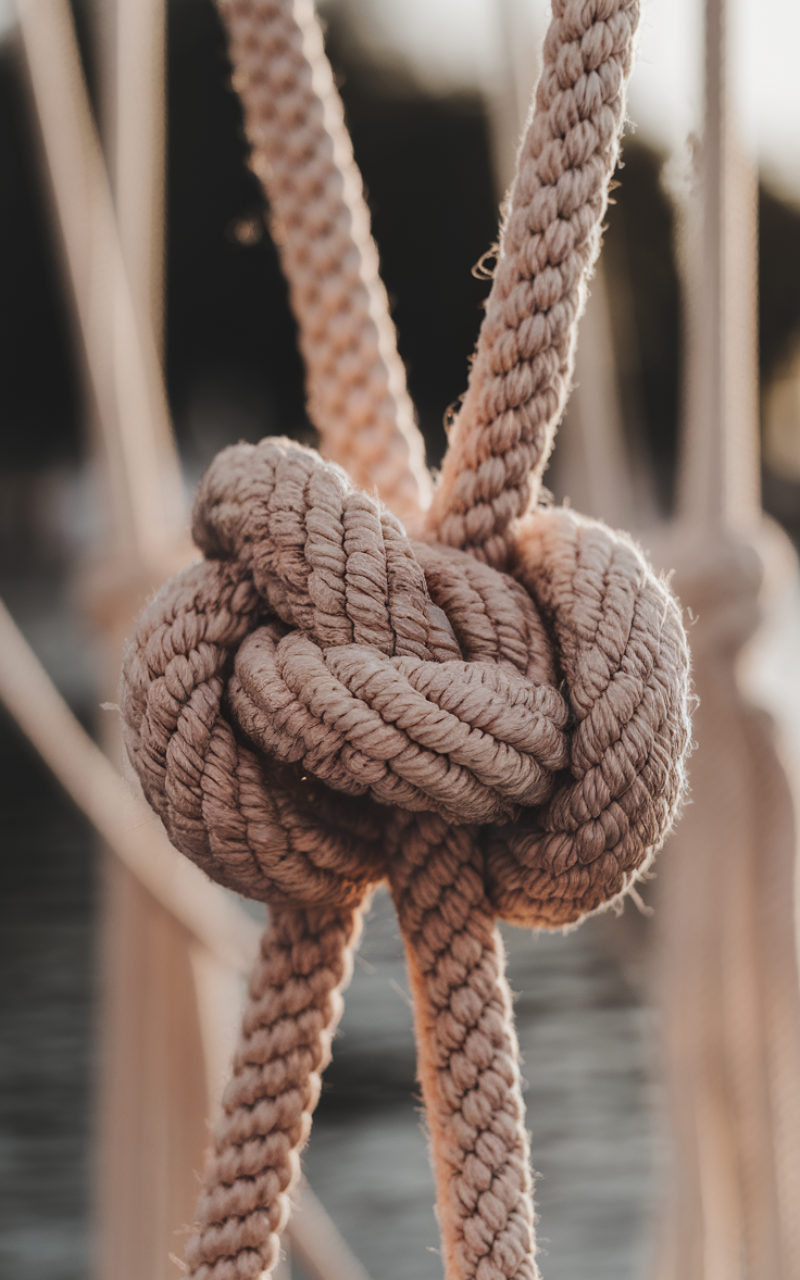
Perfect for outlining shapes and adding structure.
Macrame knots Tip: Hold one cord horizontally and wrap the other cords around it twice for a tight, smooth line.
11. Vertical Double Half Hitch
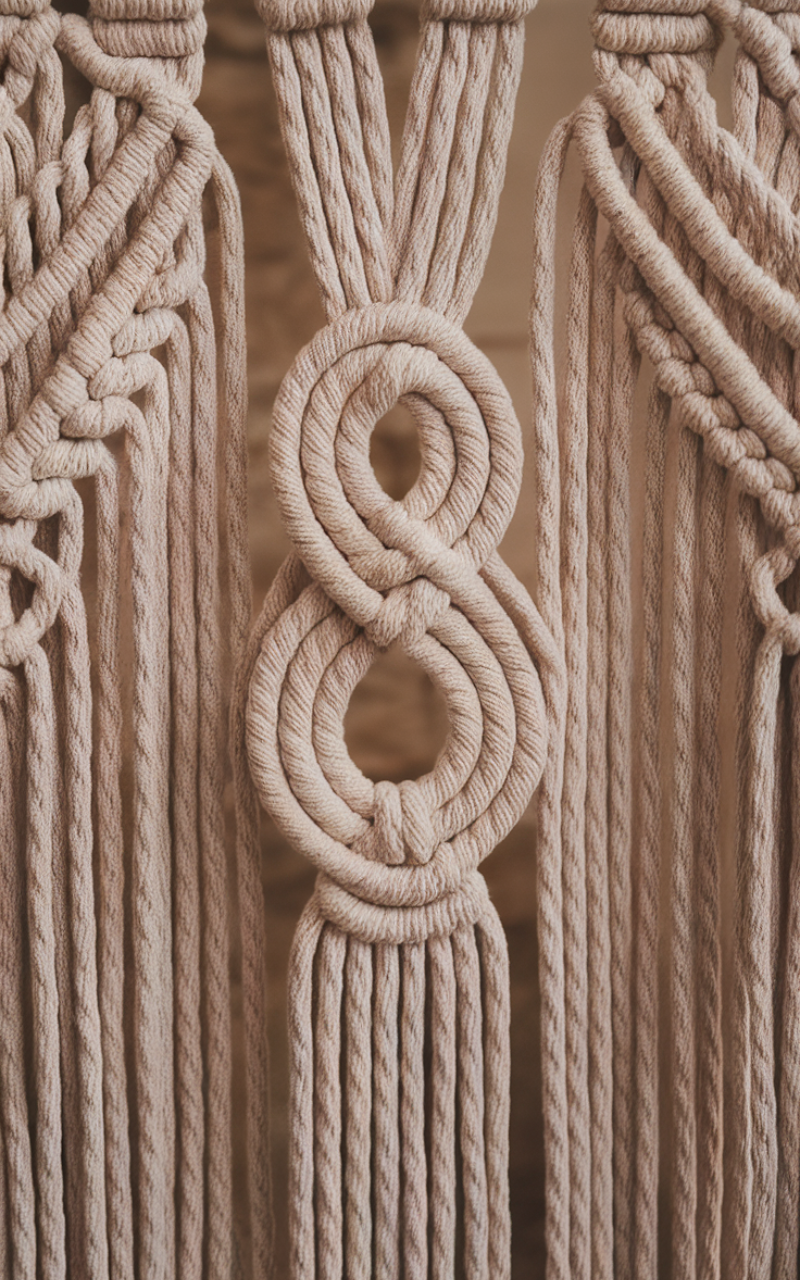
Used to create vertical lines and borders.
Macrame knots Tip: Keep your holding cord vertical and wrap the working cord around it twice in a downward direction.
10. Horizontal Double Half Hitch
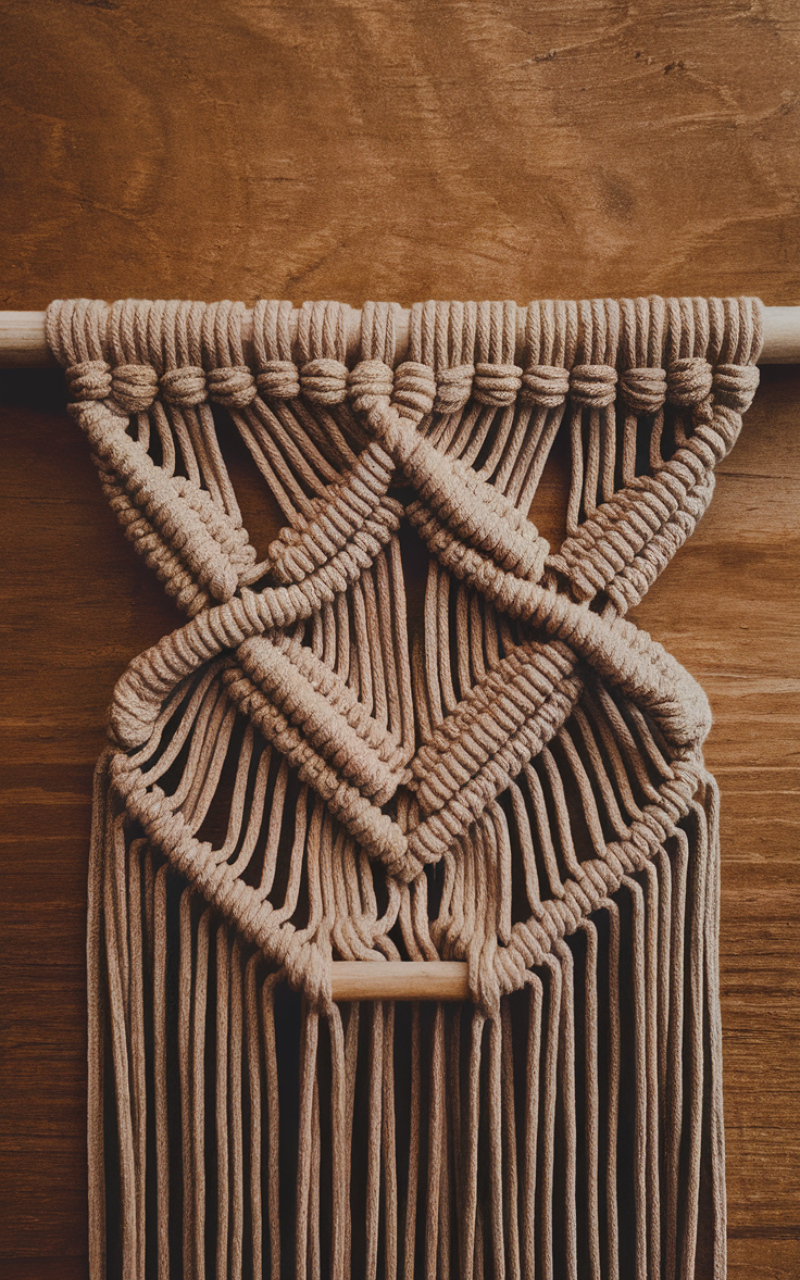
Ideal for clean horizontal lines.
Macrame knots Tip: Pull cords consistently to maintain even tension across the row.
9. Diagonal Double Half Hitch
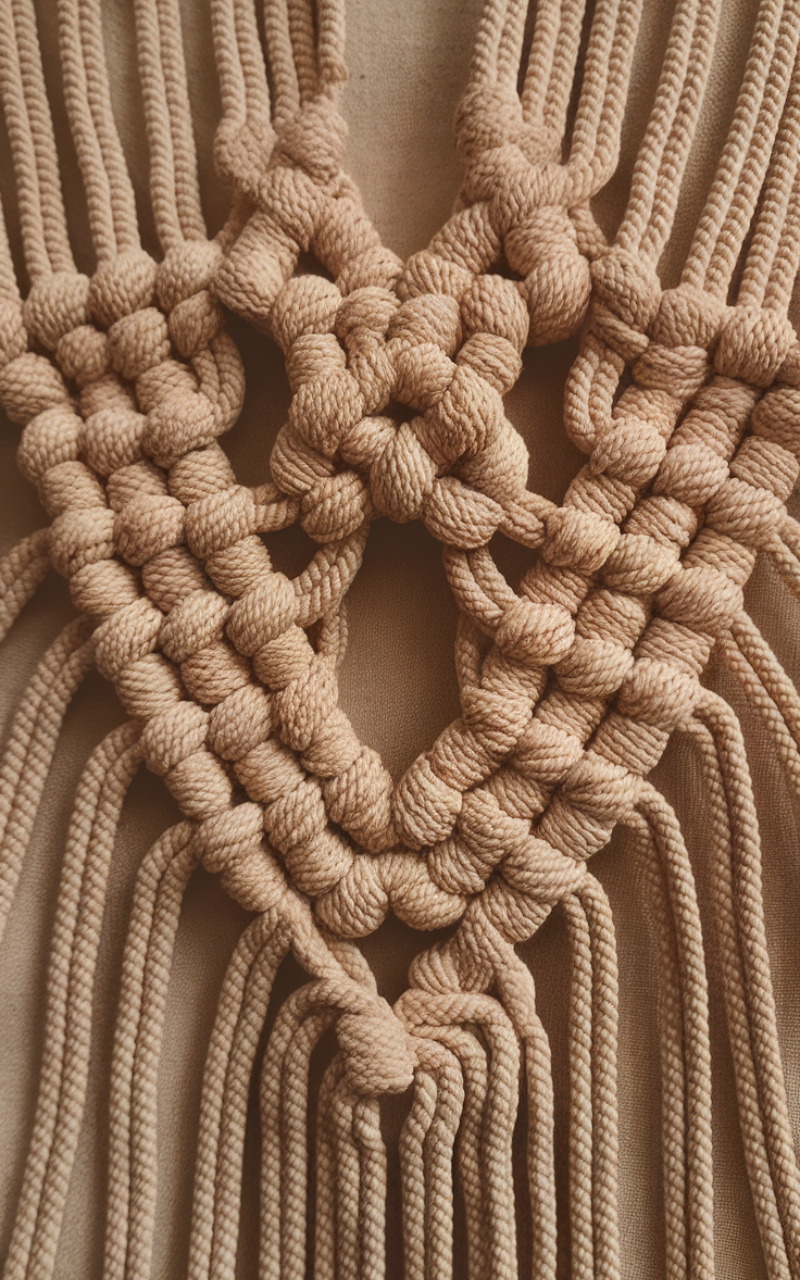
Perfect for chevron or “V” shaped patterns.
Macrame knots Tip: Adjust the angle of the holding cord to define the direction of your design.
8. Gathering Knot
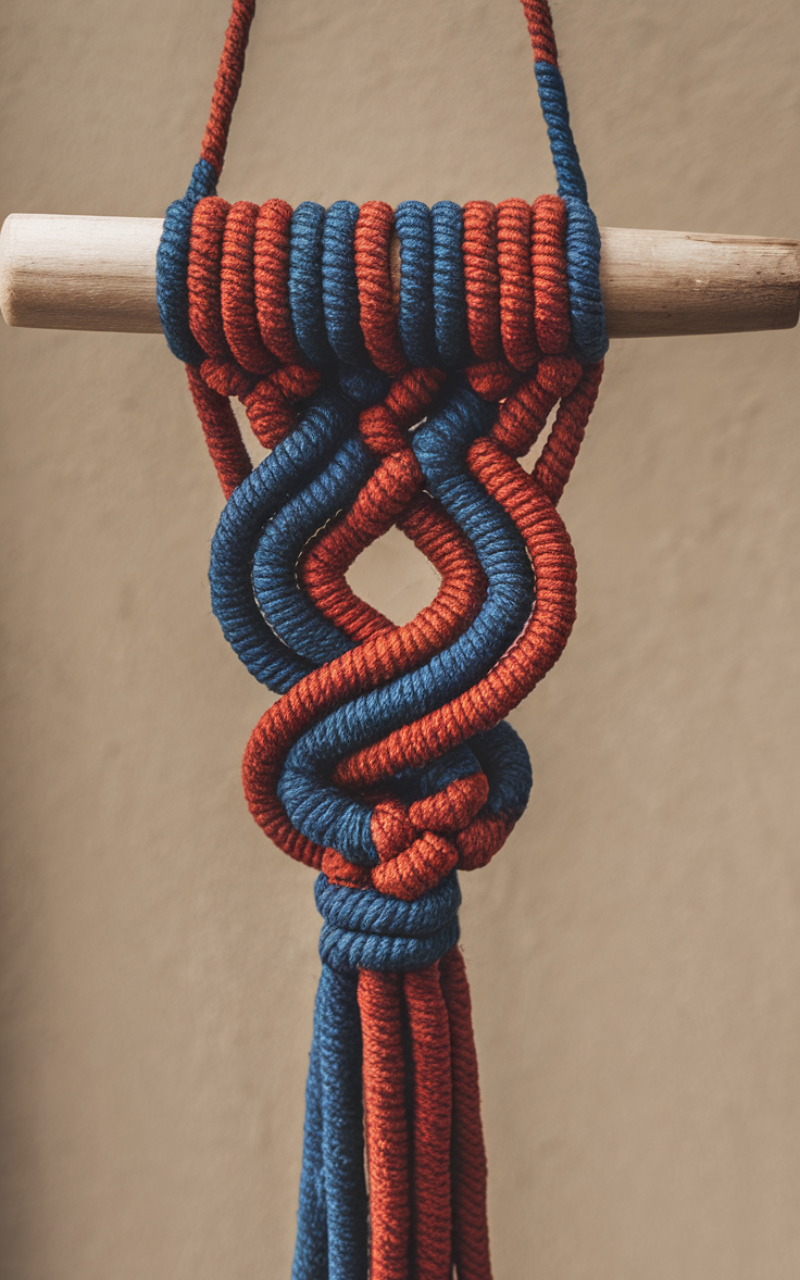
Used to finish off the end of projects neatly.
Macrame knots Tip: Wrap one cord around a bundle of cords several times, thread it through the loop, and pull tight to secure.
7. Spiral Knot
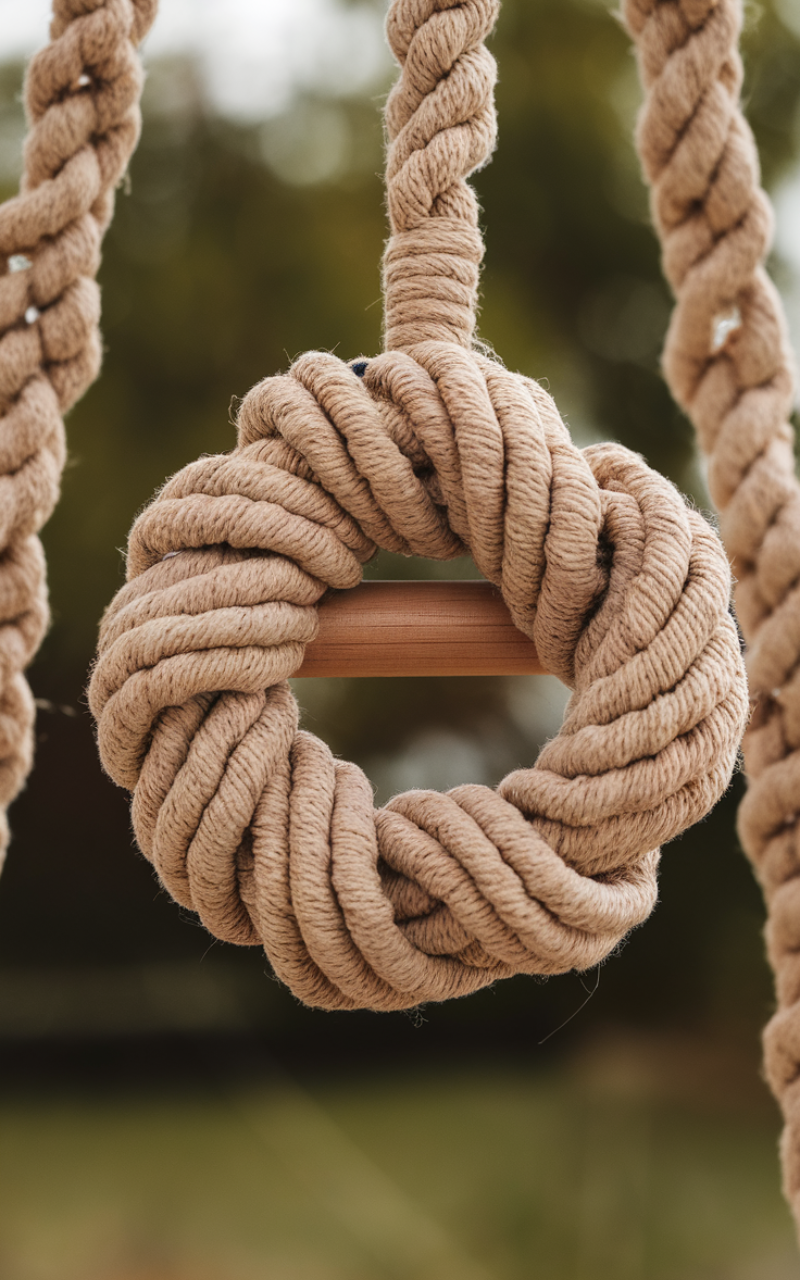
A beautiful knot for plant hangers or jewelry.
Macrame knots Tip: Form consecutive half square knots in the same direction to create a natural spiral.
6. Overhand Knot
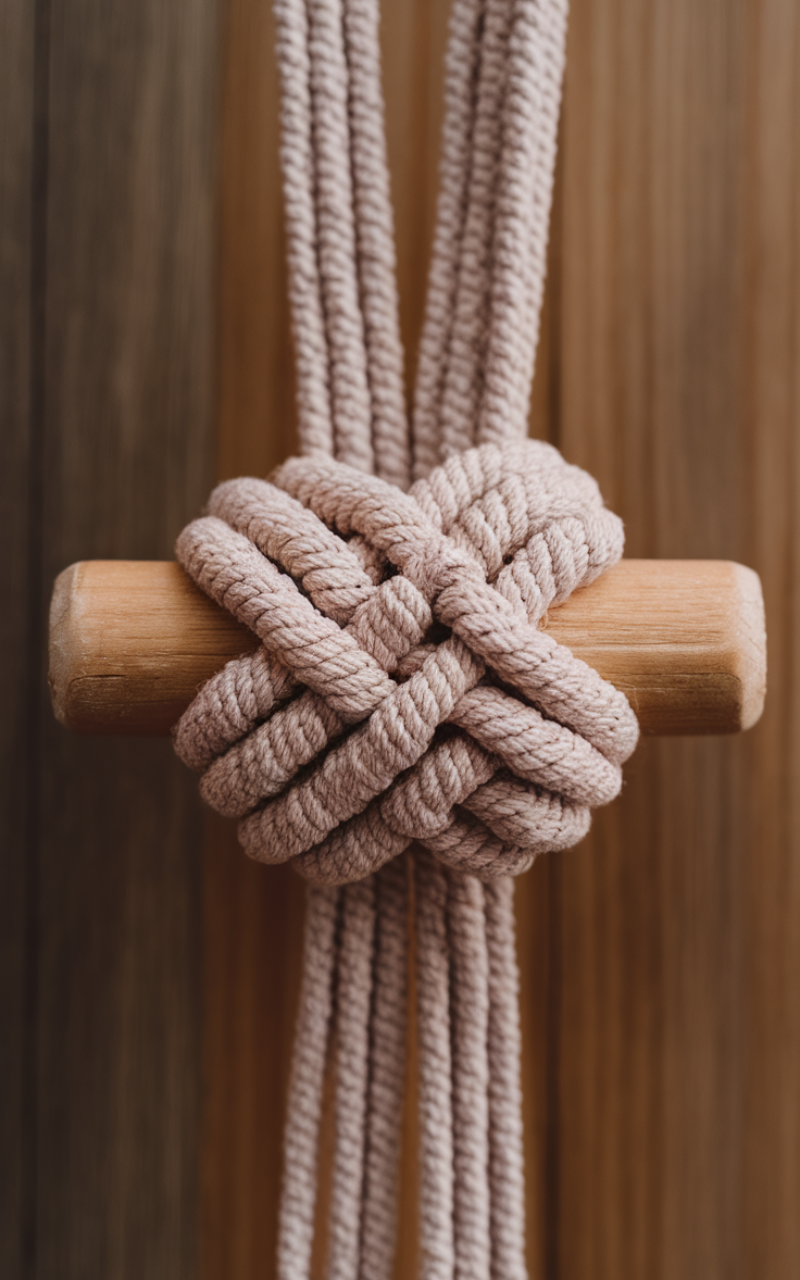
Simple but functional.
Macrame knots Tip: Use at the end of cords to prevent fraying or as part of decorative bead accents.
5. Barrel Knot
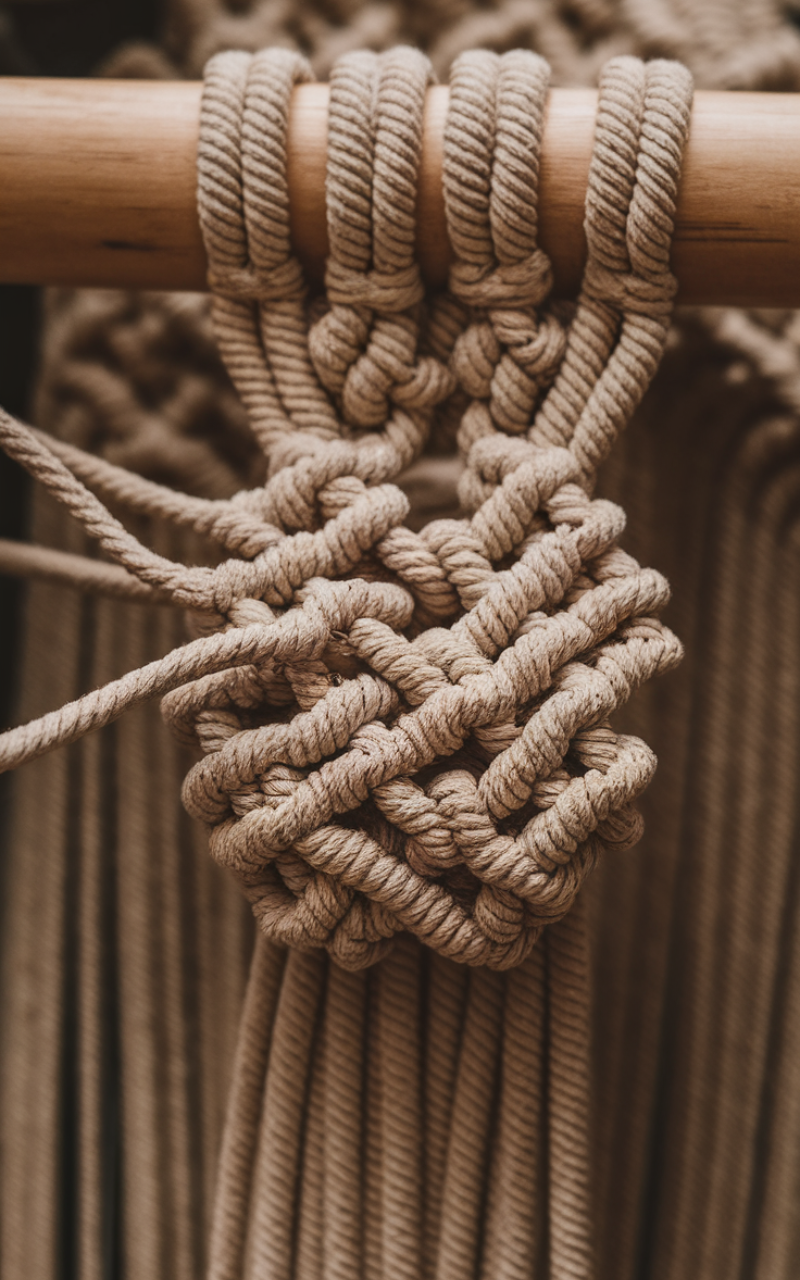
Adds a polished finish to jewelry.
Macrame knots Tip: Wrap the cord around itself 3–4 times, then thread the end through the coils and tighten slowly.
4. Josephine Knot
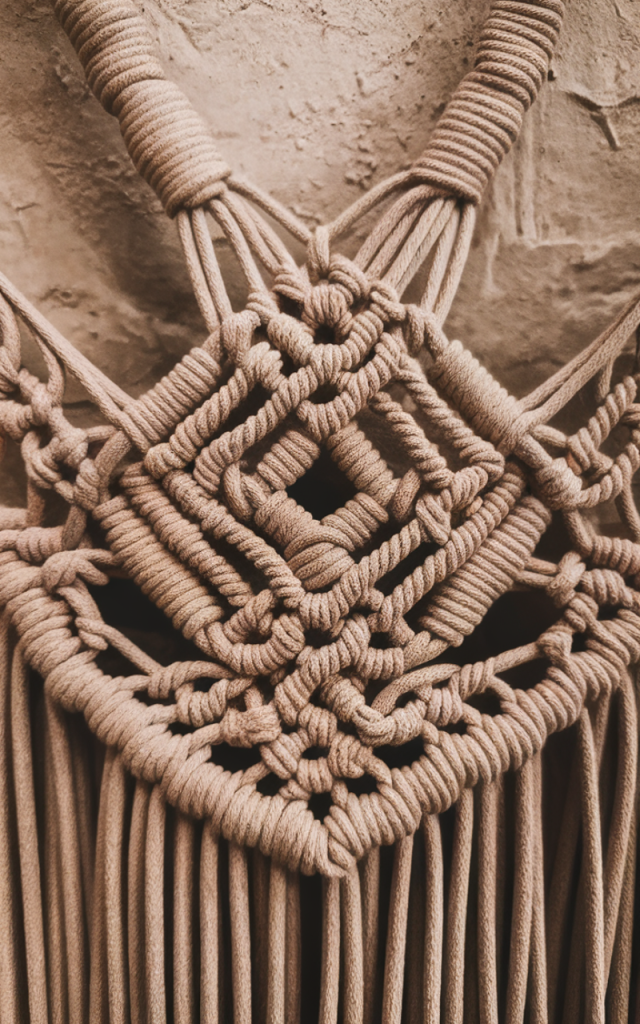
Also called the Celtic knot, it’s a decorative statement.
Macrame knots Tip: Form a loop, weave the end over and under to interlace, and gently tighten for symmetry.
3. Square Knot Sennit
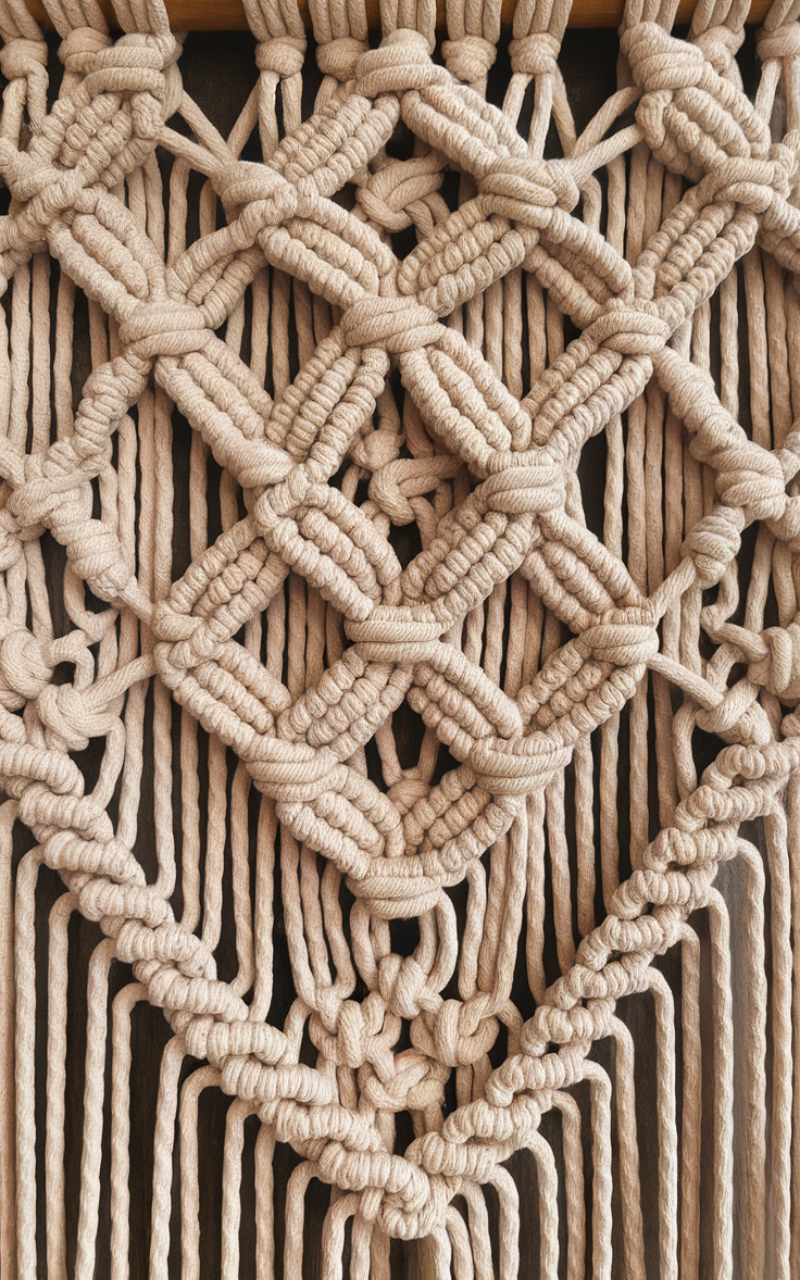
This technique involves repeating square knots in a chain.
Macrame knots Tip: Keep consistent spacing and tension to create an even, braided look.
2. Crown Knot
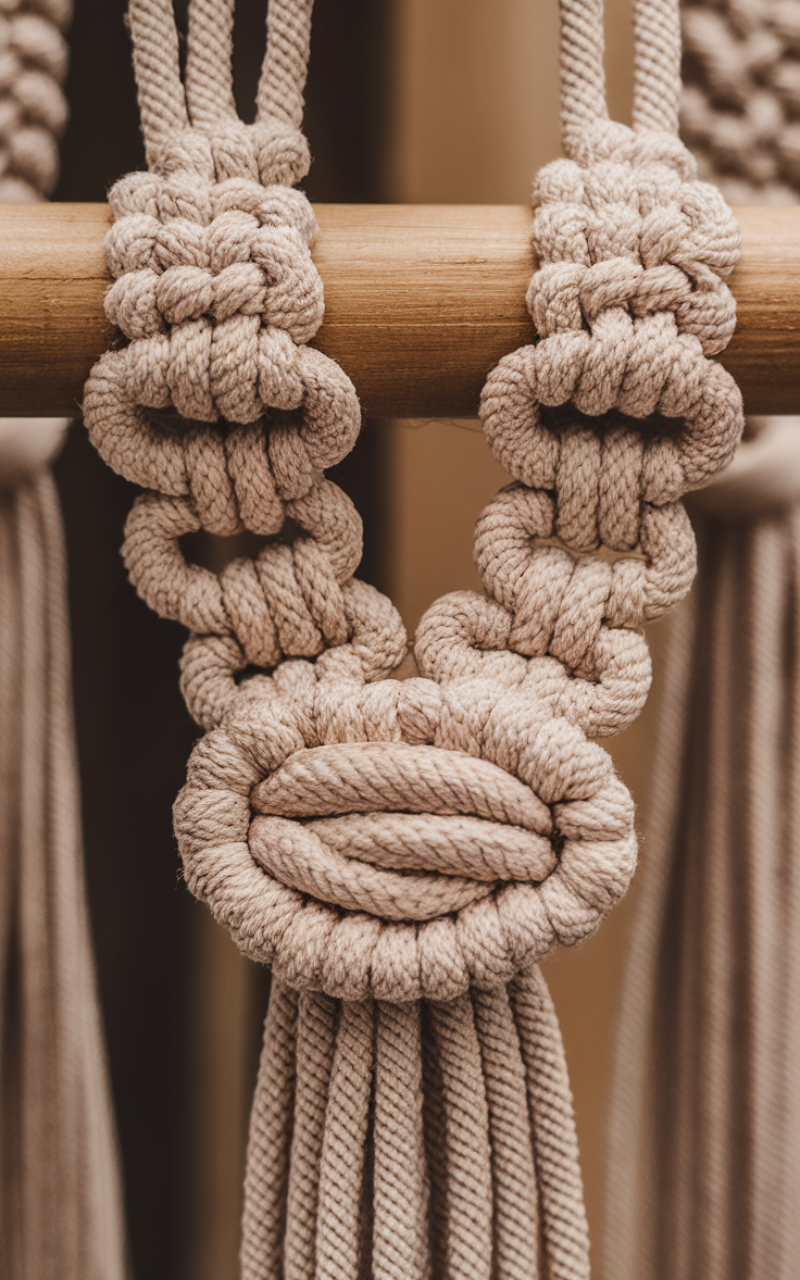
Often used for keychains or hanging cords.
Macrame knots Tip: Arrange four cords around a center and weave each over the next, forming a tight circular braid.
1. Button Knot
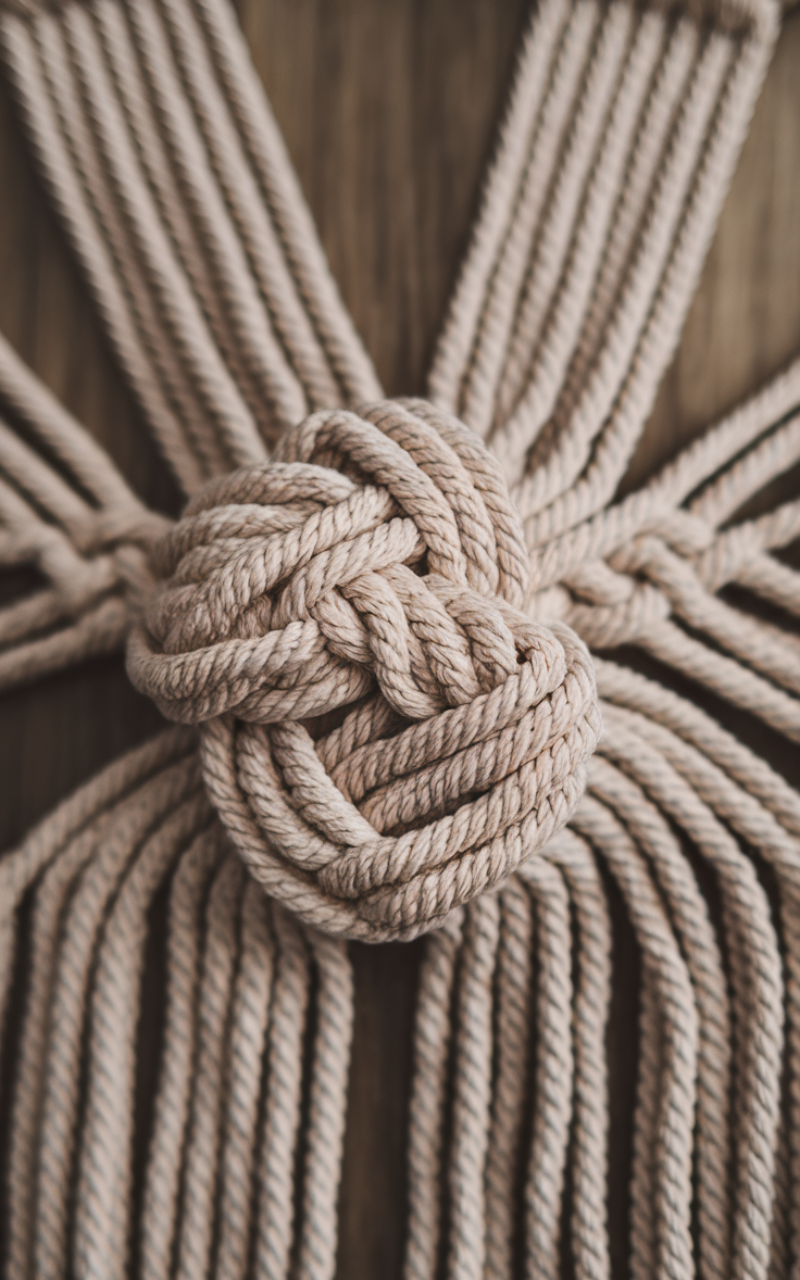
A finishing knot that also acts as a closure.
Macrame knots Tip: Weave multiple cords around each other, pull through, and tighten into a firm, rounded button shape.
Conclusion
These 17 basic macrame knots lay the foundation for all macrame projects, from simple to advanced. By mastering them, you’ll gain the flexibility to create endless textures, patterns, and designs. With patience and practice, every loop and twist becomes an opportunity to express your creativity through handmade art.
