
Join Our Newsletter for Cozy Home Inspiration, Family Fun, and Delicious Recipes Every Week

Privacy Fence Ideas That Finally Gave Our Backyard Some Breathing Room

Disclaimer. Some images featured in this post may originate from third-party sources and are used for illustrative purposes only. Please review our Image Credits Policy for attribution information.
I was hanging towels on the line last summer when I noticed our new neighbor waving from her kitchen window, close enough that I could see what she was cooking. That was the moment I finally admitted our old privacy fence was not doing its job anymore. It had gaps I had learned to ignore for years.
I did not want anything that looked like a fortress. I just wanted to hang laundry, let the kids run around, and drink my coffee outside without feeling like I was on a stage.
I started looking at other backyards online, the way I do with everything else in this house. Not the massive estate photos, just real fences on real properties that solved the same problem I had. Some were wood, some were nothing like wood at all.
What surprised me was how differently people were solving the same basic need. A fence did not have to be one plain wall anymore. It could have a pattern, height, texture, and even a little bit of personality built right into the boards.
I saved picture after picture without fully understanding why each one stopped my scroll. Some were classic and warm. Others were sleek and almost architectural. All of them shared one thing: they gave the people living behind them room to actually exhale.
That is when I understood what I had been missing. A good privacy fence is not just a barrier; it is the thing that lets your yard finally feel like yours again.
I started asking better questions once I noticed that pattern. Did the fence need to block a direct sightline or just soften it? Did we need full coverage or would a little visual texture be enough to feel comfortable?
Every idea below came from that same late-night research habit, the pictures that made me stop scrolling before I understood exactly why. None of them require tearing out an entire yard or spending a fortune before you know what actually works for your space.
If you have ever stood in your own backyard wondering how to get some real privacy back, this list is for you. Every single idea here is built around what a real privacy fence can do once you stop thinking of it as just a boundary line.
What We're Exploring
- 01 Choose Classic Cedar for a Fence That Feels Warm, Not Cold
- 02 Add a Modern Screen Panel Above the Fence Line for Extra Height
- 03 Choose Semi Privacy Vinyl for Low Maintenance Coverage
- 04 Mount Horizontal Wood Slats Over an Existing Wall for Instant Warmth
- 05 Top an Older Fence With Lattice for Added Height and Charm
- 06 Choose Vertical Slat Panels for a Clean, Architectural Look
- 07 Install Composite Panels for a Wood Look That Never Needs Staining
- 08 What Every Good Fence Line Actually Gives Your Family
- 09 Quick Take
Choose Classic Cedar for a Fence That Feels Warm, Not Cold
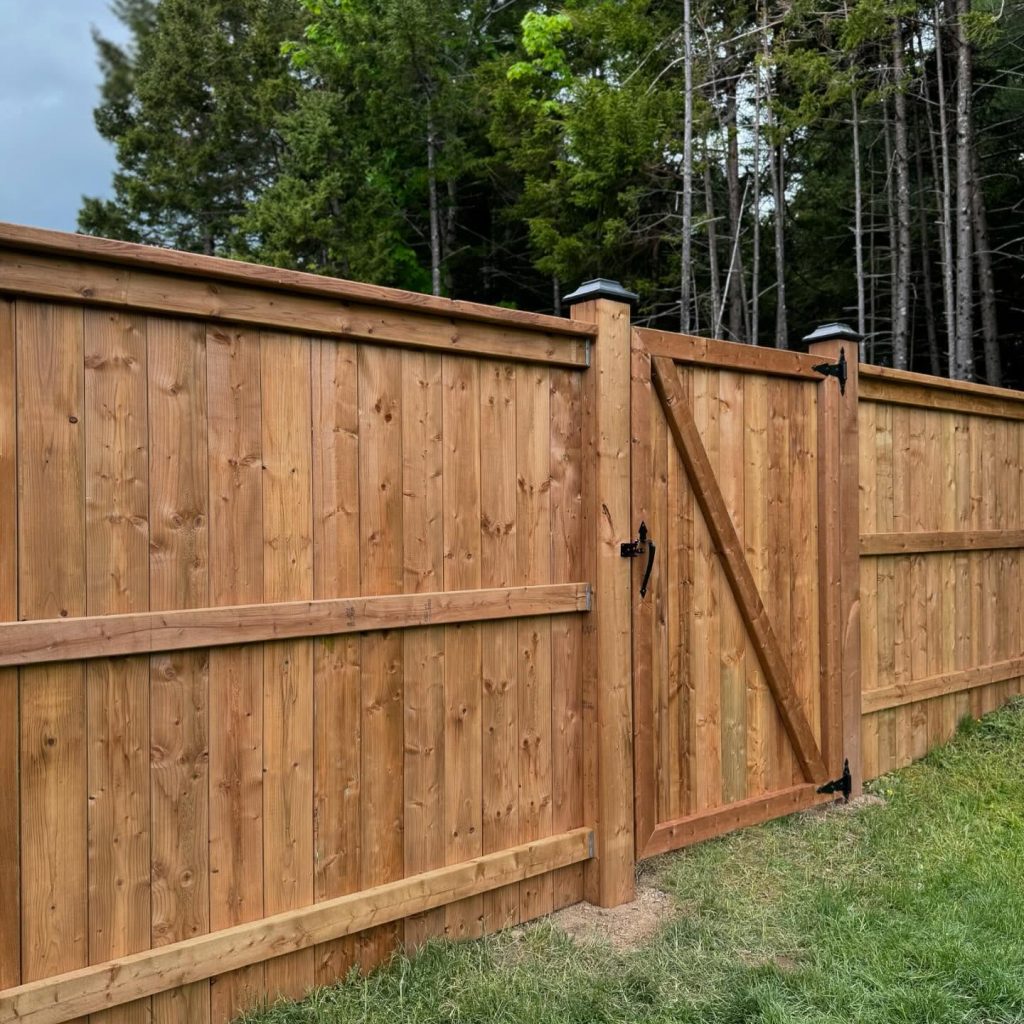
A solid cedar fence with a matching gate gives a backyard an established, settled feeling that newer materials rarely manage right away. The natural wood tone warms up against greenery instead of standing out from it, which makes the whole yard feel more like an extension of the landscape. This is one of the most reliable privacy fence choices for families who want full coverage without a stark or industrial look.
This style works especially well for yards backing up to trees or wooded areas, since the wood tone echoes what is already growing behind it. According to This Old House, cedar remains one of the most weather-resistant wood choices for fencing that needs to last through real seasons.
Budget Note: Cedar fence panels run $25 to $45 per linear foot installed, with decorative gate hardware costing $20 to $50 at Home Depot or Lowe’s.
Add a Modern Screen Panel Above the Fence Line for Extra Height
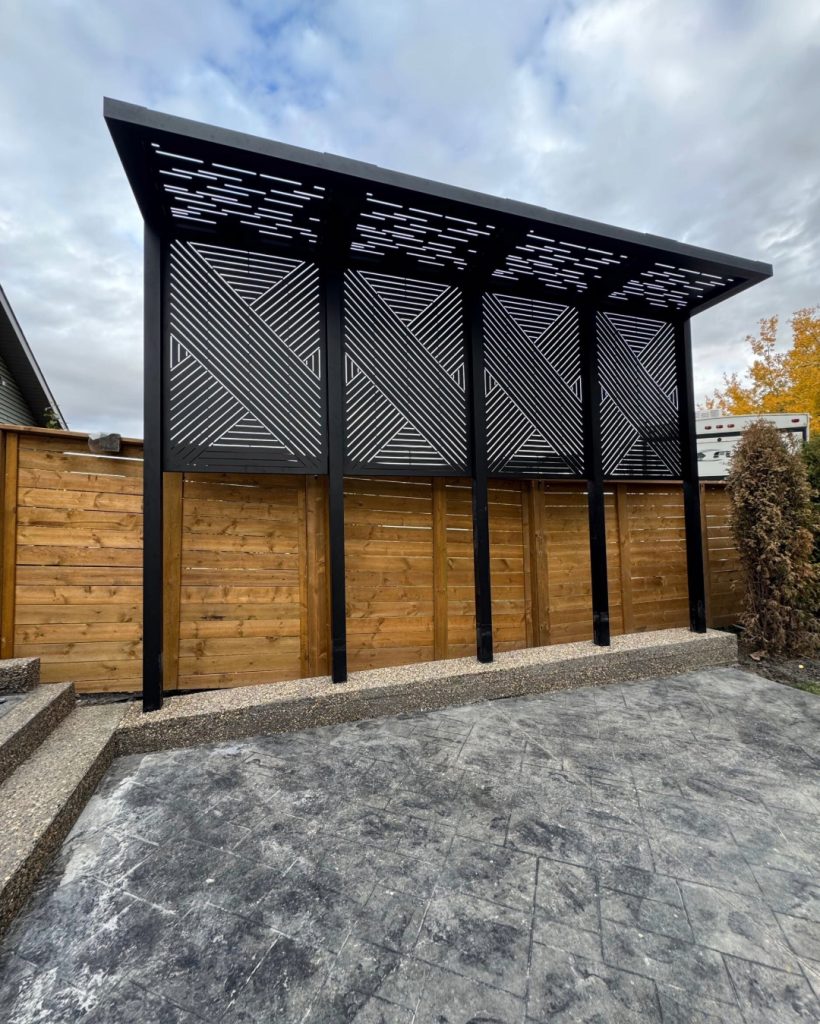
When a standard fence height still is not quite enough, a decorative screen panel mounted above it solves the problem without building a second wall. Geometric cutout patterns let light and air move through while still blocking direct views from upper windows or a neighboring deck. It turns a functional privacy fence into something that actually looks designed on purpose.
Pairing a dark metal frame with the warm wood tone underneath keeps the whole structure from feeling too heavy or industrial. The angled overhang at the top adds a small architectural moment that most standard fences never get. It reads more like an outdoor room divider than a boundary line.
Budget Note: Custom metal screen panels typically cost $200 to $500 per section through a local fabricator or fencing company.
Choose Semi Privacy Vinyl for Low Maintenance Coverage
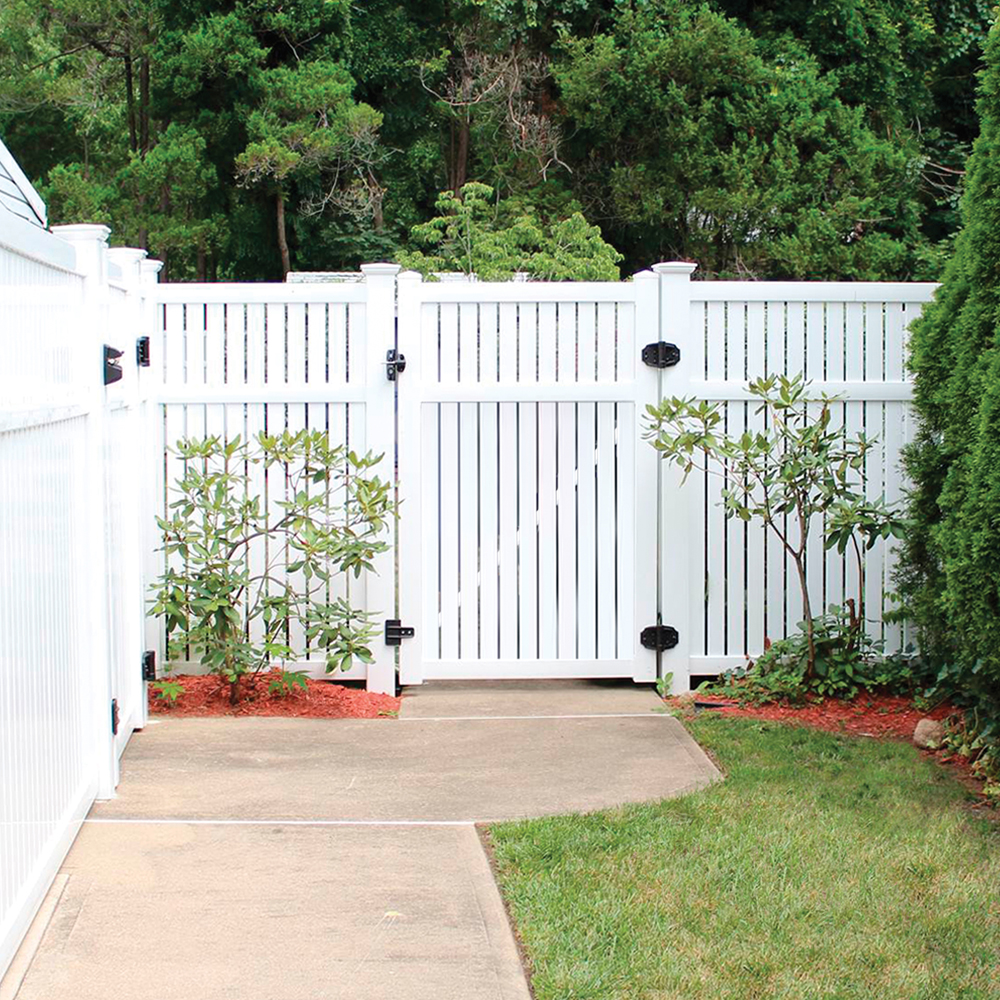
A white vinyl fence with narrow-spaced slats gives just enough coverage to soften a view without blocking every bit of light and airflow. It is one of the lowest-maintenance privacy fence options available, since it never needs staining, sealing, or repainting the way wood eventually does. A quick hose down each season is usually all it takes to keep it looking new.
This option works especially well for families who want a fence that looks freshly painted for years without any of the upkeep. It is a favorite recommendation from Good Housekeeping for homeowners who want a low-effort fencing solution that still looks polished.
Budget Note: Vinyl semi-privacy fence panels run $30 to $60 per linear foot installed, available through Home Depot or a local fencing contractor.
Mount Horizontal Wood Slats Over an Existing Wall for Instant Warmth
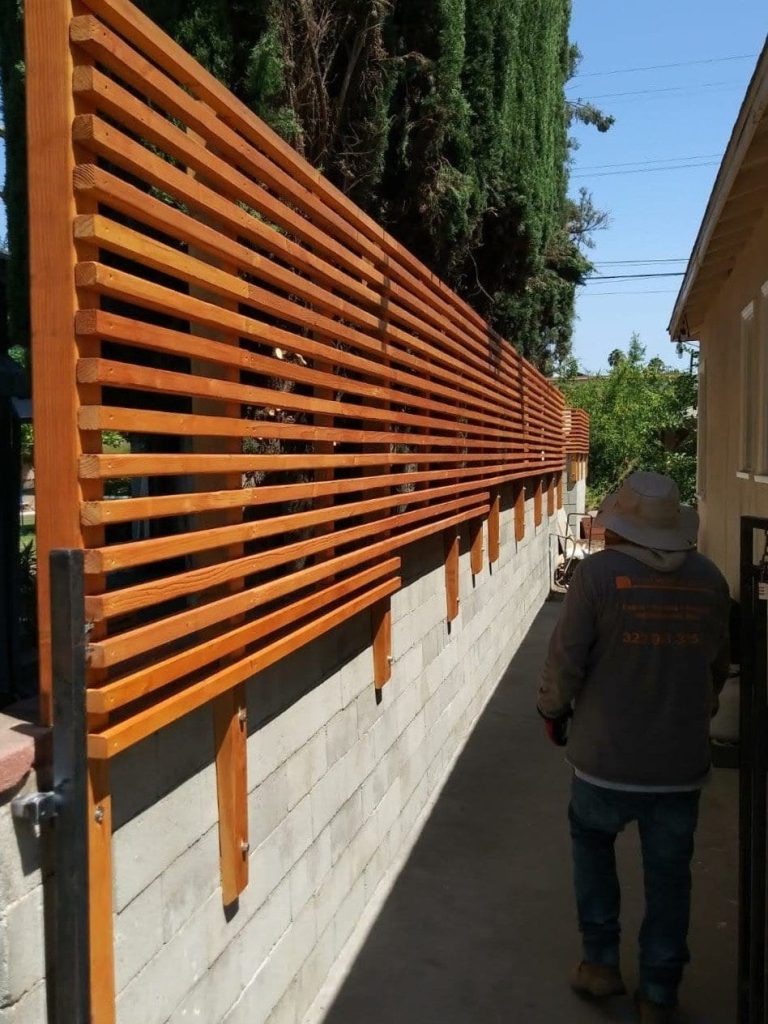
Mounting horizontal wood slats directly over a plain concrete block wall is one of the fastest ways to soften a hard, cold surface without demolishing anything underneath. The evenly spaced slats let dappled light through while still creating a real visual barrier from the other side. It is a clever privacy fence upgrade for yards that already have a solid wall doing the structural work.
Staining the wood a warm honey tone instantly makes an older cinderblock wall feel like part of an intentional design instead of something left unfinished. The spacing between slats keeps airflow moving through the yard, which matters in warmer climates where a solid wall can trap heat. Brackets anchor each board securely without needing to alter the wall itself.
Budget Note: Cedar or redwood slat boards cost $3 to $6 per linear foot, with mounting brackets running $2 to $5 each at a local lumber yard.
Top an Older Fence With Lattice for Added Height and Charm
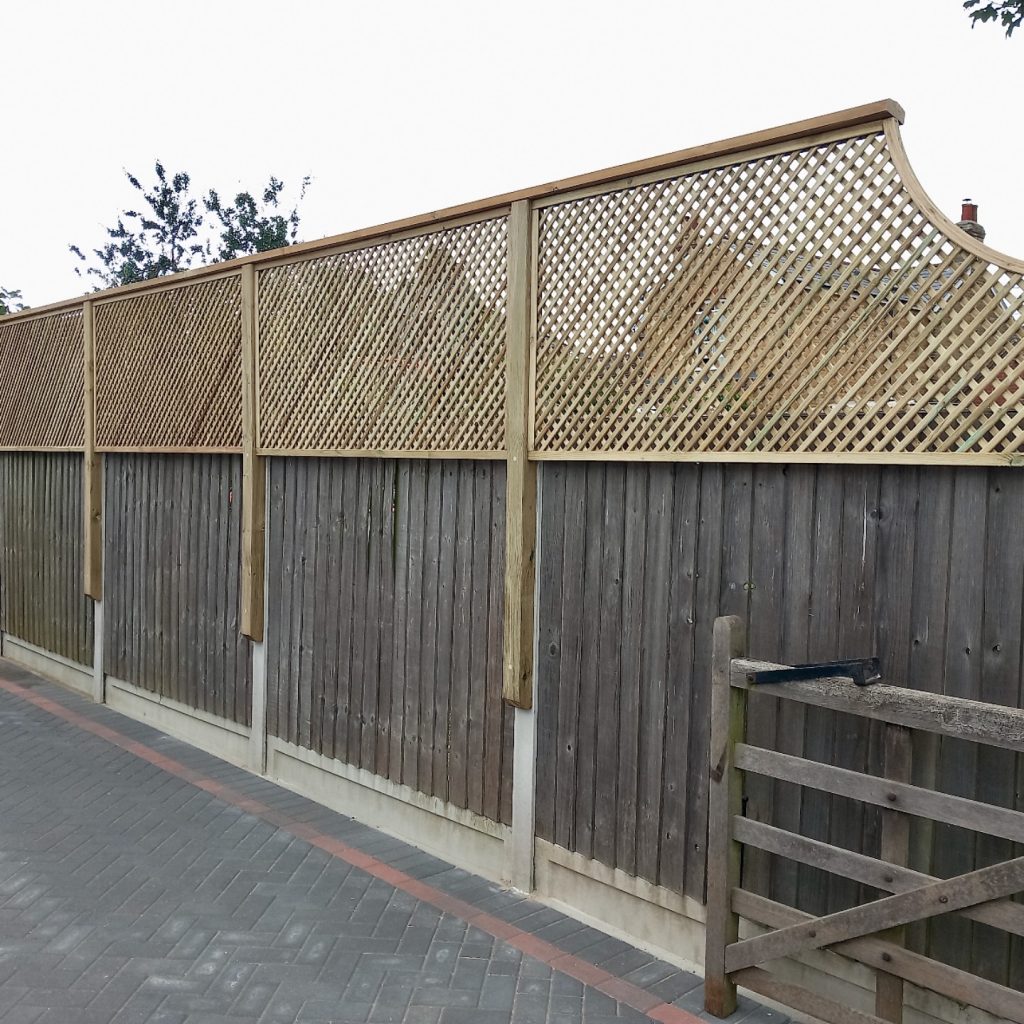
Adding a lattice panel to the top of an existing fence is one of the simplest ways to gain extra height without replacing the whole structure. The diamond pattern lets light filter through while still creating a real visual screen from taller vantage points like a second-story window. It is a budget-friendly way to extend the life of a privacy fence that is otherwise still in good shape.
A curved top edge on the lattice section adds a decorative touch that keeps the extension from looking like an obvious add-on. Climbing vines like clematis or morning glory eventually fill in the diamond gaps, turning the lattice into a living, textured wall over a season or two. That growth softens the transition between the solid fence below and the airy lattice above.
Budget Note: Pressure-treated lattice panels cost $25 to $50 each and are available at Home Depot, Lowe’s, or a local lumber yard.
Choose Vertical Slat Panels for a Clean, Architectural Look
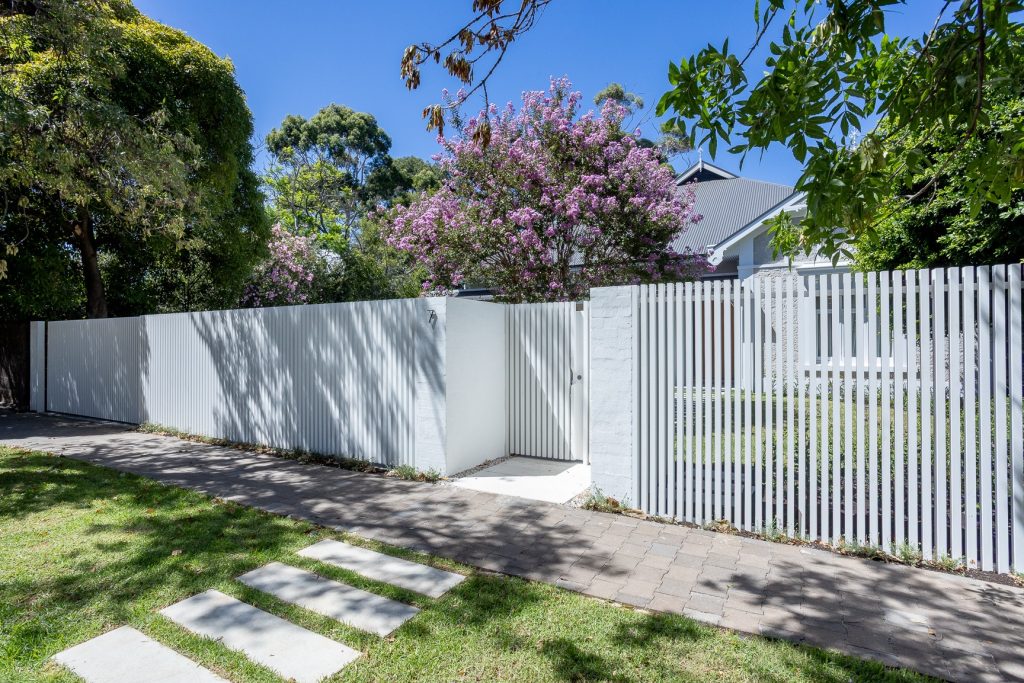
A crisp white vertical slat fence gives a property line a clean, architectural edge that pairs beautifully with modern or classic homes alike. The narrow, evenly spaced boards create a subtle rhythm along the yard that feels intentional rather than purely functional. This style has become one of the most requested privacy fence looks among homeowners chasing a more polished exterior.
Matching the fence color to the house trim ties the whole property together, which makes the yard feel like one cohesive design instead of separate projects. A blooming tree or flowering shrub planted just behind the fence line adds a soft contrast against all those straight white lines. Stepping stones leading up to the gate finish the look without adding another hard material to the palette.
Budget Note: Vertical slat fence panels run $35 to $65 per linear foot installed through a local fencing contractor.
Install Composite Panels for a Wood Look That Never Needs Staining
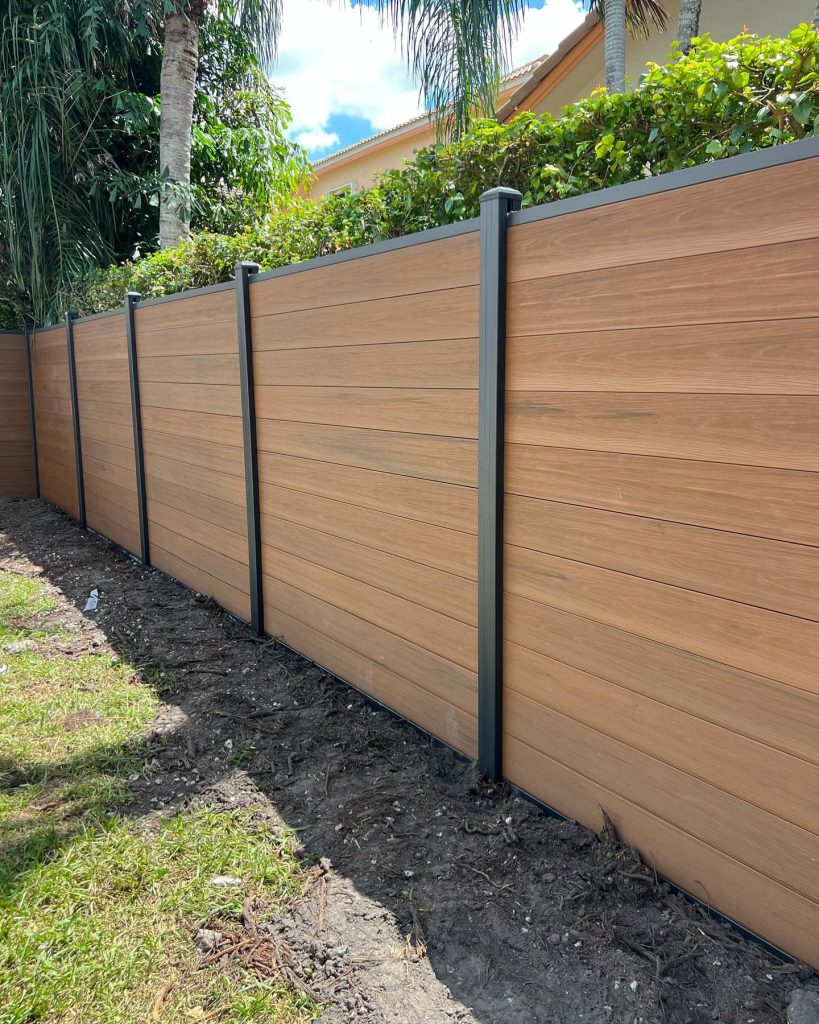
Composite fencing panels give a backyard the warm, natural look of real wood grain without a single season of staining or sealing ahead. The horizontal boards mimic real timber so closely that most guests never guess the material, while the aluminum posts keep the whole structure standing straight for years. It is one of the most practical privacy fence upgrades for hot, humid climates where real wood tends to warp.
Dark aluminum posts against the warm wood-toned panels create a subtle contrast that keeps the fence from feeling flat or one-dimensional. Tropical landscaping like palms and hedges nearby only enhances the natural feel of the composite grain. Cleanup is as simple as a rinse with the hose, with no sanding or staining ever required.
Budget Note: Composite fence panels typically run $40 to $70 per linear foot installed, available through a local fencing company or Trex dealer.
What Every Good Fence Line Actually Gives Your Family
The longer I lived with our new fence, the more I realized privacy was never really about blocking a view completely. A good privacy fence gives you permission to relax outside without constantly checking who might be watching. That shift in feeling mattered far more than the material we finally chose.
Kids notice this change faster than adults do. Once ours understood nobody could see straight into the yard anymore, they stopped asking to play inside and started staying out until dinner.
Quick Take
If your current fence still has good bones but feels a little too short or too open, start with a lattice topper or a slat screen before considering a full replacement. It is the fastest way to gain real privacy from a privacy fence you already have, without a full weekend of demolition.
I also noticed how much more we used our own patio once the fence line felt finished. A space that used to feel exposed became the place we actually wanted to sit, eat, and linger after the sun went down.
Choosing a fence style is rarely just about matching a color or a budget. It is about understanding exactly what your yard needs blocked, softened, or simply framed a little better.