
Home Decor, Kitchen Ideas, Garden Tips & DIY Projects
13 Wood Accent Wall Ideas That Make Any Room Feel Finished

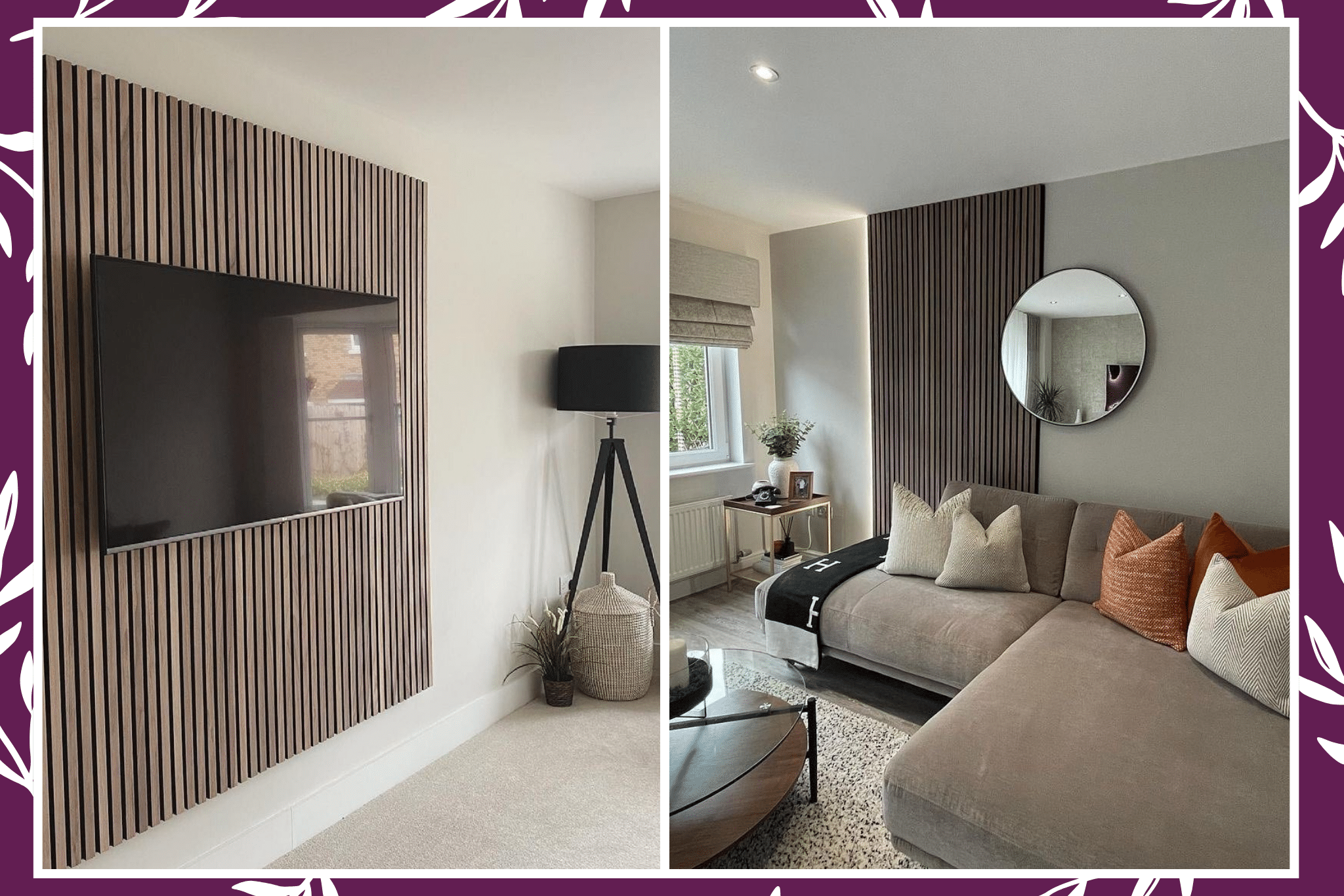
Photo Credits: All photos in this post are credited to their creators on Instagram. Want a photo removed or credited differently? Email [email protected]. See our Image Credits page for details.
I am sitting on the living room floor with a tape measure stretched along the wall behind the TV.
This blank stretch of paint is about to become a wood accent wall, and I keep running my hand over it like I am saying goodbye.
A pencil is tucked behind my ear, and three little marks on the wall show where I think the first panel should start.
My coffee is on the windowsill, safely out of the way of my elbows.
I have lived with this wall for four years. It has never been ugly, just quiet, the kind of wall your eyes slide right past on the way to something else.
Wood changes that in a way paint never quite does. It brings warmth and a feeling of something solid and grounded, even in a room full of soft cushions and plain white walls.
What I love most is how forgiving it is to live with. Wood hides small scuffs, softens echoes, and looks better as the years go by rather than worse.
It also does not need to cover a whole room to make a difference. A single wall or even the side of a kitchen island can change how a space feels the moment you walk in.
I have been noticing how many ways there are to do this. Some people use smooth slat panels, some use rough reclaimed boards, some paint simple trim into shapes, and some add hidden lighting that makes the whole wall glow at night.
The common thread is always the same. Each one makes a room feel more personal and more lived in, like someone took the time to give that wall a reason to be there.
My first mark is level now, and the tape measure has clicked back into its case. These are the ideas I keep returning to as I decide what this wall should become.
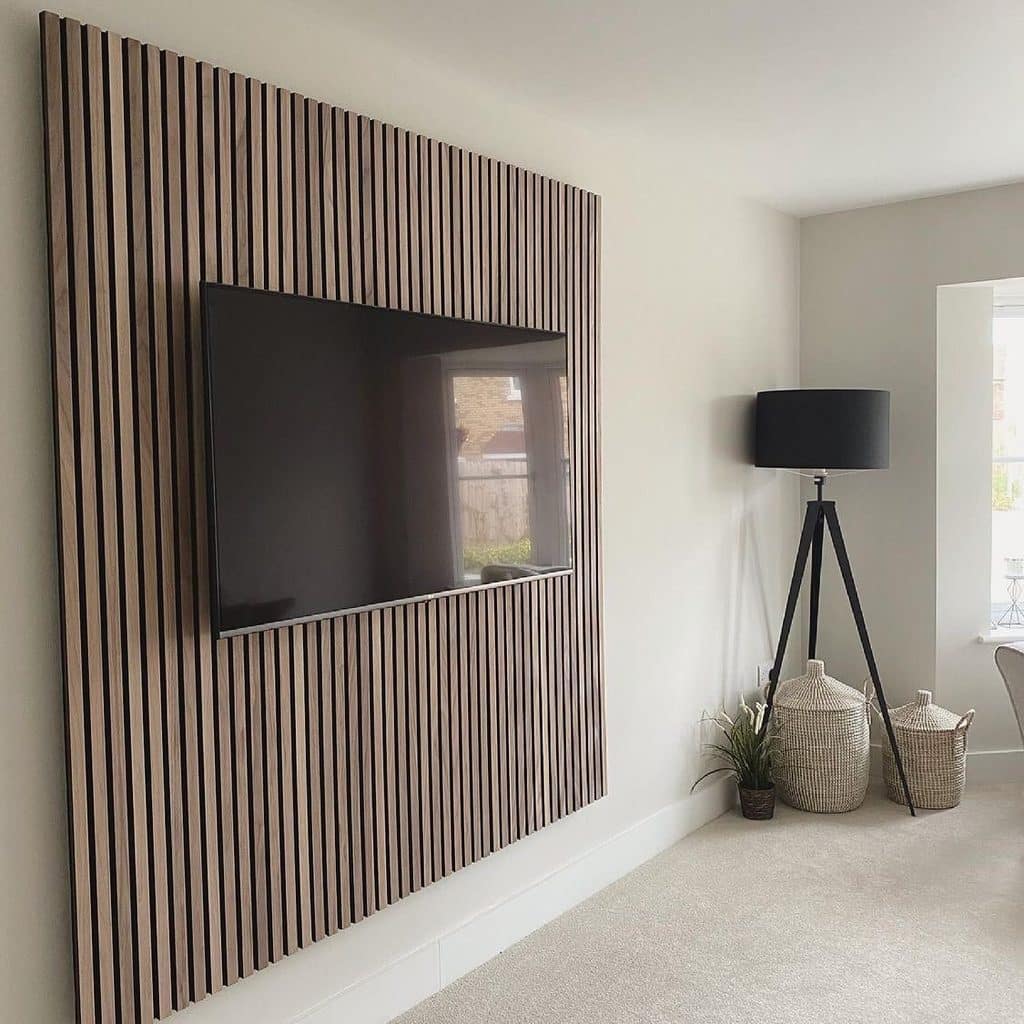
Frame Your TV With a Full Wall of Walnut Slats
Credit: naturewall
Plan your cable route before you hang a single panel. A recessed outlet box behind the TV and a cord channel tucked between the slats keep every wire hidden, so the finished wall looks clean from every angle.
Acoustic slat panels with felt backing also soften sound, a real bonus for movie nights. They hang with screws or construction adhesive, which makes this wood accent wall a realistic weekend project.
Budget Guide: Acoustic slat wall panels cost about $60 to $120 per panel on Amazon or at Home Depot. A recessed TV outlet kit runs $25 to $45, and a cord cover channel is around $10 to $20 at Walmart.
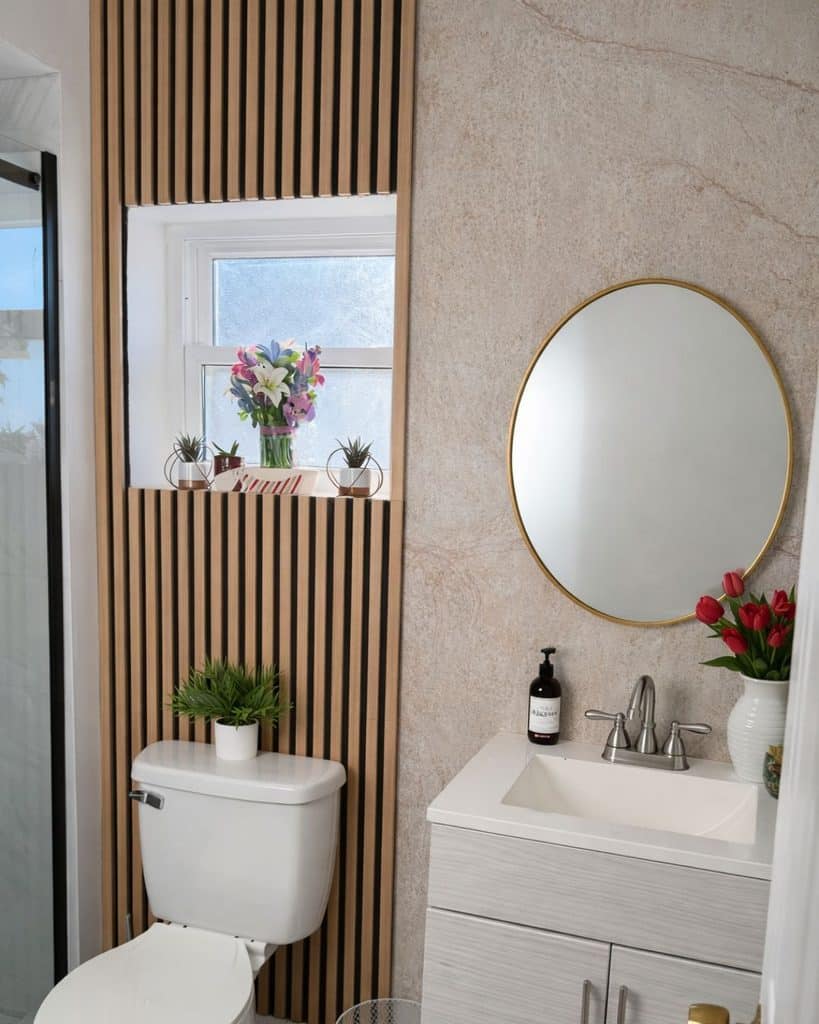
A Slim Column of Slats in a Small Bathroom
Credit: paneldecorhub
Choose slat panels made for humid spaces, or seal real wood with a water-resistant finish before installing. Keep the slats away from the shower itself, and run a fan during and after every bath to protect the wood.
Pair the slats with a round brass mirror and a stone-look wall, and the whole room feels like a calm little spa. A good bathroom ventilation habit will keep the wood looking fresh for years.
Budget Guide: Moisture-resistant slat panels cost about $50 to $100 each on Amazon or at Lowe’s. A round brass mirror runs $40 to $90 at Target or HomeGoods, and a clear polyurethane sealer is around $15 to $25 at Home Depot.
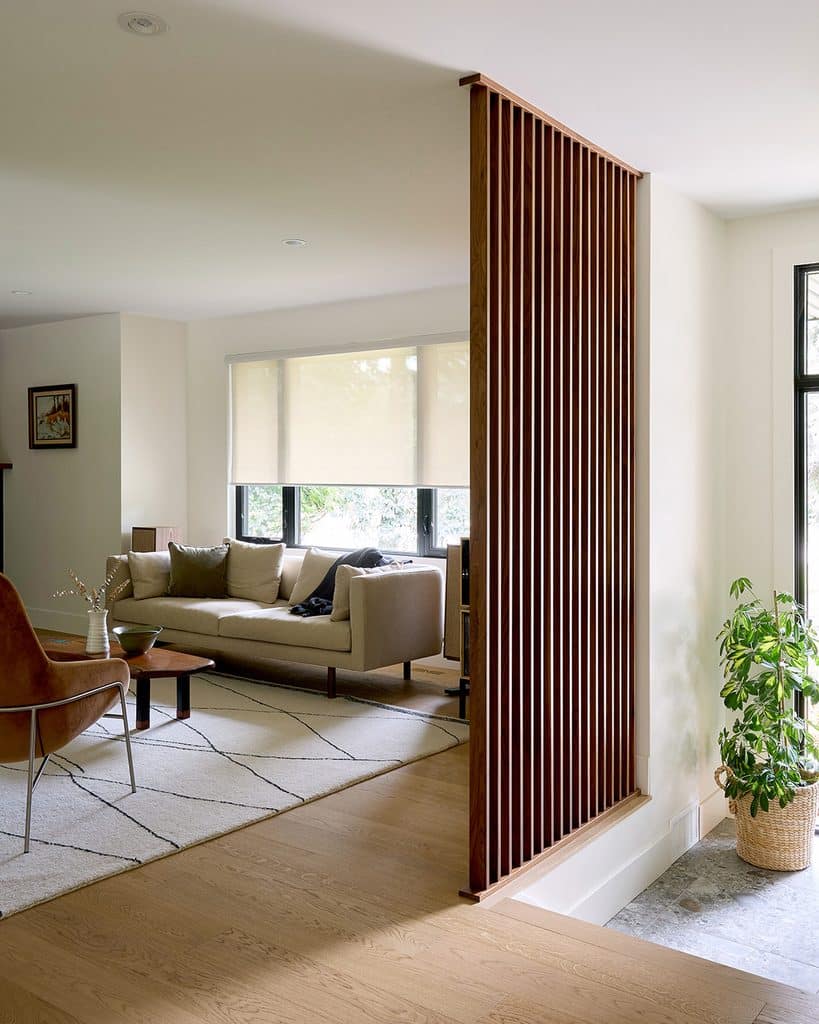
Divide an Open-Plan Room With Freestanding Wood Slats
Credit: 0812buildingsolutions
Build the screen with a top and bottom rail screwed securely into the ceiling and floor, so it stays rock solid without needing a wall. Spacing the slats about an inch and a half apart keeps it airy while still blocking direct sightlines.
Walnut or a deep stain looks rich against light floors and white walls. This kind of wood accent wall works as both architecture and decor, and it is a lovely way to give an open floor plan some structure.
Budget Guide: Hardwood slats in walnut or oak cost about $8 to $20 each at Home Depot or a local lumberyard. A pack of wood screws runs $8 to $15, and a quart of wood stain is around $12 to $20 at Lowe’s.
Paint Board and Batten Trim Into a Mountain Range
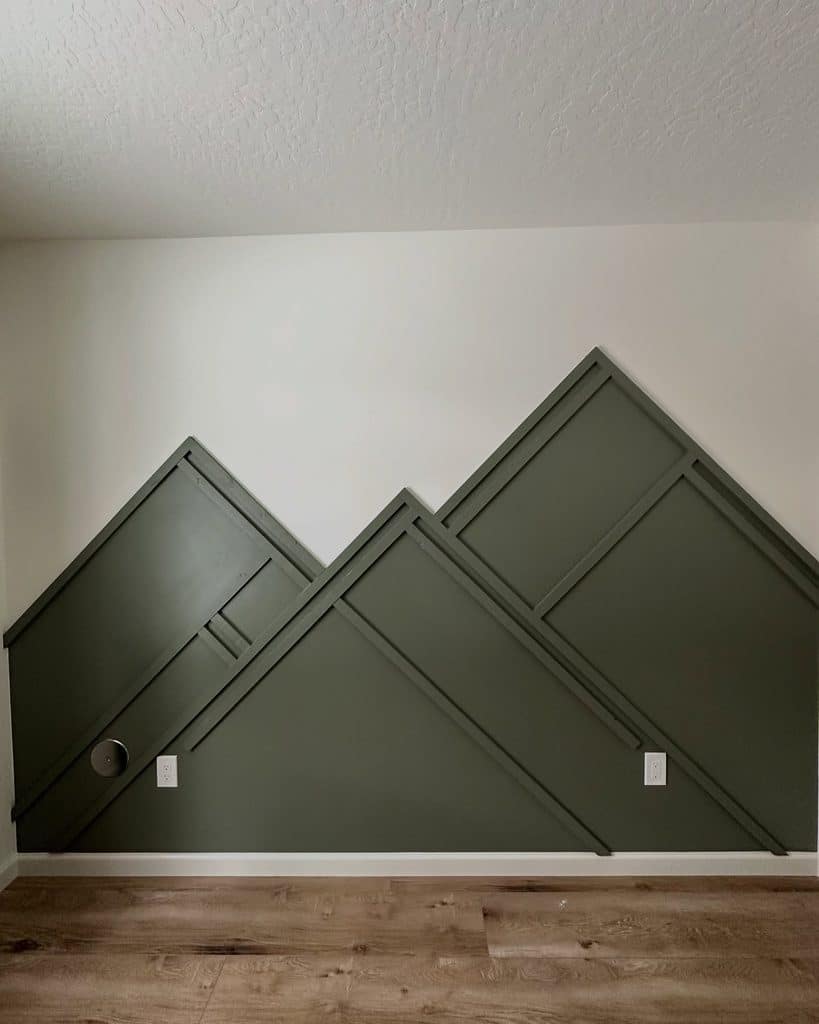
Credit: allysonschaffer_realestate
Sketch the peaks on the wall with painter’s tape first and live with the shape for a day or two. Once you like the layout, cut the trim with a miter saw so the corners meet neatly at the top of each peak.
Painting the wall and trim the same color gives a modern, layered look. A green, navy, or charcoal wood accent wall like this works especially well behind a bed, where it doubles as a headboard wall.
Budget Guide: Pine trim boards cost about $3 to $8 each at Home Depot or Lowe’s. A gallon of satin wall paint runs $35 to $60, and a box of brad nails is around $8 to $12 at Walmart.
Knotty Pine Planks for a Relaxed Boho Corner
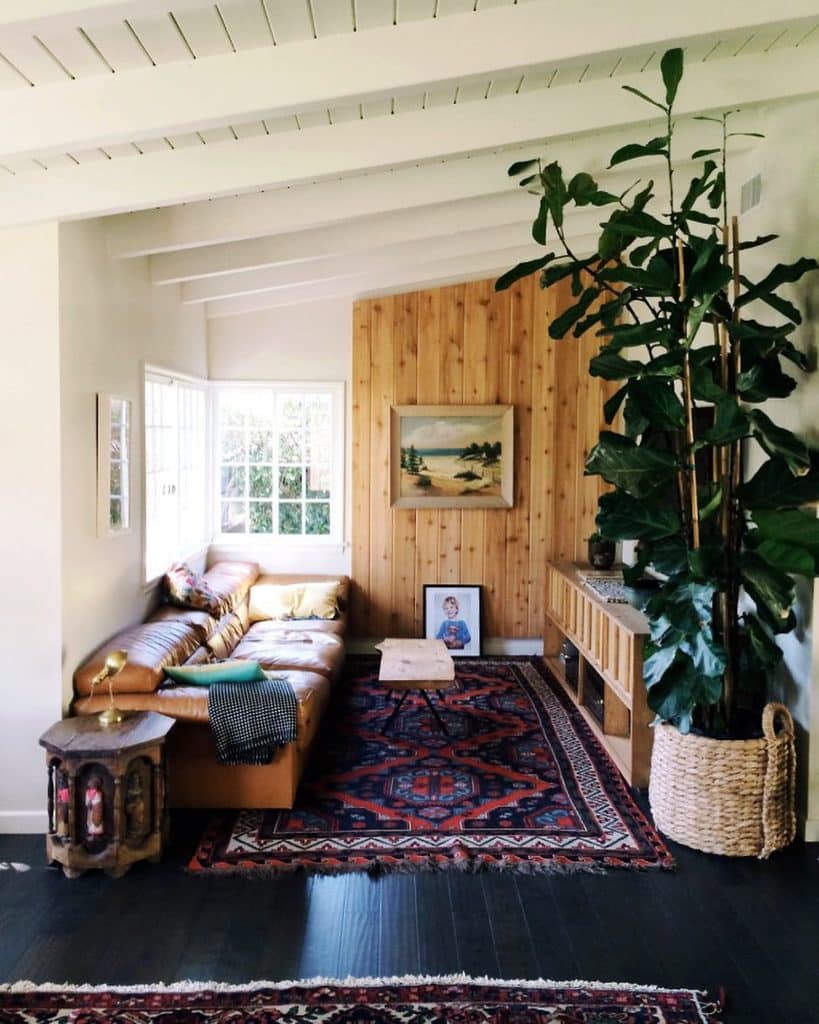
Credit: momagency
Warm pine tongue-and-groove planks on a single wall give a living room a cabin-by-the-beach feeling. Paired with a leather sofa, a vintage rug, and a big potted fig, the room feels relaxed and easy to sink into.
A clear matte sealer keeps pine from turning too orange over time. This classic style of wood accent wall has a timeless, cabin style warmth that never goes out of fashion.
Budget Guide: Pine tongue and groove planks cost about $15 to $30 per bundle at Home Depot or Lowe’s. A water based matte sealer runs $20 to $35, and a large seagrass plant basket is around $30 to $60 at Target.
A Calm Slat Wall Behind the Crib
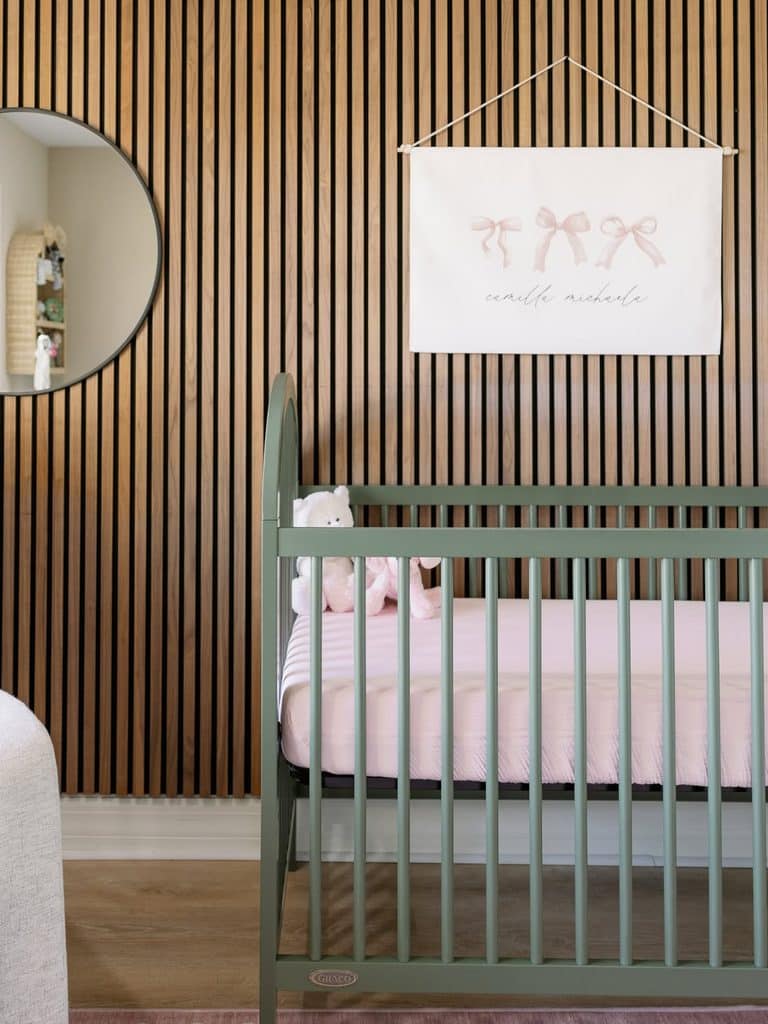
Credit: thewoodveneerhubusa
Screw every panel securely into the studs, not just adhesive, so nothing can loosen over time. Keep heavy art and mirrors well away from the crib, and hang only light fabric banners above where the baby sleeps.
A round mirror on the slats bounces light around the room. This kind of wood accent wall is also a smart choice for nursery safety because it has no loose trim pieces to pry off.
Budget Guide: Acoustic slat panels cost about $60 to $120 each on Amazon or at Home Depot. A personalized fabric name banner runs $25 to $50 on Etsy, and a round wall mirror is around $40 to $80 at Target.
Geometric Wood Panels With Hidden Backlighting
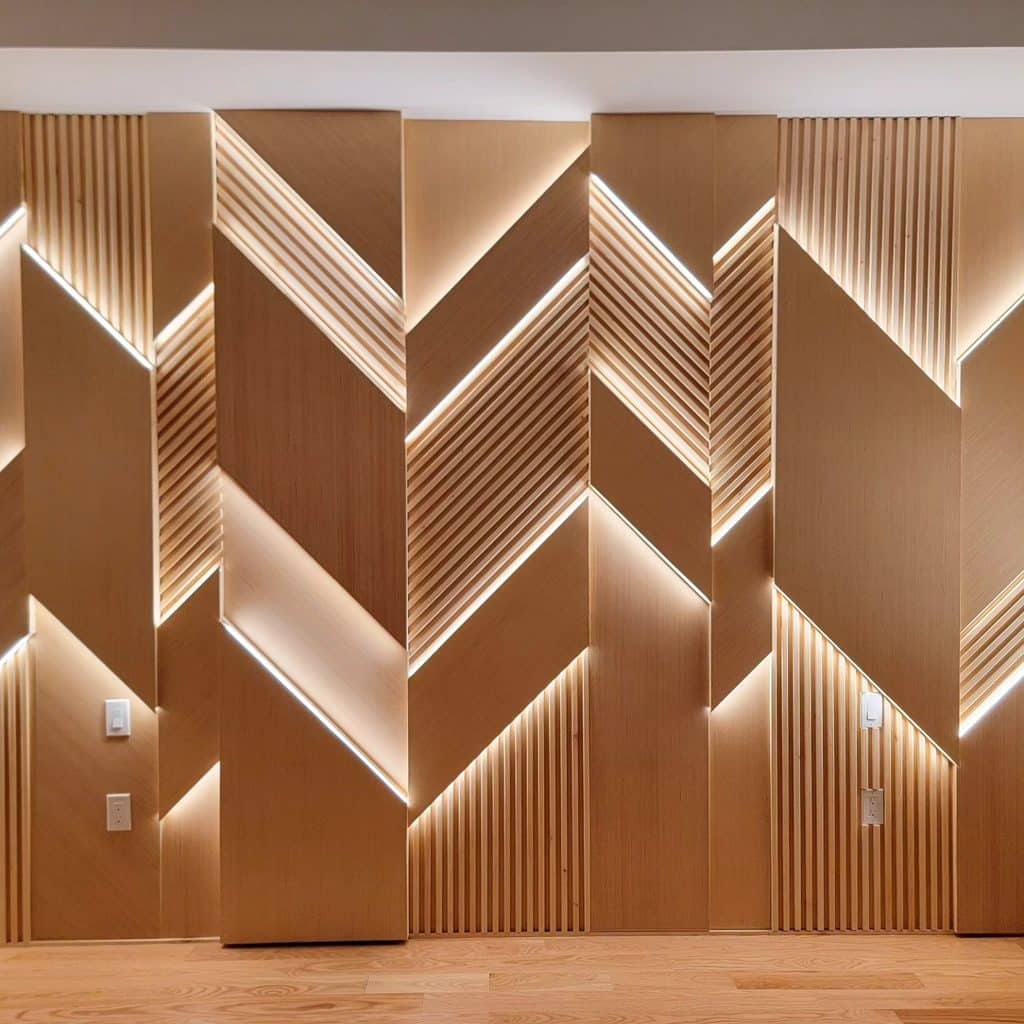
Credit: remondeos
Mount the panels on furring strips so there is a small gap behind each one for the light strip. Choose warm white LEDs around 2700K, because cooler light can make wood look grey and flat.
This is a more advanced project, so start by mapping the whole design on graph paper. A careful LED strip installation plan with one central power supply keeps the wiring simple and safe.
Budget Guide: Oak veneer plywood sheets cost about $50 to $90 each at Home Depot or Lowe’s. Warm white LED strip lights run $20 to $50 per roll on Amazon, and a pack of furring strips is around $15 to $30.
Wrap Your Kitchen Island in Oak Slats
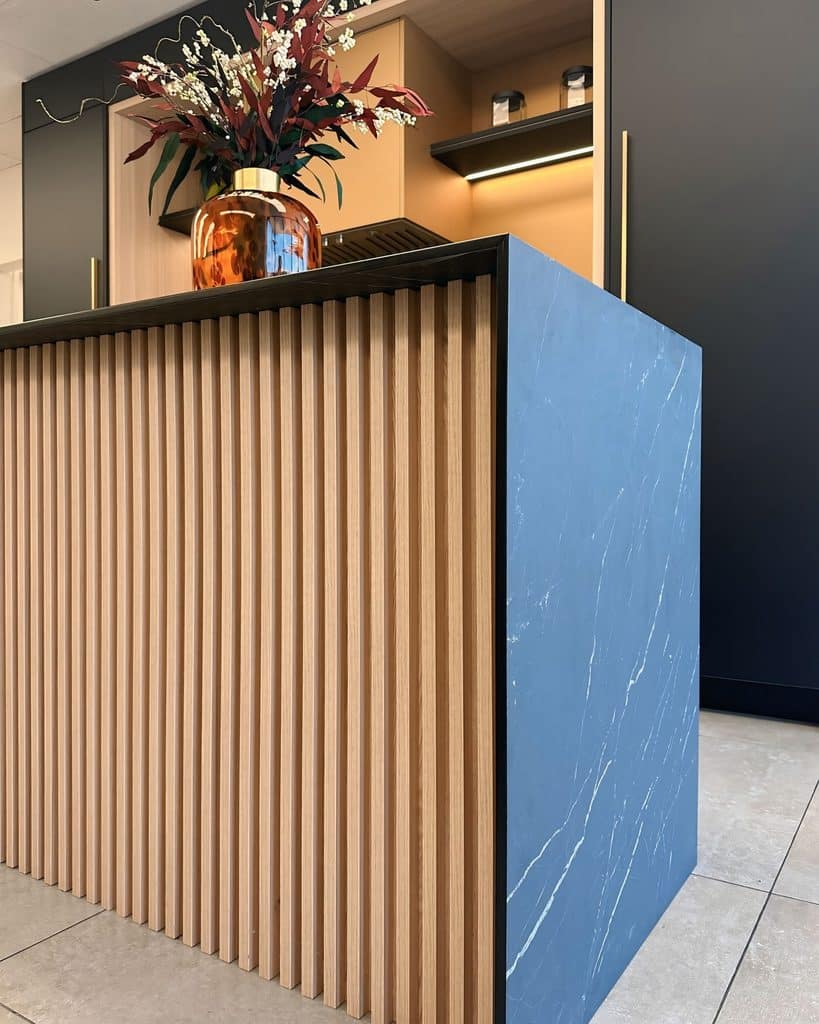
Credit: aaa_team_builders
A wood accent wall does not have to be on a wall at all. Wrapping the side of a kitchen island in light oak slats brings warmth into the middle of the room, especially next to dark cabinets or stone.
Seal the wood with a durable matte varnish, since this spot will get bumped by feet and chairs. A slatted island also makes the kitchen island feel more like a gathering spot and less like plain storage.
Budget Guide: Oak slat panels cost about $70 to $130 each on Amazon or at Home Depot. A tube of construction adhesive runs $6 to $10, and a quart of matte water-based varnish is around $15 to $25 at Lowe’s.
Diagonal Slats That Climb Into a Glowing Peak
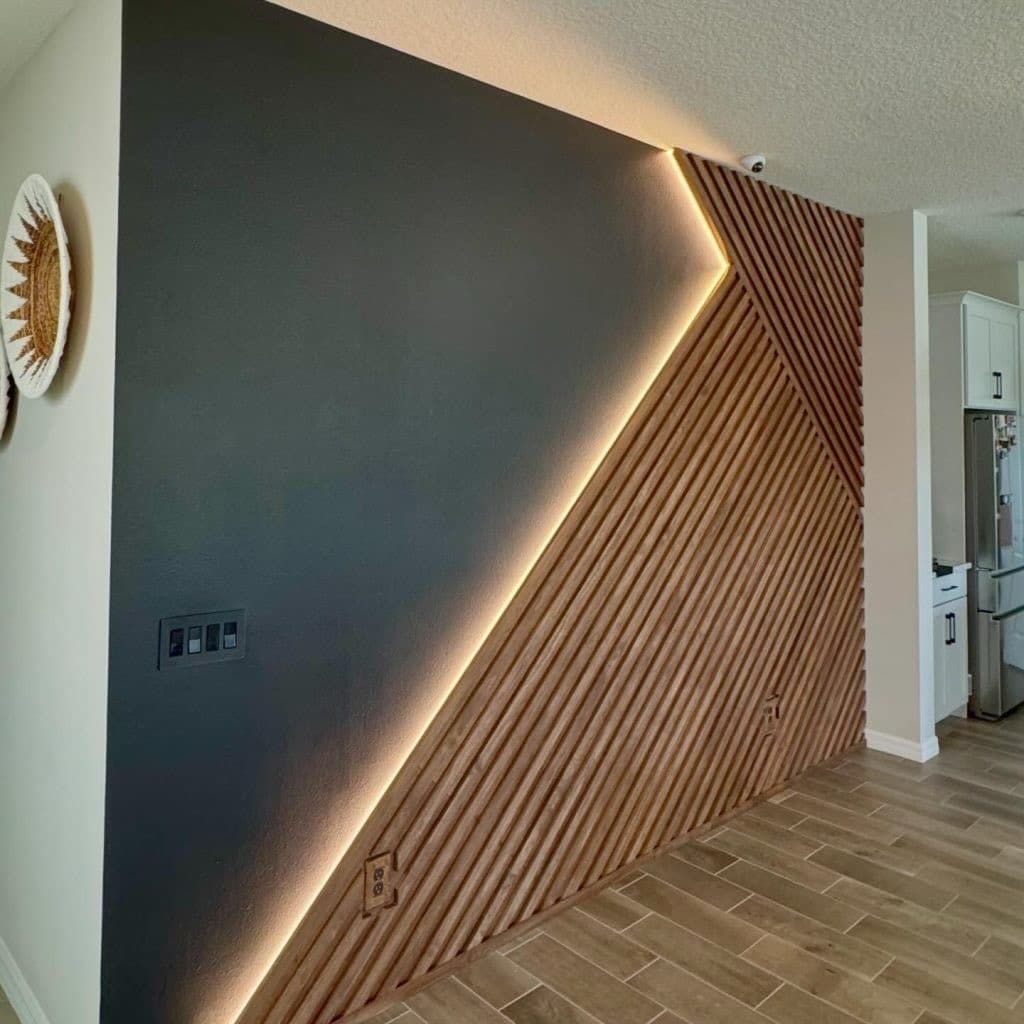
Credit: urban.cabinet
Paint the wall a deep charcoal first, since the dark background makes both the wood and the light pop. Cut each slat at the same angle with a miter saw, and use a spacer block to keep the gaps even.
A dimmer on the light strip lets you shift from bright to soft. This kind of wood accent wall shows how much accent lighting can change the feel of a plain wall.
Budget Guide: Pine or poplar slats cost about $4 to $10 each at Home Depot. A gallon of charcoal wall paint runs $35 to $60, and a dimmable warm LED strip kit is around $25 to $50 on Amazon.
Staggered Horizontal Slats With Built-In Plant Shelves
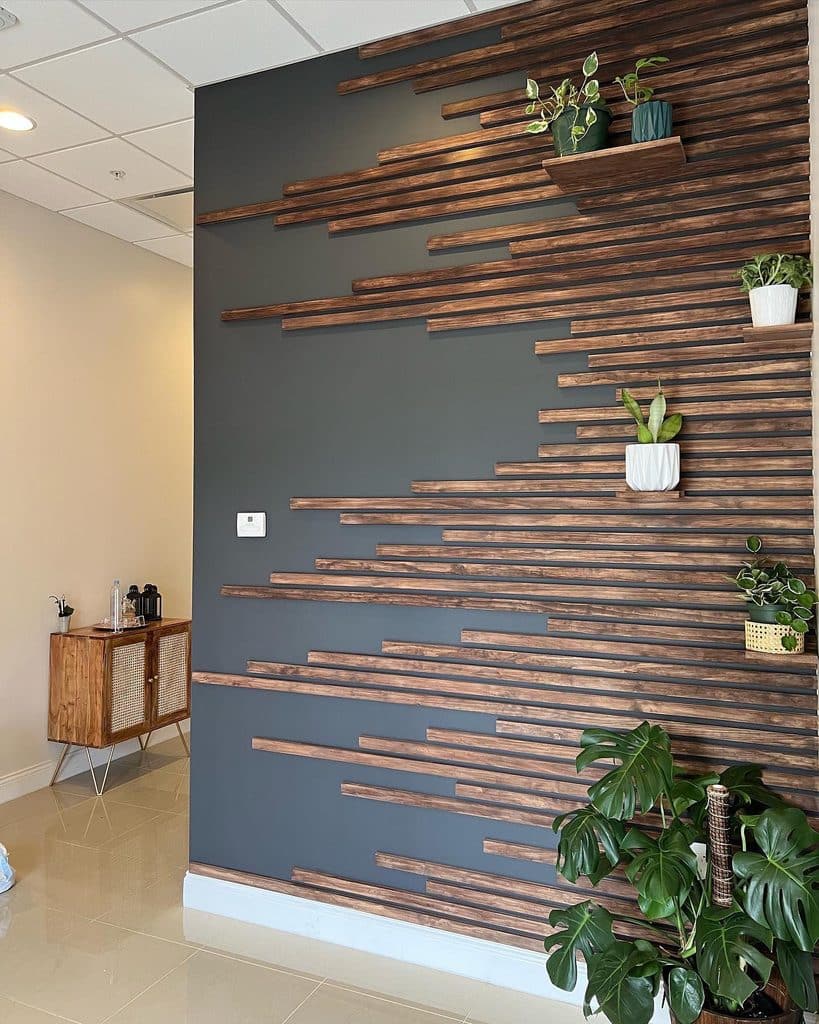
Credit: onlyproservicesllc
Leave about an inch between each slat so the dark paint shows through and adds depth. Attach the plant shelves directly to studs, since a pot full of wet soil is heavier than it looks.
A rich walnut or espresso stain looks warm against charcoal paint. If you love plants, this is one of the most rewarding ways to build a wood accent wall, and it pairs well with low-light indoor plants.
Budget Guide: Pine boards cost about $3 to $8 each at Home Depot or Lowe’s. A quart of walnut wood stain runs $12 to $20, and small floating shelf brackets are around $10 to $20 for a set on Amazon.
A Narrow Slat Strip Behind a Corner Sofa
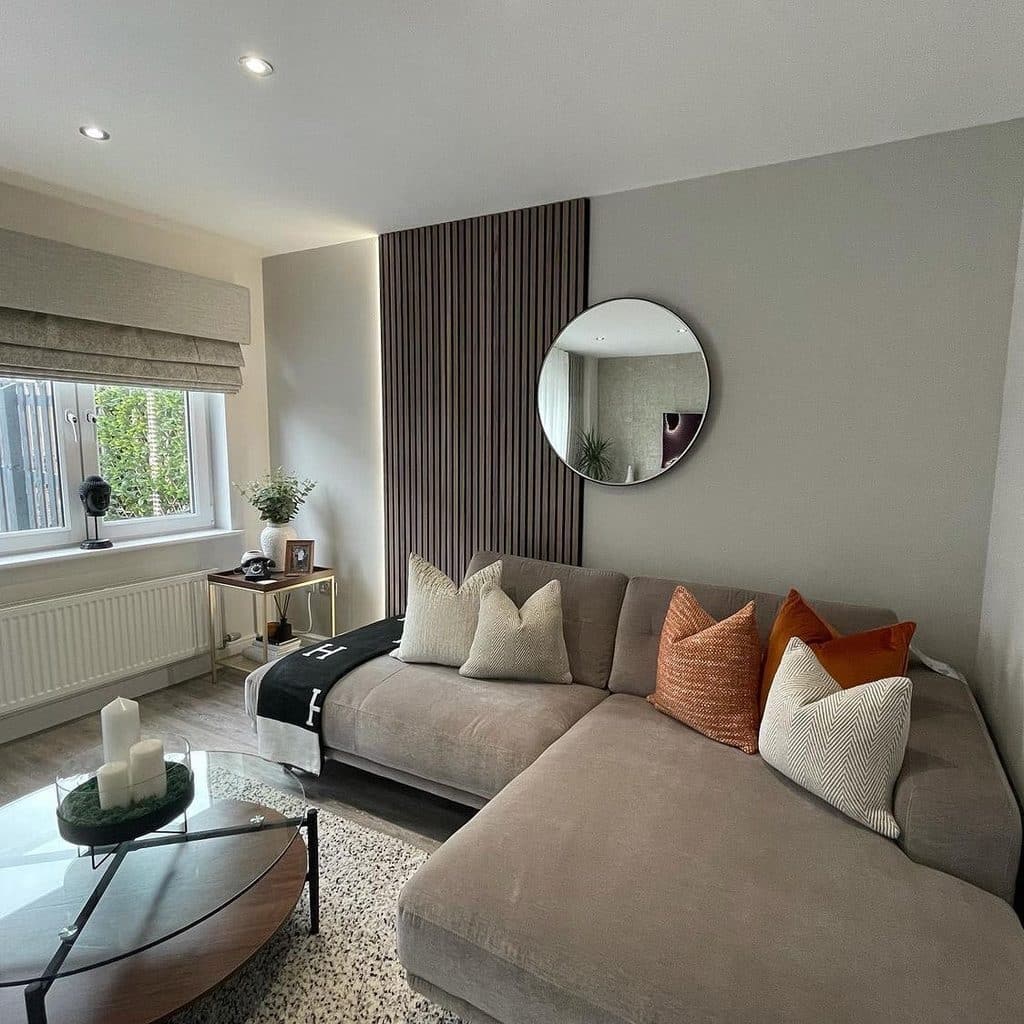
Credit: naturewall
Place the strip slightly off-center behind the sofa, then hang a round mirror on the plain wall beside it. The contrast between the soft circle and the straight slats keeps the corner balanced and interesting.
A small light strip tucked behind the panel edge adds a gentle glow at night. This is my favorite way to try a wood accent wall before committing, and it suits small living rooms perfectly.
Budget Guide: Walnut acoustic slat panels cost about $60 to $120 each at IKEA, Amazon, or Home Depot. A round black framed mirror runs $40 to $90 at Target, and a short LED light strip is around $15 to $25.
Reclaimed Pallet Boards for a Rustic TV Wall
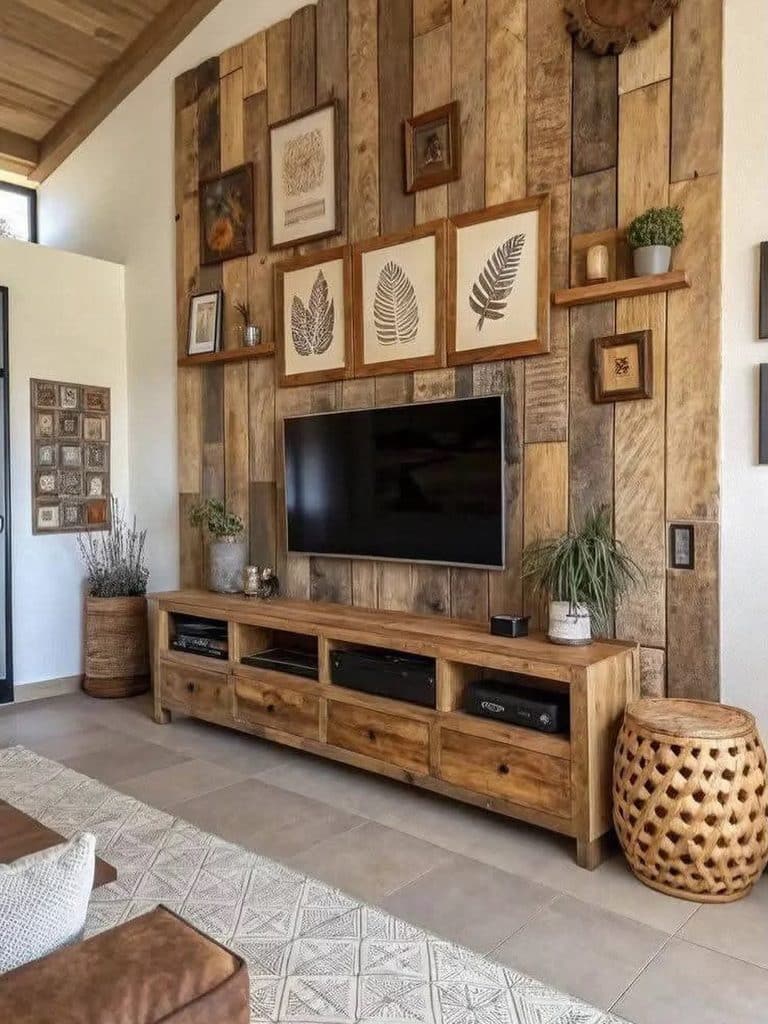
Credit: ideias.country
Clean and sand each board lightly before installing, and check for any loose nails or splinters. Look for pallets stamped HT, which means heat-treated rather than chemically treated, so they are safer indoors.
Arrange the boards on the floor first, mixing light and dark tones so no two similar planks sit side by side. A reclaimed wood accent wall like this brings real rustic charm to a modern living room.
Budget Guide: Reclaimed wood planks cost about $5 to $12 per square foot at Home Depot, Lowe’s, or local salvage yards. A pack of peel and stick reclaimed wood planks runs $40 to $80 on Amazon, and small floating shelves are around $15 to $30 each at IKEA.
What Living With a Wood Accent Wall Has Taught Me
The biggest thing I have learned is that wood changes with the light more than paint does. In the morning it looks soft and pale, and by evening it glows like honey.
I have also learned to choose the wall carefully. The best spot is usually the one you look at most, behind the sofa, behind the bed, or the first wall you see when you open the front door.
Lighting makes a bigger difference than I expected. Even a simple lamp angled toward the wall brings out the grain and shadows, and suddenly the whole room feels warmer.
Starting small is never a mistake. A narrow strip or one side of an island teaches you how wood feels in your home before you commit to a whole wall.