
Home Decor, Kitchen Ideas, Garden Tips & DIY Projects
11 Sloped Tiered Garden Ideas That Turn Uneven Yards Into Beautiful Outdoor Spaces

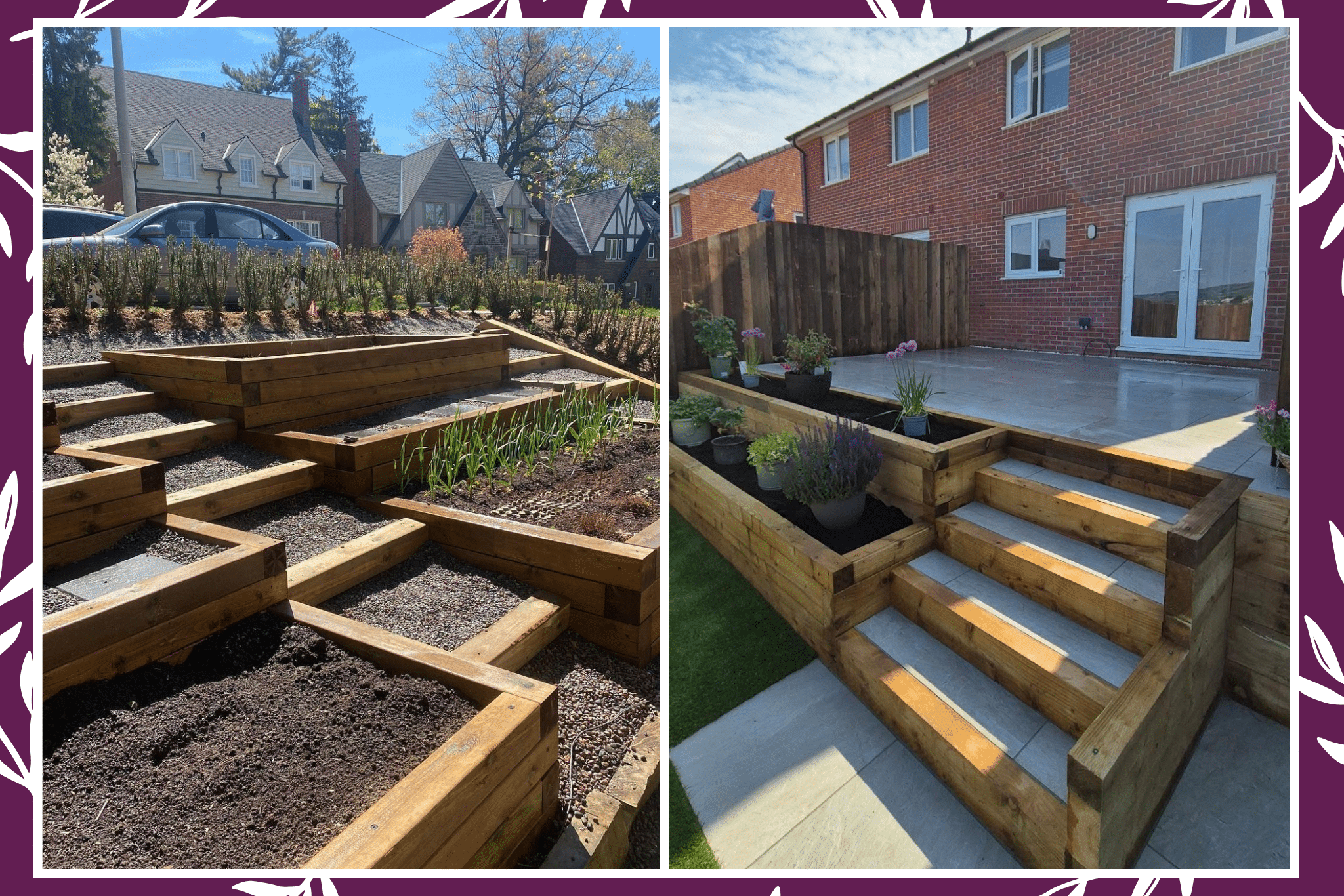
Photo Credits: All photos in this post are credited to their creators on Instagram. Want a photo removed or credited differently? Email [email protected]. See our Image Credits page for details.
I am standing at the bottom of the garden with a cup of coffee in my hand, looking up at a section of lawn that never seems quite right. The ground slopes away, the grass is difficult to maintain, and every time I think about planting something new, I wonder where everything is supposed to go.
That is one thing I have learned about having an uneven outdoor space. A sloping yard does not always need to be flattened or covered with expensive landscaping materials to become somewhere you enjoy spending time.
I have started appreciating gardens that work with their natural levels instead of fighting against them. There is something lovely about having different areas for flowers, vegetables, relaxing, and walking, especially when each space has its own purpose.
A sloped tiered garden can make that possible without requiring every part of the yard to look the same. With a little planning, different heights can become useful planting areas, comfortable paths, and attractive features that give the garden a more organized feeling.
I particularly like the idea of using raised timber beds because they make gardening easier to manage. They provide defined planting spaces, help contain soil on suitable slopes, and can create a more accessible arrangement for everyday gardening.
Of course, not every sloping garden needs wooden retaining walls. Natural stone, gravel paths, planted banks, lawn terraces, and carefully positioned steps can all work beautifully depending on the shape of the land and the amount of maintenance you want.
The first thing I would think about is how I want to use the garden. If growing vegetables is important, I would make sure there is enough space for planting beds and comfortable access between them.
If relaxing outdoors is the priority, I would save a level section for seating or a small patio. Having somewhere flat to put a table and chairs can make a sloping backyard feel much more useful.
Drainage is another detail I would never overlook. Rainwater naturally moves downhill, so retaining walls, steps, and planting areas need to be planned carefully to prevent water collecting in the wrong places.
I also think it is important to leave enough room for walking between the different levels. A garden can look beautiful, but if getting from one area to another feels awkward, you probably will not enjoy using it as much.
Materials make a difference too. Timber gives a warm, natural appearance, while stone creates a more traditional garden feeling, and gravel can be a practical choice for paths that need good drainage.
I would rather introduce a few useful levels than build too many small terraces that become difficult to maintain. Each level should have a reason for being there, whether that is growing plants, creating a seating area, or making the slope easier to walk across.
A sloped tiered garden can also be a good way to make better use of a narrow or awkward backyard. Instead of leaving an uneven section unused, you can give it a clear purpose and make the whole outdoor space feel more connected.
The best part is that the work does not always have to happen all at once. You can start with one retaining bed or a small path, then add planting and another level when your budget allows.
I always think a garden should feel welcoming before it feels finished. A little grass, some healthy plants, and a comfortable place to sit can make an outdoor space enjoyable while you continue improving it.
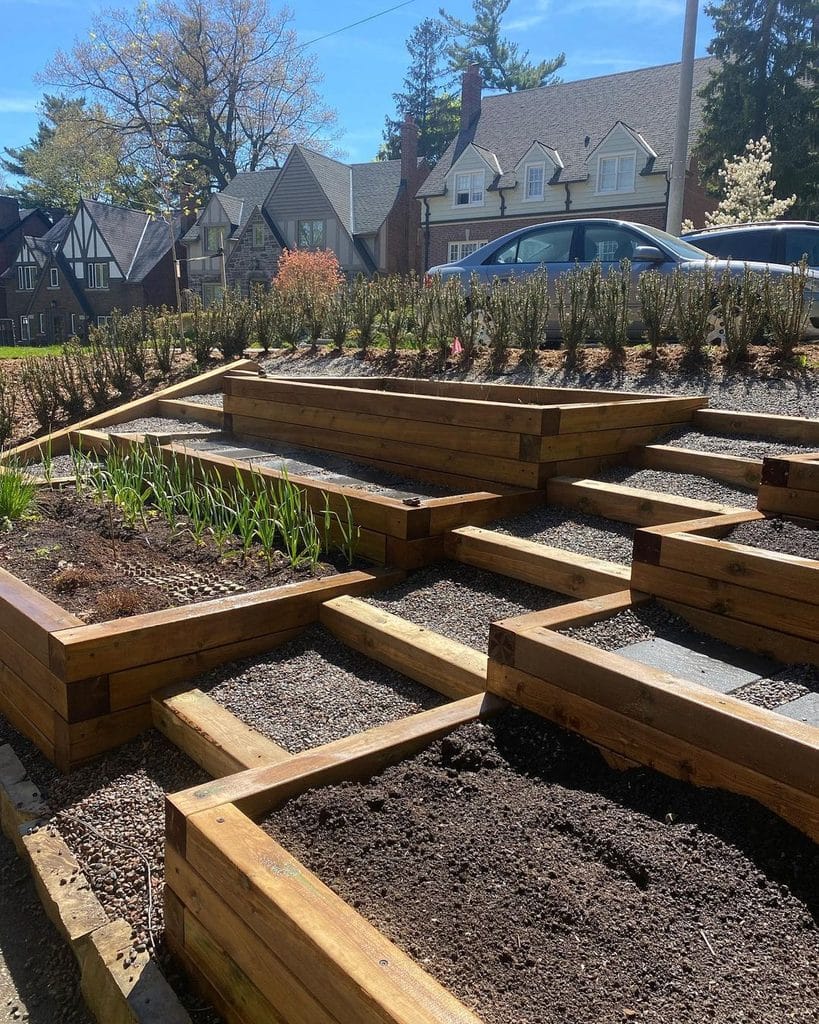
1. Build a Sloped Tiered Garden With Multiple Wooden Raised Beds
Credit: @microprosienna
I love the idea of giving every section of an uneven garden its own planting space. Wooden raised beds are a practical way to create separate growing areas while making the overall layout feel more organized.
For a sloped tiered garden, I would consider arranging the beds at different heights, following the natural shape of the land. You can use the upper levels for vegetables and herbs, then dedicate the lower sections to flowers or plants that spill gently over the edges.
One detail I would pay attention to is the walking space between the beds. Leave enough room for a wheelbarrow, watering can, and comfortable access when you need to harvest vegetables or remove weeds.
I would also choose durable, untreated or appropriately rated timber for edible gardening, with a suitable barrier between the soil and the wood when needed. Retaining structures should be properly designed for the pressure of wet soil.
For more ideas about raised garden beds, I like looking at layouts that combine practical growing areas with attractive outdoor design.
Budget Guide: Timber boards can cost approximately $10 to $30 each, depending on their dimensions and material. Landscape fabric can range from $10 to $30, while quality raised bed soil mixes can cost $8 to $20 per bag at Home Depot, Lowe’s, or local garden centers.
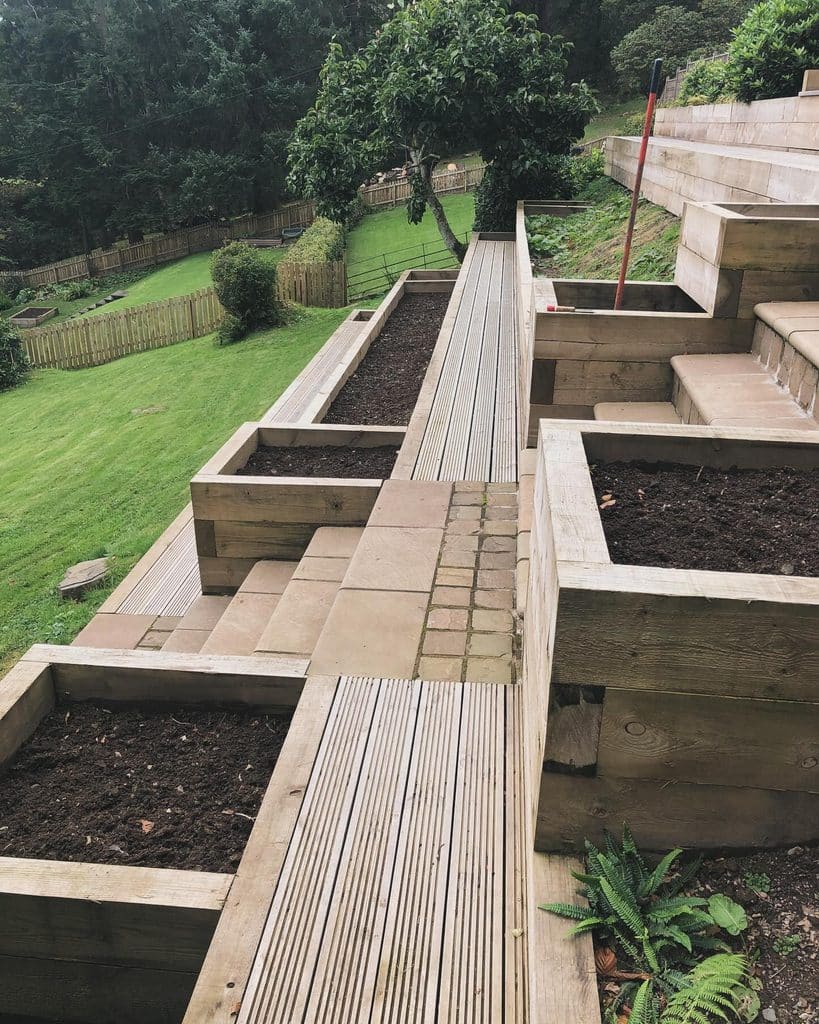
2. Create a Beautiful Wooden Walkway Between Garden Levels
Credit: @garradhlandscape
A sloping backyard can become difficult to navigate when there is no clear route between the different areas. I really like the idea of creating a long wooden walkway that connects each level and makes the garden easier to enjoy.
For a sloped tiered garden, a walkway can become the main feature that brings everything together. You could place raised planting beds along one side and use the opposite side for steps, seating, or additional greenery.
I would choose decking boards with a slip resistant finish because outdoor paths can become slippery when wet. Proper drainage beneath and around the walkway is also important, especially when the path follows a natural slope.
Another detail I would include is low growing greenery along the edges. It softens the straight lines of the timber and helps the walkway feel connected to the surrounding garden.
I like the practical advice in Family Handyman’s outdoor projects when thinking about materials, construction, and safe outdoor improvements.
Budget Guide: Pressure treated decking boards generally cost $5 to $15 each, depending on their size and quality. Outdoor screws can cost $8 to $20 per pack, while gravel for a prepared walkway base can range from $40 to $100 per cubic yard at local landscaping suppliers.
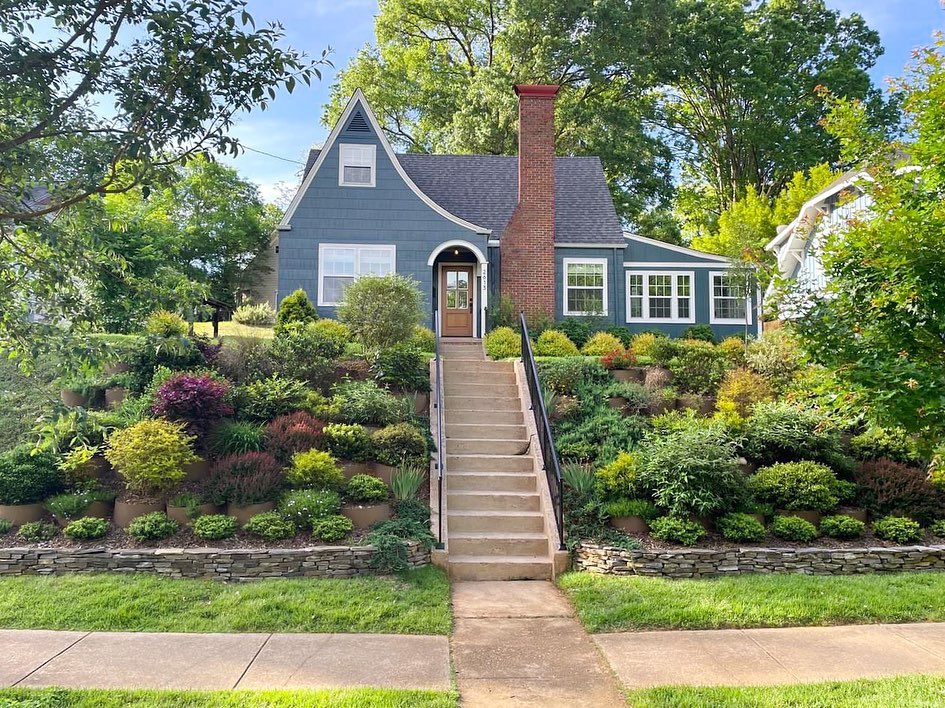
3. Use Stone Retaining Walls to Create Beautiful Garden Levels
Credit: @dirtlocker_official
There is something about natural stone that makes an outdoor space feel established and welcoming. I would consider using stone retaining walls when I wanted the garden to have a more traditional appearance instead of relying entirely on timber.
This sloped tiered garden idea works particularly well for front yards where the landscaping needs to complement the architecture of the house. You can create several planting levels and fill them with small evergreen shrubs, colorful flowers, and decorative grasses.
I would keep the planting varied rather than choosing only one type of shrub. A mixture of different heights and leaf colors gives each level more character throughout the year.
For a practical layout, I would use taller shrubs toward the back and smaller flowering plants near the front edges. This makes it easier to appreciate the different layers without hiding the plants behind them.
I also like browsing House Beautiful for inspiration on combining traditional landscaping materials with welcoming outdoor spaces.
Budget Guide: Natural stone retaining materials can range from $15 to $40 per square foot of wall face, depending on the stone and installation requirements. Small evergreen shrubs generally cost $15 to $45 each, while flowering perennials can cost $8 to $25 at local nurseries and Home Depot.
4. Add Natural Stone Steps Through a Lush Sloping Garden
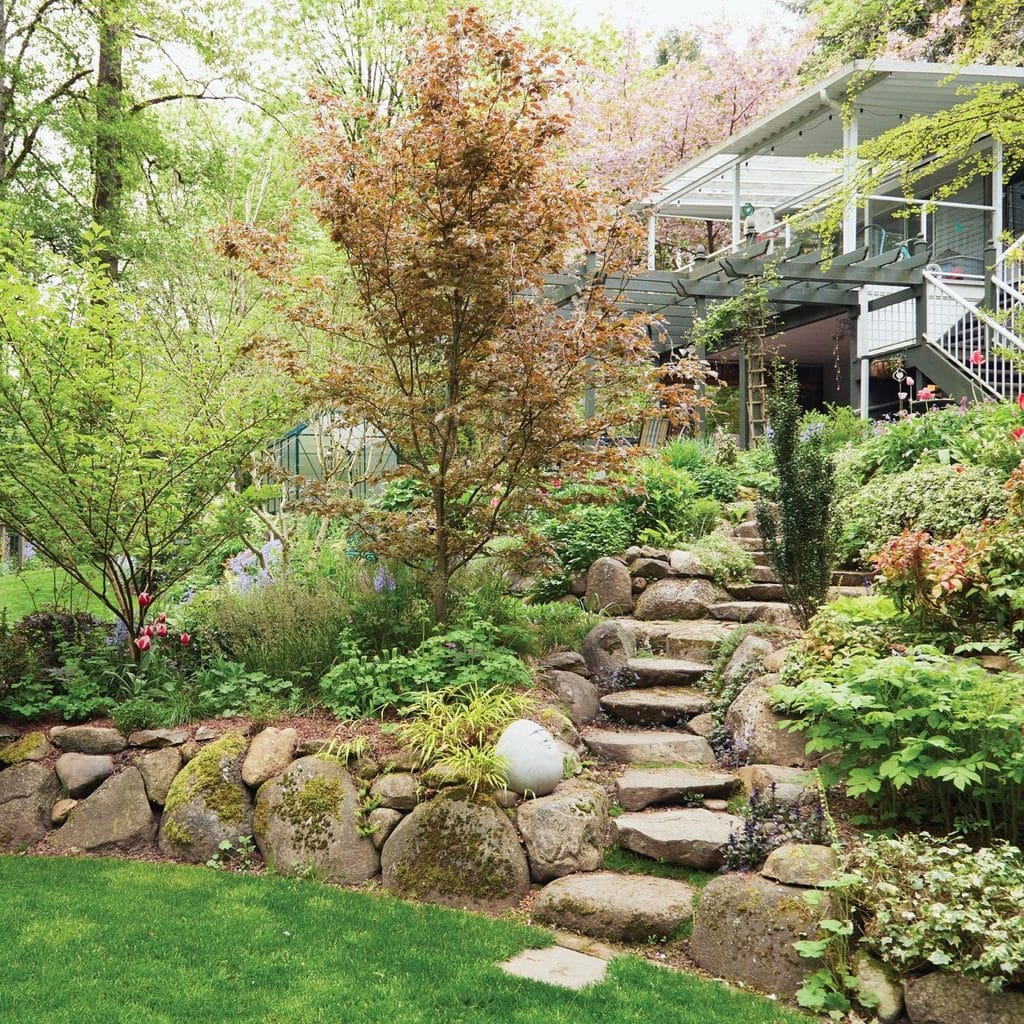
Credit: @gardengatemagazine
I have always liked gardens where the steps feel like part of the landscaping instead of something added afterward. Natural stone steps can make an uneven yard easier to access while giving the planting areas a relaxed, natural appearance.
I would use broad, stable steps and surround them with plants that soften the edges. Ferns, ornamental grasses, and low growing perennials can work beautifully in suitable light conditions.
For a sloped tiered garden, this approach is especially appealing when there are trees or established plants that you want to keep. Rather than removing everything to create a completely flat yard, you can build a route that works around the existing landscape.
I would leave enough space beside the steps for planting and avoid using loose decorative stones where people need secure footing. Good drainage and a stable foundation are essential for outdoor steps.
For more inspiration on garden pathways, I like designs that combine natural materials with plants that suit the local climate.
Budget Guide: Natural stepping stones can cost approximately $10 to $35 each, depending on their size and material. Gravel for the base can cost $40 to $100 per cubic yard, while ferns and suitable ground cover plants generally range from $8 to $25 each at local nurseries.
5. Divide a Sloping Backyard Into Green Lawn Terraces
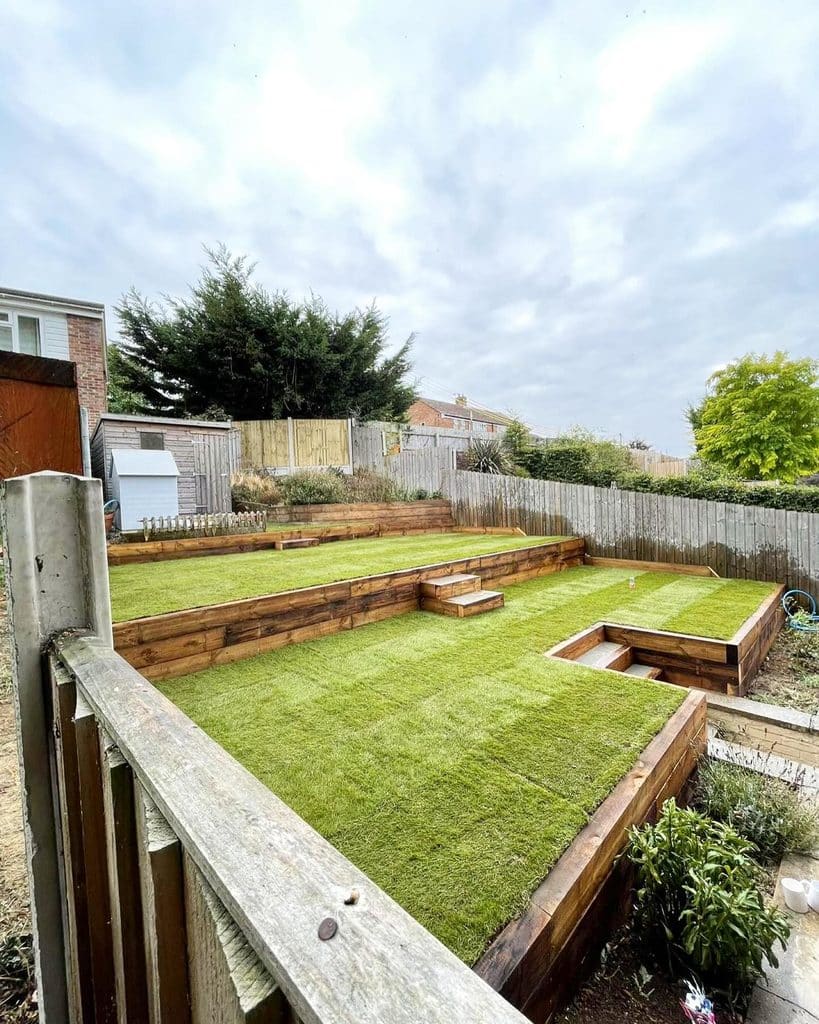
Credit: @thegardentamer
Not every garden level needs to become a flower bed or vegetable patch. I really like the idea of keeping some levels covered in grass because it gives the family somewhere comfortable to relax, play, and enjoy the outdoors.
A sloped tiered garden with separate lawn terraces can make a large difference when the original yard is difficult to use. You can create two or three flatter sections connected by small steps, with retaining walls helping to define the different areas.
I would keep the upper lawn as an open space and use the lower section for outdoor games or a seating area. This creates different uses for the garden without making it feel divided into too many small sections.
One thing I would plan carefully is mowing access. Choose gentle transitions where possible, and make sure retaining structures and steps do not create awkward areas that are difficult to maintain.
I find HGTV’s landscaping ideas useful when thinking about how to balance lawn areas, planting, and outdoor living spaces.
Budget Guide: Grass seed can cost $20 to $60 per bag, depending on coverage and variety. Turf can cost approximately $1 to $3 per square foot for materials, while pressure treated retaining timber can cost $10 to $30 per board at Home Depot or Lowe’s.
6. Soften Garden Levels With Colorful Flowering Borders
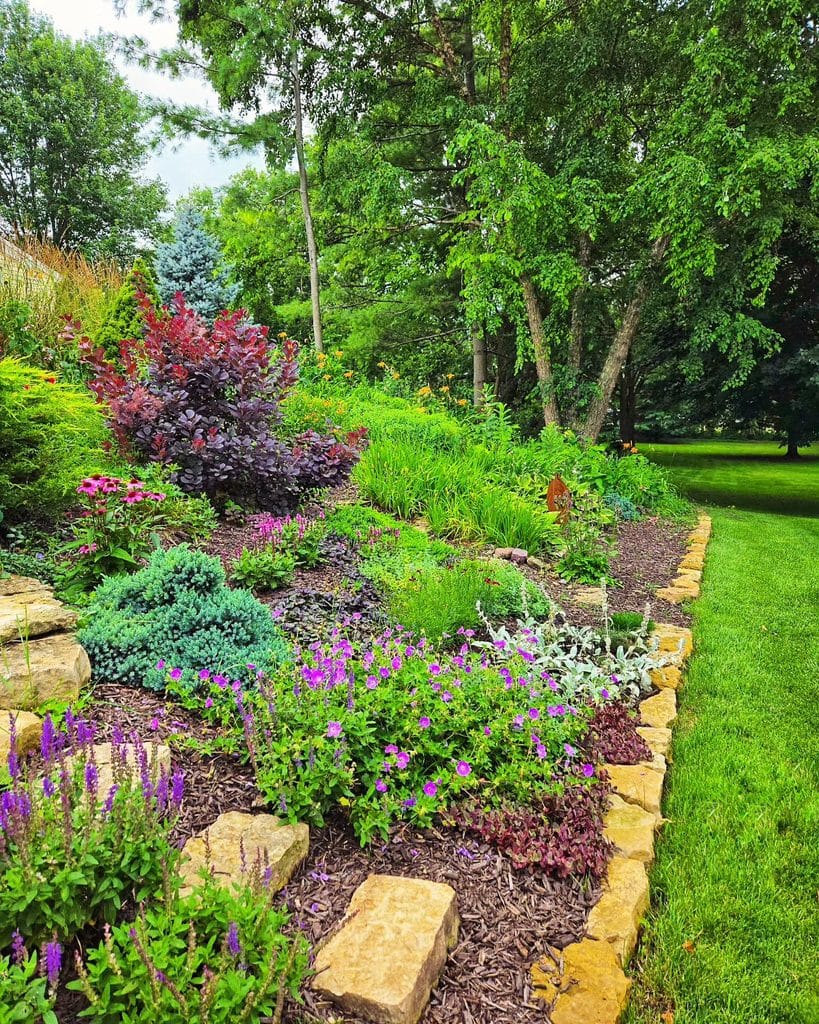
Credit: @creatingmybackyardsanctuary
I think flowers are one of the easiest ways to make a terraced garden feel welcoming rather than overly structured. Wooden borders and retaining edges provide the framework, while colorful plants bring the softer details.
For this sloped tiered garden, I would create flowing planting borders that follow the natural shape of the yard. Purple flowers, ornamental grasses, small shrubs, and ground cover plants can give the garden different textures without making maintenance too complicated.
I particularly like using plants with different flowering seasons. This means the garden does not lose all its color once the first flowers finish blooming.
If you have a sunny area, consider suitable varieties of salvia, coneflowers, and creeping phlox. For shadier areas, hostas and ferns can provide attractive foliage instead.
I would also add a layer of mulch around the plants to help retain moisture and reduce weed growth. The Spruce has helpful inspiration for choosing flowers and arranging garden borders.
Budget Guide: Flowering perennials generally cost $8 to $25 each, ornamental grasses can range from $12 to $35, and garden mulch usually costs $3 to $8 per bag at Walmart, Home Depot, or local garden centers.
7. Build Large Raised Vegetable Beds Into a Hillside
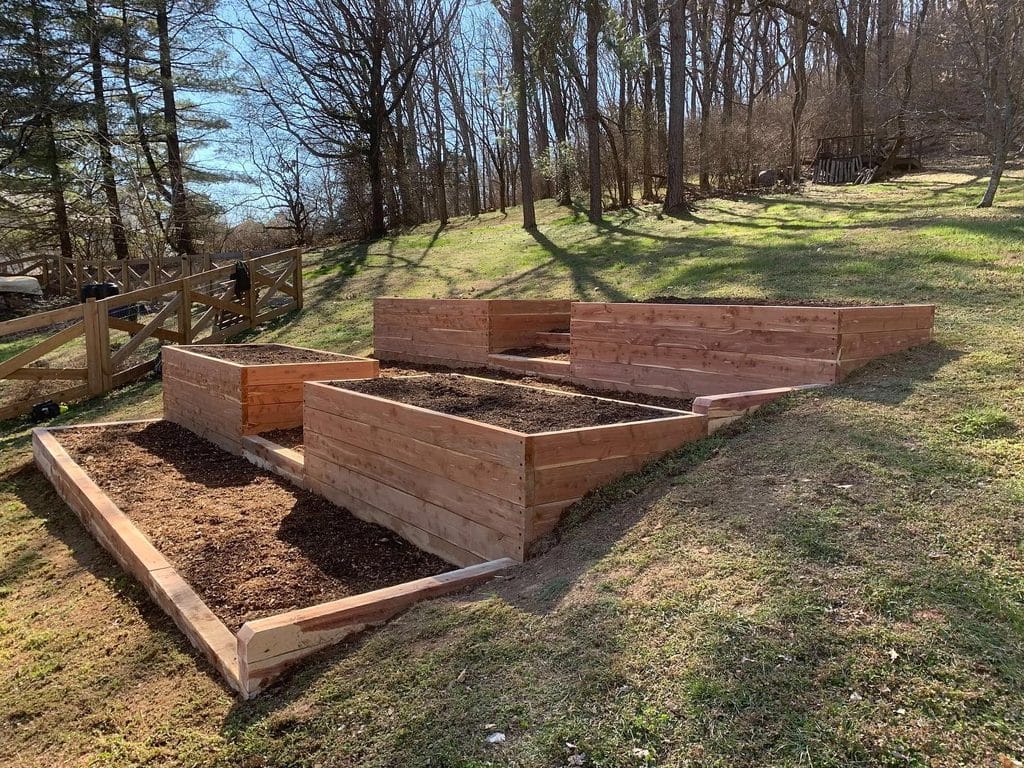
Credit: @nashvillefoodscapes
If growing your own vegetables is something you enjoy, I would definitely consider using the slope to create a series of large raised beds. It gives you separate growing areas and makes it easier to organize vegetables according to their watering and sunlight needs.
The best part of this sloped tiered garden arrangement is that you can dedicate each bed to a different purpose. One could be used for tomatoes, another for leafy greens, and another for herbs or seasonal vegetables.
I would make the beds wide enough for productive planting but not so wide that you have to step into them to reach the middle. Keeping the soil loose and avoiding unnecessary foot traffic makes everyday gardening easier.
A simple irrigation system is another addition I would consider. A drip line can help deliver water directly to the plants, which is particularly useful when the garden has several levels.
For useful advice on planning a vegetable garden, I like focusing on sunlight, soil quality, and how much space each crop needs.
Budget Guide: Timber raised bed materials can cost $60 to $180 for a medium sized bed. Vegetable soil and compost can cost $30 to $80 for a small growing area, while basic drip irrigation kits generally range from $25 to $70 at Amazon, Home Depot, or garden supply stores.
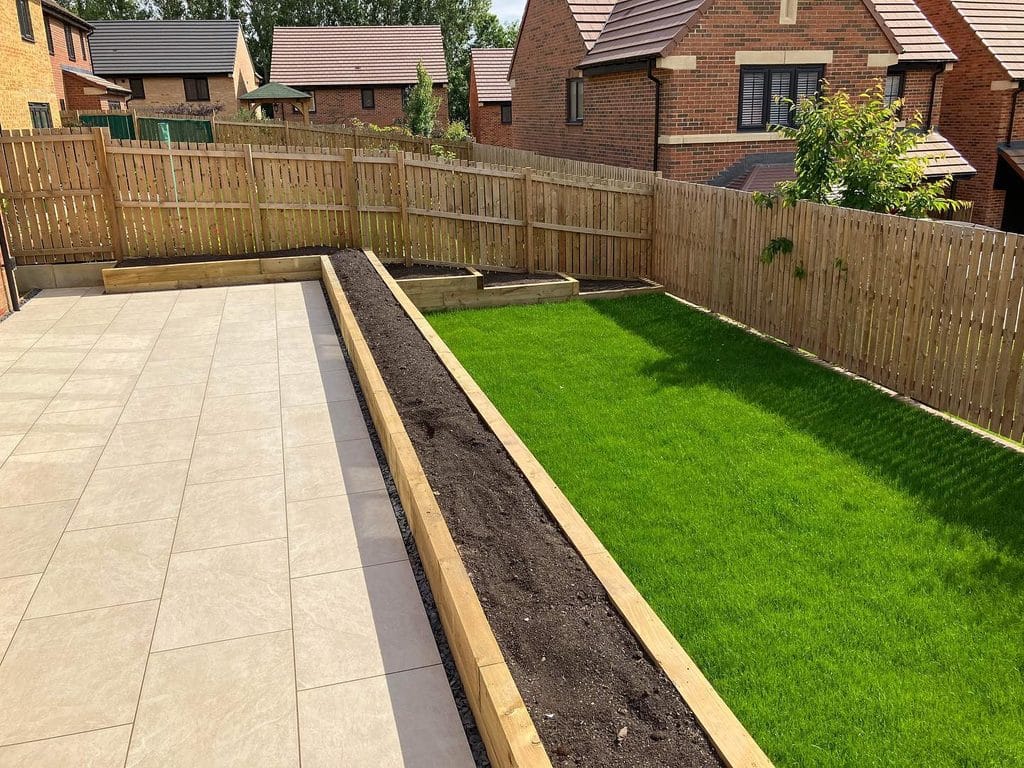
8. Create a Long Raised Flower Bed Beside the Patio
Credit: @rslandscapingponteland
I love having greenery close to the patio because it makes the outdoor sitting area feel connected to the rest of the garden. A long raised planting bed is a simple way to introduce plants without taking away too much lawn space.
For a sloped tiered garden, this is a particularly useful idea when the backyard has a narrow shape. You can run one long planting bed alongside the patio and use smaller sections at the far end to create additional planting opportunities.
I would choose a combination of flowering plants, compact shrubs, and a few herbs if the area receives enough sunlight. This gives the garden a little variety while keeping the planting arrangement relatively easy to maintain.
One detail I would not overlook is the distance between the raised bed and the patio. Leave enough room to walk comfortably, move garden furniture, and clean the paving without constantly brushing against plants.
I also like the ideas in Real Simple for making outdoor spaces practical without filling every available corner.
Budget Guide: Timber boards for a long raised planter can cost $40 to $120, depending on the length and wood type. Flowering plants generally range from $8 to $25 each, while decorative mulch can cost $3 to $8 per bag at local garden centers and Home Depot.
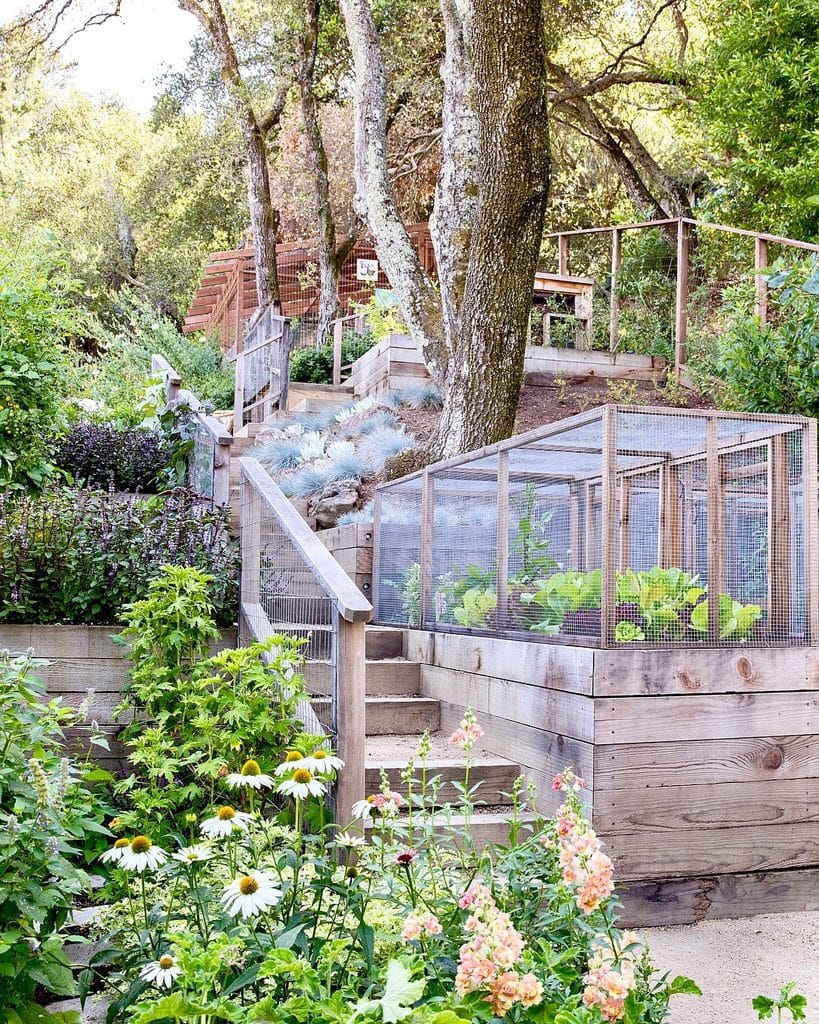
9. Protect Vegetable Beds With Attractive Garden Enclosures
Credit: @sunsetmag
I think protecting vegetables from animals is something worth considering before you spend time filling raised beds with plants. A simple enclosure can help protect young vegetables while keeping the growing area organized.
For a sloped tiered garden, I would consider adding wire mesh panels around selected raised beds. This is particularly useful for leafy greens, strawberries, and other crops that might attract rabbits or other garden visitors.
I would choose a lightweight frame that allows easy access for watering, harvesting, and removing weeds. Hinged sections can make everyday gardening much more convenient than having to remove the entire enclosure.
Another thing I like about this idea is that you can use it only where protection is needed. There is no reason to enclose every planting area if some crops are less vulnerable.
I would also make sure the mesh openings are suitable for the animals you want to keep out. Good Housekeeping has useful gardening inspiration and practical advice for maintaining outdoor growing spaces.
Budget Guide: Garden wire mesh generally costs $15 to $40 per roll, while wooden framing materials can range from $20 to $60 for a small enclosure. Outdoor hinges and latches usually cost $8 to $20 at Home Depot, Lowe’s, or Amazon.
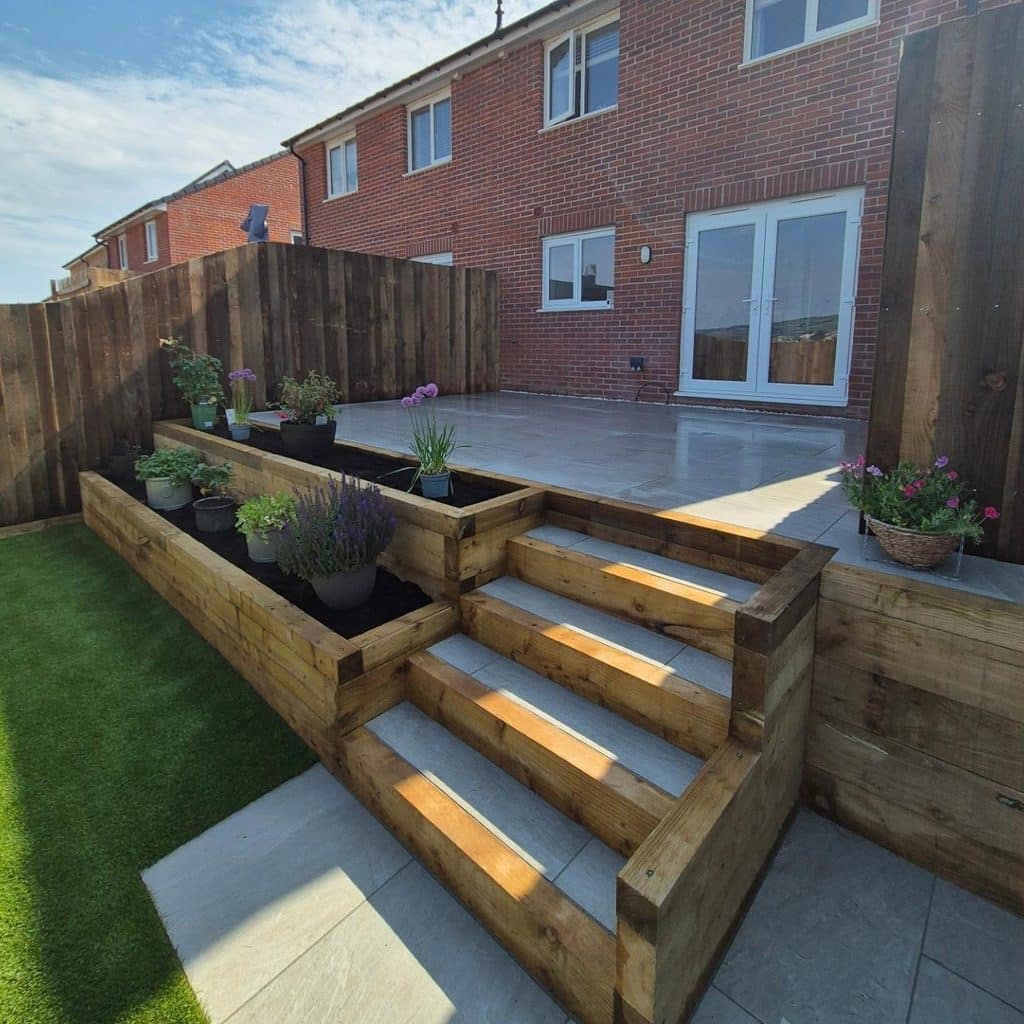
10. Combine Wooden Planters With a Small Patio and Steps
Credit: @gwentgardens
I really like outdoor spaces where the practical features also become part of the design. A small patio with wooden raised planters and built in steps can make a sloping backyard feel much easier to use.
This sloped tiered garden arrangement works particularly well when you want somewhere to sit close to the house. You can use the upper section for outdoor dining and place flowering plants or herbs along the edges.
I would choose simple paving in a neutral color and combine it with natural timber. The contrast gives the space a warm appearance without needing lots of decorative accessories.
For the planting beds, I would use a mixture of compact shrubs and seasonal flowers. Keeping the taller plants toward the back helps preserve the open feeling around the patio.
I would also make sure the steps have comfortable dimensions and suitable non slip surfaces. For more inspiration on small patio landscaping, I like designs that make even modest outdoor areas feel useful.
Budget Guide: Outdoor paving slabs generally cost $3 to $10 per square foot, depending on the material. Timber planter boards can range from $10 to $30 each, while outdoor flower pots usually cost $10 to $35 at IKEA, Home Depot, and garden centers.
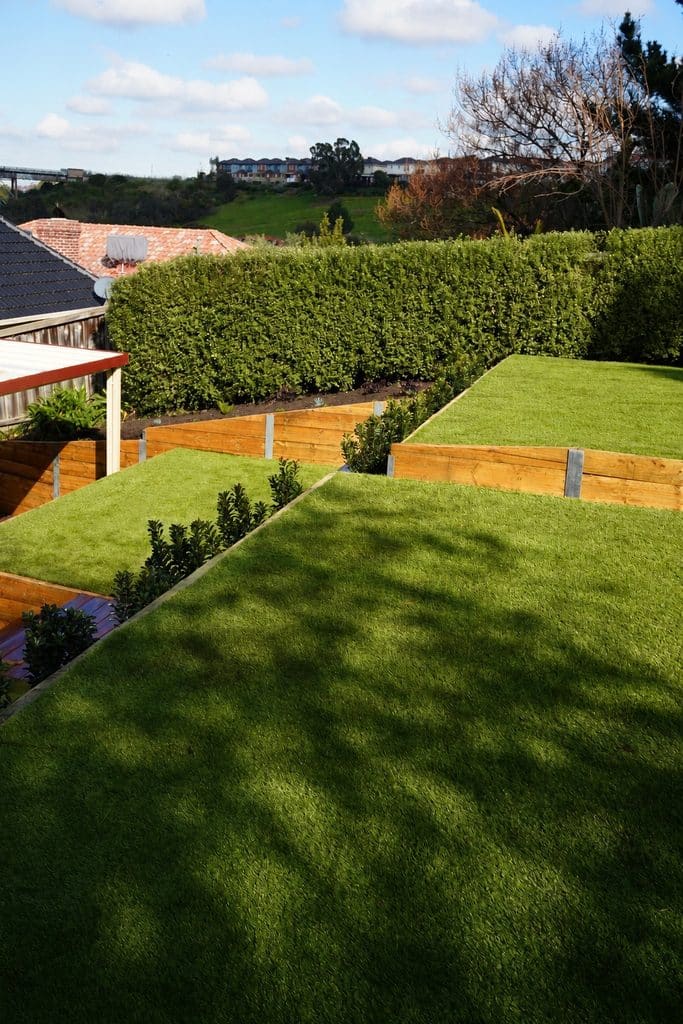
11. Create Modern Lawn Levels With Clean Timber Retaining Walls
Credit: @creative_landworks
Sometimes I prefer a garden design with simple lines and plenty of open space. Timber retaining walls combined with separate grass levels can give an outdoor area a modern appearance without filling it with too many plants or decorative features.
For a sloped tiered garden, I would use straight retaining edges to create clear sections of lawn. The different heights give the garden structure, while the green grass keeps the overall appearance fresh and relaxed.
This arrangement is particularly useful for families who want an outdoor space with room for children to play. You can keep one level open for activities and use another for outdoor furniture or a small planting area.
I would choose timber that is suitable for outdoor ground contact and make sure the retaining walls have proper drainage behind them. Larger walls may need professional design, especially when they are holding back substantial amounts of soil.
A few compact shrubs along the boundaries can soften the timber and make the design feel less formal. I would keep the planting simple so the clean lines remain the main feature.
For practical advice about retaining wall construction, I would pay particular attention to foundations, drainage, and suitable materials.
Budget Guide: Pressure treated landscaping timber can cost $10 to $35 per board, while grass seed generally costs $20 to $60 per bag. Landscape edging materials can range from $15 to $50, depending on the style and length, at Home Depot, Lowe’s, or local landscaping suppliers.
How to Make a Sloped Garden Easier to Maintain
I always think about maintenance before deciding how many levels a garden should have. A complicated design might look attractive at first, but it can become frustrating when every section needs different watering, trimming, and cleaning.
For a sloped tiered garden, I would start by dividing the space into a few useful zones. Having a clear purpose for each level makes it easier to choose the right materials and plants.
Drainage should be part of the plan from the beginning. Retaining walls often need drainage gravel and suitable drainage pipes behind them, and larger structures may require professional assessment.
I would also choose plants according to the amount of sunlight each level receives. Some areas may be suitable for vegetables and flowering plants, while shaded sections can work better for ferns and other shade loving varieties.
Finally, I would leave enough room for comfortable access. A well planned path, a few stable steps, and easy to reach planting beds can make the garden much more enjoyable to use.