
Join Our Newsletter for Cozy Home Inspiration, Family Fun, and Delicious Recipes Every Week
Creative Wood Pallet Planters Every Backyard Deserves This Season

Disclaimer. Some images featured in this post may originate from third-party sources and are used for illustrative purposes only. Please review our Image Credits Policy for attribution information.
I found an old pallet leaning against our fence and almost dragged it to the curb on trash day. My husband stopped me and asked if we could turn it into a wood pallet planter instead. I had no idea that one decision would change my whole backyard.
I did not have a plan or even basic tools that weekend. What I had was a pallet, some leftover paint, and a stubborn need to make something out of nothing.
I started scrolling for ideas before we touched a single nail. I wanted to see how other families had turned the same scrap wood into something worth looking at every day.
What I found surprised me. The best projects were never the most complicated ones.
They were simple builds, painted or left raw, with plants tucked into slats that used to hold shipping boxes. Every single one looked intentional instead of thrown together.
I started saving photos before I fully understood why they worked. A dark painted frame here. A set of hanging buckets there. A rolling planter that could move with the sun through the day.
That instinct became the only rule I needed. If a photo made me want to build it that same weekend, it went on the list. Nothing fancier than that.
Some projects took an afternoon with a paintbrush and a few screws. Others took a full weekend of sanding and staining before anything went into the ground. Every one of them came from a real photo I could not stop looking at.
What surprised me most was how affordable the whole thing turned out to be. Most of the wood was already sitting outside waiting for a second life. The only real cost was time and a little patience with the sanding.
If you have a pallet sitting in your garage right now, these ideas are for you. Every single one came from a photo that stopped my scroll before I understood exactly why.
A good wood pallet planter does not need expensive lumber or a fancy workshop to look finished. It just needs a little vision and a free Saturday afternoon.
Here is everything that made me want to build one more before summer ends.
What We're Exploring
- 01 The Wall Mounted Wood Pallet Planter That Doubles As Art
- 02 A Rolling Pallet Planter That Moves With The Sun
- 03 Hanging Herb Buckets That Keep Everything Labeled And Tidy
- 04 A Compact Raised Planter Built From Leftover Boards
- 05 Long Planter Boxes Built For A Full Row Of Blooms
- 06 Mom Notes
- 07 Tall Twin Planters Built With Their Own Trellis Frame
- 08 A Leaning Pallet Pergola That Shelters Plants And People
- 09 A Tiered Wall Display Mixing Shelves And Pallet Slats
- 10 What Makes A Wood Pallet Planter Last More Than One Season
- 11 Quick Take
The Wall Mounted Wood Pallet Planter That Doubles As Art
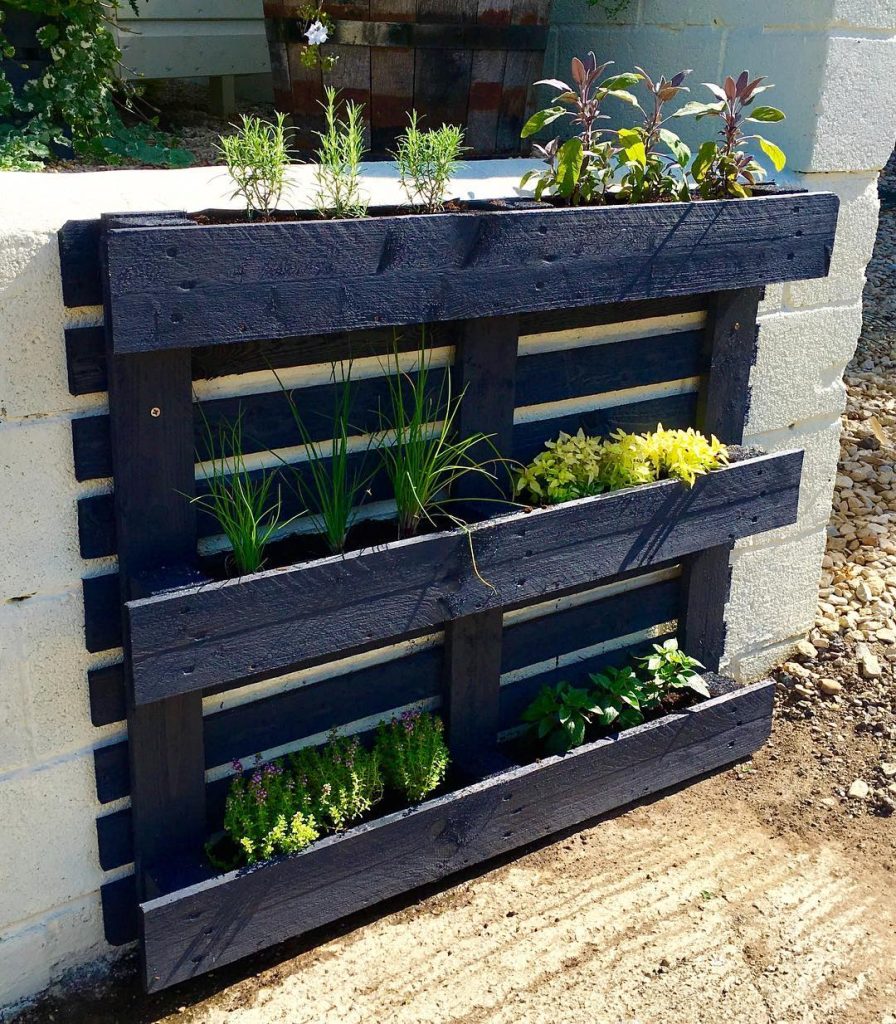
Painting a pallet a deep charcoal color and mounting it flat against a wall turns it into something that looks closer to a piece of art than a garden project. The dark color makes the greenery pop against it in a way plain wood never quite manages. This is one of the most photogenic versions of a wood pallet planter you can build in a single afternoon.
Filling each slat with a different herb keeps the whole thing functional as well as beautiful. Rosemary and mint spilling over the top edge softens all those straight painted lines. This kind of vertical herb garden approach is a favorite layout often referenced by Better Homes and Gardens for small-space growing.
Budget Note: Exterior wood paint typically ranges from $20 to $35 per quart and is available at Home Depot, Sherwin-Williams, or Amazon.
A Rolling Pallet Planter That Moves With The Sun
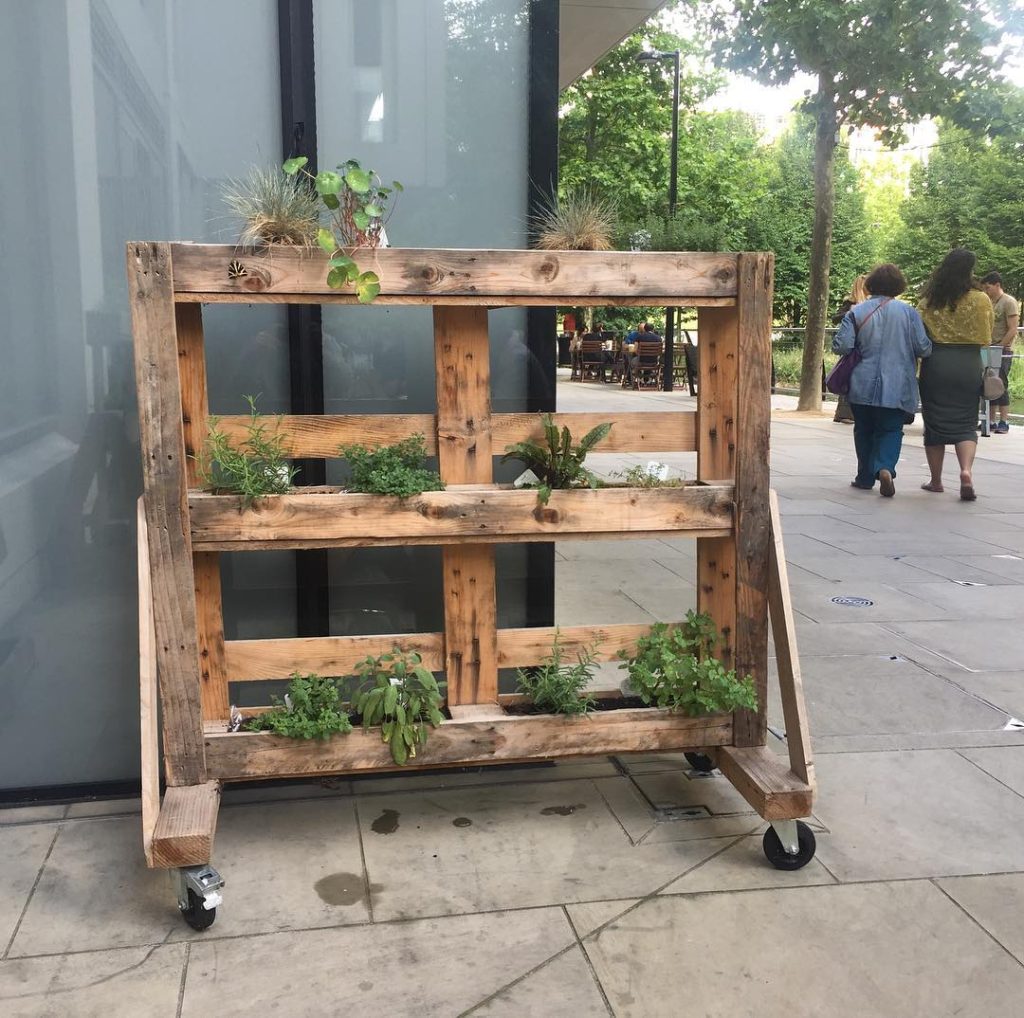
Adding locking casters to the bottom of a wood pallet planter solves one of the biggest headaches in small-space gardening: chasing sunlight around a patio. Rolling the whole thing a few feet in either direction takes seconds instead of repotting every plant one at a time. It keeps herbs and greens thriving even in spots that only get partial sun.
Keeping the structure lightweight enough to roll means anyone in the family can help move it, not just whoever built it. That shared responsibility is what makes a garden project actually stick around past the first month. A planter that moves easily gets used far more than one that stays stuck in one spot.
Budget Note: Locking caster wheel sets typically range from $12 to $25 and are available at Home Depot, Amazon, or Lowe’s.
Hanging Herb Buckets That Keep Everything Labeled And Tidy
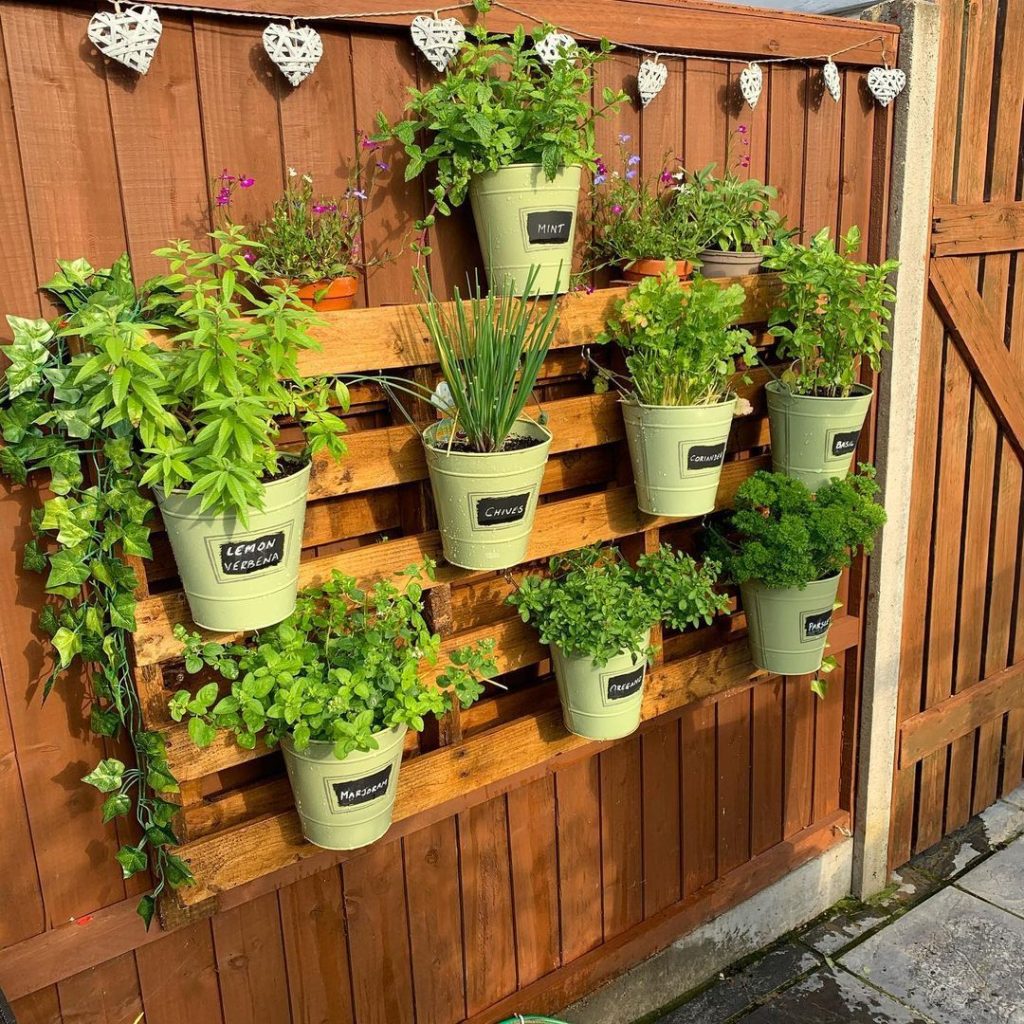
Mixing in a trailing vine or two along the edges softens all those uniform buckets with something a little wild. String lights or a hanging garland along the top adds a decorative touch that makes the whole wall feel finished, not just functional. This kind of labeled, tiered planting has been highlighted by Garden Design as an easy way to keep a small herb collection organized.
Because each bucket hangs independently, swapping out a struggling plant never disturbs the rest of the setup. It is one of the easiest systems to maintain since nothing is permanently rooted into the wood itself. A tidy, labeled wall like this also makes a great spot to send kids to grab dinner herbs.
Budget Note: Small galvanized hanging buckets typically range from $4 to $10 each and are available at Target, IKEA, or Amazon.
A Compact Raised Planter Built From Leftover Boards
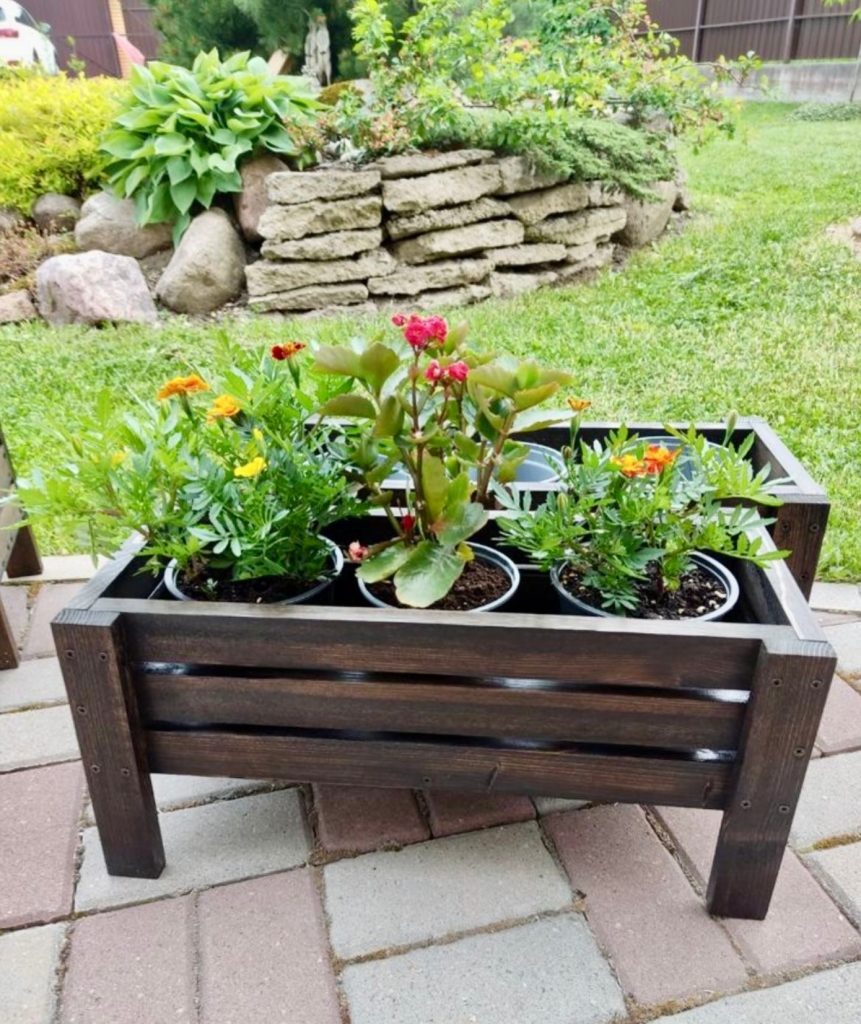
Filling the box with a mix of marigolds and begonias adds color that lasts through the entire season with very little upkeep. The dark stain finish gives the wood a polished look that holds up well against sun and rain. This kind of simple raised bed design is a project style often recommended by HGTV for beginner gardeners.
Placing it near a stone garden bed or along a patio edge ties the whole outdoor space together without needing matching materials everywhere. It is proof that a small, well-finished project can hold its own next to a much larger landscaped area. Sometimes the smallest planter gets the most compliments.
Budget Note: Wood stain and sealant typically range from $15 to $30 per can and are available at Home Depot, Lowe’s, or Amazon.
Long Planter Boxes Built For A Full Row Of Blooms
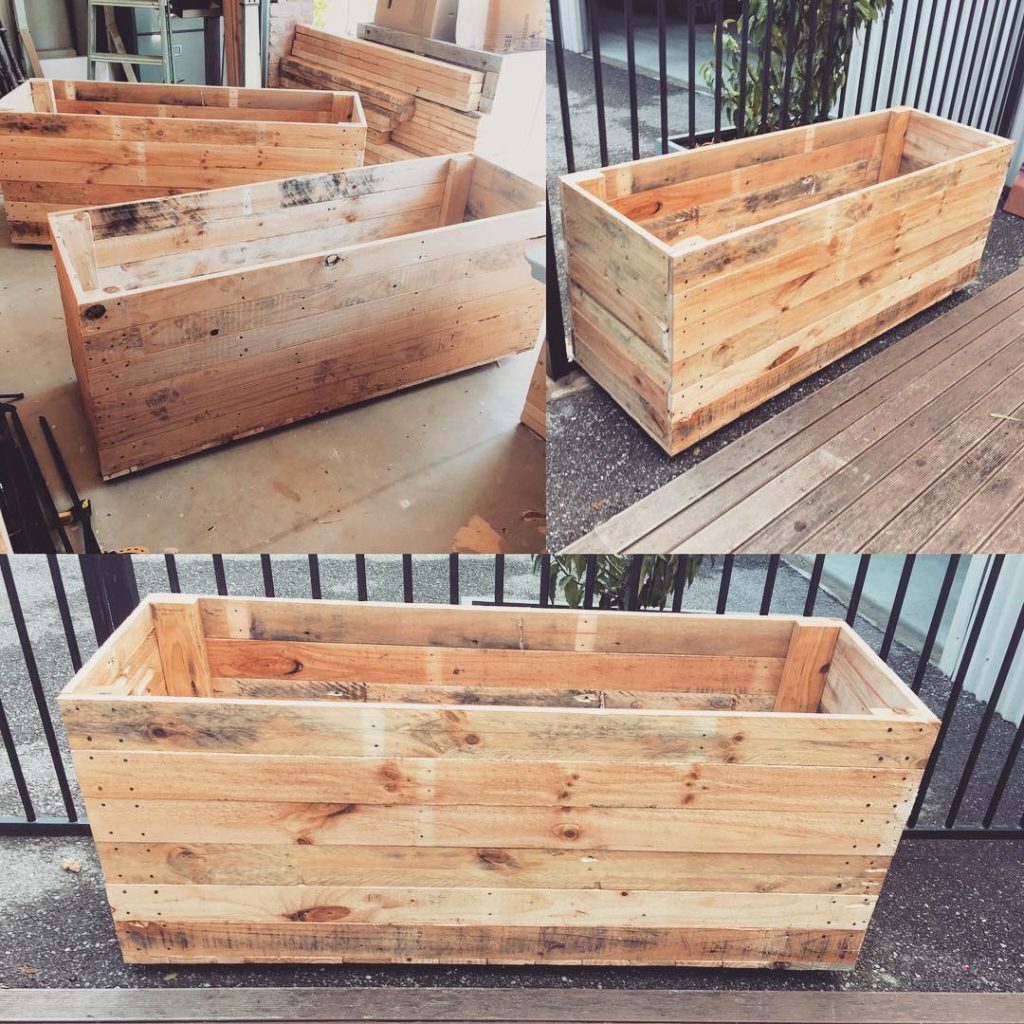
Building a long, narrow planter box from raw pallet slats gives you an entire row of growing space without needing a full garden bed dug into the ground. The natural wood grain left unpainted gives the whole piece a warm, collected look straight out of the workshop. This long format is one of the most practical versions of a wood pallet planter for anyone short on yard space.
Leaving a small gap between each box lets air circulate and makes mowing or sweeping around them much simpler. It is a build that looks intentional even before a single plant goes into the soil. Sometimes clean lines and repetition do more for a space than color ever could.
Budget Note: Pallet wood, if not sourced free, typically ranges from $5 to $15 per pallet and is available at local hardware stores or through Facebook Marketplace.
Mom Notes
If you are building your first wood pallet planter, start small. A single box or one mounted panel is enough to learn what works before you commit a whole weekend to a bigger build.
Sand every edge twice. Pallet wood splinters more than you expect, and a smooth edge is the difference between a project you love touching and one you avoid.
Tall Twin Planters Built With Their Own Trellis Frame
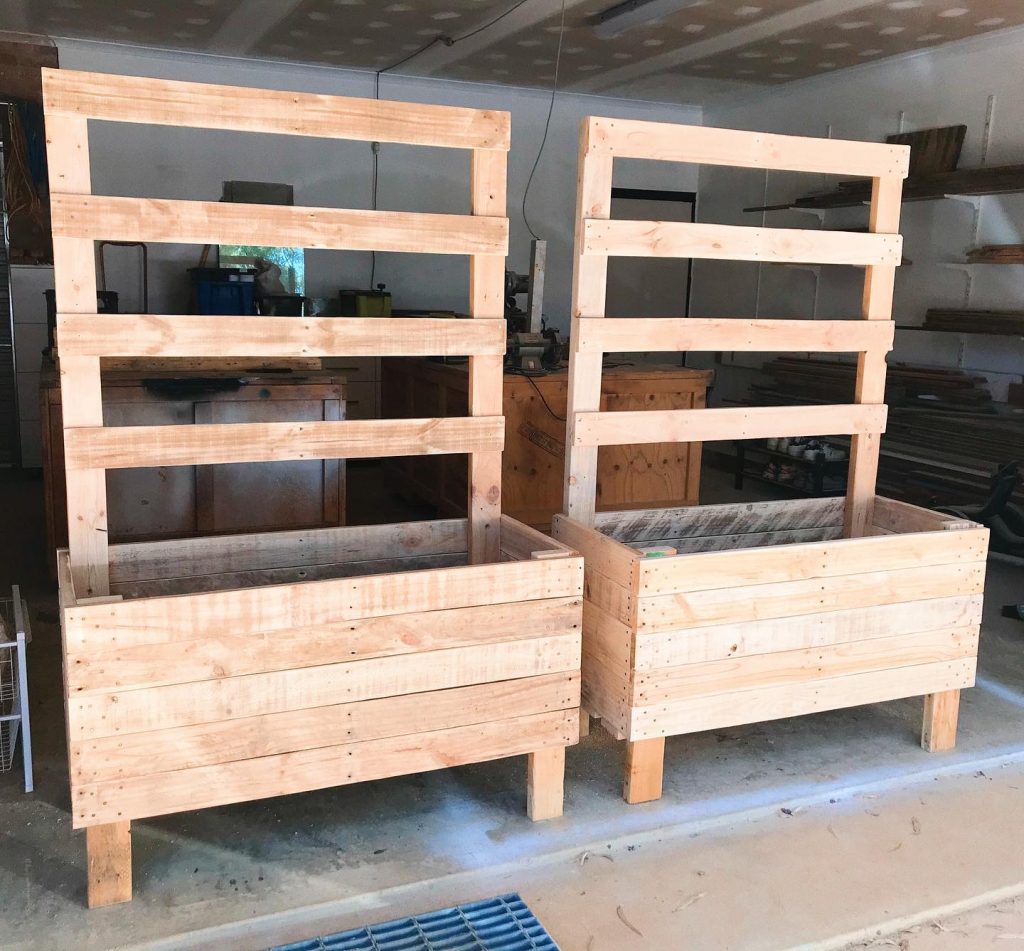
Building a pair of tall matching planters, each with its own open trellis frame rising above the box, gives climbing plants somewhere to actually climb. Raised legs keep the wood off wet ground, which extends the life of the whole build significantly. This taller structure turns a basic wood pallet planter into something closer to a piece of garden architecture.
Leaving the wood raw and unfinished at first lets you decide later whether to stain, paint, or simply let it weather naturally outdoors. Building two matching units side by side creates symmetry that reads as designed rather than improvised. This layered trellis and planter combination is a build style often shared by Fine Gardening for supporting vining vegetables and flowers.
Budget Note: Basic wood screws and corner brackets typically range from $8 to $18 per project and are available at Home Depot, Lowe’s, or Ace Hardware.
A Leaning Pallet Pergola That Shelters Plants And People
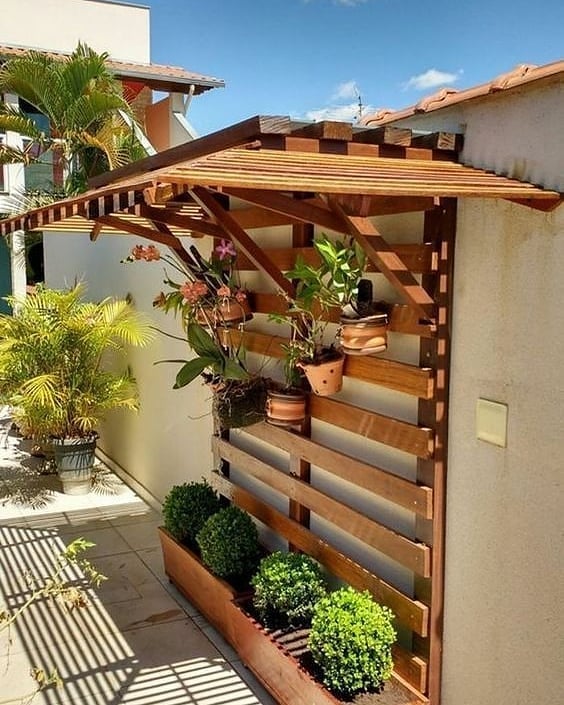
Building a slatted roof structure that leans against an existing wall gives potted plants shade while creating a small sheltered nook underneath. Hanging terracotta pots along the slats adds height and movement without crowding the planter box below. This ambitious build takes a wood pallet planter from a simple garden feature to a full outdoor living space.
Boxwood shrubs are planted along the base, grounding the whole structure and keeping it from feeling too skeletal in the off-season. The angled slatted roof also doubles as a trellis for climbing vines over time, softening the wood with greenery from above. This kind of pergola-style build is a favorite feature highlighted by Real Simple for creating shaded seating areas in small backyards.
Budget Note: Roofing slats and support brackets typically range from $40 to $90 depending on size and are available at Home Depot or a local lumber yard.
A Tiered Wall Display Mixing Shelves And Pallet Slats
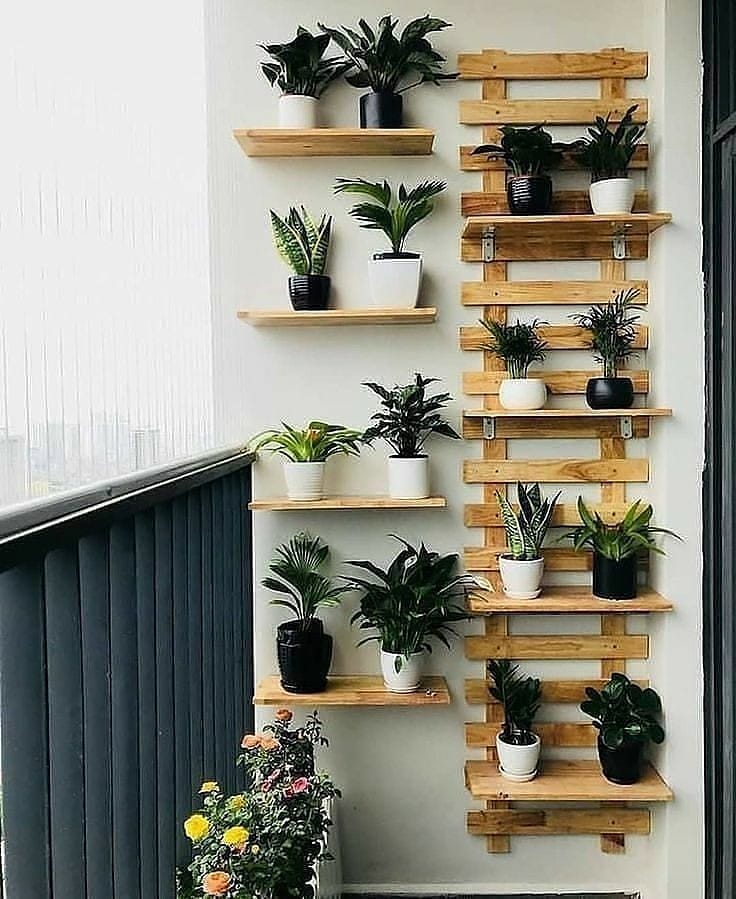
Combining floating shelves with an upright section of pallet slats gives a narrow balcony or side yard a full green wall without needing floor space at all. Grouping plants in matching black and white pots keeps the display feeling curated instead of cluttered. This vertical approach makes a wood pallet planter work even in the tightest outdoor spaces.
Alternating shelf heights on either side of the pallet section creates visual rhythm that keeps the eye moving up the wall. Snake plants and pothos mixed with leafier varieties add texture without needing constant care. This kind of small-space vertical gardening has been covered by Martha Stewart as an ideal solution for apartment balconies and narrow patios.
Budget Note: Floating wall shelves typically range from $10 to $25 each and are available at IKEA, Target, or Amazon.
What Makes A Wood Pallet Planter Last More Than One Season
The difference between a pallet project that lasts for years and one that falls apart by fall almost always comes down to the wood itself. A wood pallet planter built from heat-treated pallets, marked with an HT stamp, holds up far better than chemically treated ones. That small detail matters more than most people realize before they start building.
Sealing the wood before it ever touches soil or water extends the life of the whole project significantly. A simple exterior stain or sealant creates a barrier that slows down rot, especially on boxes that sit directly on damp ground. Skipping this step is the most common reason a first pallet project does not survive its first winter.
Quick Take
Check for the HT stamp. Heat treated pallets are safe to reuse and hold up far better outdoors than chemically treated ones.
Seal before you plant. A coat of exterior stain protects the wood long before soil and water ever touch it.
Drill drainage holes first. It is the easiest step to forget and the one that saves the whole project from rot.
Drainage matters just as much as the wood treatment when it comes to keeping plants healthy long-term. Drilling a few holes in the base before filling with soil prevents water from pooling and rotting the wood from the inside out. It is a small step that gets skipped often and regretted later.
Every wood pallet planter on this list started as scrap wood before it became something worth sharing. Yours can follow the exact same path, one pallet and one weekend at a time. The result is almost always worth more than the material ever cost.