
Home Decor, Kitchen Ideas, Garden Tips & DIY Projects
10 Indoor Herb Garden Ideas That Make the Most of Your Space

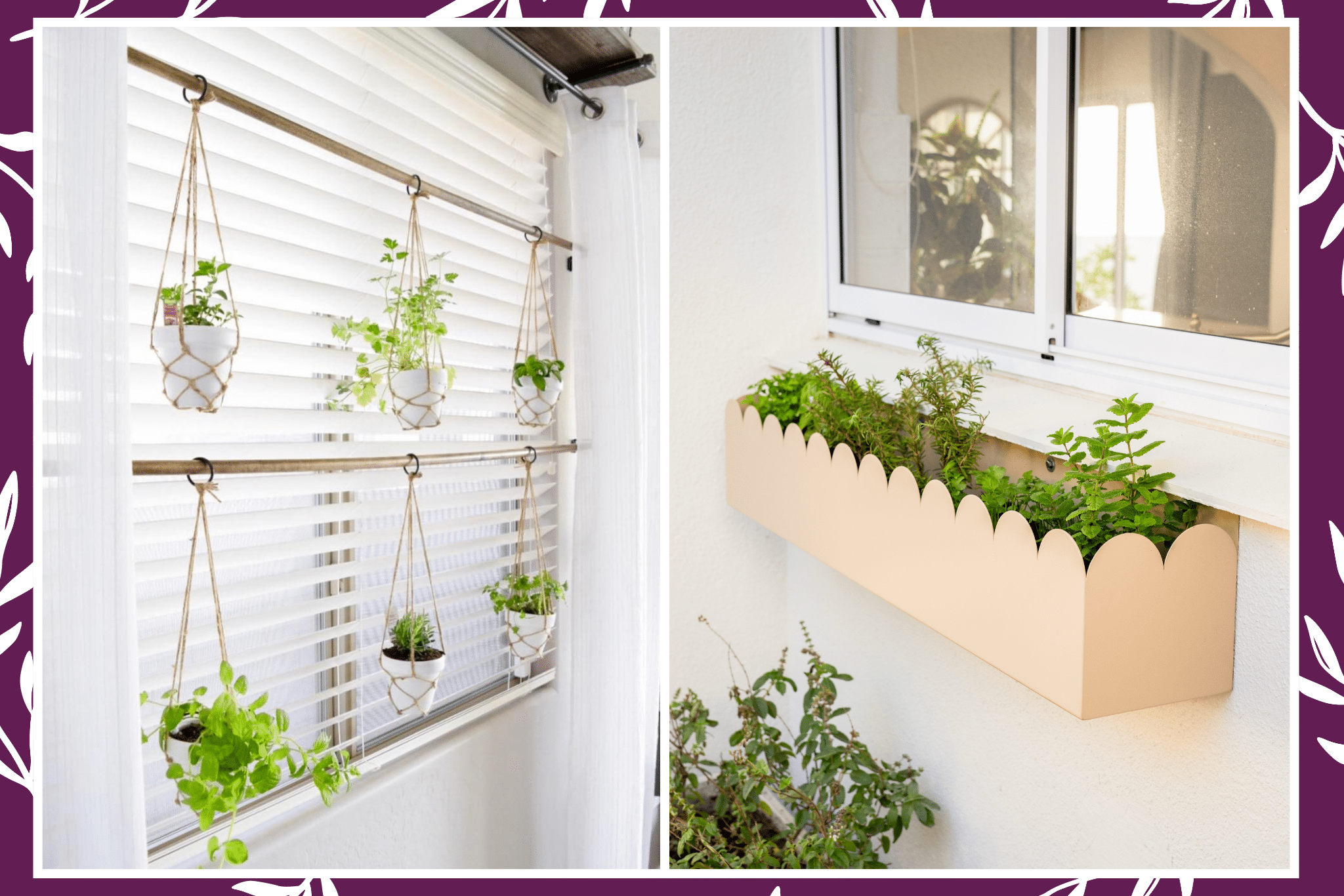
Photo Credits: All photos in this post are credited to their creators on Instagram. Want a photo removed or credited differently? Email [email protected]. See our Image Credits page for details.
I am clearing a little space beside my farmhouse pantry window and thinking about how much nicer it would be to have fresh herbs within reach while cooking.
An herb garden does not need a backyard or even a lot of room.
A bright windowsill or an empty corner can become a useful growing spot.
Having fresh basil or mint nearby makes everyday meals feel a little more special.
Countertop Microgreen Garden
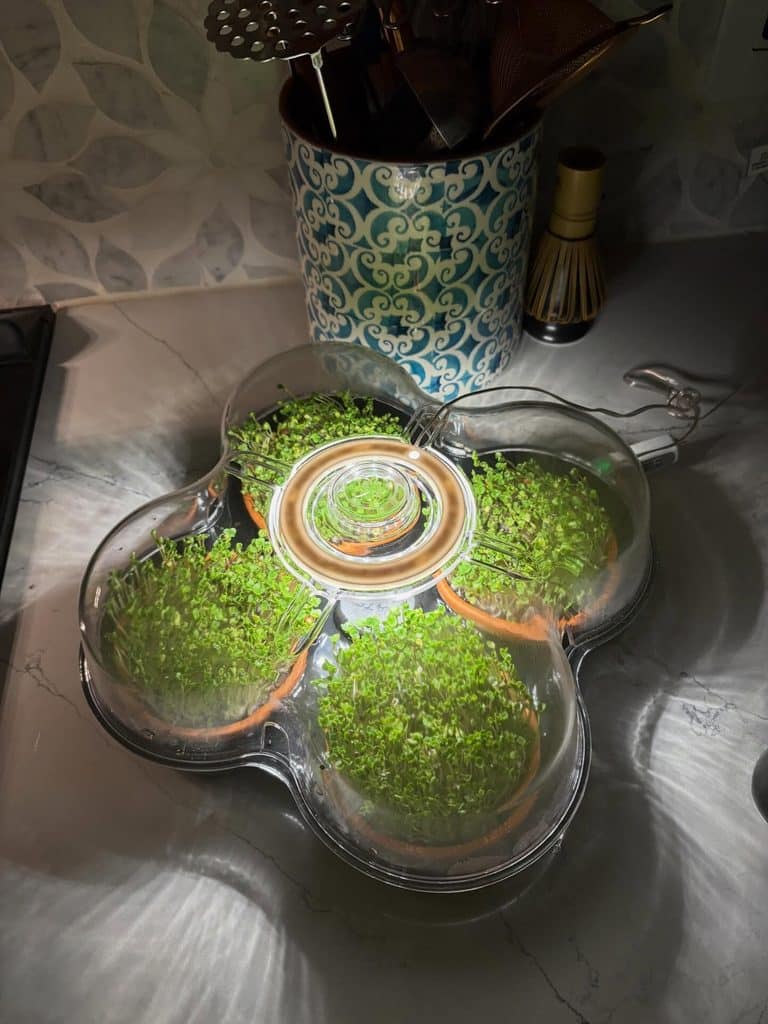
Image Credit: heatherpetersrebounds
A countertop microgreen garden is a lovely starting point when there is very little room for growing. It brings fresh greens into the kitchen without needing a row of large pots or a sunny outdoor space.
Microgreens are young seedlings harvested while they are still small. Radish, broccoli, mustard, and pea shoots are popular choices because they grow quickly and add a fresh, crisp finish to salads, sandwiches, soups, and eggs.
Related Guide: How to Grow Microgreens
Windowsill Herb Planter
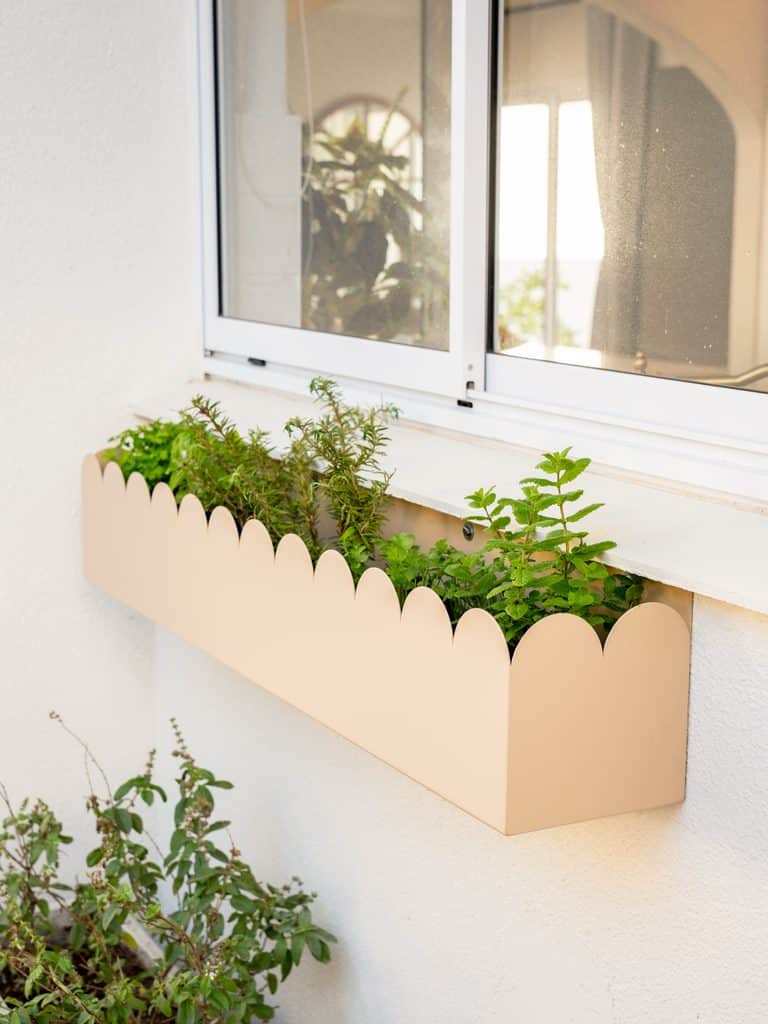
Image Credit: wall.spaces
A long planter beneath a kitchen window makes a practical herb garden because it uses a space that often sits empty. It also keeps fresh leaves close to the counter, which is handy when cooking and seasoning meals.
Choose herbs that suit the light coming through the window. Basil, parsley, chives, and thyme are useful kitchen choices, but check how much direct sun the window receives before deciding what to plant.
Related Guide: How to Grow Herbs
Wall Mounted Herb Rack
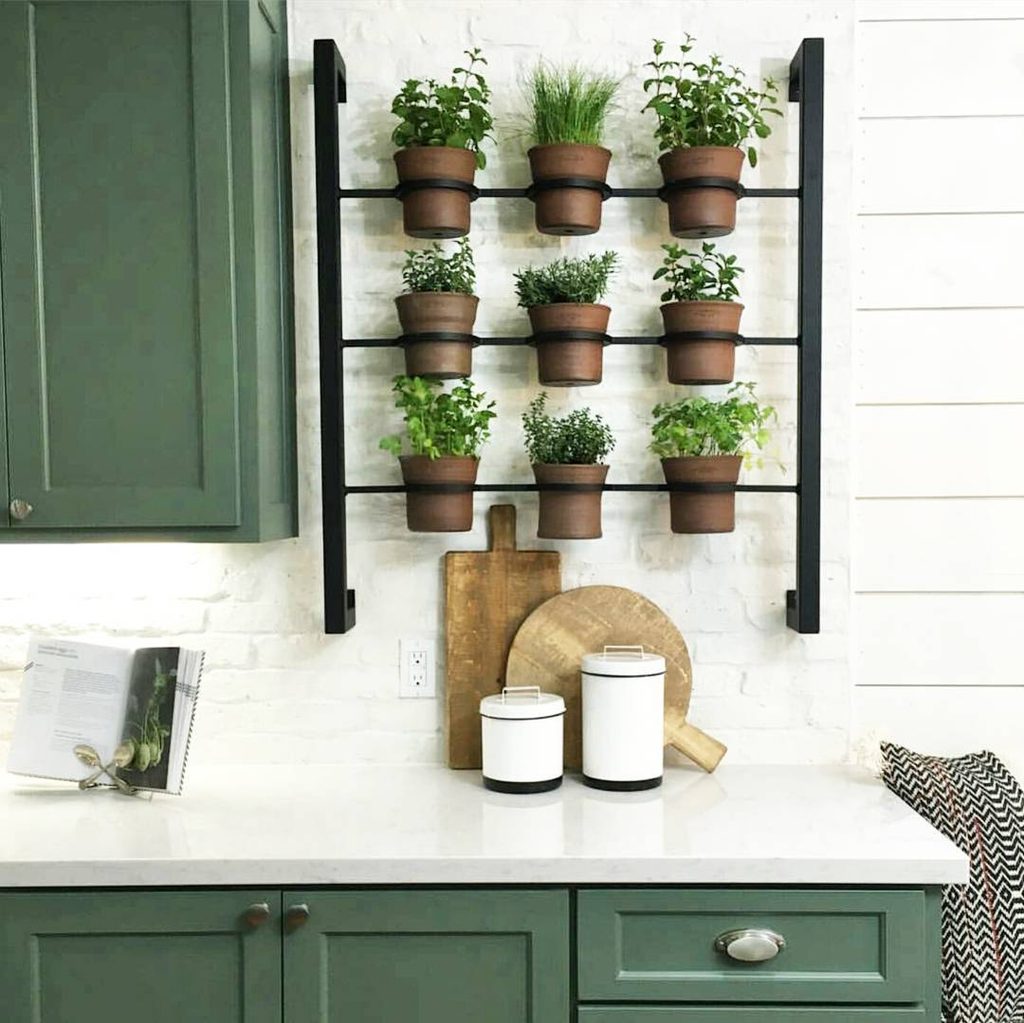
Image Credit: @artsychicksrule from Instagram
A rack is a smart way to create an indoor herb garden when counter space is limited. Small pots can sit in individual holders, leaving the worktop free while keeping herbs easy to reach.
This arrangement works especially well with compact plants such as thyme, oregano, chives, and small parsley plants. Use pots that can be lifted out easily, because watering and trimming are much simpler when each plant can be brought down to the sink.
Related Guide: Growing Herbs Indoors
Tiered Indoor Herb Stand
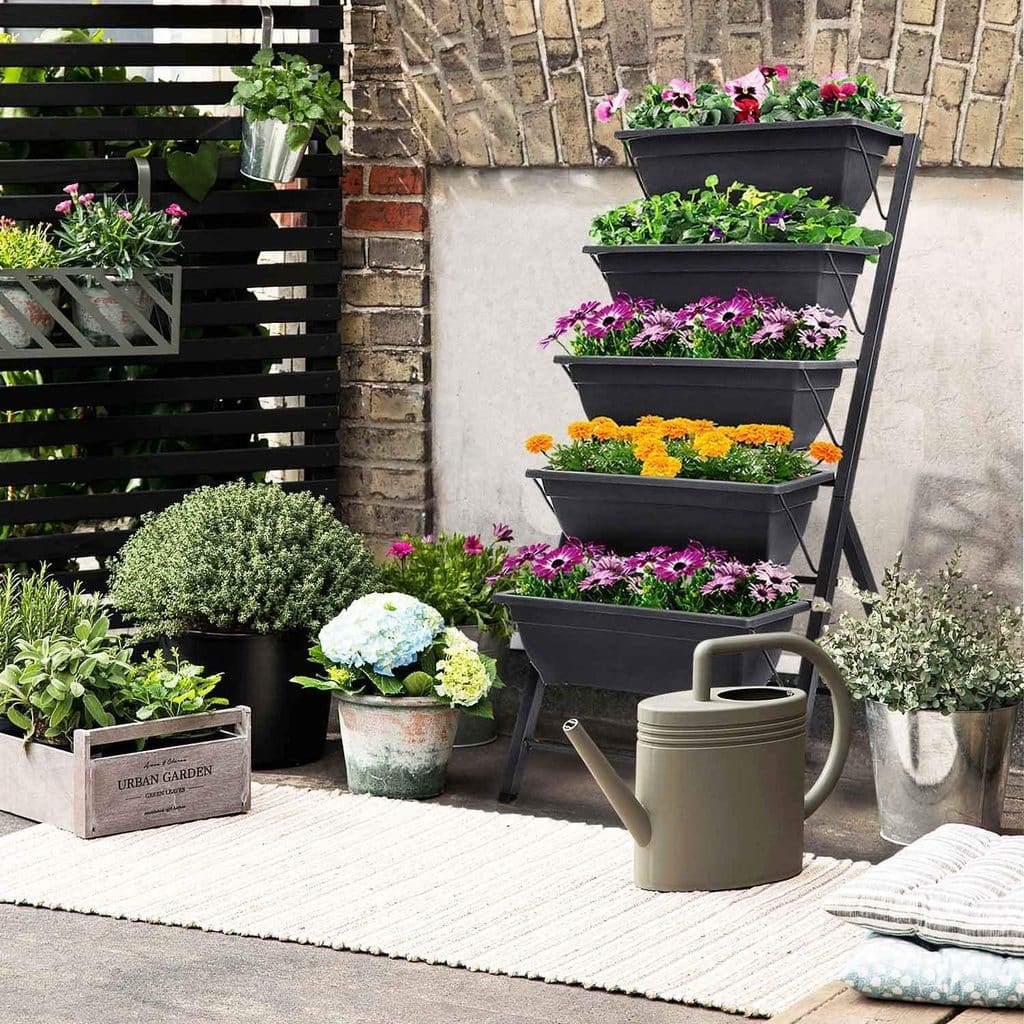
Image Credit: at_lunas
A tiered stand gives several plants their own level without taking up a wide area of floor space. It is a useful choice for a kitchen corner, a bright enclosed porch, or a spot near a large window.
Use the top level for herbs that need the strongest light, such as basil and rosemary. Lower levels can hold parsley, mint, or other plants according to the light they receive, although every herb still needs enough brightness to grow well.
Related Guide: How to Grow Herbs
Rolling Herb Garden Cart
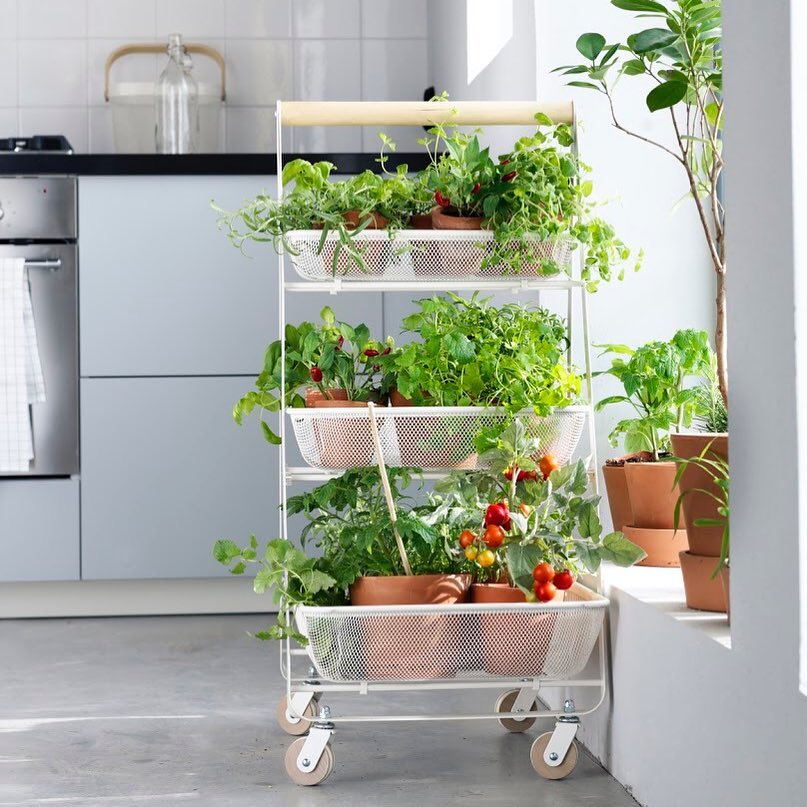
Image Credit: @ikeajapan
A rolling cart makes a flexible herb garden for homes where the sunlight changes during the day. It can be moved closer to a bright window in the morning and shifted out of the way when the kitchen needs more space.
Look for a cart with sturdy shelves and enough room for several small pots. Open wire or mesh shelves are useful because they allow air to circulate, and removable trays can help catch water after watering.
Related Guide: How to Grow Herbs Indoors
Hanging Herb Planters
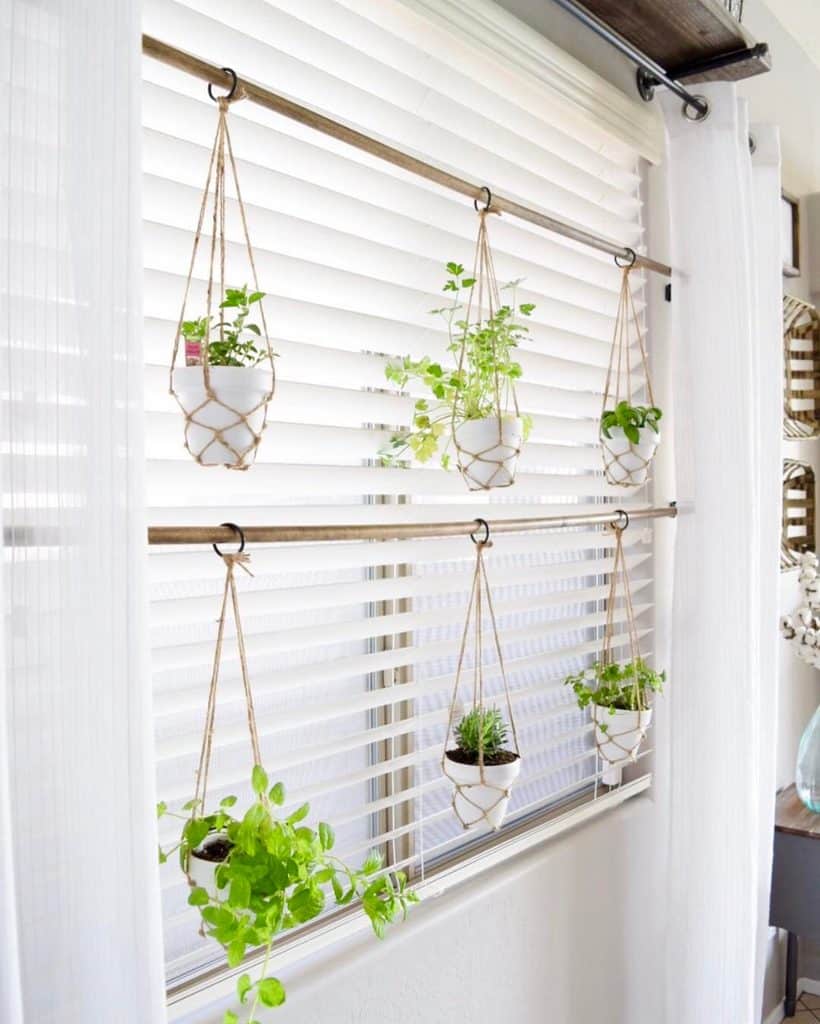
Image Credit: @qbhome
Hanging planters make use of vertical space and can bring greenery into a bright kitchen window. They are especially useful when shelves and counters are already full, but they need to be placed where the plants can still receive enough light.
Choose lightweight pots with drainage and secure hanging supports. A macrame holder can add a relaxed handmade feel, while simple hooks and matching containers keep the arrangement neat.
Related Guide: How to Grow Herbs
Wall Mounted Wooden Herb Planters
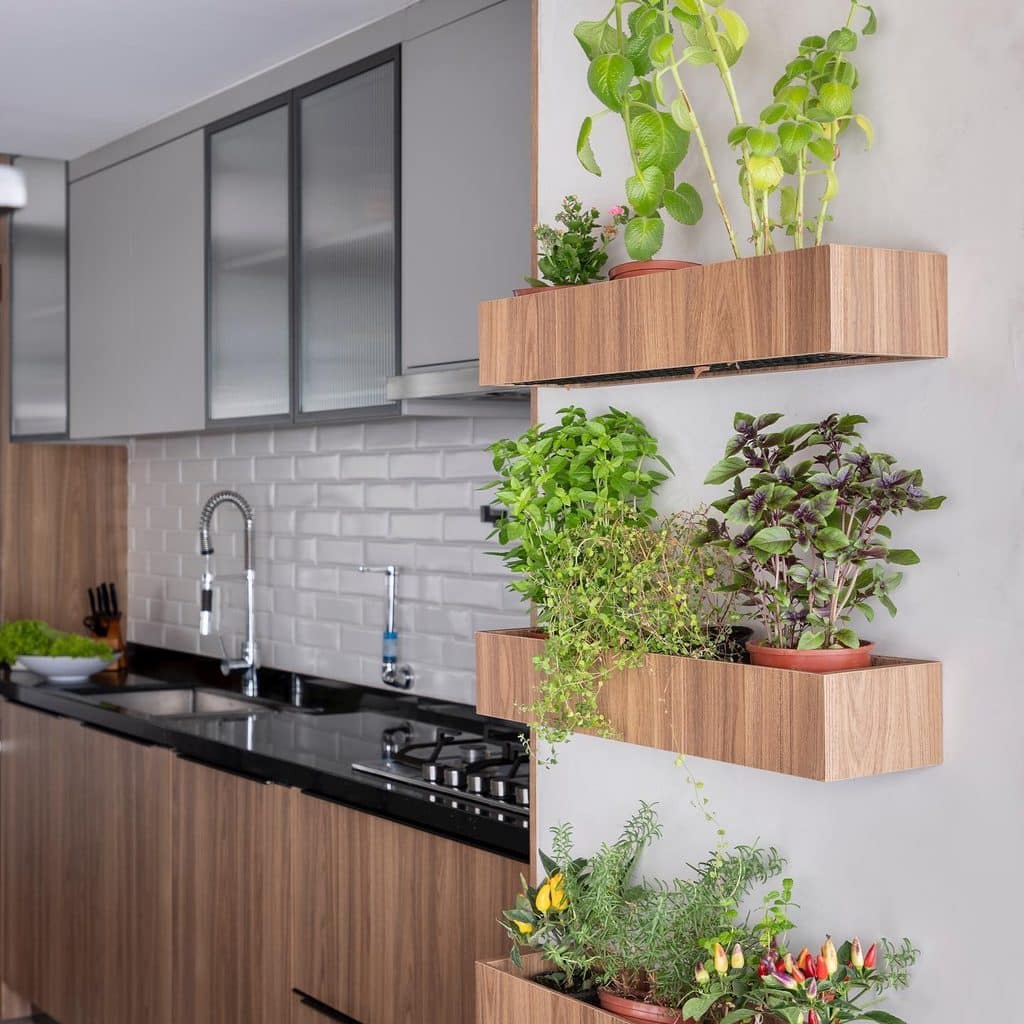
Image Credit: tuacasa
A vertical herb garden works best when every plant receives enough light and has room for air to move around it. Avoid placing the planters directly above a stove, where heat and cooking steam can make growing conditions less predictable.
Wooden planters should be protected from constant moisture. Use waterproof liners or separate nursery pots, and make sure water cannot collect against the wood after watering.
Related Guide: Growing Herbs Indoors
Wooden Pallet Herb Garden
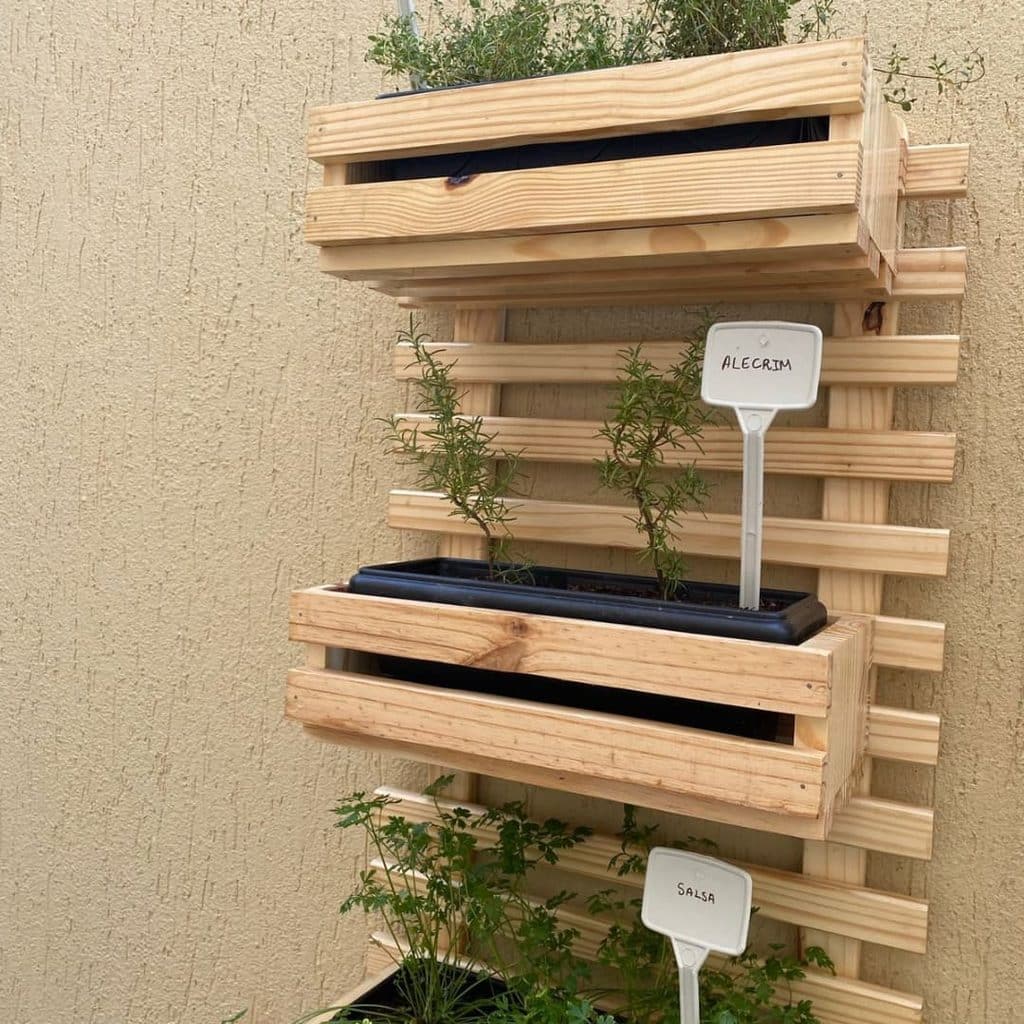
Image Credit: rustik_the
A wooden pallet planter can turn a plain wall or balcony corner into a productive growing space. Its stacked sections provide room for several containers, making it a practical option for anyone who wants to grow a range of kitchen herbs in one place.
Use a pallet or purpose-built frame that is sturdy, clean, and suitable for outdoor or indoor use. Avoid wood that has been treated with unknown chemicals, especially when the containers will hold herbs intended for cooking.
Related Guide: How to Grow Herbs
Indoor Herb Garden With Grow Lights
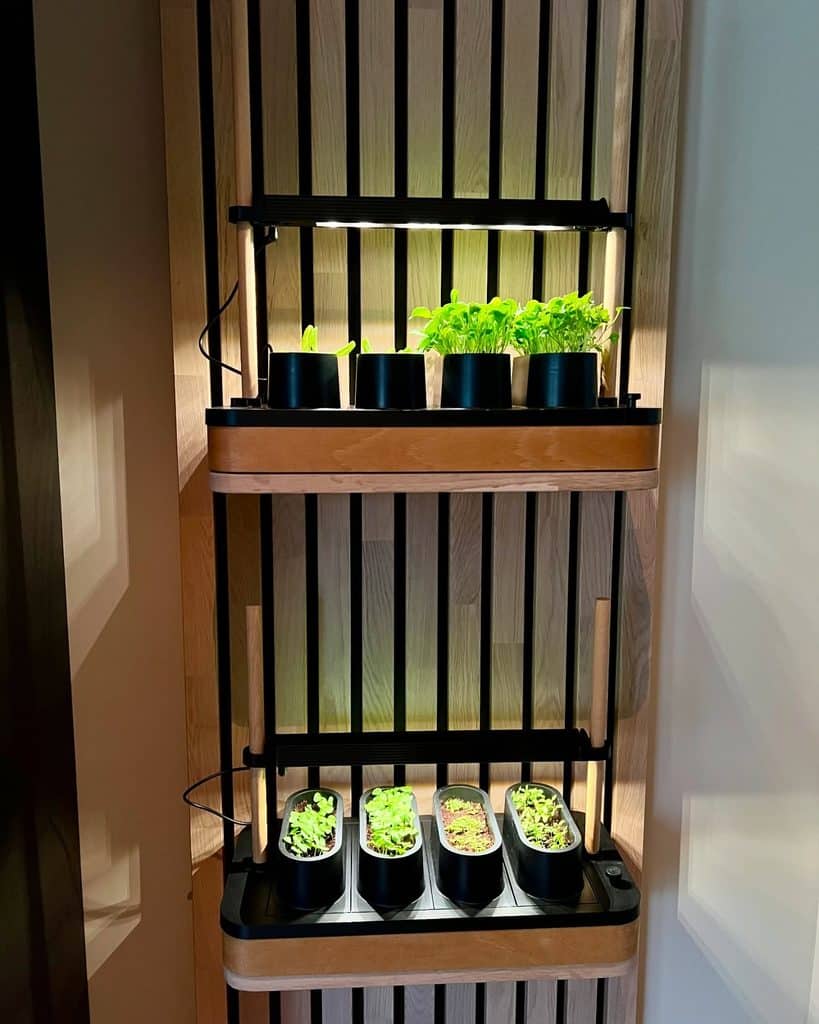
Image Credit: villalangveien
A grow light shelf can make an herb garden possible even in a home with limited natural sunlight. It is especially useful during darker months or in rooms where the windows do not receive enough direct light for healthy growth.
Choose a shelf with enough height for the plants to grow and enough room for the light to sit above the leaves. Adjustable lights are helpful because they can be raised as the herbs become taller.
Related Guide: Growing Herbs Indoors
Mason Jar Herb Garden
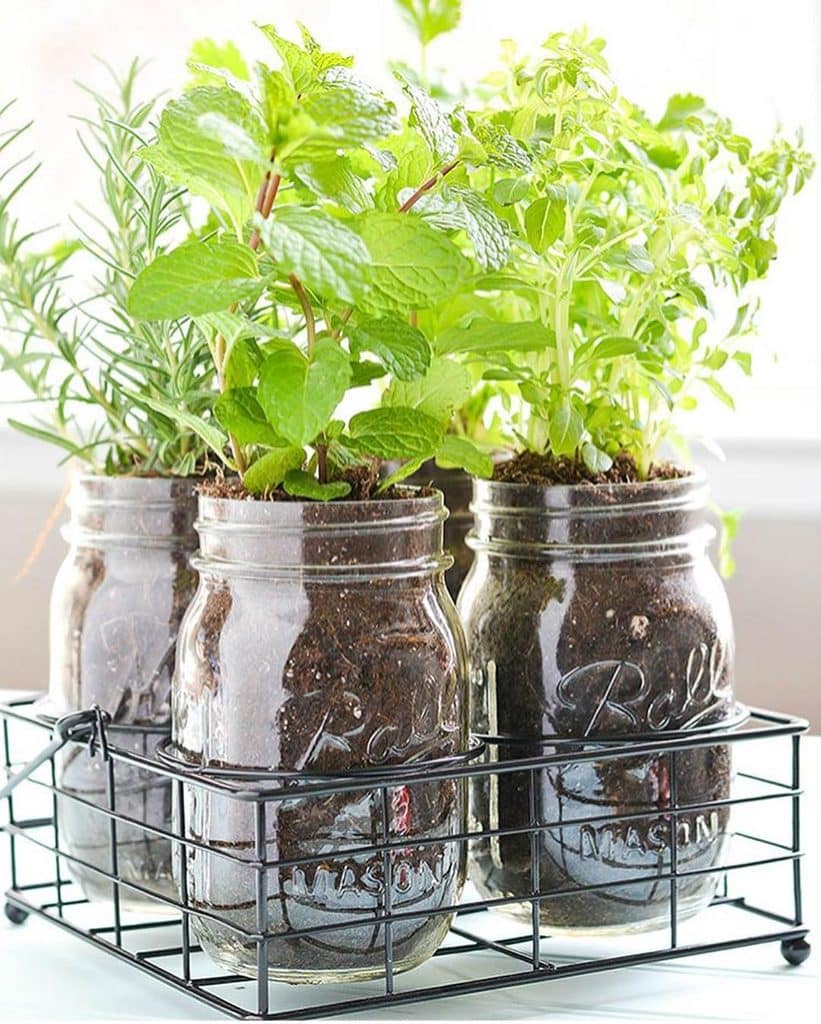
Image Credit: krufeorganizer
A mason jar arrangement is a simple way to keep a few herbs together on a kitchen shelf or windowsill. Clear jars make it easy to see the roots and growing medium, and a small basket can keep the containers grouped neatly.
For growing herbs in soil, choose jars or containers with drainage holes whenever possible. A jar without drainage can hold too much water, so it is better used as an outer cover for a smaller pot that can be removed for watering.
Related Guide: How to Grow Herbs
Choosing the Best Herbs for an Indoor Herb Garden
The easiest way to keep an herb garden healthy is to choose plants that match the light and space available in your room.
Start with a few herbs you already use in cooking, like basil or mint are useful choices.
It helps to group plants with similar growing needs; rosemary or sage generally prefer soil that dries between waterings.
Buy healthy young plants from a garden center or grow them from seed.
