
Join Our Newsletter for Cozy Home Inspiration, Family Fun, and Delicious Recipes Every Week

Walkable Ground Cover Grass Alternatives That Actually Hold Up

Disclaimer. Some images featured in this post may originate from third-party sources and are used for illustrative purposes only. Please review our Image Credits Policy for attribution information.
I stood at the edge of my side yard last spring, staring at a strip of dirt where grass had never once taken hold. I needed a walkable ground cover that could survive foot traffic without turning into mud every time it rained.
I had already tried grass seed there twice, both times watching it wash out after the first heavy storm. That narrow side path between the house and the fence just was not built for a traditional lawn.
One night I gave up trying to fix it myself and started scrolling through garden accounts instead, half hoping for a shortcut. I was not looking for anything complicated, just something that could take a few footsteps a day and still look good.
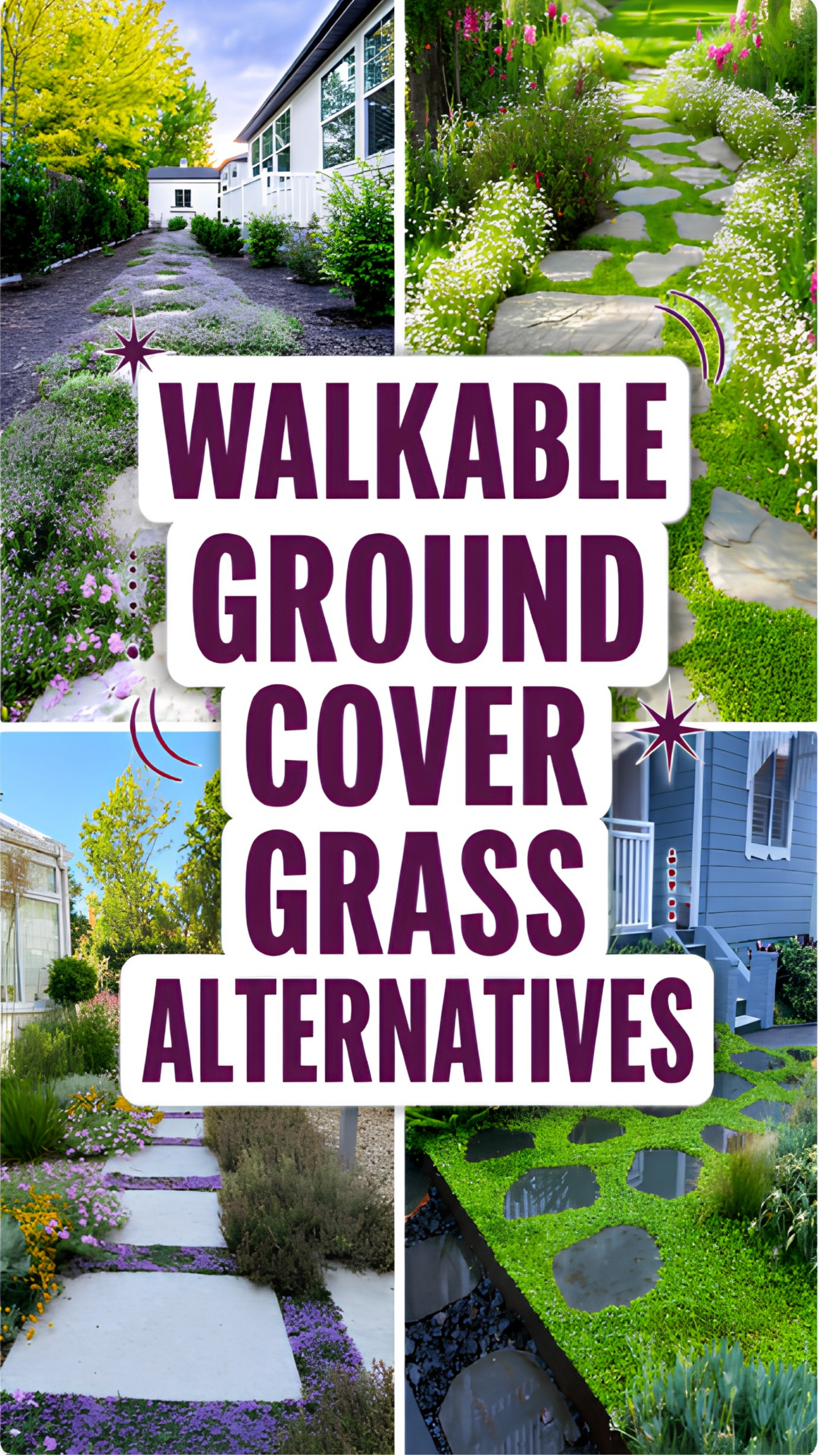
I found a photo of a path almost exactly like mine, lined in tiny purple blooms instead of bare mulch. It stopped my scroll immediately, which is always the first sign an idea is worth saving.
I kept going and found more. A stepping-stone path threaded with green. A whole backyard replaced with something soft enough to walk barefoot across.
None of these yards looked like they belonged to a landscaping crew with an unlimited budget. They looked like real homes where real families needed a path that could survive kids, pets, and regular use.
That is the real difference between grass you fight every weekend and a walkable ground cover you actually get to enjoy. One means constant mowing and bare patches. The other just fills in and holds its shape season after season.
I started noticing what all of these successful paths had in common. Almost none of them relied on grass seed at all, and almost all of them used low-spreading plants built to handle foot traffic naturally.
What We're Exploring
- 01 Creeping Thyme Turns a Side Path Into Real Walkable Ground Cover
- 02 A Flower Framed Path Makes Walkable Ground Cover Feel Like a Garden
- 03 Thyme Between Pavers Creates Colorful Walkable Ground Cover Near Stairs
- 04 Clover Handles Full Yard Coverage Better Than Most Walkable Ground Cover
- 05 Mom Notes
- 06 Dichondra Fills Wide Concrete Gaps With Lush Walkable Ground Cover
- 07 Mondo Grass Frames Modern Pavers With Neat Walkable Ground Cover
- 08 Dichondra Softens a Shaded Side Path Into Livable Walkable Ground Cover
- 09 What Makes Walkable Ground Cover Worth Choosing Over Grass
- 10 Quick Take
Creeping Thyme Turns a Side Path Into Real Walkable Ground Cover
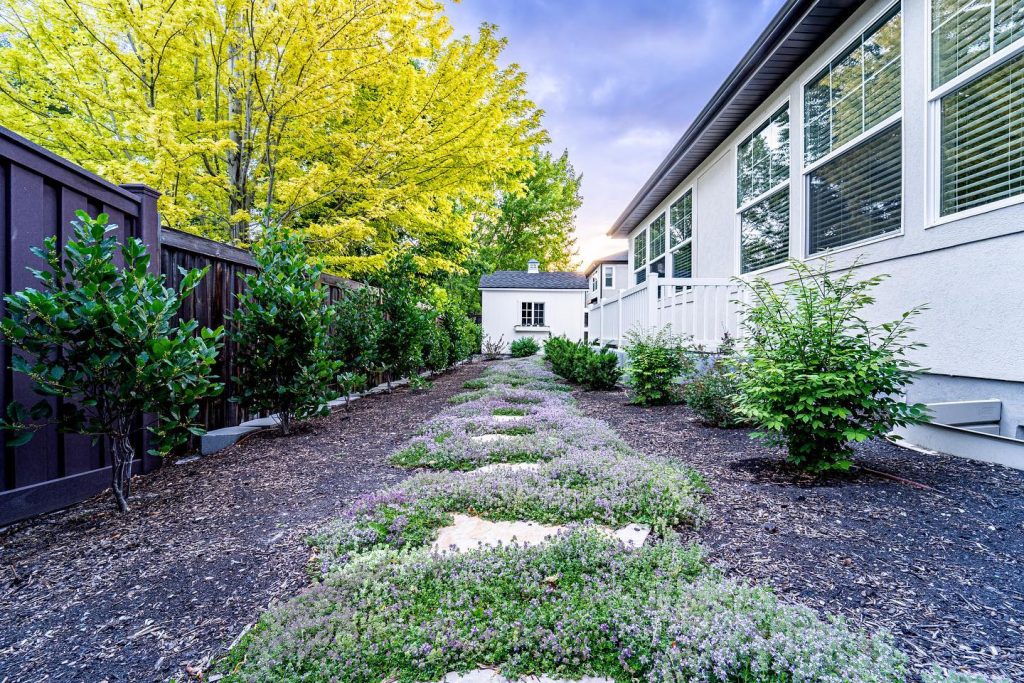
Filling the narrow strip between a fence and a house with blooming creeping thyme is one of the smartest ways to solve a side yard that grass has always struggled to cover. This particular walkable ground cover tolerates the shade and compacted soil that often show up in these tight side spaces.
The soft purple blooms add color to a part of the yard most people never bother decorating at all. Placing simple stepping stones through the thyme gives the path a clear route while still letting the plant fill in generously around each stone.
Budget Note: Creeping thyme plugs typically cost $4 to $9 each at Lowe’s or specialty nurseries, and a narrow side path usually needs about twenty plants for full coverage.
A Flower Framed Path Makes Walkable Ground Cover Feel Like a Garden
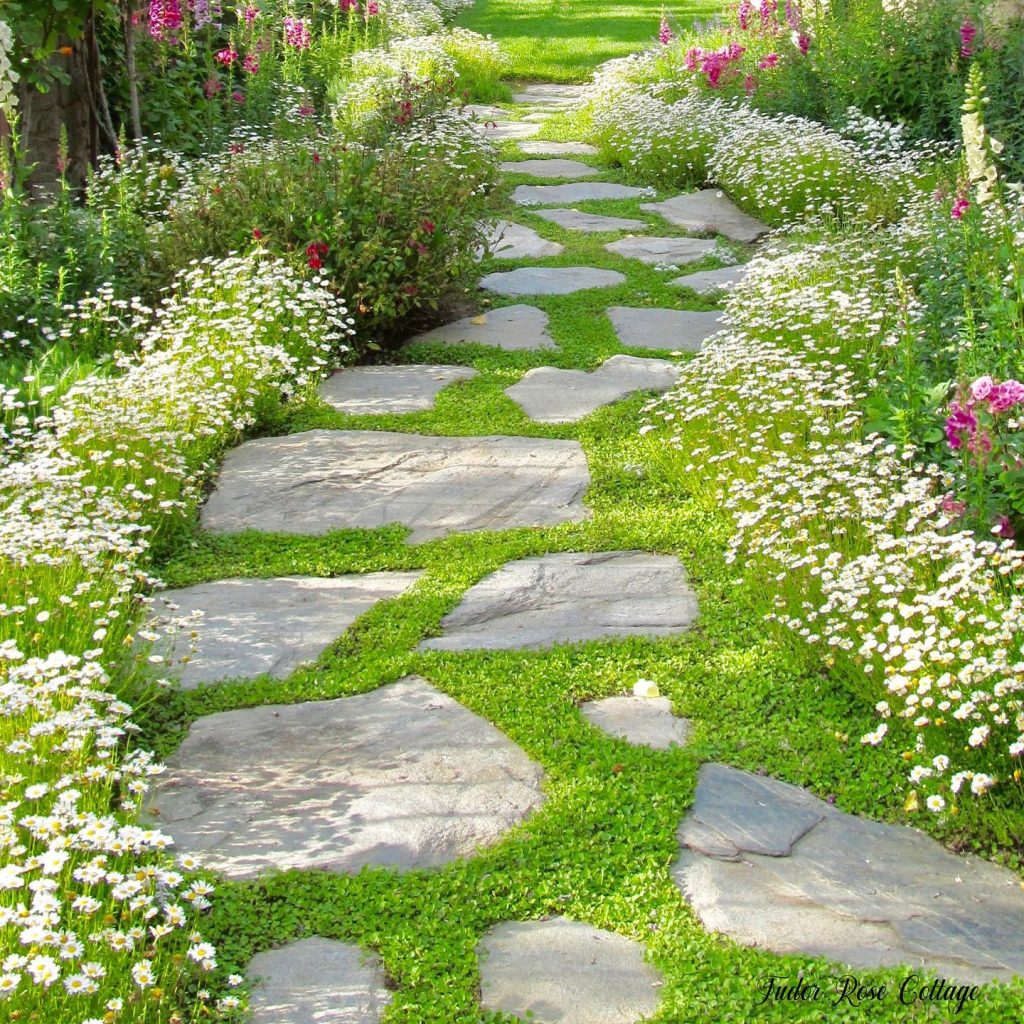
Letting a low-spreading green filler grow between large flat stepping stones, then surrounding the whole path in cottage flowers, turns a simple walkway into the prettiest part of the whole yard. This layered approach makes walkable ground cover feel less like a lawn solution and more like an intentional garden feature.
The stones stay stable underfoot while the green filler softens every edge between them. Daisies and tall spikes of color along the sides give the path a lush, romantic feel that plain grass edging never quite achieves.
Budget Note: Low-growing groundcover plugs for stone gaps typically cost $4 to $8 each at Home Depot, and a modest path usually needs fifteen to twenty plants total.
Thyme Between Pavers Creates Colorful Walkable Ground Cover Near Stairs
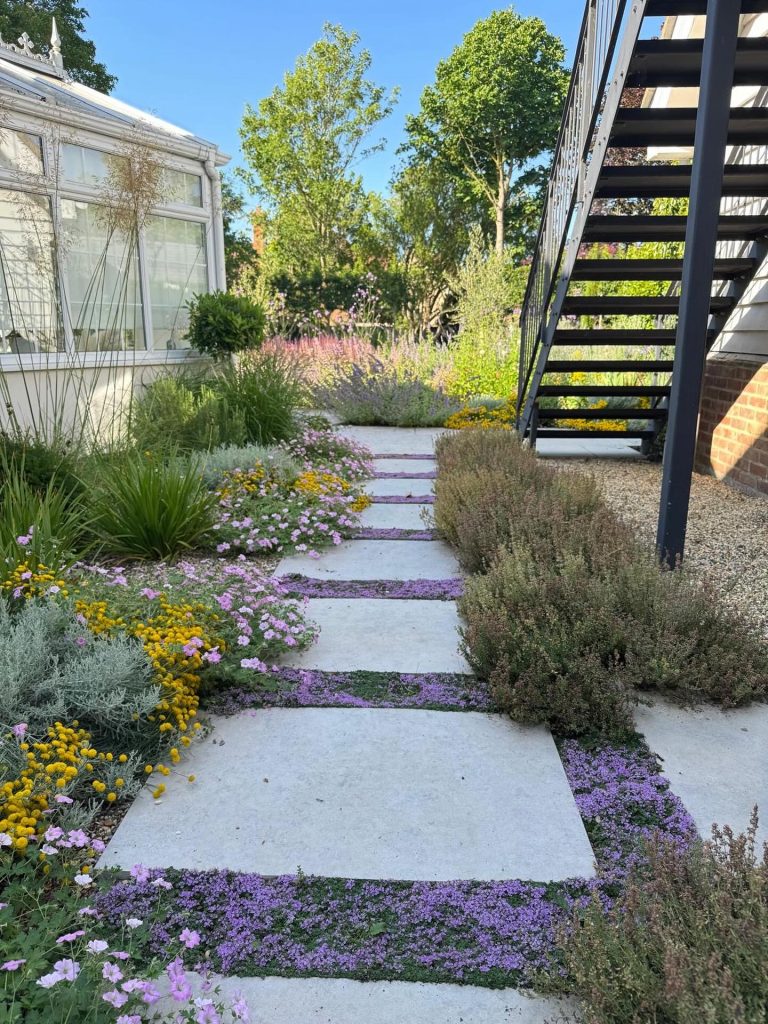
Planting a mix of flowering thyme along a paver path that leads up toward outdoor stairs softens what would otherwise be a purely functional walkway. This kind of walkable ground cover thrives in the gravelly, well-drained soil often found near staircases and foundations.
The purple blooms create a cohesive line of color that pulls the entire path together, even where the stones shift direction. Nearby ornamental grasses and ferny herbs give the whole area a layered, professionally designed feel without much extra cost.
Budget Note: Flowering thyme plants typically cost $5 to $10 each at garden centers, and lining a paver path near stairs usually costs $80 to $150 in plants total.
Clover Handles Full Yard Coverage Better Than Most Walkable Ground Cover
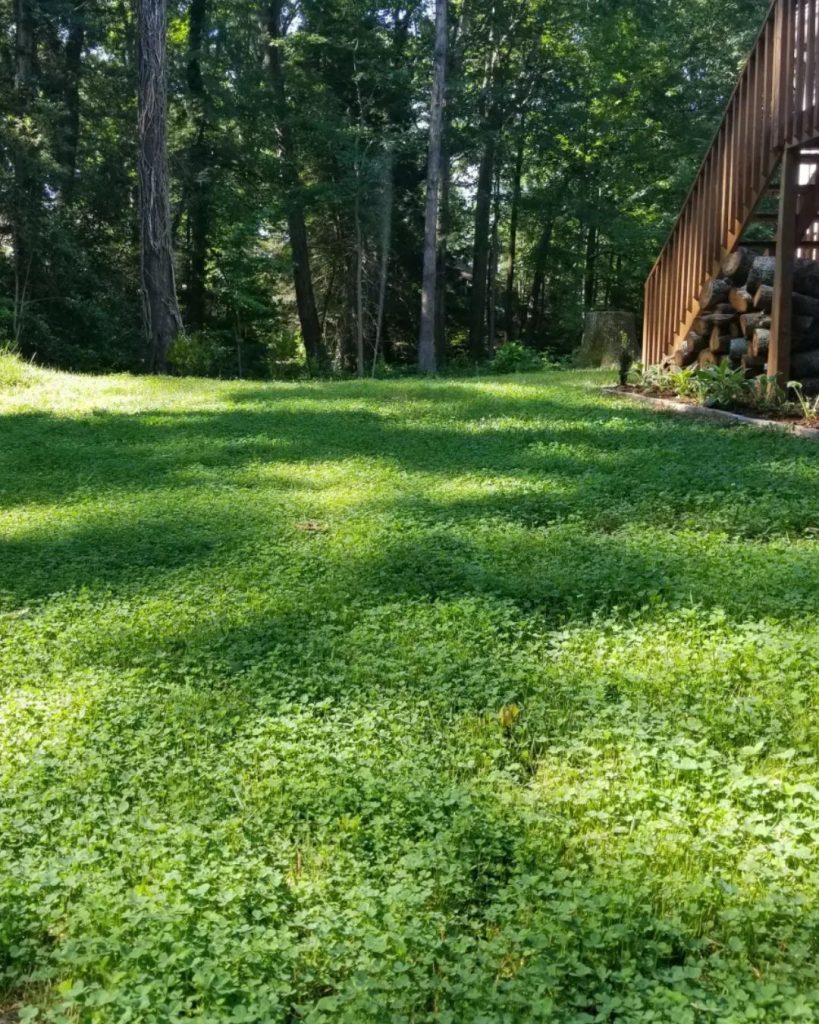
Replacing a full backyard lawn with soft, dense clover solves the problem of shaded, patchy grass in one move. Clover is one of the few options that works as walkable ground cover across an entire yard, not just a narrow path or garden edge.
It stays green with far less water than traditional grass and actually improves the soil underneath it as it grows. This idea works especially well under mature trees, where dappled shade usually leaves regular lawn thin and struggling most of the season.
Budget Note: Clover seed typically costs $15 to $30 for enough coverage of a standard backyard, available at Home Depot or Amazon.
Mom Notes
Before you commit to any groundcover, walk the exact path your family actually uses for a week and pay attention to where feet land. Planting slightly outside that worn line, rather than directly on it, gives new plants a real chance to establish before anyone steps on them again.
Dichondra Fills Wide Concrete Gaps With Lush Walkable Ground Cover
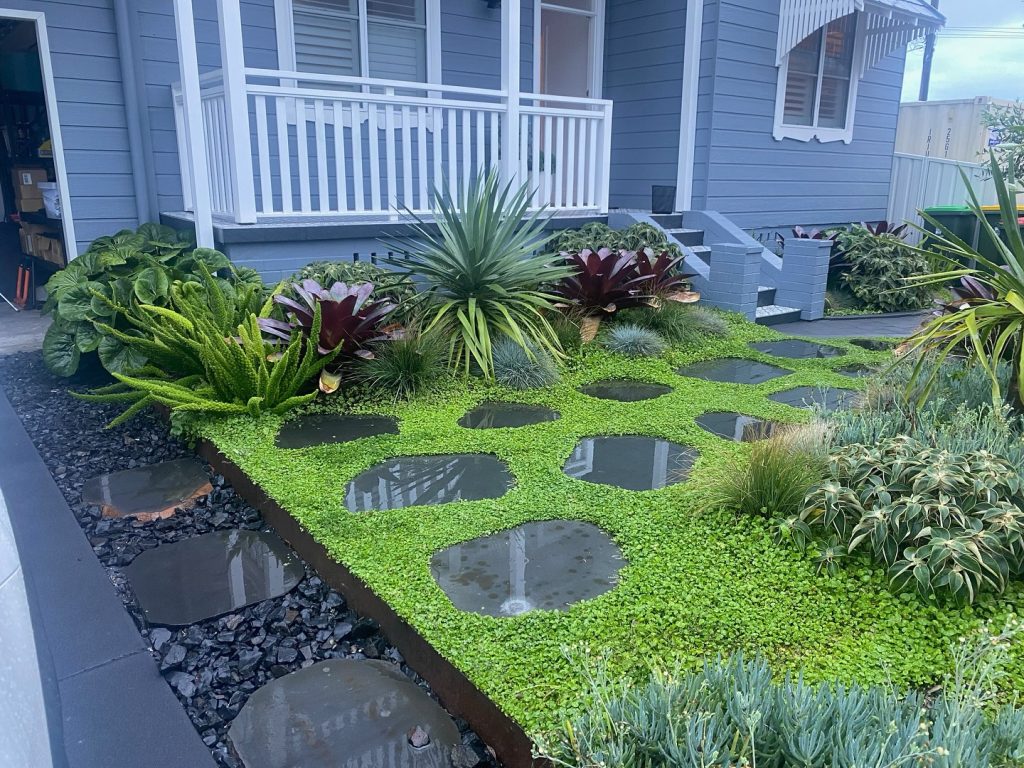
Filling wide gaps between oversized concrete pavers with dense, round-leafed dichondra creates a striking contemporary look that still holds up to regular foot traffic. This kind of walkable ground cover spreads quickly and forms a solid mat that reads almost like a soft green rug.
The rounded leaf shape gives it a slightly different texture than thyme or clover, which makes it a good choice if you want something a bit more lush and tropical-looking. Paired with bold tropical plants nearby, dichondra fits especially well in warm-climate gardens.
Budget Note: Dichondra plugs or seed mats typically cost $6 to $15 depending on coverage, available through specialty nurseries or online garden suppliers.
Mondo Grass Frames Modern Pavers With Neat Walkable Ground Cover
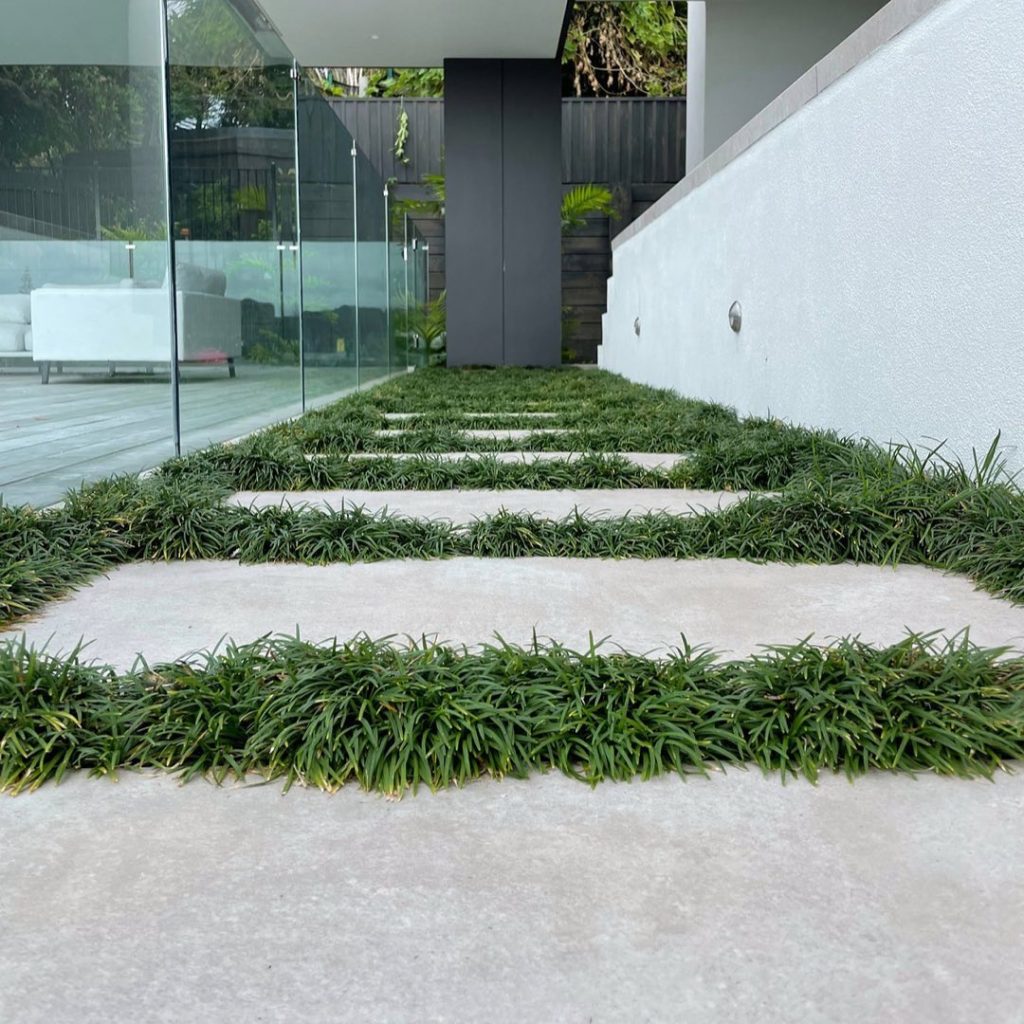
Lining a row of smooth concrete pavers with dense, dark green mondo grass gives a modern walkway a crisp, tailored finish. This particular walkable ground cover grows in tight clumps that stay neat without constant trimming, which suits a clean architectural look.
The grass tolerates both sun and partial shade, making it flexible for a path that shifts between exposed and covered areas throughout the day. Its fine texture reads almost like a living border, outlining each paver with a soft green edge.
Budget Note: Dwarf mondo grass plugs typically cost $3 to $7 each at Home Depot or online nurseries, and a modest paver path usually needs thirty to forty plants for full coverage.
Dichondra Softens a Shaded Side Path Into Livable Walkable Ground Cover
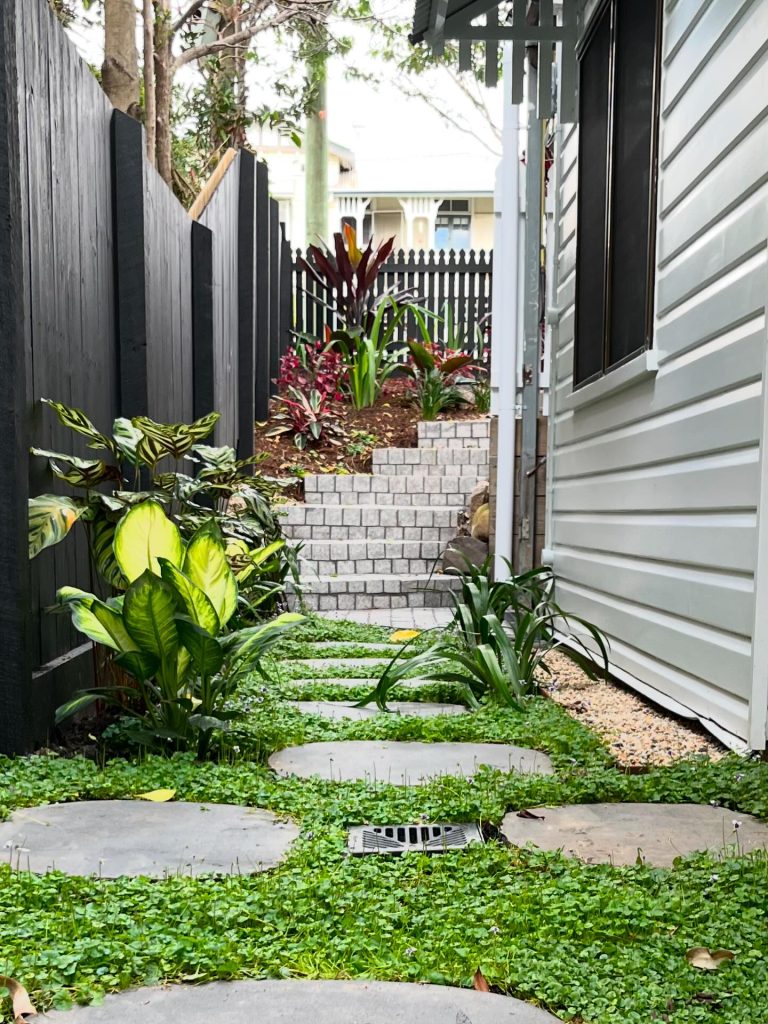
Threading round stepping stones through a bed of low, spreading green filler turns a shaded, narrow side path into one of the most charming parts of a whole property. This kind of walkable ground cover thrives in the dappled light that tall fences and mature trees usually create along these tight spaces.
Tropical foliage planted just off the path adds color and texture without crowding the actual walking surface. This idea works particularly well for older homes with narrow side yards that connect a front entry to a backyard gate.
Budget Note: Shade-tolerant groundcover plugs typically cost $4 to $8 each, and a narrow side path usually needs fifteen to twenty-five plants depending on length.
What Makes Walkable Ground Cover Worth Choosing Over Grass
The best walkable ground cover rarely comes from the most expensive landscaping crew. It comes from matching the right low-growing plant to the exact amount of foot traffic and light a specific spot actually gets.
Every idea on this list shares one trait in common. Each plant was chosen because it tolerates repeated steps without thinning out the way traditional grass eventually does in high-traffic areas.
Quick Take
Narrow side yard or shaded path, reach for creeping thyme or a shade tolerant filler. Full backyard replacement, clover handles the whole space with far less water. Modern paver walkway, mondo grass or dichondra keeps clean, tailored lines around every stone.
Grass is built for wide open lawns, not narrow side paths, shaded corners, or the strip beside a driveway that gets walked on daily. That mismatch is exactly why so many families end up with bare, muddy patches no matter how much seed they put down.
Once established, most of these groundcover options genuinely need less mowing, less watering, and less fighting than the grass they replaced. That shift from constant upkeep to quiet resilience is really the whole point of choosing groundcover in the first place.