
Join Our Newsletter for Cozy Home Inspiration, Family Fun, and Delicious Recipes Every Week
Earthy Neutral Organic Kitchen Ideas That Made My Home Feel Like It Finally Fit Us

Disclaimer. Some images featured in this post may originate from third-party sources and are used for illustrative purposes only. Please review our Image Credits Policy for attribution information.
I stood in my kitchen last winter holding a grocery bag in one hand and a fake plant in the other, wondering why the room still felt cold. The cabinets were fine. The counters were fine. Nothing was wrong exactly, but nothing felt like home either. That was the night I first typed organic kitchen into a search bar out of pure frustration.
I did not expect much. I had already tried a dozen small updates that year. New towels, a different soap dispenser, a basket here and there that never quite landed right.
What I found instead was a whole world of kitchens that felt warm without trying too hard. Wood tones next to soft whites. Plants that spilled over shelves instead of sitting stiff in a corner. Nothing matched perfectly, and somehow that made it feel more like a real home.
I started saving pictures late at night after the kids were asleep. My husband would find me scrolling with my tea going cold, zooming in on shelf brackets and cabinet pulls. He thought I was overthinking it. I probably was.
But something about those spaces kept pulling me back. They were not showroom kitchens. They had jars that did not match, cutting boards leaning instead of hanging, and plants that looked like they had been there for years.
That is when I understood what I actually wanted. Not a redesign. Just a kitchen that breathed a little.
An organic kitchen is not about ripping everything out and starting over. It is about letting natural materials, real greenery, and a little imperfection back into a space that had gotten too stiff. Wood grain instead of high gloss. Woven baskets instead of plastic bins.
I started with one shelf. Then one plant. Then a rug that felt too rustic for our old style but somehow fit perfectly once it was down.
Every idea I am about to share came from that same late-night scrolling habit. None of them cost a fortune. None of them required a contractor or a weekend of chaos.
What they required was permission to let the kitchen feel lived in instead of styled. That shift changed how our whole family used the room, not just how it looked.
If you have ever stood in your own kitchen wondering why it does not feel like yours yet, this list is for you. Every idea here leans into the same organic kitchen feeling that pulled me in that first night. Warm, textured, a little imperfect, and completely worth trying.
What We're Exploring
- 01 Let Open Shelves Hold Real Greenery, Not Just Décor
- 02 Hang a Plant Shelf Above the Island for an Instant Focal Point
- 03 Choose Raw Wood Cabinetry for a Kitchen That Feels Grounded
- 04 Add a Wood Dining Nook Right Into the Kitchen Island
- 05 Bring In Olive Branches for Effortless Natural Styling
- 06 Style a Cozy Corner With Layered Textures in a Small Kitchen
- 07 Choose a Soft Sage Island to Anchor a Warm, Classic Kitchen
- 08 What Makes a Kitchen Feel Like It Actually Belongs to Your Family
- 09 Quick Take
Let Open Shelves Hold Real Greenery, Not Just Décor
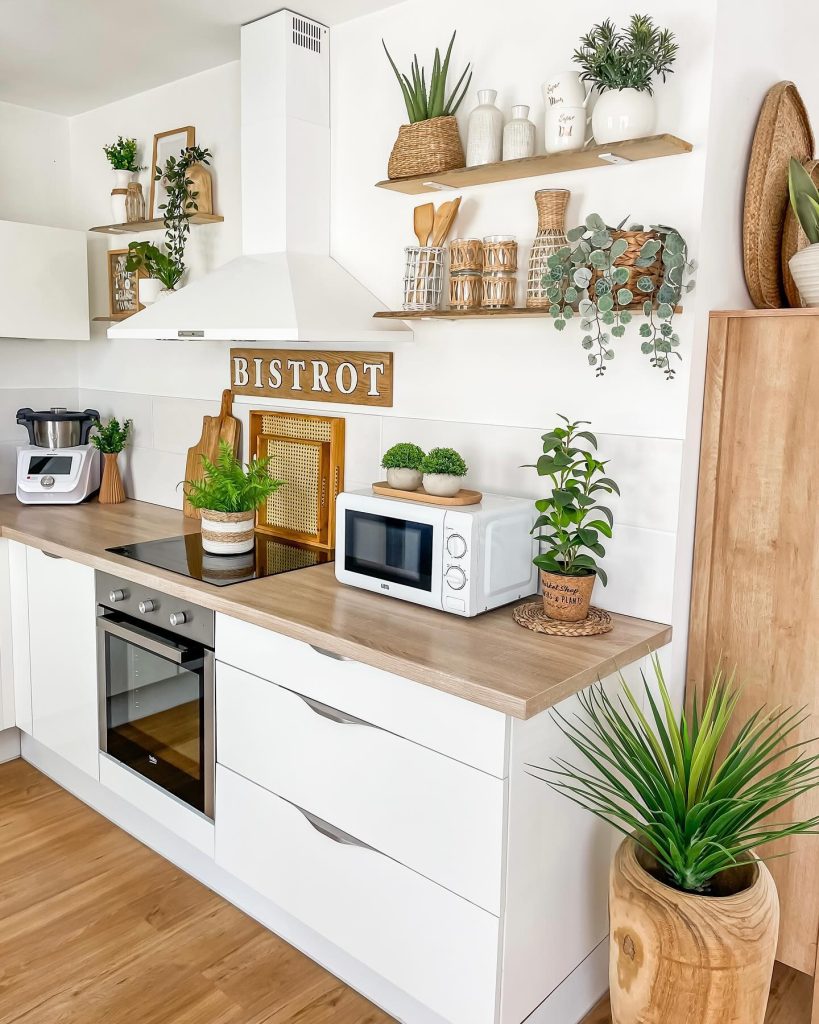
Open shelving gets a bad reputation for being hard to keep tidy, but the secret is filling it with things that are meant to be seen. A mix of trailing greenery, simple ceramic vases, and a woven basket instantly softens a wall that used to feel bare. This is one of the easiest ways to bring the organic kitchen look into a space without touching a single cabinet.
This idea works especially well above a stove hood, where a plain white space usually goes unused. A little wooden sign, a stack of vases, and one good trailing plant turn that dead zone into the prettiest corner in the room. It is the kind of small refresh that design editors at Better Homes and Gardens often point to as making the biggest visual difference for the least effort.
Budget Note: Floating wood shelves typically range from $18 to $40, and faux trailing plants run $10 to $25 at IKEA, Amazon, or HomeGoods.
Hang a Plant Shelf Above the Island for an Instant Focal Point
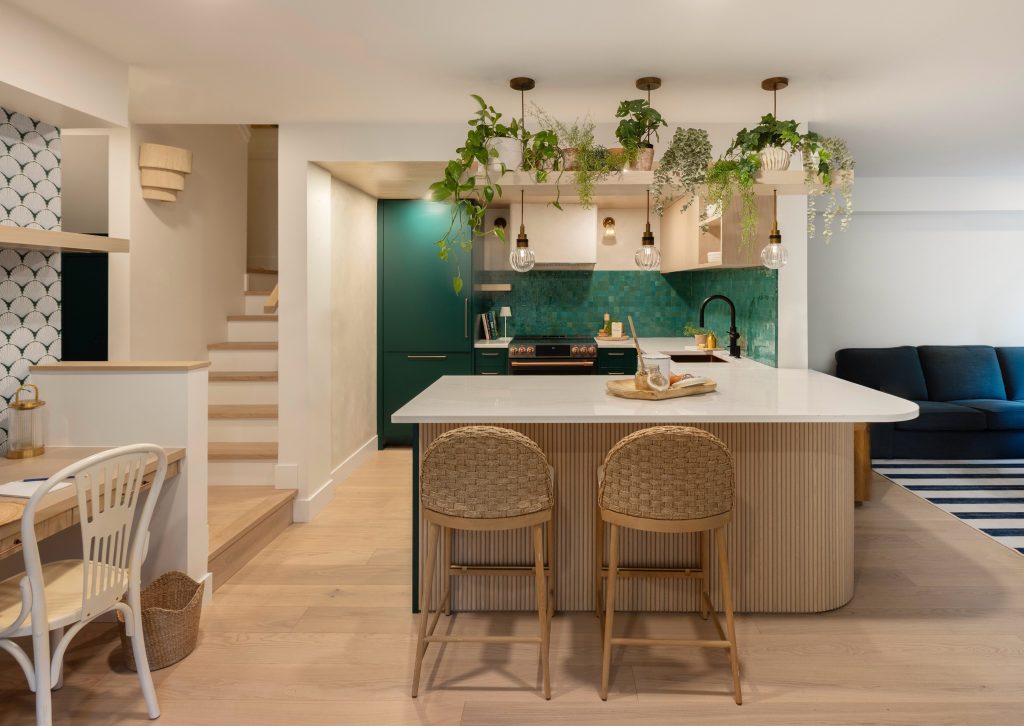
A single organic kitchen feature can change the entire feel of an island, and a hanging shelf lined with greenery does exactly that. Suspended just above eye level, it draws attention upward without blocking the view across the counter. It feels less like decorating and more like bringing a little bit of the outdoors inside.
This idea shines in kitchens with bold cabinet colors, since the greenery softens strong tones without competing with them. It is a favorite trick among designers featured on Apartment Therapy, who often use hanging plant shelves to make deep jewel-tone kitchens feel warm instead of heavy.
Budget Note: A suspended wood plant shelf runs about $60 to $120, with small terra cotta pots costing $4 to $10 each at Target, Amazon, or a local nursery.
Choose Raw Wood Cabinetry for a Kitchen That Feels Grounded
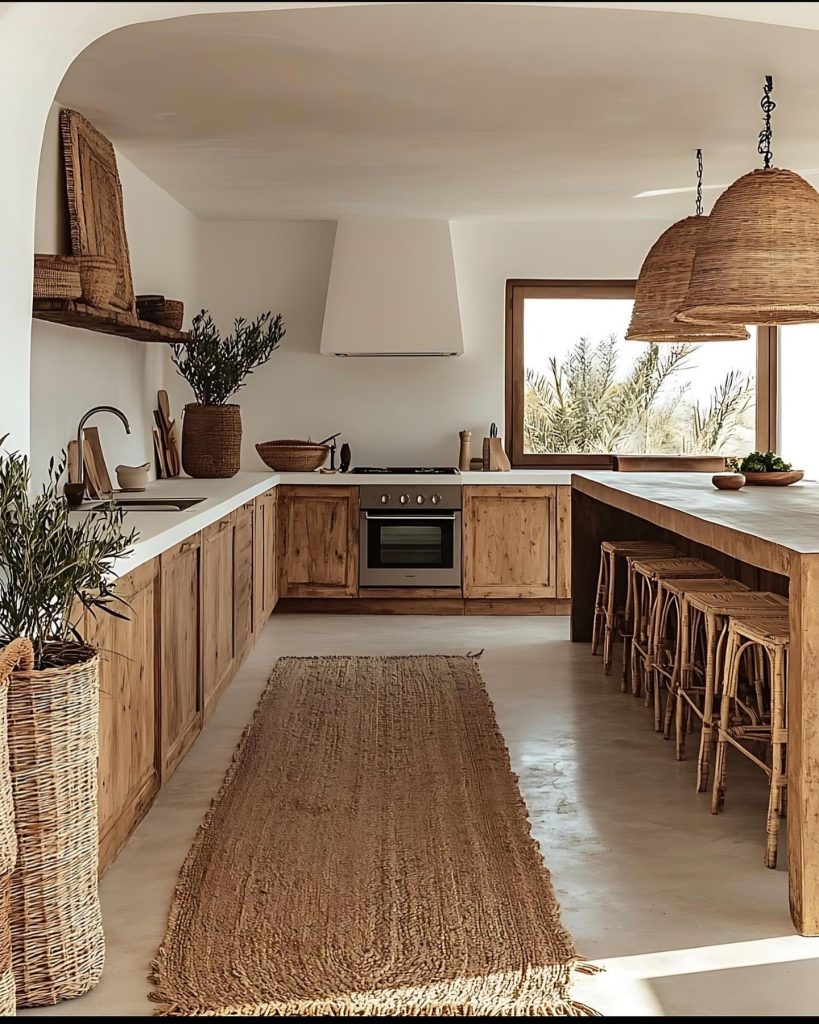
Pairing raw wood with simple white countertops keeps the space from feeling too heavy or rustic. Woven pendant lighting and a jute rug underfoot round out the feel without adding a single extra color to the room. Everything stays in the same warm family, which is part of why the style photographs so beautifully and lives so comfortably in real life.
This look works best in kitchens with plenty of natural light, since the wood tones deepen and shift throughout the day. A woven runner rug adds texture underfoot and hides everyday scuffs far better than a flat mat ever could.
Budget Note: A jute runner rug ranges from $50 to $150, and woven pendant shades cost $40 to $90 at Target, Amazon, or World Market.
Add a Wood Dining Nook Right Into the Kitchen Island
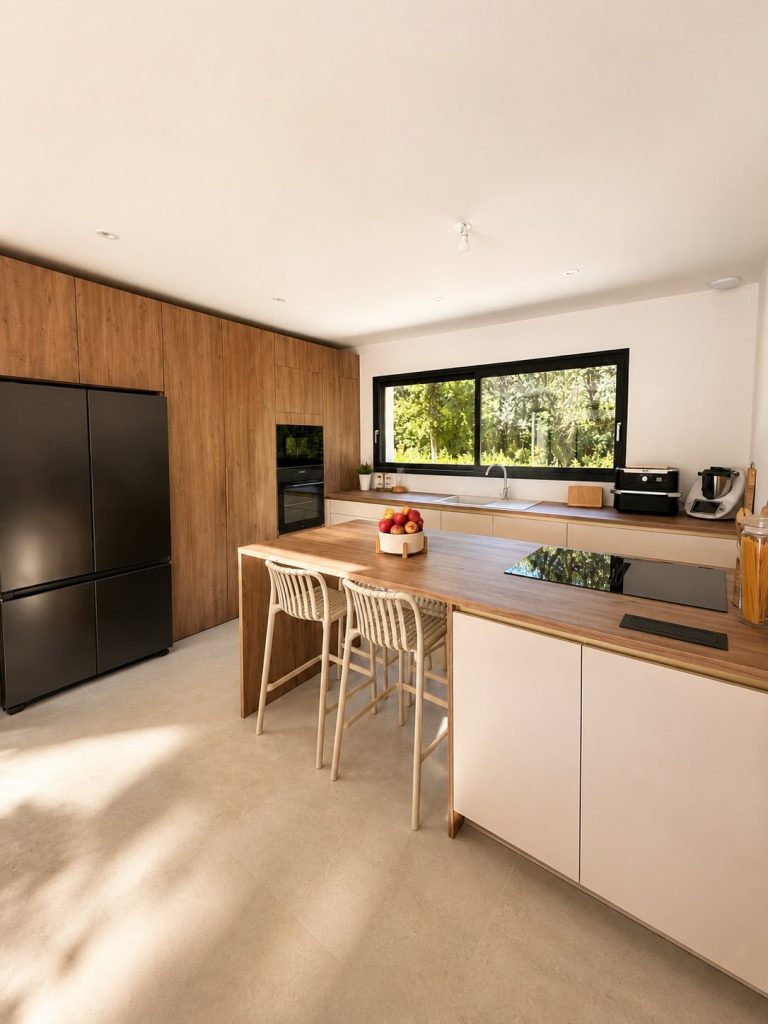
Matching the table wood tone to the surrounding cabinetry keeps the whole area feeling like one connected piece instead of two competing styles. Simple woven or wire chairs add just enough texture without crowding the space. The result feels more like a farmhouse table than a kitchen island, which is exactly the point.
This setup also makes the kitchen the natural gathering spot during parties, since guests have somewhere to sit that is not the counter stools everyone already crowded around. A cutting board and a bowl of fruit are all it takes to make the space feel finished, a styling trick often mentioned by The Kitchn when discussing kitchen islands that double as a family hub.
Budget Note: A custom wood table extension typically costs $300 to $700 through a local carpenter, while woven counter stools run $80 to $150 at IKEA or World Market.
Bring In Olive Branches for Effortless Natural Styling
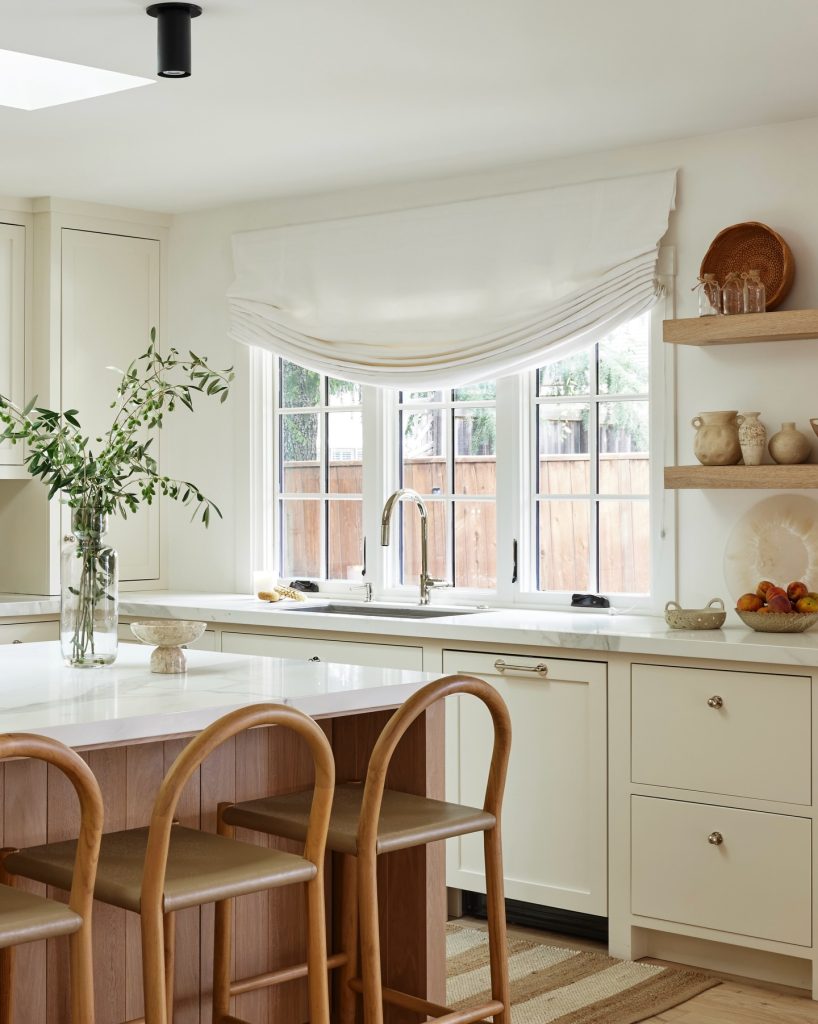
A tall glass vase filled with fresh or faux olive branches is one of the simplest ways to add movement to a kitchen without adding clutter. The long, slightly wild stems catch the light differently throughout the day, which keeps the counter from ever feeling static. This is the kind of low-effort, high-impact touch that defines the organic kitchen aesthetic.
Olive branches pair beautifully with natural stone counters, since the muted green tones echo the soft grey and cream veining already in the stone. A simple glass vase, not a decorative one, keeps the focus entirely on the greenery itself. Nothing about this idea requires watering schedules or plant care knowledge, which is exactly why it works for busy households.
Budget Note: Faux olive branch stems cost $8 to $18 each, and a tall glass vase runs $12 to $30 at HomeGoods, Amazon, or Target.
Style a Cozy Corner With Layered Textures in a Small Kitchen
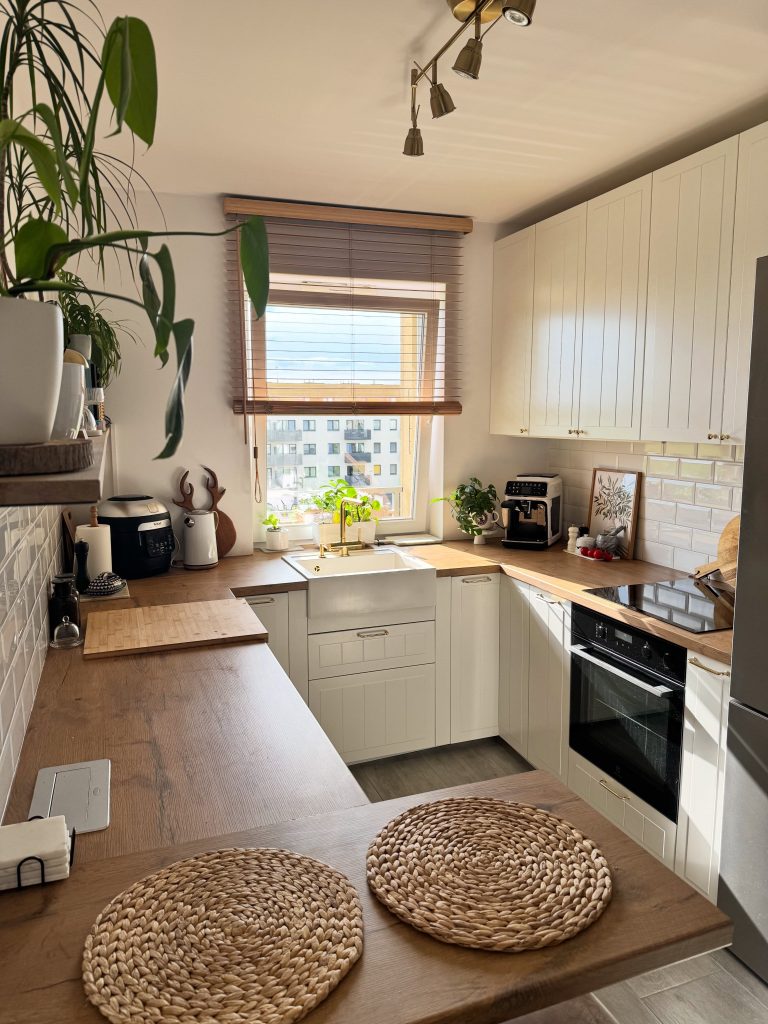
Small kitchens often get skipped in design conversations, but they hold onto warmth just as well as larger ones when the layers are right. A woven trivet, a wood cutting board leaning against the backsplash, and one healthy plant on the windowsill do more work than any single big purchase could. This is the organic kitchen approach at its most accessible, proving the style has nothing to do with square footage.
Brass fixtures and warm wood counters play especially well together in tighter spaces, since they reflect light instead of absorbing it the way darker finishes can. A single framed piece of botanical art on the counter adds personality without taking up drawer space. Every texture added here earns its spot instead of just filling a gap.
Budget Note: Woven coasters and trivets cost $10 to $20 for a set and small botanical prints run $15 to $35 at Amazon, IKEA, or a local shop.
Choose a Soft Sage Island to Anchor a Warm, Classic Kitchen
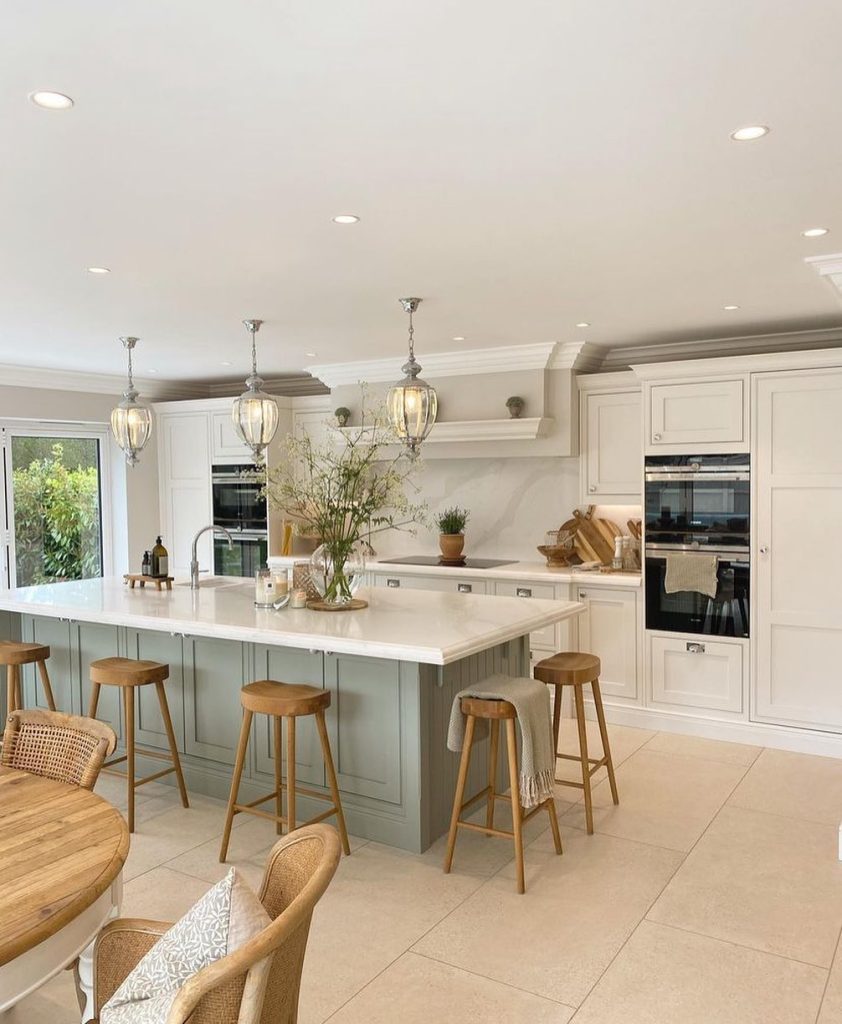
A soft sage island paired with warm white perimeter cabinets gives a kitchen a classic feel without leaning cold or clinical. The green reads as a neutral rather than a bold statement, which means it ages well and never feels like a passing trend. It is one of the most requested combinations among readers chasing the organic kitchen look for a more traditional home.
Wood stools pull the sage and white together, echoing the same warmth found in wood floors or ceiling beams nearby. Glass pendant lighting keeps the eye moving upward instead of stopping flat at the island, which makes the whole room feel taller. Fresh greenery on the counter finishes the look without adding another hard surface to clean.
Budget Note: A gallon of sage cabinet paint runs $45 to $70, and glass pendant lights cost $60 to $150 at Sherwin-Williams, Amazon, or Lowe’s.
What Makes a Kitchen Feel Like It Actually Belongs to Your Family
The more of these ideas I tried, the more I noticed a pattern that had nothing to do with money spent. Every change that stuck made the kitchen easier to live in, not just prettier to photograph. Real texture, real greenery, and real materials tend to age with a family instead of against it.
A kitchen that leans too polished can start to feel like it belongs to someone else. Fingerprints, cutting board scratches, and a plant that needs trimming are not flaws in an organic kitchen; they are proof the room gets used. That shift in thinking changed how I approach every small update now.
Quick Take
If you only try one thing from this list, start with the open shelf and a trailing plant near your stove. It takes under an hour, costs less than thirty dollars, and gives the fastest visible shift toward that organic kitchen feeling. Everything else can follow at whatever pace fits your week.
I also noticed how much easier it became to keep the kitchen tidy once the styling felt natural instead of forced. When every object earns its spot, there is simply less to manage and less to second-guess. A basket does not need to be perfectly centered to look right; it just needs to belong.
Family kitchens are not showrooms, and they were never meant to be. The best ones tell you exactly who lives there, what they cook, and how they gather, all without a single word.