
Join Our Newsletter for Cozy Home Inspiration, Family Fun, and Delicious Recipes Every Week
Easy Things You Can Repurpose as Garden Planters Without Spending A Single Dollar

Disclaimer. Some images featured in this post may originate from third-party sources and are used for illustrative purposes only. Please review our Image Credits Policy for attribution information.
I was standing in my garage last spring holding an empty bleach bottle, about to toss it, when I stopped myself. My garden planters budget for the season was already gone, and my basil seedlings were still sitting in their flimsy plastic trays.
I looked at that bottle a little longer than I probably should have. It was sturdy, it had a handle, and it was already the perfect size for one plant. So I rinsed it out and cut it open instead of throwing it away.
That one bottle turned into a habit. Every time something empty crossed my counter, I started asking whether it could hold soil before I asked whether it belonged in the trash. A yogurt tub, an old boot, a chipped mug—all of it got a second look.
I started following gardeners online who did the same thing, and I could not stop scrolling. Some had turned dresser drawers into raised beds. Others had painted plain pots until they looked like something from a boutique.
None of it looked expensive. Most of it looked like stuff that had been sitting around a garage or a curb for months. That was the part that got me the most.
I began saving every idea that made me pause, the way you do when something feels obvious in hindsight but you never thought of it yourself. A coconut shell as a tiny planter. A stack of buckets built into a vertical garden. A plastic jug painted with a face.
None of these ideas needed a trip to a garden center. They needed a little patience, a little paint sometimes, and a willingness to look at trash differently for five minutes. That shift changed how I saw my whole backyard.
I started noticing containers everywhere once I trained my eye to look. The recycling bin stopped being an afterthought and became a small shopping trip. My kids even started pointing out bottles and jars they thought would make good planters, which was its own kind of win.
What I gathered from all that scrolling and experimenting is six ideas that felt different enough, useful enough, and pretty enough to actually try. Each one turns something ordinary into a spot for something green to grow. Here is everything I found worth sharing.
What We're Exploring
- 01 Garden Planters Made From Plastic Bottles Hanging On A Fence
- 02 What You Need Before You Start.
- 03 Garden Planters Built From Stacked Five-Gallon Buckets
- 04 Garden Planters Painted With Playful Faces For A Porch Full Of Personality
- 05 Garden Planters Grown Right Out Of An Old Dresser
- 06 Garden Planters Made From A Painted Plastic Jug
- 07 Garden Planters Carved From A Simple Coconut Shell
- 08 Why Repurposed Containers End Up Looking Better Than Store-Bought Ones
- 09 Mom Notes
Garden Planters Made From Plastic Bottles Hanging On A Fence
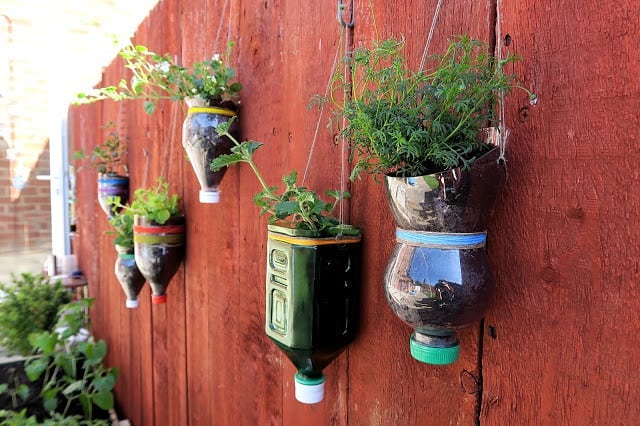
A row of plastic bottles cut open and hung along a fence turns a bare wall into a living herb garden overnight. Each bottle only needs one cut and a bit of string, which makes this one of the fastest garden planter projects on this whole list. A fence that used to feel blank suddenly holds mint, basil, and trailing greens at eye level.
Better Homes and Gardens has pointed out that vertical growing setups make the most of tight outdoor spaces, and a fence full of bottles does exactly that.
Budget Note: A roll of garden twine costs about $4 at Amazon or Home Depot, and the bottles themselves cost nothing since they are already headed for recycling.
What You Need Before You Start.
- Something to repurpose, a bottle, bucket, jug, or old piece of furniture
- A drill or sharp scissors for drainage holes
- Outdoor acrylic paint if you plan to decorate
- Landscape fabric for wood or porous containers
- Potting soil and a few starter plants or cuttings
- String, twine, or hooks if the container will hang
Garden Planters Built From Stacked Five-Gallon Buckets
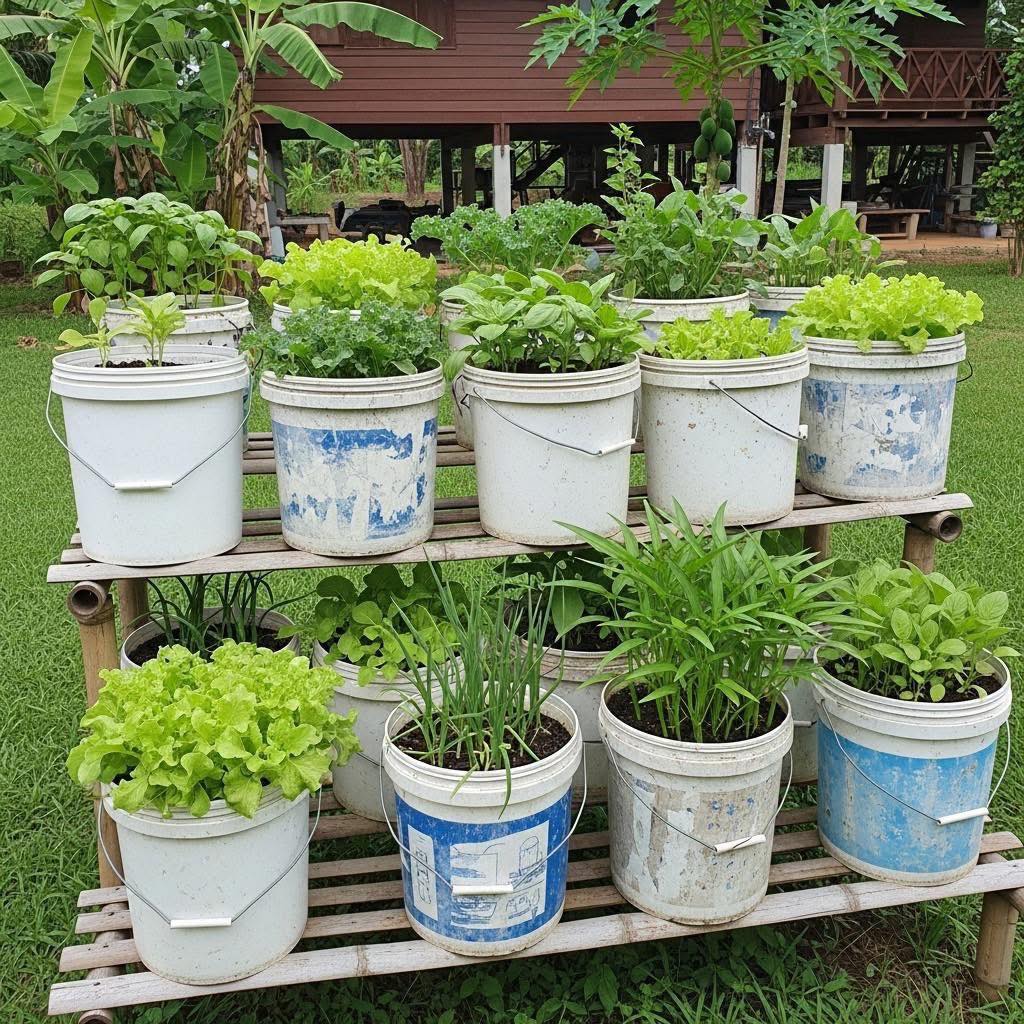
A tiered shelf lined with old five-gallon buckets can hold an entire mini vegetable garden in a fraction of the space a traditional raised bed needs. Lettuce, herbs, and greens all do well in buckets, and stacking them on a simple wooden rack keeps everything within easy reach. This kind of garden planter setup feels like a real solution for anyone short on yard space.
What makes this idea worth trying is how forgiving the buckets are. A few drainage holes are drilled in the bottom, and they are ready to plant; no special pot is required. HGTV has written about how container gardening lets people grow a surprising amount of food in a small footprint, and a bucket wall proves that point well.
Budget Note: A basic drill bit for drainage holes runs about $8 at Home Depot, and used five-gallon buckets are often free from restaurants or hardware stores.
Garden Planters Painted With Playful Faces For A Porch Full Of Personality
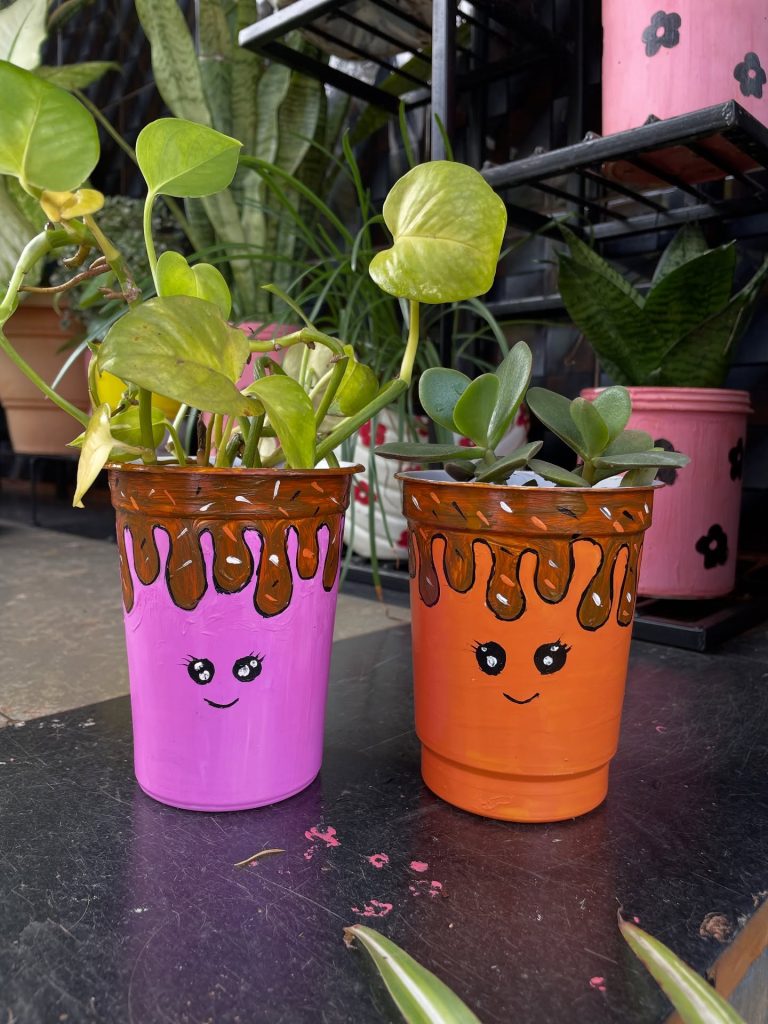
This idea works because it costs almost nothing compared to buying decorative pots from a store. A plain terracotta pot runs a few dollars, and the paint job is what makes it feel special. Apartment Therapy has noted that small handmade details like painted pots do more to personalize an outdoor space than expensive furniture ever does.
Painting two pots in different colors, like the pink and orange pairing, gives a porch a playful pop without clashing with the rest of the plants. This is also a lovely project for kids, since a simple face only needs a few dots and a curved smile. Letting the paint job be a little imperfect only adds to the charm here.
Budget Note: Terracotta pots run $2 to $5 each at Home Depot or Target, and a basic acrylic paint set costs around $10 at Michaels.
Garden Planters Grown Right Out Of An Old Dresser
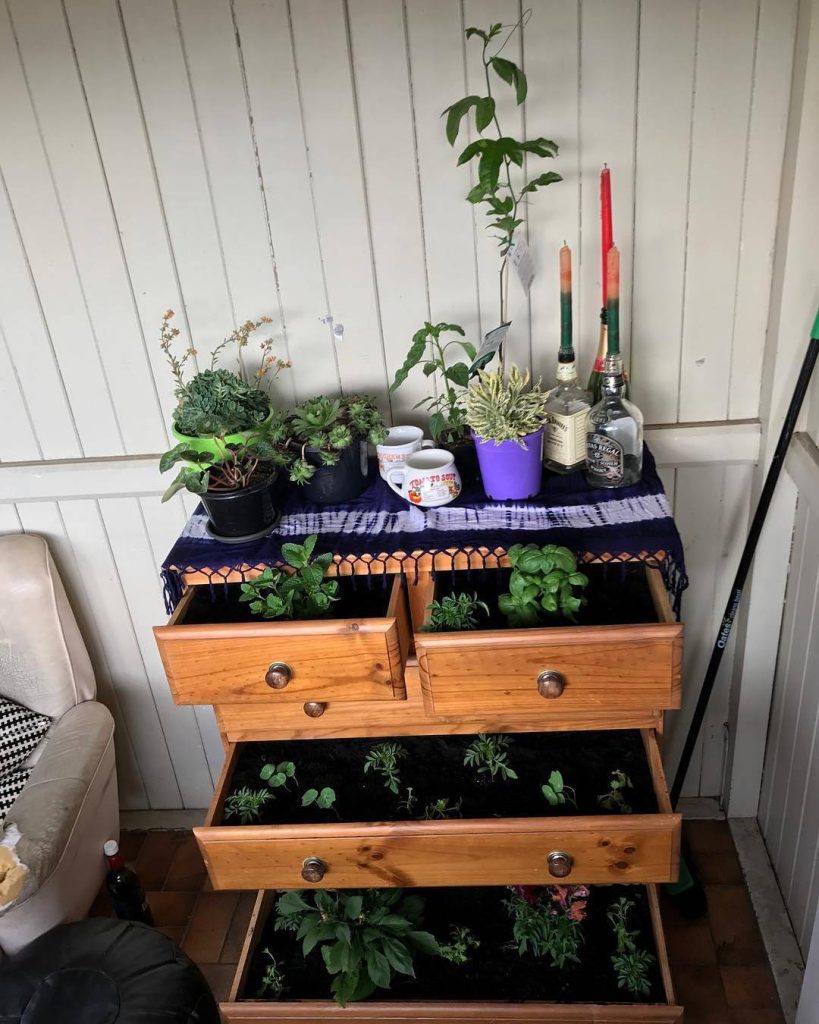
An old dresser with the drawers pulled halfway open, each one filled with soil and seedlings, might be the most creative garden planter idea on this entire list. It turns a piece of furniture that would normally head to the curb into a tiered garden with real visual interest. The wood grain and drawer pulls give it a charm that a plain planter box could never match.
Lining the drawers with a bit of landscape fabric before adding soil helps the wood last longer outside. Different drawers can hold different plants: herbs up top where they are easy to reach and flowers lower down where they catch more eyes. This is a weekend project that turns into a genuine garden centerpiece.
Budget Note: Landscape fabric costs about $10 for a roll at Amazon or Lowe’s, and the dresser itself is often free from a curb pickup or thrift store.
Garden Planters Made From A Painted Plastic Jug
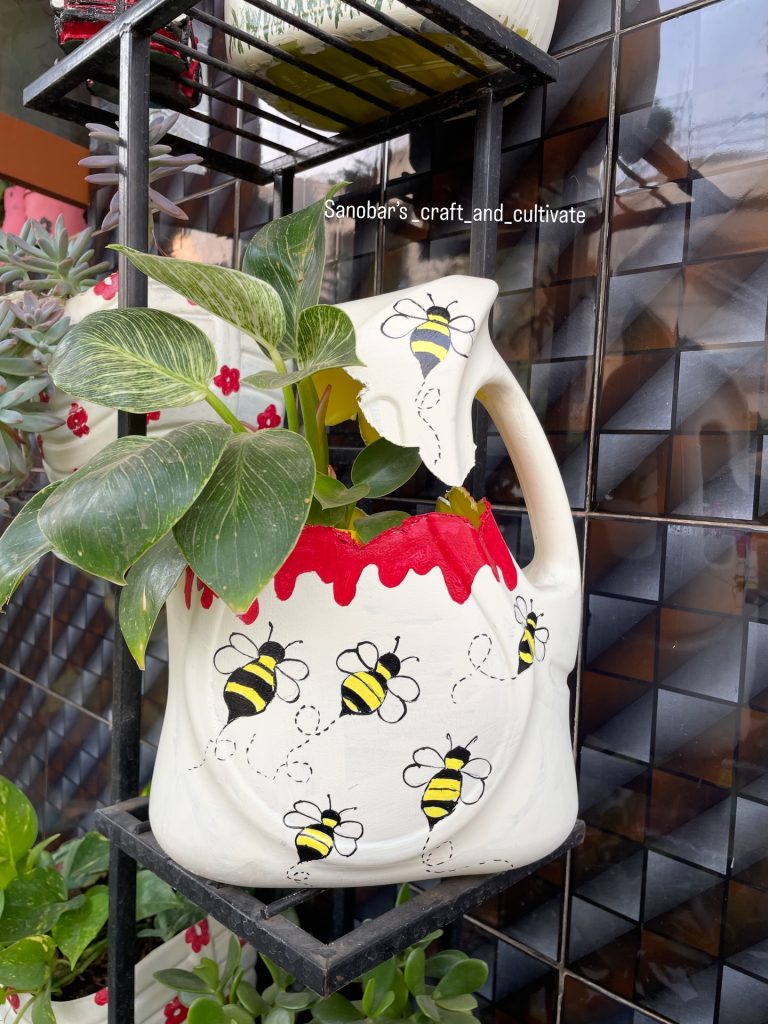
The handle actually makes it more useful than a typical pot, since it hangs easily from a hook or a shelf bracket. This kind of garden planters project turns something headed for the recycling bin into a piece worth showing off.
This idea works so well because it gives a plant a little lift and movement that a stationary pot cannot offer. Good Housekeeping has pointed out that hanging containers add visual interest to a patio by using vertical space instead of just the ground. A painted jug does that while also adding a splash of color.
Budget Note: A small bottle of outdoor acrylic paint costs about $6 at Michaels, and the jug itself is free once it is empty.
Garden Planters Carved From A Simple Coconut Shell
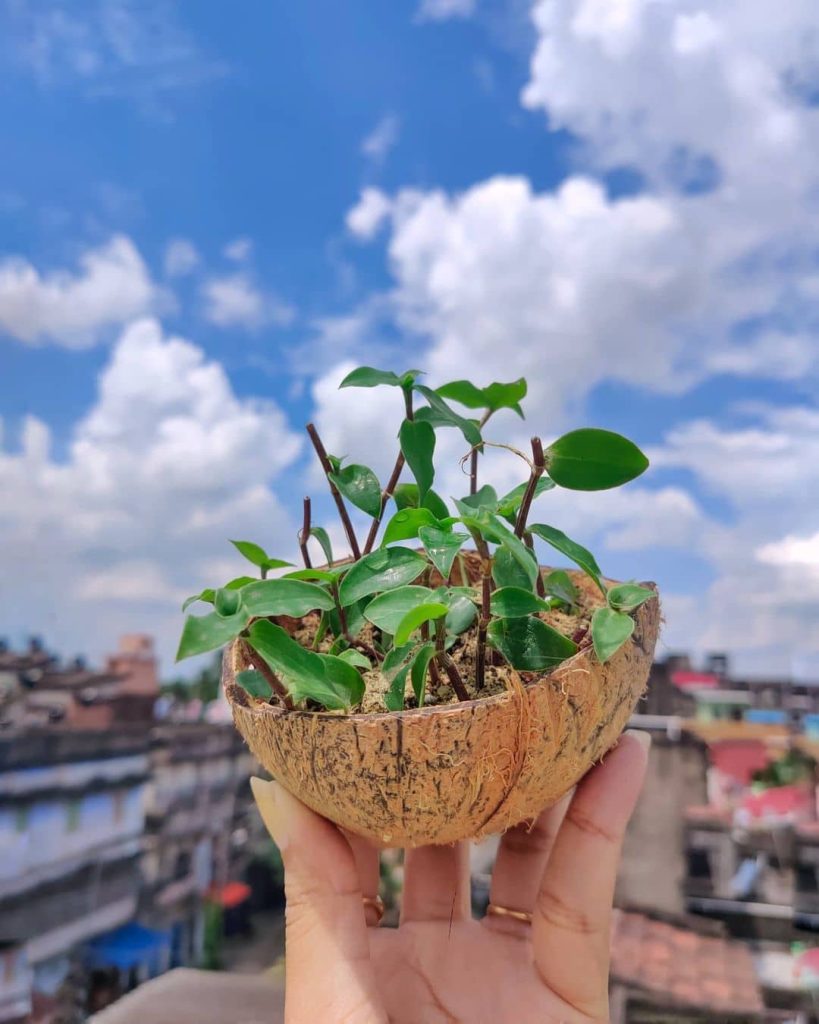
A halved coconut shell, filled with a few small cuttings, is one of the most unexpected garden planters ideas and also one of the prettiest. The natural texture and curve of the shell give it a look no plastic pot could copy. It works beautifully for small trailing plants that do not need much root space.
A coconut planter is light enough to hold in one hand, which makes it a sweet little gift for a friend who loves plants. It also works well indoors on a sunny windowsill if outdoor space is limited. This is the kind of project that feels a little bit special every time you look at it.
Budget Note: A whole coconut costs about $2 to $4 at most grocery stores, and small plant cuttings are often free from a friend’s existing plants.
Why Repurposed Containers End Up Looking Better Than Store-Bought Ones
A garden built entirely from matching store-bought pots can start to feel a little flat after a while. Repurposed containers bring texture and history into the mix instead, which makes the whole space feel collected over time. That difference is subtle, but it changes how a yard feels to walk through.
Using what is already on hand also takes the pressure off getting everything perfect at once. A garden built with one bottle, one bucket, and one painted pot at a time grows naturally instead of arriving all finished on a single weekend. That slower pace tends to make the whole project more enjoyable, too.
Mom Notes
If you are trying any of these with kids, let them pick the paint colors and the faces themselves. It does not need to look professional to look good on a porch. And always poke a few drainage holes in the bottom of anything repurposed, since standing water is the fastest way to lose a plant you worked hard to grow.
There is also something satisfying about giving an object a second purpose instead of sending it to a landfill. A dresser drawer full of herbs or a jug covered in painted bees carries a small story with it. That story is part of what makes a garden feel personal instead of purchased.
Repurposed containers also cost next to nothing compared to decorative planters from a garden center. Those savings add up quickly for anyone trying to fill a whole yard or patio. The money saved on containers can go toward soil, seeds, or plants instead.