
Join Our Newsletter for Cozy Home Inspiration, Family Fun, and Delicious Recipes Every Week
Creative Raised Garden Beds Layout Ideas Worth Copying Before You Build Yours

Disclaimer. Some images featured in this post may originate from third-party sources and are used for illustrative purposes only. Please review our Image Credits Policy for attribution information.
I stood at the edge of a half-finished garden fence one evening, watching the sky turn pink, and realized I had no real plan for how the beds inside it should actually sit. The raised garden beds layout was not something I had thought through before we started building.
We had ordered the lumber, picked a spot, and started assembling boxes without much thought for how they would work together as a whole space. It felt backward the moment I stood inside the fence line for the first time.
I remember standing there trying to picture how the beds should be arranged instead of just plopped down randomly. That gap in planning bothered me enough to stop construction for a weekend.
I started searching for garden layouts that night, mostly out of the need to fix a mistake before it became permanent. What I found changed how I thought about the whole project completely.
Some gardens used symmetry and matching arches to create a sense of arrival. Others leaned wild and layered, letting a tangle of peas and trellises spill over the edges of the beds.
I noticed a pattern across every layout that actually worked well. A clear path down the center mattered more than the shape or size of any individual bed.
I redrew our own plan that weekend, using paths as the starting point instead of an afterthought. That single shift made the rest of the layout decisions come together far more easily.
Over the following months, we built out bed by bed, adjusting the plan slightly each time something did not sit quite right. Some choices worked immediately. Others needed a full season before I understood why they mattered.
What surprised me most was how much a thoughtful layout changed how often we actually used the space. It stopped feeling like a chore and started feeling like somewhere worth walking to every evening.
I am sharing the six ideas that shaped our own garden the most. Every one of them came from a real garden I admired online before I ever tried it in our own backyard.
What We're Exploring
- 01 A Lit Center Path Makes Raised Garden Beds Feel Like a Destination
- 02 A Grid Layout With a Focal Shed Keeps a Large Garden Organized
- 03 Mom Notes
- 04 Tall Trellis Focal Points Add Height to a Flat Raised Bed Garden
- 05 A Fenced Enclosure With Raised Beds Keeps Wildlife Out and Structure In
- 06 A Rustic Arched Trellis Turns One Bed Into the Garden Centerpiece
- 07 A Screened Structure Protects an Entire Raised Bed Garden at Once
- 08 What Planning a Garden Layout Taught Me About Slowing Down First
A Lit Center Path Makes Raised Garden Beds Feel Like a Destination
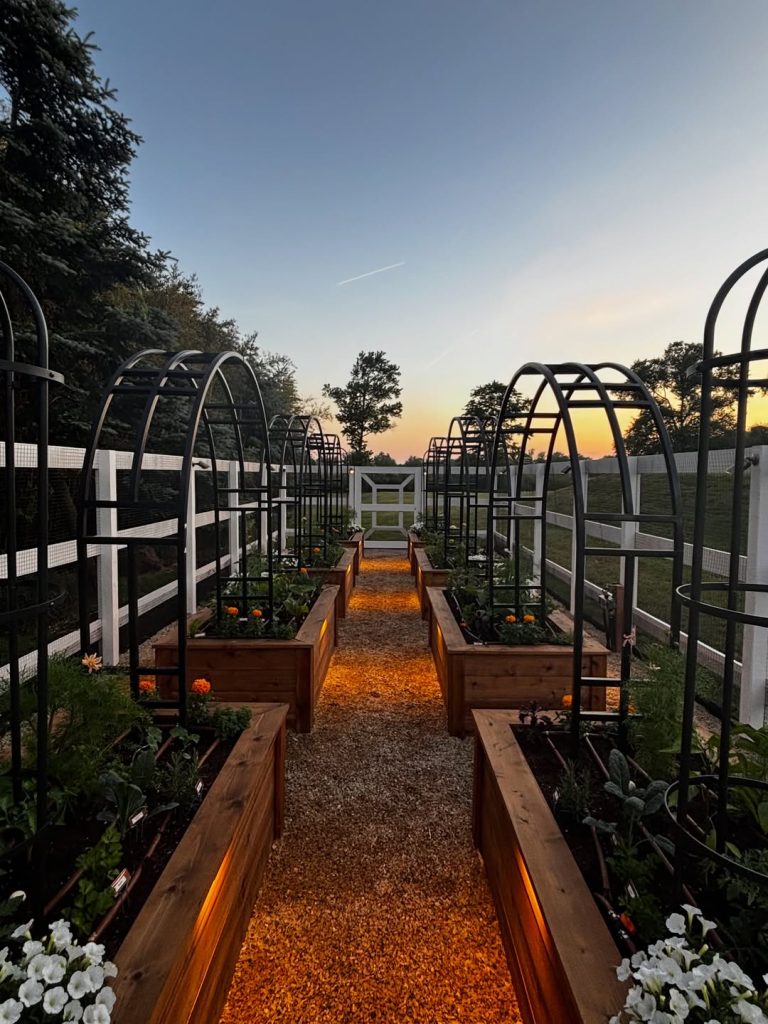
Running a gravel path straight down the center of a raised bed garden, lit softly from below, turns a purely functional space into somewhere worth visiting after dark. The warm glow draws the eye forward the same way a lit hallway pulls you through a house. This kind of intentional raised garden beds layout proves that structure matters as much as what gets planted inside each box.
This kind of layout also makes evening watering or a quick harvest feel like a small event rather than a chore. Low lighting extends the hours the garden actually gets used and enjoyed. That extra time outside is worth the initial wiring for anyone who spends long days indoors.
Budget Note: Low-voltage landscape lighting kits typically run $60 to $150 at Home Depot, with metal garden arches adding $40 to $90 each.
A Grid Layout With a Focal Shed Keeps a Large Garden Organized
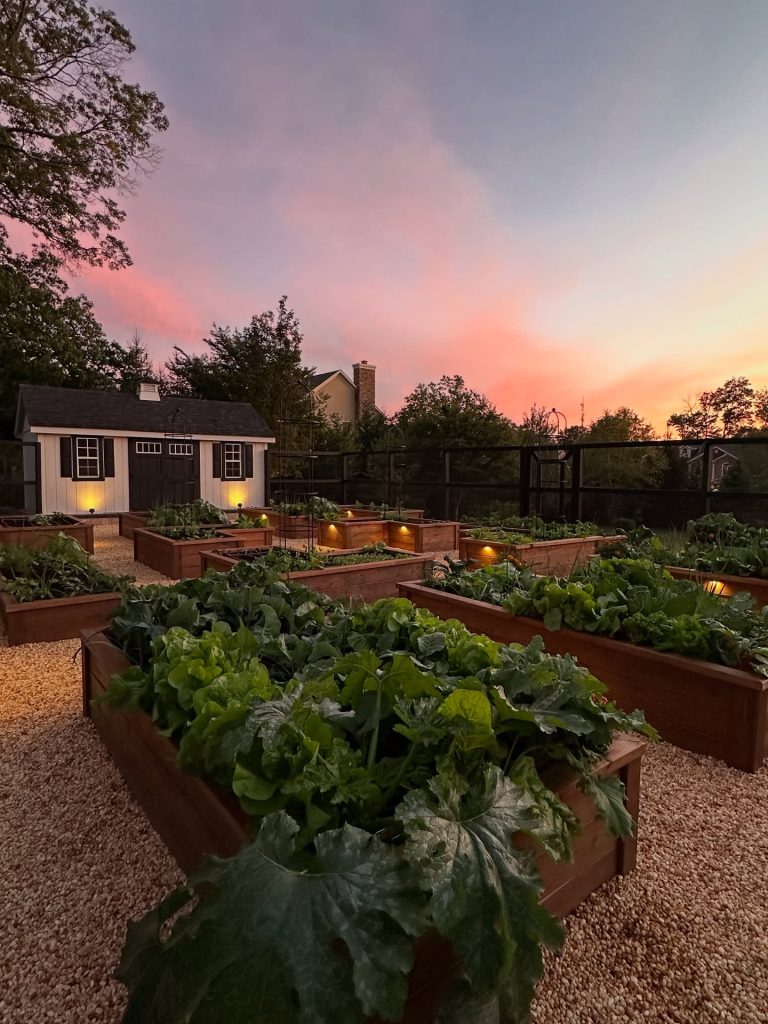
Arranging raised beds in a clean grid with a garden shed as the visual anchor at one end keeps even a large growing space feeling organized rather than sprawling. Every bed gets equal access to sun and equal space to walk around, which matters once harvest season gets busy. This grid-based raised garden beds layout works especially well for anyone growing enough to actually feed a family through summer.
Painting the shed a soft white with dark trim ties the whole garden together visually, giving it the same polish you would expect from a proper country house exterior inspiration feature. Landscape lighting tucked along the bed edges keeps the space usable well past sunset. That small detail turns a purely practical garden into one that photographs beautifully too.
Budget Note: A prefab garden shed kit typically runs $2000 to $5000 depending on size, with cedar raised bed kits adding $80 to $150 each.
Mom Notes
Plan your paths before you plan your beds, since walkway width matters more than most people expect once a wheelbarrow or garden cart needs to fit through. Leave at least two feet between beds for comfortable access. Gravel paths drain better than mulch and stay cleaner through a whole rainy season.
Tall Trellis Focal Points Add Height to a Flat Raised Bed Garden
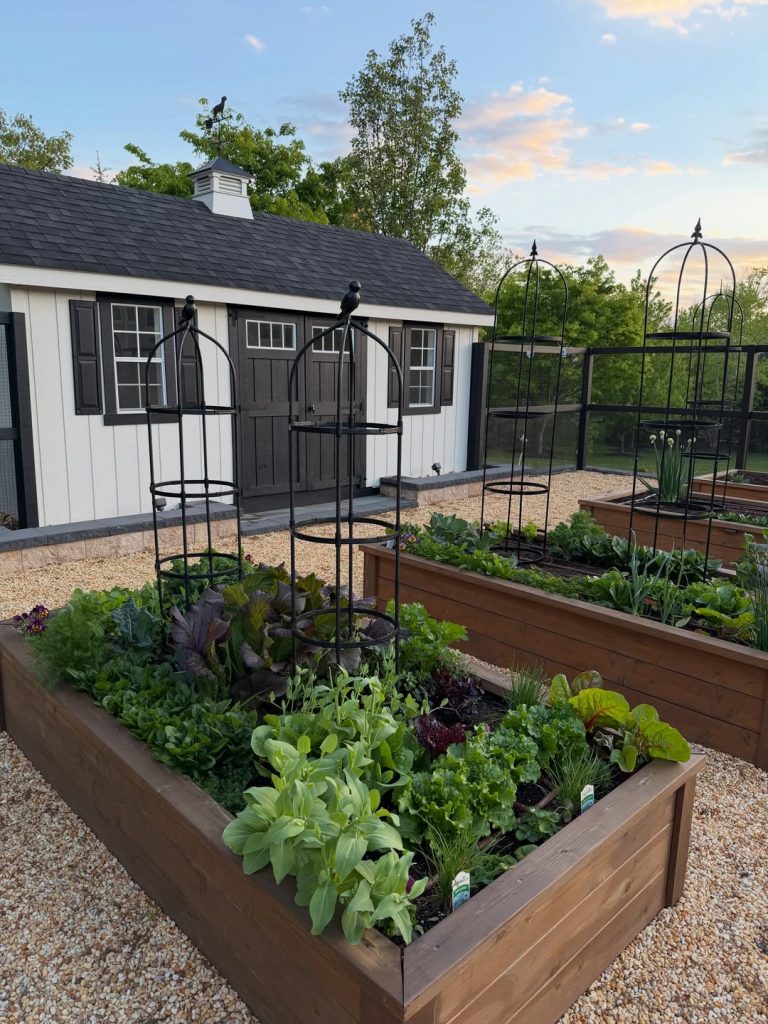
Placing a pair of tall black obelisk trellises inside a single raised bed adds height that a flat garden full of low-growing greens rarely achieves on its own. Climbing peas or beans fill in the structure over a season, turning empty metal into a living tower. This vertical approach to raised garden beds layout planning solves the visual flatness that comes with rows of lettuce and kale.
Topping each trellis with a small bird finial adds a whimsical detail that keeps the whole bed from feeling purely utilitarian. That kind of personal touch echoes the charm found in classic cottage exterior garden styling, where small ornamental details soften a working space. A weathervane on the shed roof behind ties the whole scene together.
Budget Note: Decorative metal obelisk trellises typically run $40 to $90 each at Wayfair or a garden center.
A Fenced Enclosure With Raised Beds Keeps Wildlife Out and Structure In
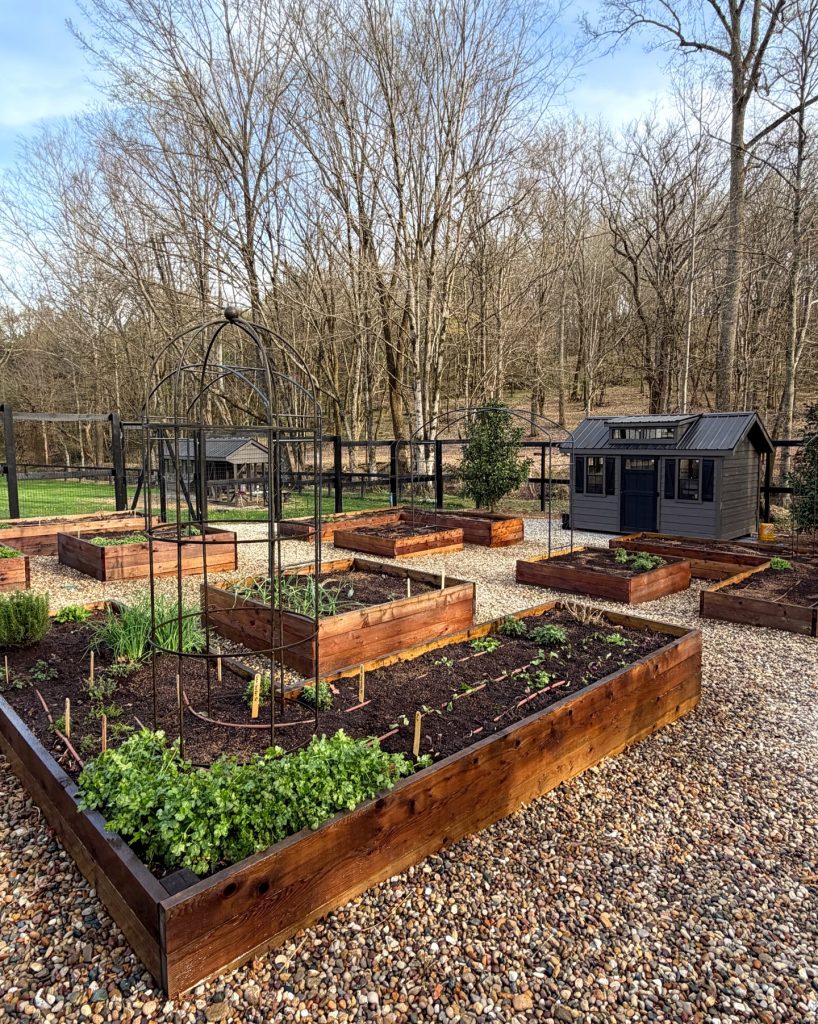
Building a full black metal fence around a cluster of raised beds solves the very real problem of deer and rabbits undoing a whole season of work overnight. The fence also gives the garden clear boundaries, which makes planning bed placement and paths far easier from the start. This protective approach to raised garden beds layout is worth the upfront investment for anyone gardening near woods or open fields.
Leaving the beds bare in early spring, before anything fills in, actually reveals the structure of the whole layout most clearly. That is the best time to notice if paths are too narrow or beds are spaced awkwardly before plants hide any mistakes. A small ornamental tree planted between beds breaks up the grid without disrupting the growing space.
Budget Note: Metal deer fencing panels typically run $50 to $120 per section at Tractor Supply or a farm store, with cedar raised beds adding $70 to $140 each.
A Rustic Arched Trellis Turns One Bed Into the Garden Centerpiece
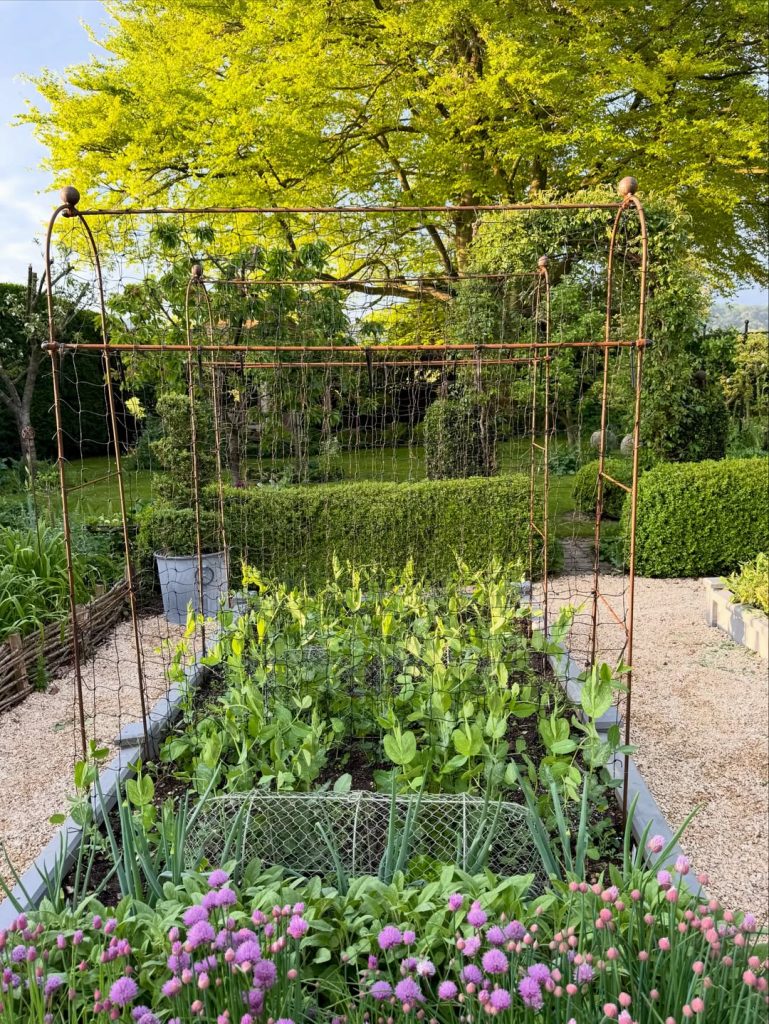
Building one oversized arched trellis over a single raised bed, woven with netting for climbing peas, creates an instant centerpiece that draws the eye from anywhere in the garden. Everything else in the layout can stay simple once this one structure is doing the visual work. This kind of focal point proves that raised garden beds layout planning benefits from at least one standout piece.
Framing the bed with a low woven hazel edge instead of straight wood boards softens the whole structure and gives it a more organic cottage feel. That contrast between rigid copper piping and loose natural weaving is part of what makes the piece feel handcrafted rather than store-bought. A neat boxwood hedge grounds the whole scene.
This kind of feature bed also gives visiting kids or grandkids something memorable to duck under and explore. It turns an ordinary vegetable patch into a small adventure rather than just rows of plants. That sense of discovery is worth building even if the rest of the garden stays simple.
Budget Note: Copper or metal arch trellis materials typically run $60 to $150 depending on size, sourced from a garden supply store or built from plumbing pipe.
A Screened Structure Protects an Entire Raised Bed Garden at Once
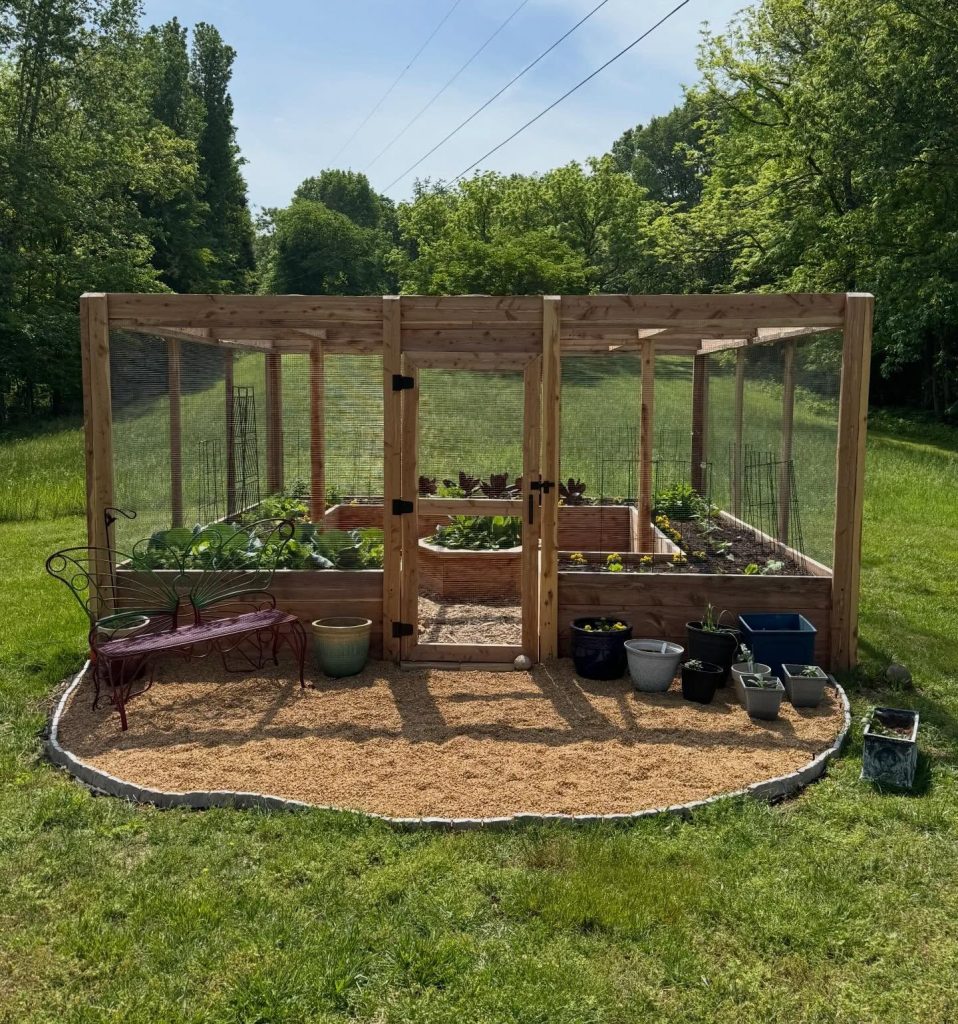
Building a full wooden frame covered in fine mesh over an entire cluster of raised beds protects everything inside from birds, insects, and larger pests all at once. It looks almost like a small greenhouse, but the open mesh keeps air and light moving freely through the whole structure. This is one of the more ambitious versions of raised garden beds layout planning, built for total protection rather than partial fencing.
Adding a small seating area just outside the structure, with a decorative bench and a cluster of potted plants, gives the whole garden a place to pause before stepping inside to work. That kind of thoughtful transition space is often missing from purely functional garden designs. A curved gravel edge softens the transition from lawn to garden.
Budget Note: A screened garden structure kit or custom build typically runs $500 to $1500 depending on size, with mesh netting adding $30 to $60 per roll.
What Planning a Garden Layout Taught Me About Slowing Down First
That half-built fence taught me more about patience than any other project in our yard. I wanted to start planting immediately, and stopping to plan the layout felt like wasted time in the moment.
I used to think a garden just needed good soil and enough sun to succeed. Raised garden beds layout planning taught me that how beds relate to each other matters just as much as what grows inside them.
There is something satisfying about walking a finished path and realizing every turn makes sense. That kind of flow does not happen by accident, even in a space that looks effortless once it is done.
My family started spending more evenings out there once the layout actually worked, walking the paths just to see what had changed since morning. That daily habit became more valuable than any single harvest.