
Join Our Newsletter for Cozy Home Inspiration, Family Fun, and Delicious Recipes Every Week

Elegant Lattice Screens That Made My Backyard Feel Private Without Losing Any Light

Disclaimer. Some images featured in this post may originate from third-party sources and are used for illustrative purposes only. Please review our Image Credits Policy for attribution information.
I stood at my kitchen window one evening watching my neighbor set up her patio furniture and realized I could see everything, and she could see everything right back. Lattice screens were not something I had ever thought about before that moment.
We had lived in that house for two years without a single bit of privacy in the backyard. I just accepted it, the same way I accepted the squeaky back door and the light switch that never worked right.
That evening changed something. I stood there a little too long, feeling exposed in my own yard, and decided I was done ignoring it.
I started searching for backyard privacy ideas that did not involve a full fence and a permit. Most of what came up felt either too flimsy or too expensive for what we actually needed.
Then I found a photo of a lattice panel tucked beside a pool, and something clicked. It looked light, almost decorative, but it clearly did the job.
I saved that image and kept scrolling, and the more I looked, the more I realized lattice was everywhere once I knew to look for it. Old wraparound porches, patio walls covered in plants, and even antique wooden screens used indoors.
I started noticing how differently each version felt depending on where it sat. Some blocked a view completely, others just softened it, letting light and breeze pass right through.
That flexibility is what sold me. A lattice screen could be exactly as private or as open as a specific corner of the yard actually needed.
We tried one panel first, near the patio, before committing to anything bigger. It held up through a full summer of storms and still looked good come fall.
That first panel led to a few more, each one solving a different problem around the yard. I am sharing the six ideas that shaped how we think about privacy and structure outside now.
None of it required tearing anything down or spending a fortune. It just took noticing what already worked in other people’s yards and figuring out how to make it work in ours.
What We're Exploring
- 01 Lattice Screens Make Poolside Privacy Feel Effortless
- 02 A Plant Covered Lattice Wall Turns a Patio Into a Retreat
- 03 Mom Notes
- 04 Wraparound Lattice Skirting Gives a Whole Home Character
- 05 An Antique Carved Screen Brings Lattice Indoors
- 06 A Standalone Lattice Panel Solves an Awkward Backyard View
- 07 Layered Lattice and Planter Boxes Create a Living Privacy Wall
- 08 Why Lattice Screens Became the Backbone of Our Backyard Plan
Lattice Screens Make Poolside Privacy Feel Effortless
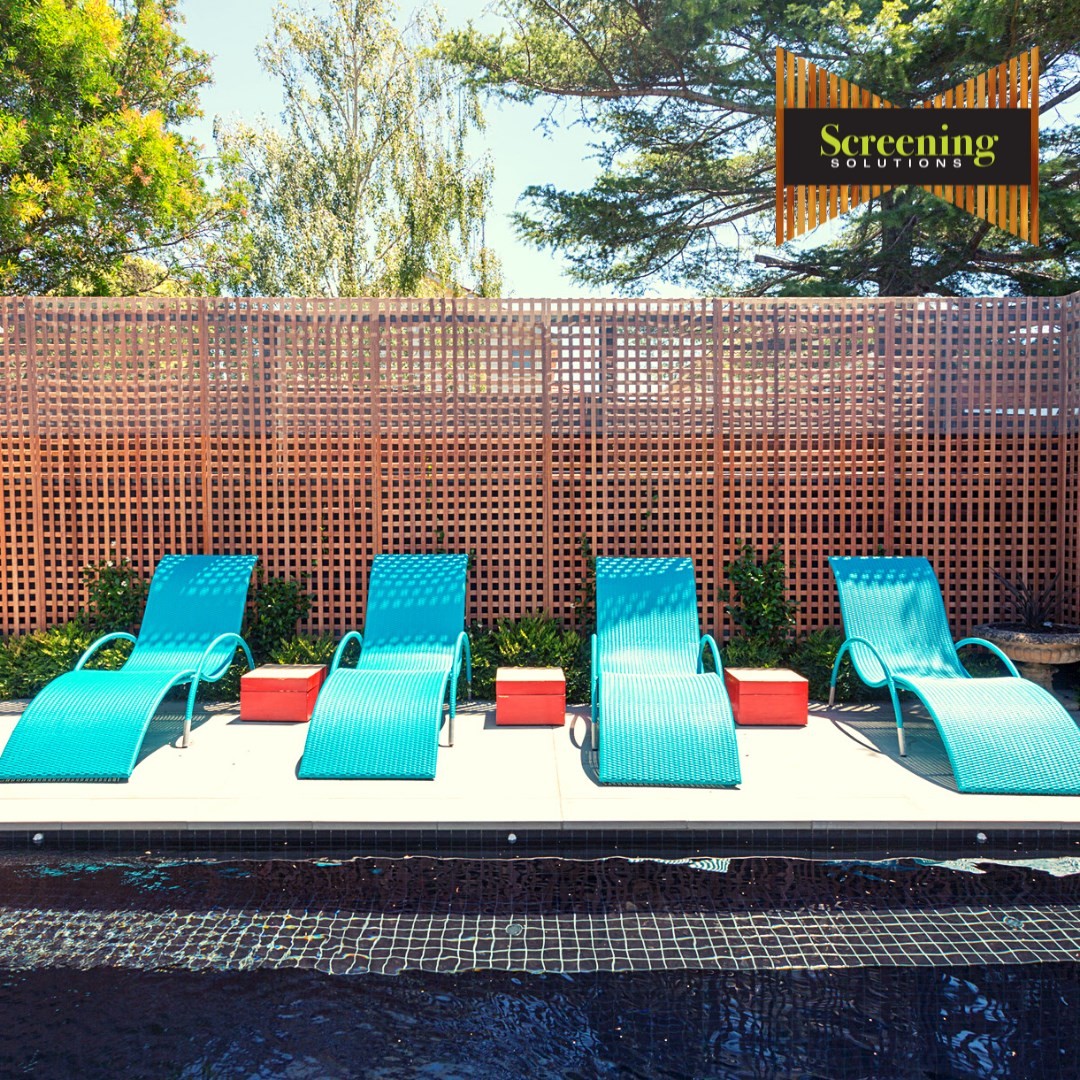
A tall lattice panel set behind a row of lounge chairs does something a solid fence never quite manages near a pool. It blocks the neighbor’s direct sightline while still letting light and air move through the space. This kind of poolside privacy is one of the most requested uses for lattice screens among families with a backyard pool.
The open weave keeps the whole area from feeling closed in, which matters a lot when you are trying to relax rather than feel boxed into a corner. It pairs beautifully with simple greenery planted along the base, softening the wood without hiding the pattern. Readers exploring outdoor privacy ideas often land on lattice for exactly this reason.
A stained or painted finish also holds up well against pool splash and sun exposure far longer than untreated wood. It becomes a backdrop instead of something you have to think about maintaining every season. That low upkeep is what makes it worth the initial setup.
Budget Note: Pressure-treated lattice panels typically run $25 to $60 each at Home Depot or Lowe’s, with wood stain adding another $15 to $25.
A Plant Covered Lattice Wall Turns a Patio Into a Retreat
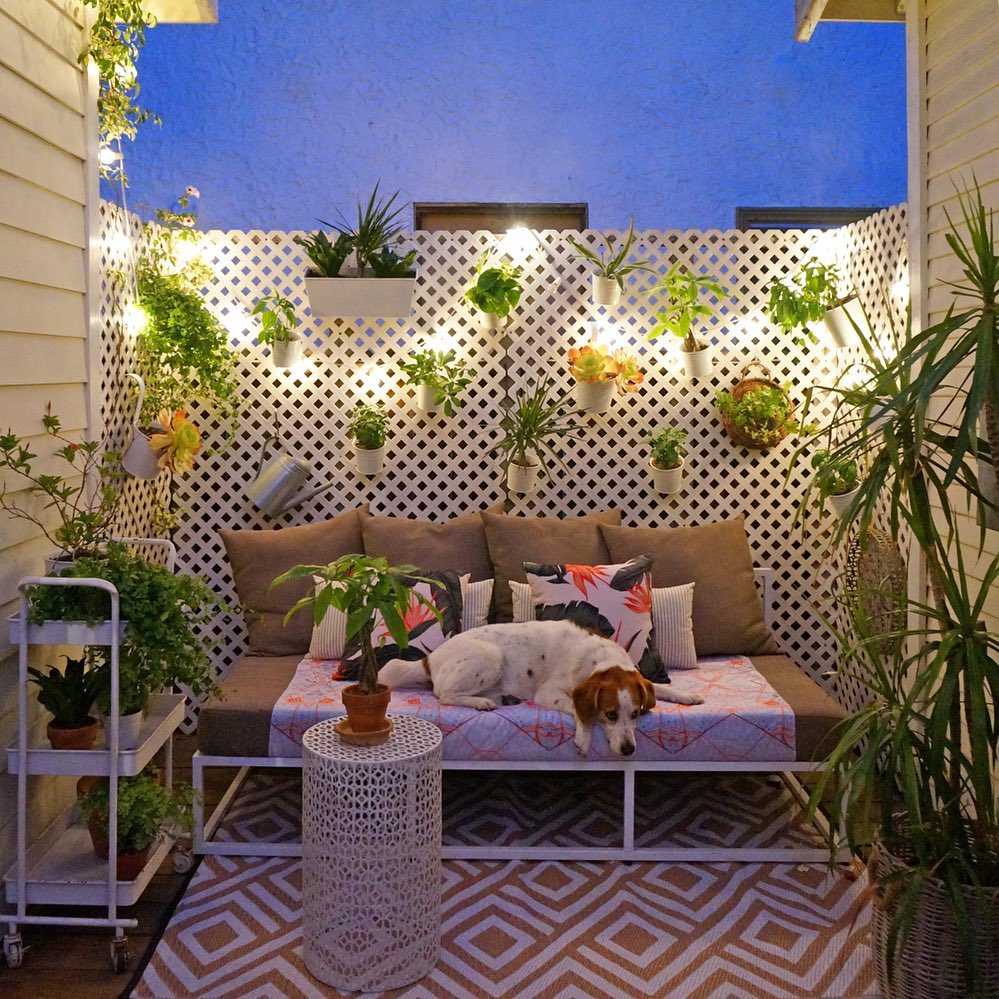
Mounting a full lattice wall along a small patio and hanging pots directly into the grid turns a plain corner into a lush little retreat. Every plant gets its own spot without eating up floor space, which matters most in a smaller backyard. This is one of the most rewarding ways to use lattice screens, since the structure and the greenery work together instead of competing.
String lights woven along the top edge stretch the whole space into the evening, making it feel intentional rather than an afterthought. A soft daybed or bench underneath gives the area an actual reason to be used daily. It fits right alongside the kind of outdoor hanging planter setups that fill up quickly once you start collecting a few favorites.
White painted lattice against a warm wood floor also brightens a patio that might otherwise feel a little dark or closed off. It reflects light back into the space instead of absorbing it the way a solid wall would. That brightness is what makes the whole corner feel bigger than it actually is.
Budget Note: A lattice wall panel with mounting hardware runs $40 to $90 at Lowe’s or Amazon, with small hanging planters adding $3 to $8 each.
Mom Notes
Before you install any lattice screen, check with your neighbor first if the panel sits near a shared fence line. A quick conversation avoids any awkwardness later, and most neighbors are happy once they see it adds privacy for both sides. Seal or stain the wood before the first summer to help it hold up through heat and rain.
Wraparound Lattice Skirting Gives a Whole Home Character
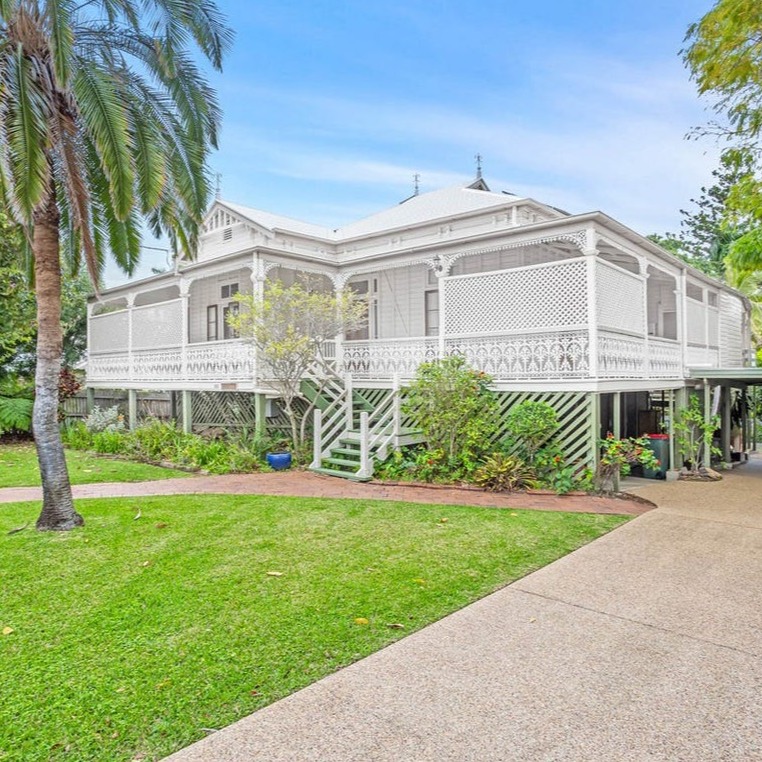
A full wraparound porch skirted in decorative white lattice does more for a home’s curb appeal than almost any other single detail. It ties the whole exterior together while still letting air circulate underneath the structure. This kind of architectural approach shows exactly why lattice screens have stayed a staple of classic country house exterior inspirations for generations.
The ornamental pattern along the top edge adds a level of detail that plain fencing simply cannot match. It gives a home a finished, storybook quality without requiring a full renovation. Even a smaller section applied to a porch base can borrow that same charm on a modest budget.
Painting the lattice to match the home’s trim rather than the siding creates a cohesive look from every angle. It reads as one intentional design choice instead of a patched-together fix. That consistency is what separates a home that looks cared for from one that just looks finished.
Budget Note: Vinyl or wood lattice skirting panels run $20 to $50 per section at Home Depot, with trim paint adding another $30 to $50 per gallon.
An Antique Carved Screen Brings Lattice Indoors
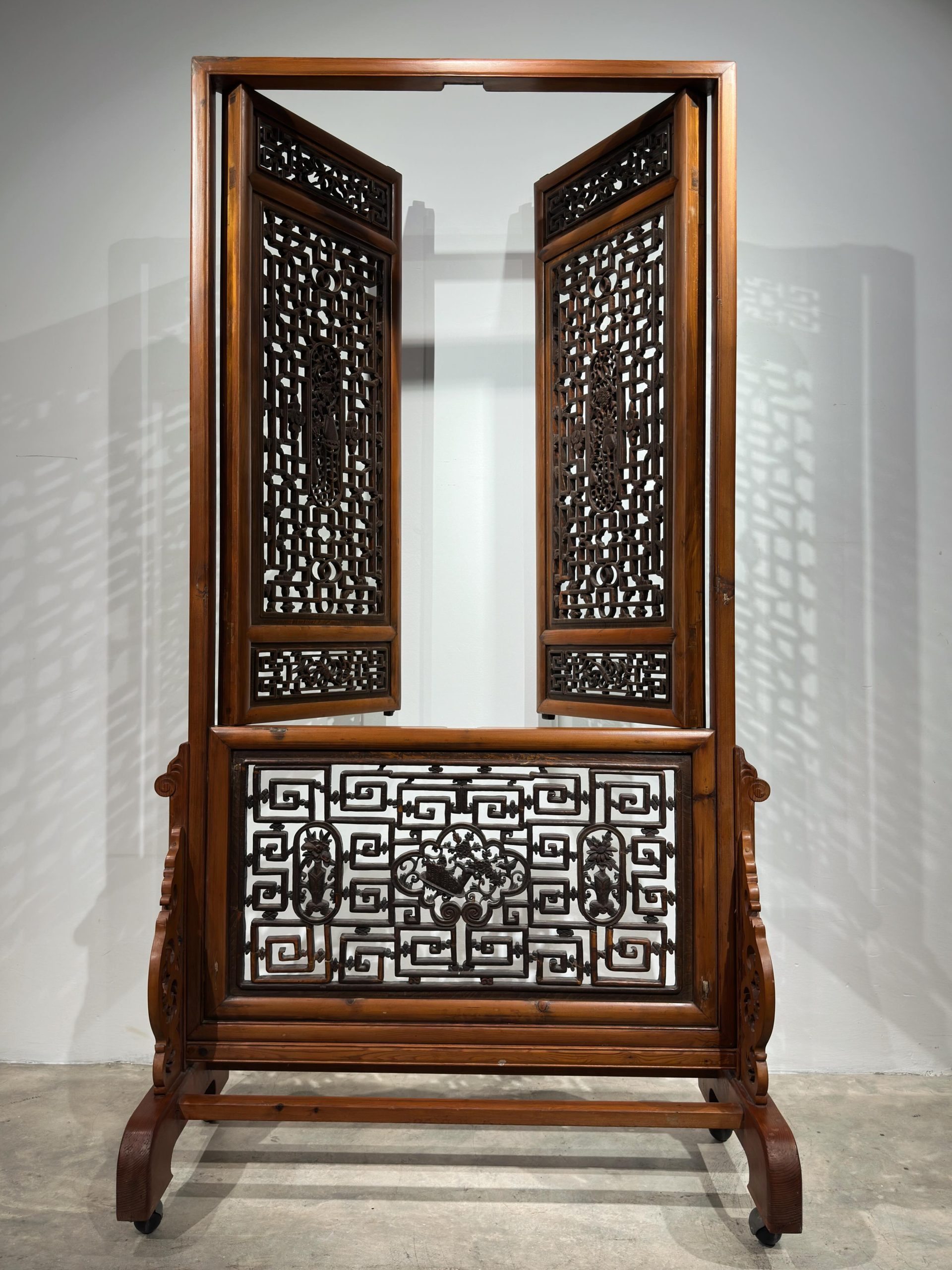
A tall, intricately carved wooden screen used as a room divider proves that lattice patterns work just as well inside the house as they do outside. It breaks up an open floor plan without fully closing off the light or the sightline between rooms. This is a favorite trick among readers drawn to pottery ceramic and other collected, storied pieces for a sitting room.
The open latticework at the top lets light filter through while the solid panel below still offers a sense of separation. It works especially well behind a reading chair or beside a doorway that needs a little definition. A piece like this becomes a conversation starter rather than just a functional divider.
Sourcing a vintage or antique version from an estate sale or import shop gives a room instant depth that new furniture rarely provides. Even a simpler modern reproduction borrows the same carved detail for a fraction of the cost. Either way, it adds texture that a flat wall never could.
Budget Note: Vintage carved wood screens typically range from $150 to $600 depending on age and detail and are found through estate sales, Chairish, or import furniture shops.
A Standalone Lattice Panel Solves an Awkward Backyard View
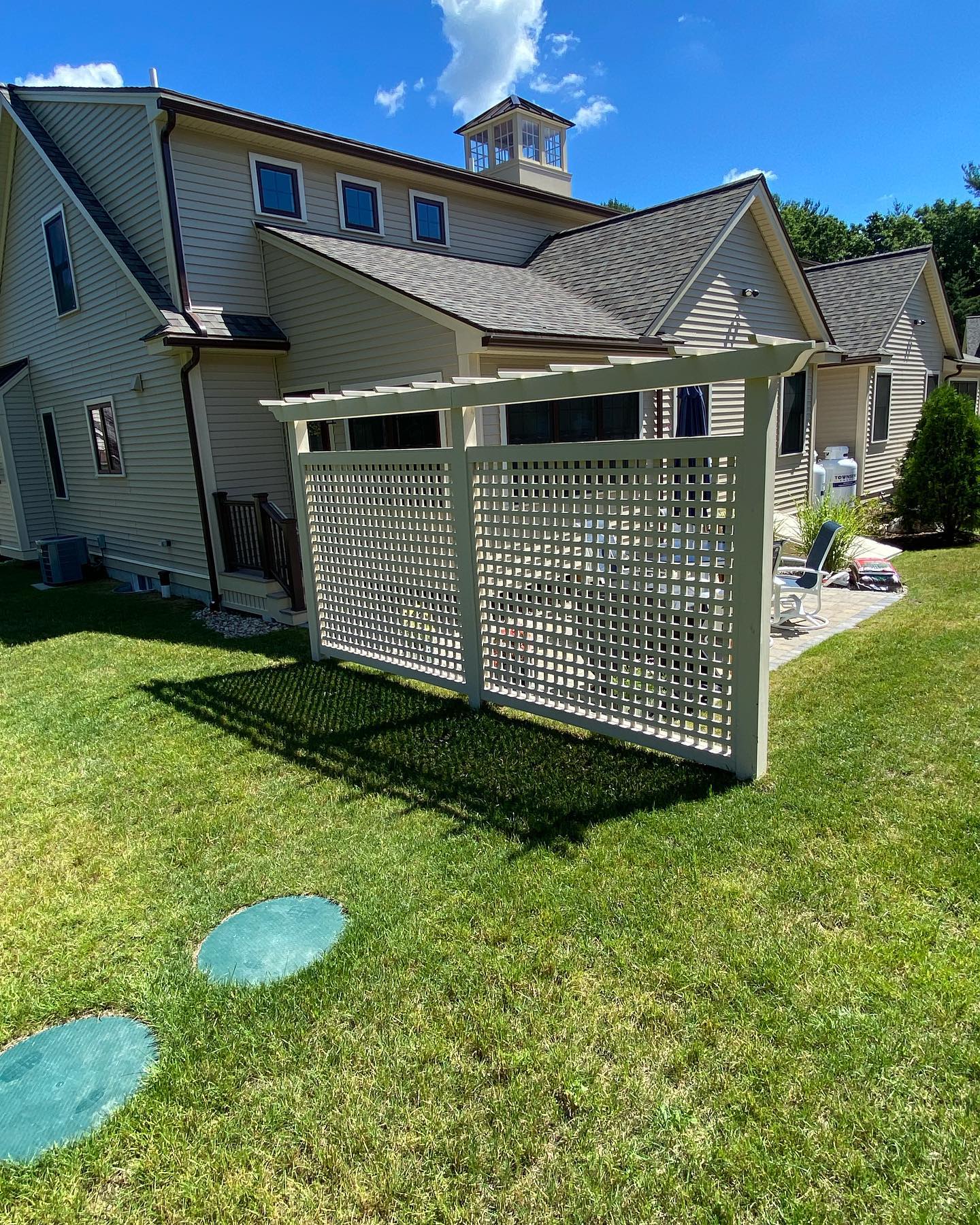
Sometimes a whole fence is not the answer, and a single freestanding lattice panel set on the lawn does exactly what is needed. It blocks a direct sightline into a utility area or a neighbor’s window without closing off the rest of the yard. This is one of the most flexible uses for lattice screens, since a panel can be moved if the yard’s layout ever changes.
A simple pergola-style top rail gives the panel a finished, purposeful look rather than something dropped in as an afterthought. It reads as a design feature instead of a patch job hiding an eyesore. That distinction matters when you want the yard to still feel cohesive.
This approach also works well for hiding an air conditioning unit, trash bins, or a stretch of under-deck skirting that never quite got finished. One well-placed panel solves the problem without a major landscaping project. It is proof that a small addition can fix a surprisingly big annoyance.
Budget Note: A freestanding lattice privacy screen kit runs $80 to $200 at Lowe’s or Wayfair, depending on height and finish.
Layered Lattice and Planter Boxes Create a Living Privacy Wall
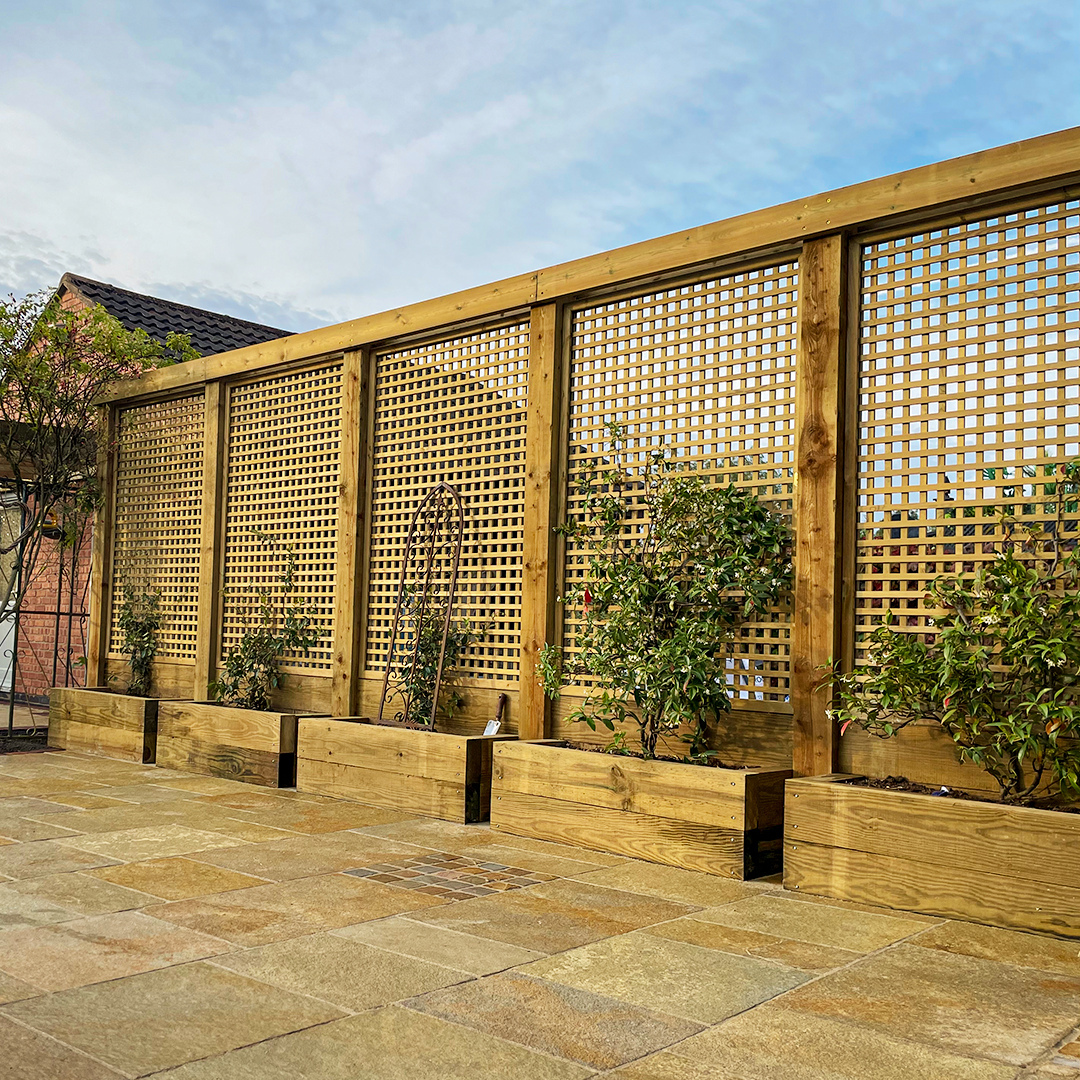
Running a full row of lattice panels along a patio edge, with built-in planter boxes at the base, turns a simple privacy fence into something that grows more beautiful every season. Climbing vines or small flowering shrubs eventually fill the grid, softening the wood with actual greenery. It is one of the more ambitious ways to use lattice screens, but the payoff builds over time.
The planter boxes double as a border for the patio itself, giving the whole space a defined edge without feeling boxed in. It pairs naturally with the kind of raised garden bed layout thinking that treats structure and planting as one project instead of two. Every panel becomes its own small growing space.
Choosing fast-climbing plants like jasmine or clematis speeds up how quickly the wall fills in and starts doing its privacy work. Within a season or two, the lattice becomes mostly hidden behind leaves and blooms. That transformation from bare wood to living wall is what makes this idea worth the patience.
Budget Note: A lattice and planter box combo panel runs $60 to $120 per section at Lowe’s or a local lumberyard, with starter climbing plants adding $10 to $20 each.
Why Lattice Screens Became the Backbone of Our Backyard Plan
A backyard rarely needs one big solution. It usually needs a handful of smaller fixes that work together, and that is exactly what Lattice ended up giving us.
I used to think privacy meant a solid fence around the entire property line. Lattice screens taught me that a few well-placed panels could solve specific problems without closing the yard off completely.
There is something satisfying about a fix that does more than one job at once. A single panel can block a view, hold a climbing plant, and still let the breeze through on a hot afternoon.
My husband was skeptical the first time I brought home a sample panel from the hardware store. He came around once he saw how much less exposed the patio felt after one weekend of work.