
Join Our Newsletter for Cozy Home Inspiration, Family Fun, and Delicious Recipes Every Week

Outdoor Hanging Planter Ideas hat Finally Gave Our Backyard Fence Some Personality

Disclaimer. Some images featured in this post may originate from third-party sources and are used for illustrative purposes only. Please review our Image Credits Policy for attribution information.
I stood staring at a plain wooden fence panel one Saturday morning, coffee going cold, trying to figure out why our backyard still felt unfinished after a whole summer of work. A hanging planter was not even on my mind until I noticed how bare that one section looked compared to everything else.
We had planted beds, hung string lights, and set out furniture, but that fence line stayed stubbornly empty. It bothered me every time I looked out the kitchen window while doing dishes.
I remember standing there trying to picture what would actually fix it. Nothing about a flat flower bed felt right for a space that narrow against the fence.
That is when I started scrolling through old pallet projects, mostly out of curiosity rather than a real plan. A reclaimed wood planter mounted right onto a fence panel stopped me mid-scroll.
I saved that photo and kept looking, and the ideas kept multiplying from there. Tiered stands, macrame hangers, geometric frames, even a whole pergola built around hanging baskets.
Each version solved a slightly different space problem. Some worked for a bare fence, others for an empty porch corner or a narrow strip of deck.
I tried the simplest one first, mostly because it used scrap wood we already had sitting in the garage. Watching that first planter fill in with trailing greenery within a few weeks was enough to convince me to keep going.
Over the following months, I added a few more ideas around the yard and inside the house too. Some plants thrived right away in their new hanging spots. Others needed a little trial and error before they settled in.
What surprised me most was how much personality these vertical additions gave spaces that used to feel like afterthoughts. A hanging planter does something a floor pot never quite manages; it uses air instead of ground.
I am sharing the five ideas that changed our outdoor and indoor spaces the most. Everyone came from a project I admired online before I ever built or bought a version for our own home.
What We're Exploring
- 01 A Reclaimed Pallet Planter Gives a Bare Fence New Purpose
- 02 A Tiered Wooden Stand Multiplies Hanging Space in One Corner
- 03 Mom Notes
- 04 A Cluster of Macrame Hangers Fills an Empty Wall Corner
- 05 A Geometric Frame Turns One Plant Into a Sculptural Piece
- 06 A Built In Pergola Planter Turns a Deck Into a Garden Room
- 07 What Filling Every Empty Corner Taught Me About Our Backyard
A Reclaimed Pallet Planter Gives a Bare Fence New Purpose
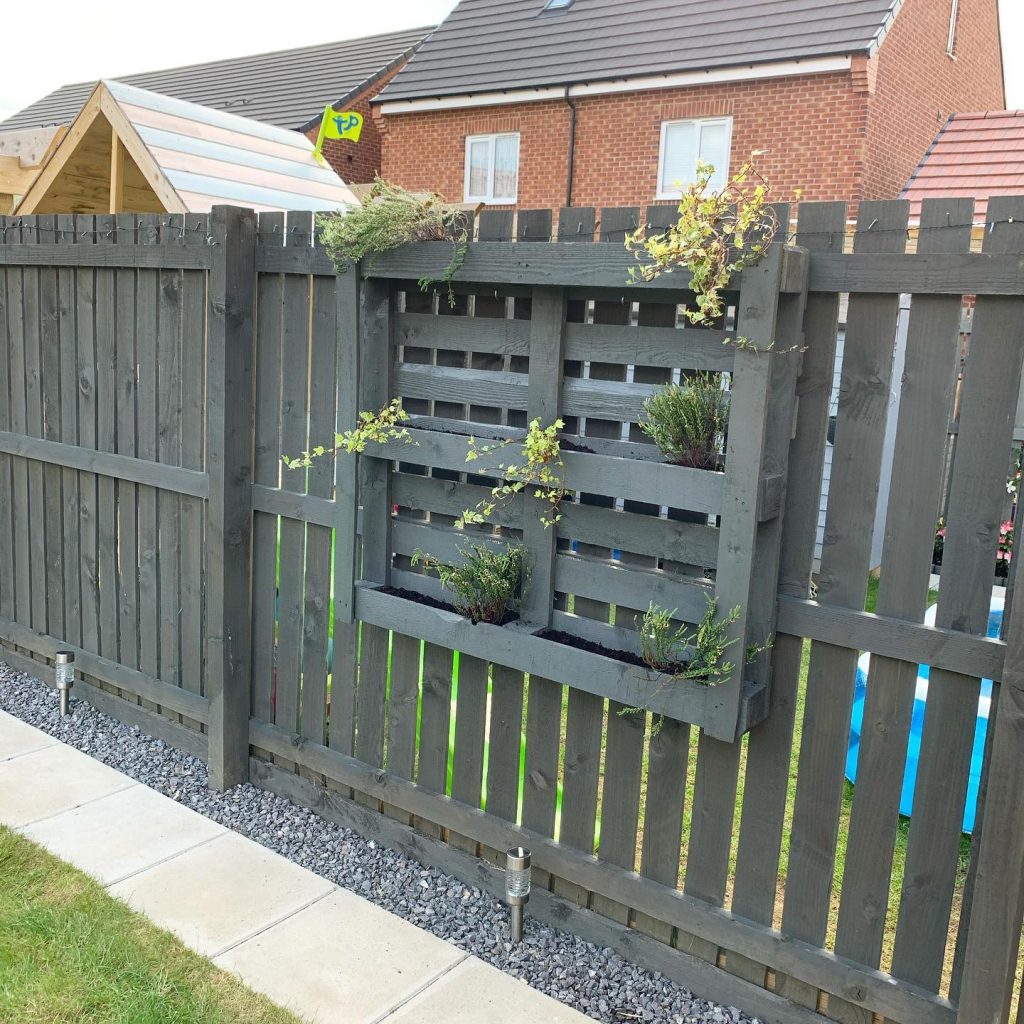
Mounting a reclaimed wood pallet directly onto a fence panel and tucking small planter boxes into the slats turns an unused stretch of fence into a genuine growing space. Trailing ivy and small evergreens fill in the gaps over a season, softening the flat wood behind them. This kind of vertical hanging planter setup solves the exact problem of a narrow yard with no ground space left to spare.
Painting or staining the pallet to match the fence keeps the whole structure looking built-in rather than added on as an afterthought. That cohesive finish is part of what separates a thoughtful project from a stack of scrap wood. Solar lights along the base add a soft glow once evening settles in.
This project also works well for renters or anyone hesitant to commit to permanent landscaping, since the whole unit can be unscrewed and taken along when moving. It gives real green space without digging into the ground at all. That flexibility is what makes a wood pallet planter worth the weekend it takes to build.
Budget Note: A reclaimed wooden pallet typically costs nothing to $15 from a hardware store, with small evergreen and ivy plants adding $8 to $20 each at a local nursery.
A Tiered Wooden Stand Multiplies Hanging Space in One Corner
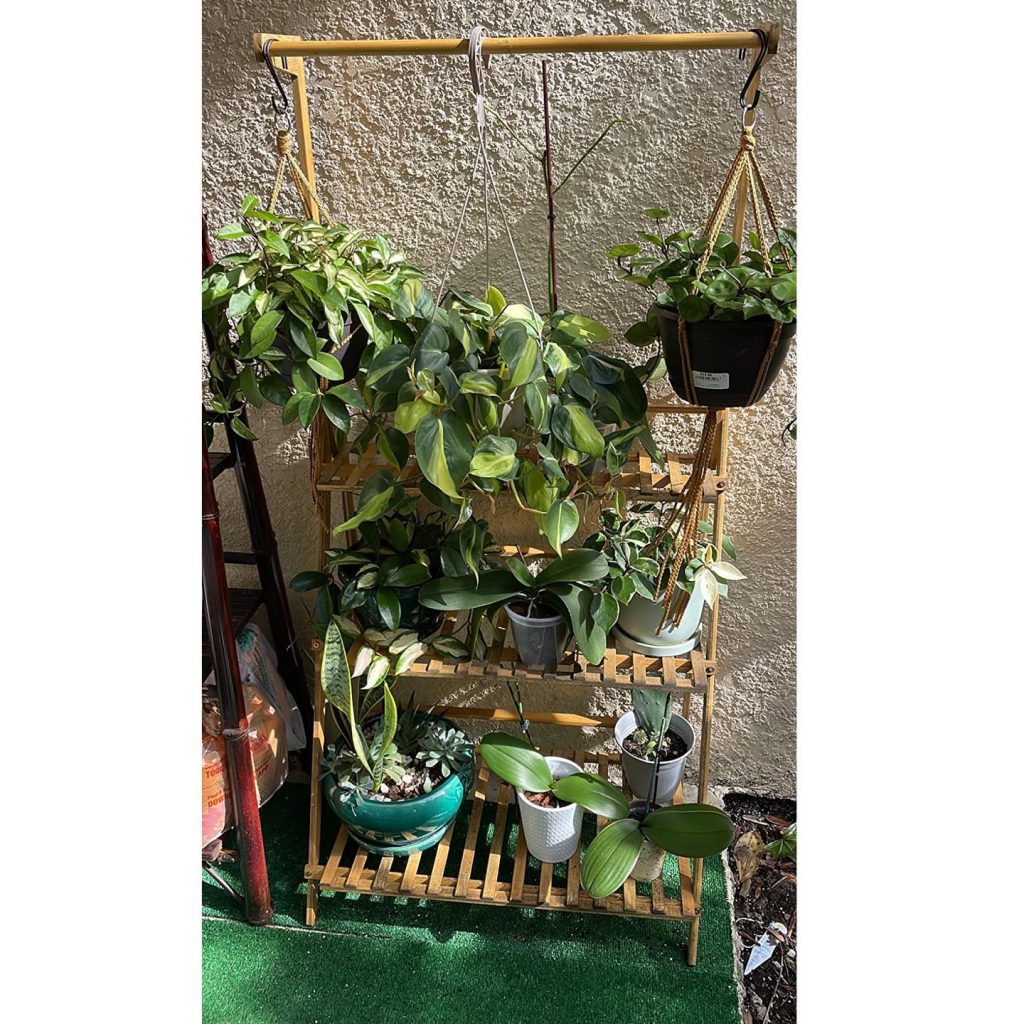
A tall wooden ladder-style stand with a top bar for hanging pots and shelves below for potted plants turns one narrow corner into a display that holds a dozen plants at once. The hanging baskets fill the top level while sturdier pots sit safely on the shelves underneath. This layered approach to hanging planter display makes the most of vertical space on a patio or porch.
Mixing a few trailing varieties on top with structural plants like snake plants on the lower shelves keeps the whole stand from feeling one-dimensional. That combination of textures and growth habits is a favorite technique borrowed from outdoor plant styling guides that favor variety over uniformity. The natural wood tone blends easily against a stucco wall or fence.
Budget Note: A wooden tiered plant stand typically runs $30 to $70 at Target or Wayfair, with small hanging pots adding $5 to $12 each.
Mom Notes
Check the weight limit on any hook or bracket before hanging a full pot of wet soil, since a soaked hanging planter is heavier than it looks. Water hanging plants a little more often than potted ones on the ground, since they tend to dry out faster in open air. A saucer or drip tray underneath saves your floor or deck from water stains.
A Cluster of Macrame Hangers Fills an Empty Wall Corner
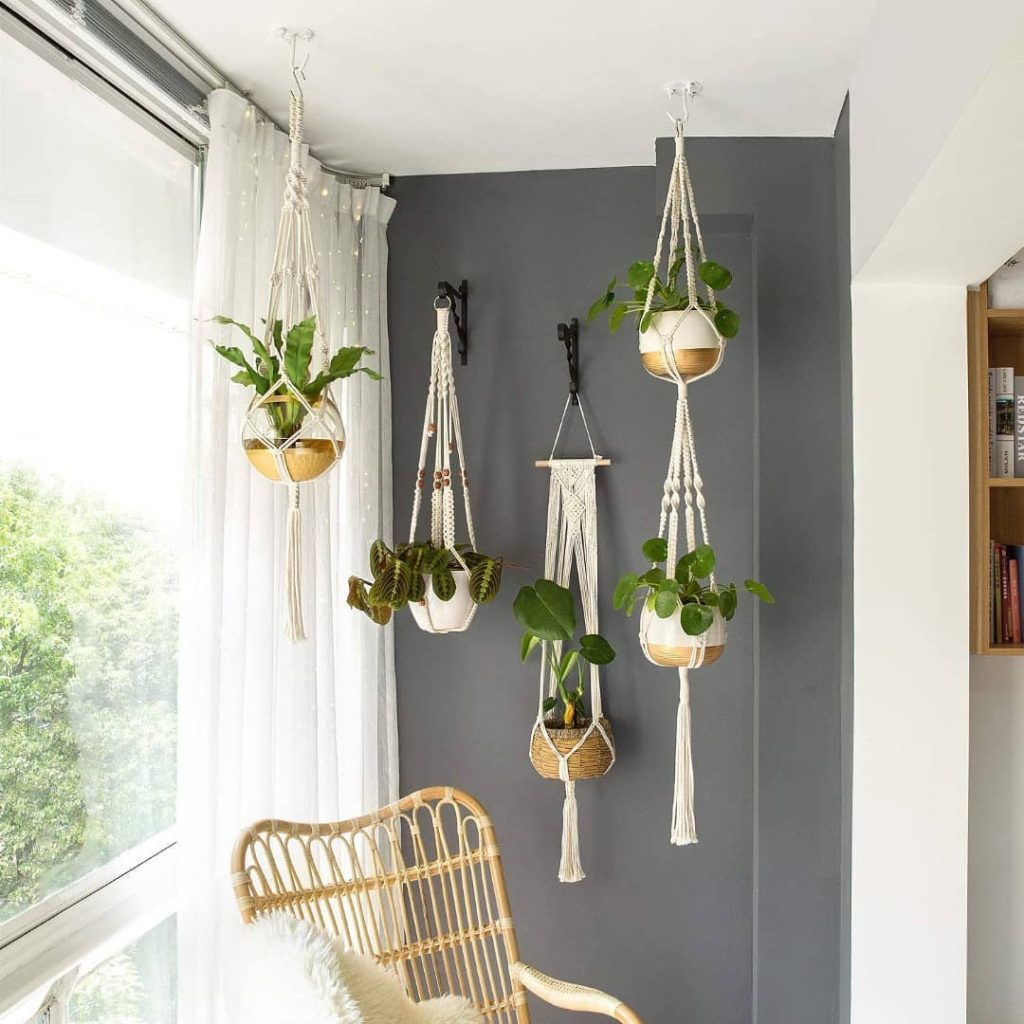
Grouping several macrame plant hangers at different lengths against one wall corner creates a display with real depth, rather than a single lonely pot near a window. The knotted cotton cord adds texture that a plain ceiling hook never provides on its own. This kind of layered hanging planter arrangement has become a signature look for anyone chasing a relaxed boho feel indoors.
Mixing pot styles, ceramic, woven, and painted terra cotta, keeps the display from feeling too matched or too formal. Hanging one from a ceiling hook and the others from wall-mounted brackets adds variation in height that makes the whole corner feel intentional. Fairy lights woven behind the curtain nearby carry the display into the evening beautifully.
Budget Note: Macrame plant hangers typically run $8 to $18 each at Amazon or a local craft market, with small potted plants adding $6 to $15.
A Geometric Frame Turns One Plant Into a Sculptural Piece
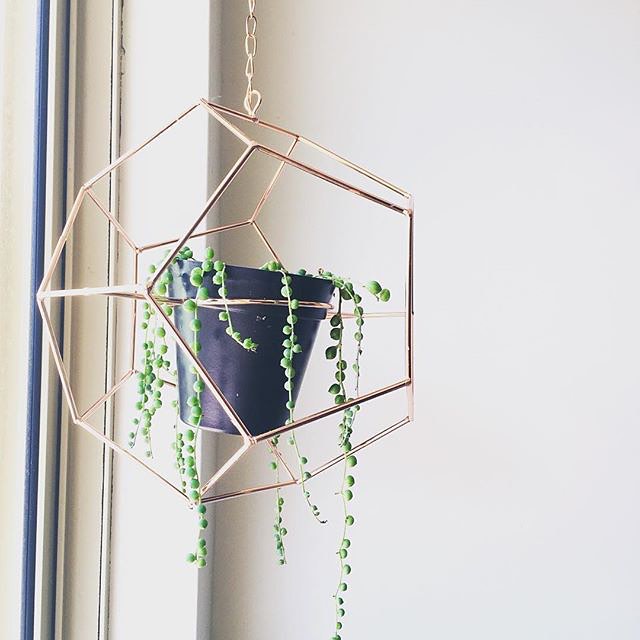
Suspending a single trailing succulent inside a geometric copper or brass frame turns one plant into a small piece of art rather than just another pot on a shelf. The angular lines of the frame contrast beautifully against the soft, cascading growth of a string of pearls or similar trailer. This modern take on hanging planter design suits a minimalist room that wants greenery without visual clutter.
Hanging it near a window where natural light streams through the metal frame creates shifting shadows on the wall throughout the day. That subtle movement is part of what makes a single well-placed plant feel more dynamic than a whole shelf of them. It works especially well in a minimalist bedroom or reading nook that benefits from one deliberate focal point.
Budget Note: A geometric metal plant hanger frame typically runs $15 to $35 at Amazon or Etsy, with a string of pearl succulents adding $8 to $15.
A Built In Pergola Planter Turns a Deck Into a Garden Room
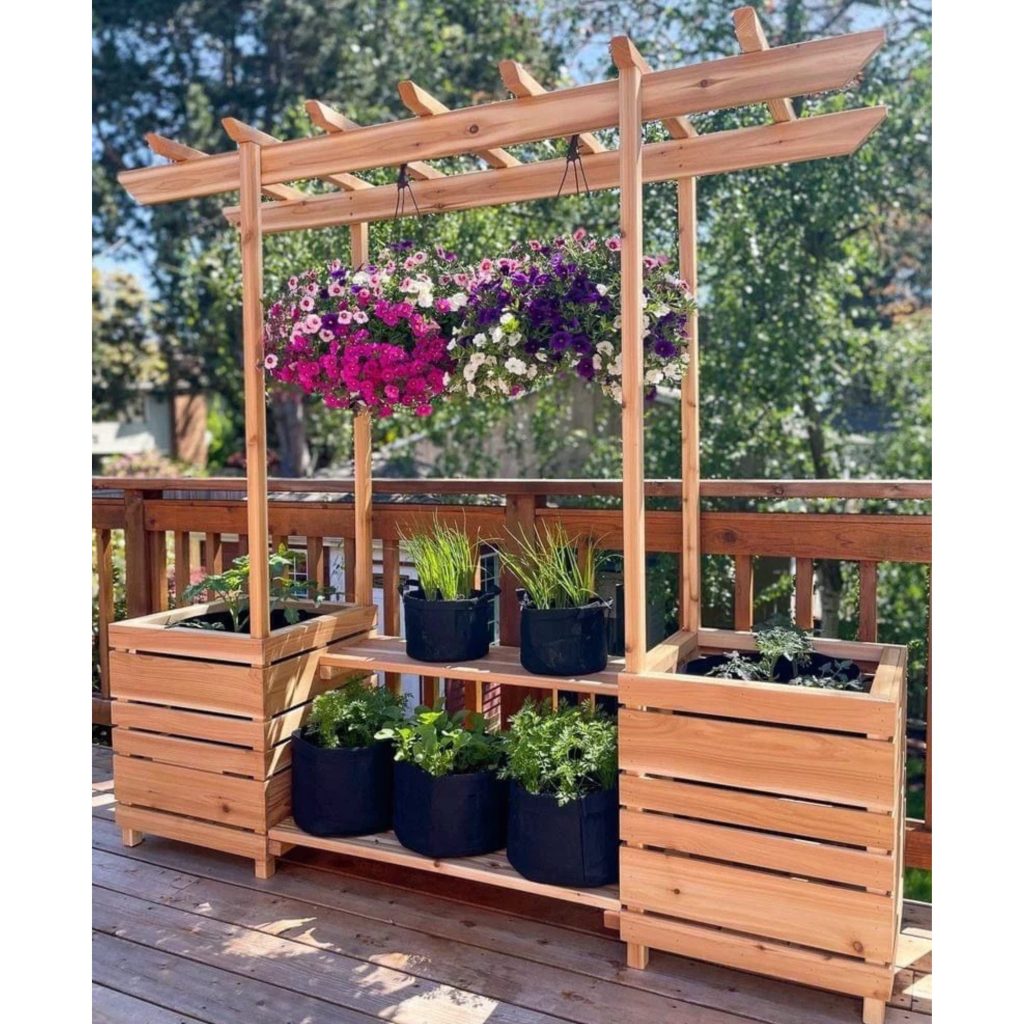
Building a small wooden pergola directly over a set of raised planter boxes, with hanging baskets suspended from the crossbeam, turns an ordinary deck corner into its own garden room. The hanging petunias spill down at eye level while herbs and greens grow in the boxes below. This combination approach to hanging planter and raised bed design makes the most of a compact outdoor footprint.
Mixing edible plants in fabric grow bags on the lower shelf with flowering hanging baskets up top gives the whole structure double duty, feeding the family while still looking beautiful. That kind of practical thinking fits right alongside a raised garden bed layout designed for small yards or apartment patios. The natural cedar tone weathers gracefully without needing much upkeep.
Budget Note: A pergola-style planter kit typically runs $200 to $450 at Wayfair or a specialty garden retailer, with hanging petunia baskets adding $15 to $30 each.
What Filling Every Empty Corner Taught Me About Our Backyard
That one bare fence panel taught me more about patience than almost any other project we tackled that year. It sat there empty for months while I waited for the perfect idea instead of just starting with something simple.
I used to think a backyard needed big landscaping to feel finished. A single hanging planter taught me that small vertical additions could fill gaps that ground-level planting never quite reached.
There is something satisfying about looking at a space that used to feel unfinished and realizing it finally works. It rarely takes one big change, usually just a few smaller ones added over time.
My kids started noticing the new greenery too, asking which plant was new each time they went outside to play. That small attention turned into one of my favorite parts of the whole project.