
Join Our Newsletter for Cozy Home Inspiration, Family Fun, and Delicious Recipes Every Week
Lush Shade Garden Ideas That Finally Made Our Backyard Feel Like Ours

Disclaimer. Some images featured in this post may originate from third-party sources and are used for illustrative purposes only. Please review our Image Credits Policy for attribution information.
I used to stand at my kitchen window and stare at the shady side of our yard like it was a problem I had not solved yet. Nothing grew there the way I wanted. The grass stayed patchy no matter what I did, and every planter I tried in that corner just sat there looking sad by July. I did not even know the phrase “shade garden” yet; I just knew that part of our yard felt wasted.
My husband kept suggesting we cut down the big tree that made that corner so dark. I refused every single time. Something in me knew that tree was not the problem; I just had not learned how to work with the shade it gave us.
One evening I sat outside with my coffee, watching the light move slower through those branches than it did anywhere else in the yard. It occurred to me that the shade itself was not the enemy. I had just never bothered to ask what actually wanted to grow there.
That is when I started saving pictures late at night, the same way I do for everything else in this house. Not glossy magazine spreads, just real backyard corners that other moms had figured out through trial and error. Ferns tucked under benches. Big leafy plants doing the work an umbrella usually does.
I noticed something right away. The most beautiful shaded corners were never trying to fight the shade. They were built entirely around it.
That shift changed how I looked at our whole yard. Instead of one more space to manage, that shaded side became the place I actually wanted to sit. A shade garden is not a consolation prize for the part of the yard that does not get sun; it is its own kind of beautiful once you stop expecting it to act like everywhere else.
I started with one small bed near the fence. Then a bench got tucked into a corner nobody used to sit in. Then I finally understood which plants actually wanted that shade instead of tolerating it.
Every idea below came from that same late-night scrolling habit, the one where a picture stops you cold before you even know why. None of them require ripping out a tree or hiring a landscaper for a full redesign. They just require looking at your shady corner as an opportunity instead of a leftover space.
If you have a patch of yard that never quite gets enough sun, this list is for you. Every single one of these ideas leans into what makes a real shade garden work, not against it.
What We're Exploring
- 01 Turn a Shaded Courtyard Into an Outdoor Dining Room
- 02 Let One Big Leaf Plant Create Instant Shade Over a Patio Table
- 03 Line a Shaded Bed With Colorful Caladiums Instead of Only Green
- 04 Plant a Row of Small Trees Along the Fence for Living Shade
- 05 Build a Quiet Reading Nook Into the Shadiest Corner of the Yard
- 06 Layer Hostas and Heuchera for a Shade Bed That Never Looks Bare
- 07 What a Shaded Corner Can Teach You About the Rest of Your Yard
- 08 Quick Take
Turn a Shaded Courtyard Into an Outdoor Dining Room
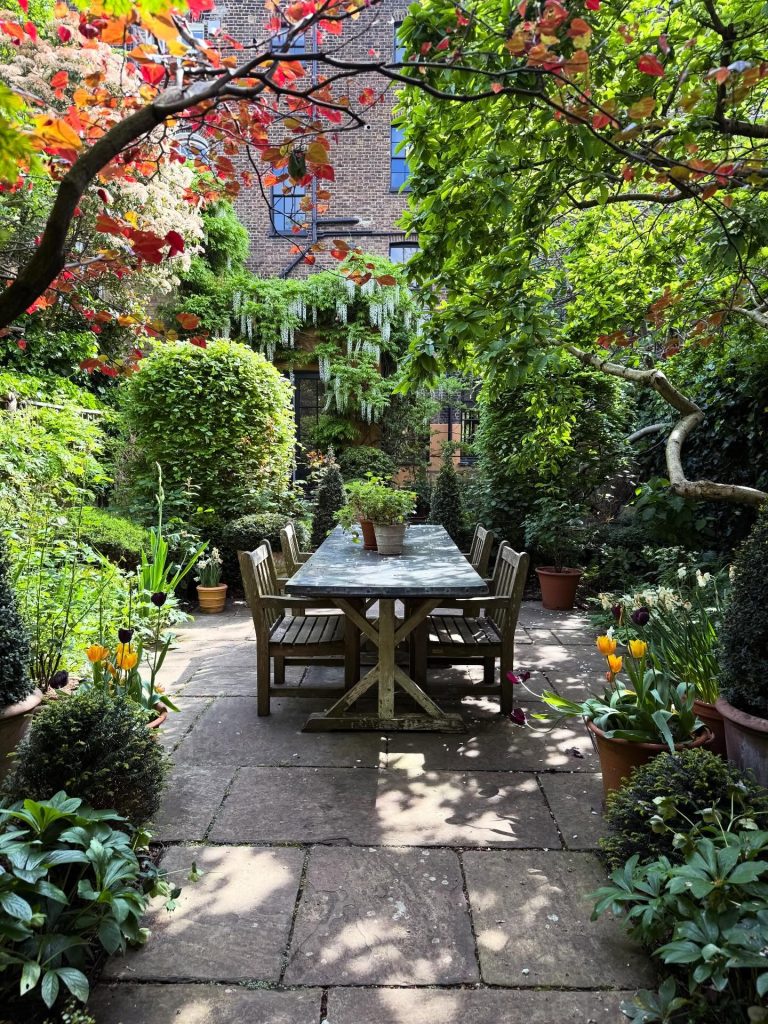
A dining table tucked under a canopy of trees does something a sunny patio never quite manages: it stays comfortable through the entire afternoon. The dappled light filtering through overhead branches feels softer on the eyes and cooler on the skin, which matters enormously when you are trying to get a family through an entire meal outside. This is one of the most inviting ways to use a shade garden space that might otherwise feel forgotten.
This idea works especially well in older homes with mature trees already in place, since the canopy is doing most of the design work for free. A layout like this is often highlighted by garden writers at Better Homes and Gardens as one of the simplest ways to make an underused yard corner feel finished.
Budget Note: Terracotta planters run $8 to $25 each, and a simple wooden bench costs $60 to $150 at IKEA, Amazon, or Home Depot.
Let One Big Leaf Plant Create Instant Shade Over a Patio Table
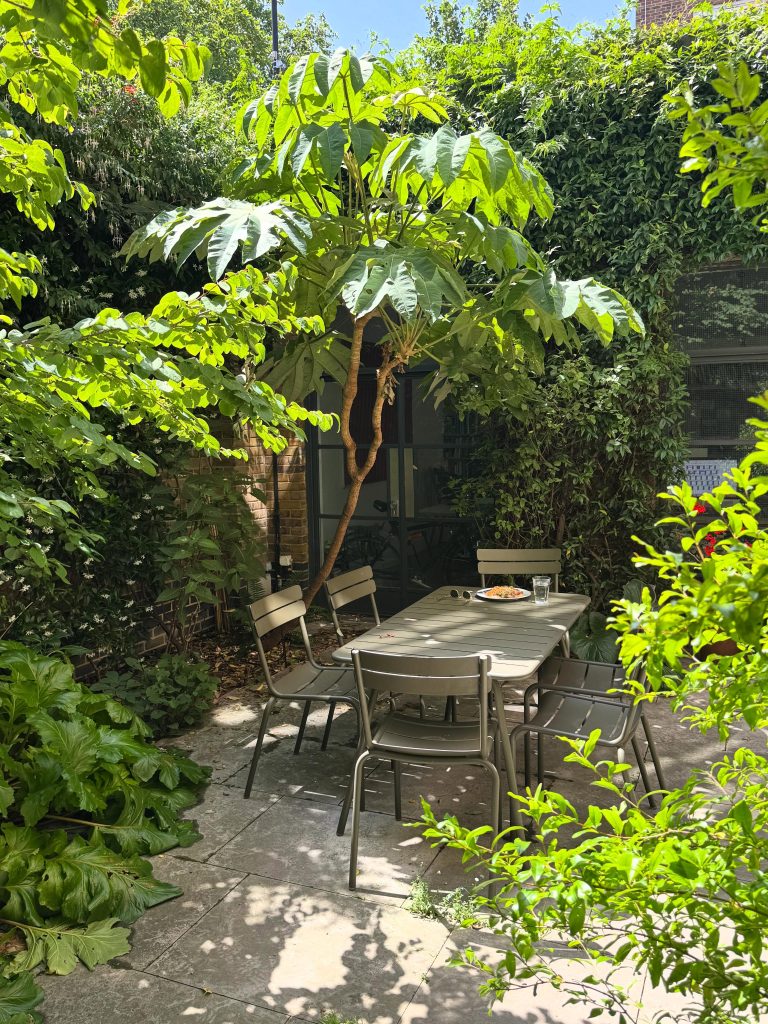
A single large-leafed plant positioned near a small patio table can do the job of an umbrella without the bulk or the annual replacement cost. The broad leaves filter harsh light into something gentler, which keeps a metal table from turning into a hot plate by midafternoon. It is a quiet, almost accidental way to bring shade garden thinking into a tiny outdoor footprint.
This works best in narrow side yards or small patios where a full pergola or awning simply will not fit. One well-placed plant, given a few years to grow, ends up doing more visual work than any store-bought shade structure. The plant becomes the ceiling of the space instead of something added on top of it.
Budget Note: A mature large-leaf shade plant costs $30 to $70 at a local nursery, and stackable metal patio chairs run $40 to $90 at Target or Amazon.
Line a Shaded Bed With Colorful Caladiums Instead of Only Green
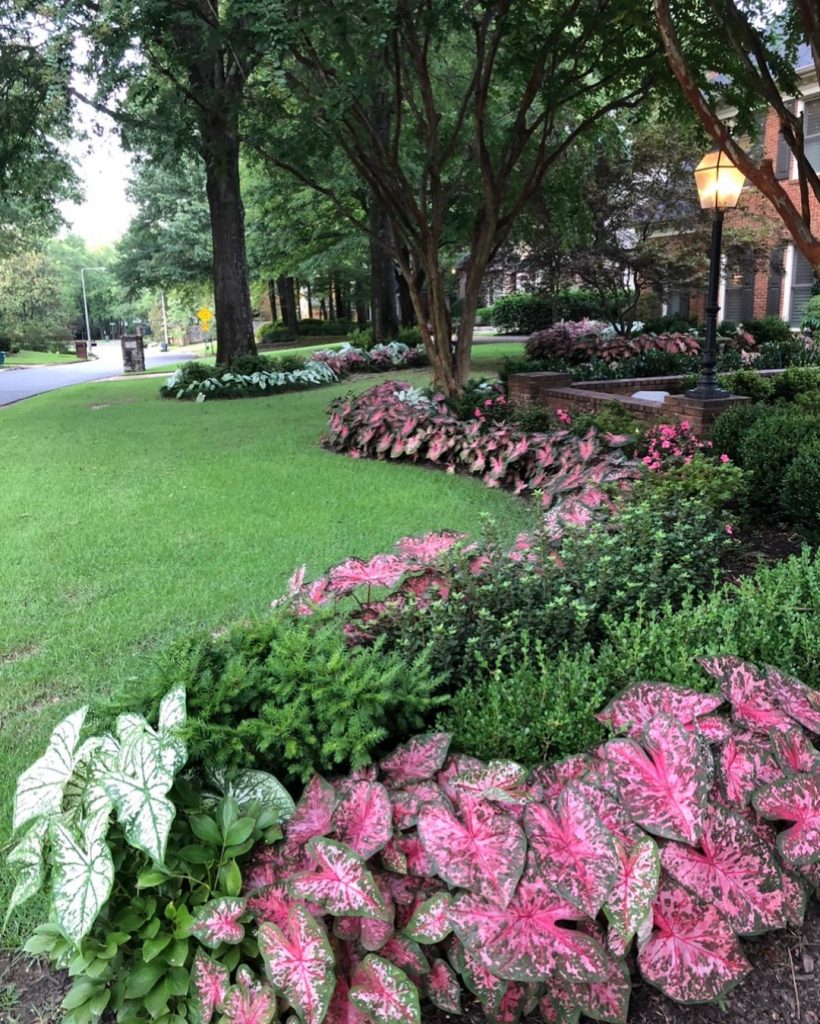
Planting them in a sweeping curve along a lawn edge, rather than a straight line, gives the bed a softer and more natural feel. Mixing in a few solid green shrubs behind the caladiums keeps the bright leaves from feeling like the only thing happening in the space. A nearby lamppost or small light fixture extends the color show well into the evening.
Caladiums also handle humidity better than most flowering shade plants, which makes them forgiving for anyone who forgets to water for a day or two. According to Southern Living, they remain one of the most reliable shade plants for adding season-long color without much fuss.
Budget Note: Caladium bulbs cost $2 to $5 each and are available in bulk at Home Depot, Lowe’s, or a local garden center.
Plant a Row of Small Trees Along the Fence for Living Shade
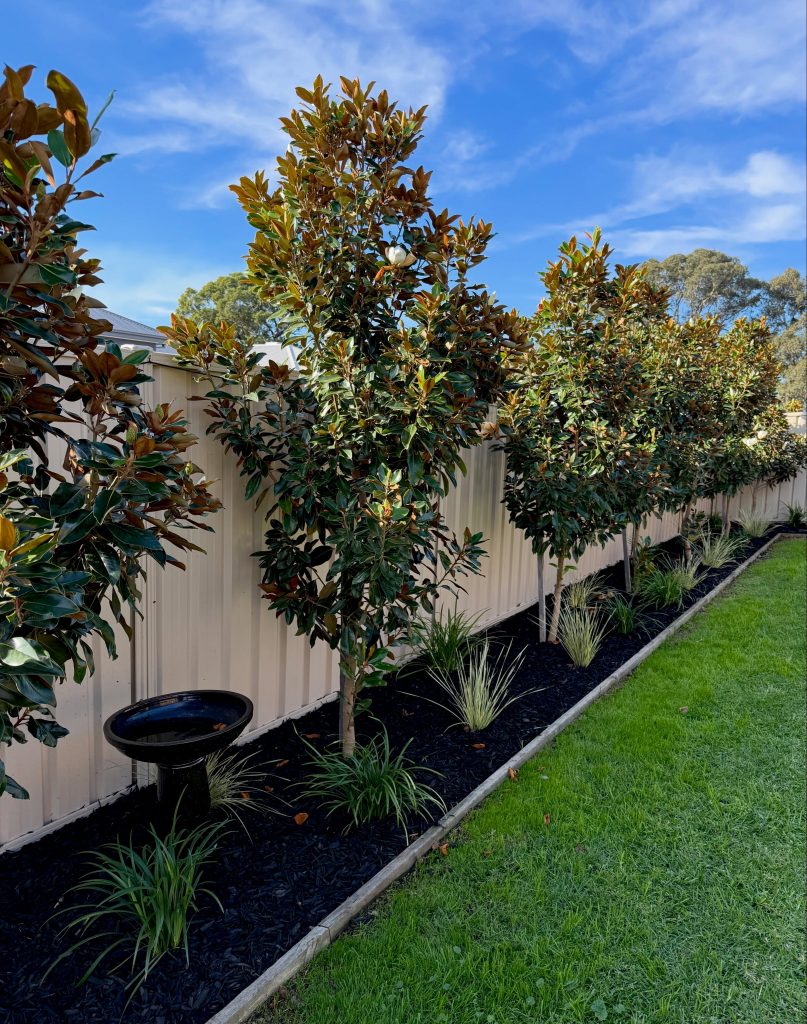
Underplanting the base of each tree with ornamental grasses keeps the bed from looking bare while the trees are still young and filling in. A simple black birdbath tucked among the greenery adds a small focal point without competing with the trees themselves. Dark mulch beneath everything keeps moisture in and makes the greenery pop against a clean, tidy edge.
This approach works particularly well for families who plan to stay in a home for years, since the payoff grows alongside the kids. A well-planned tree line like this is often mentioned by HGTV as one of the most cost effective ways to add privacy without a fence extension or a screening wall.
Budget Note: Small ornamental trees cost $40 to $90 each at a local nursery, and bagged dark mulch runs $4 to $8 per bag at Lowe’s or Home Depot.
Build a Quiet Reading Nook Into the Shadiest Corner of the Yard
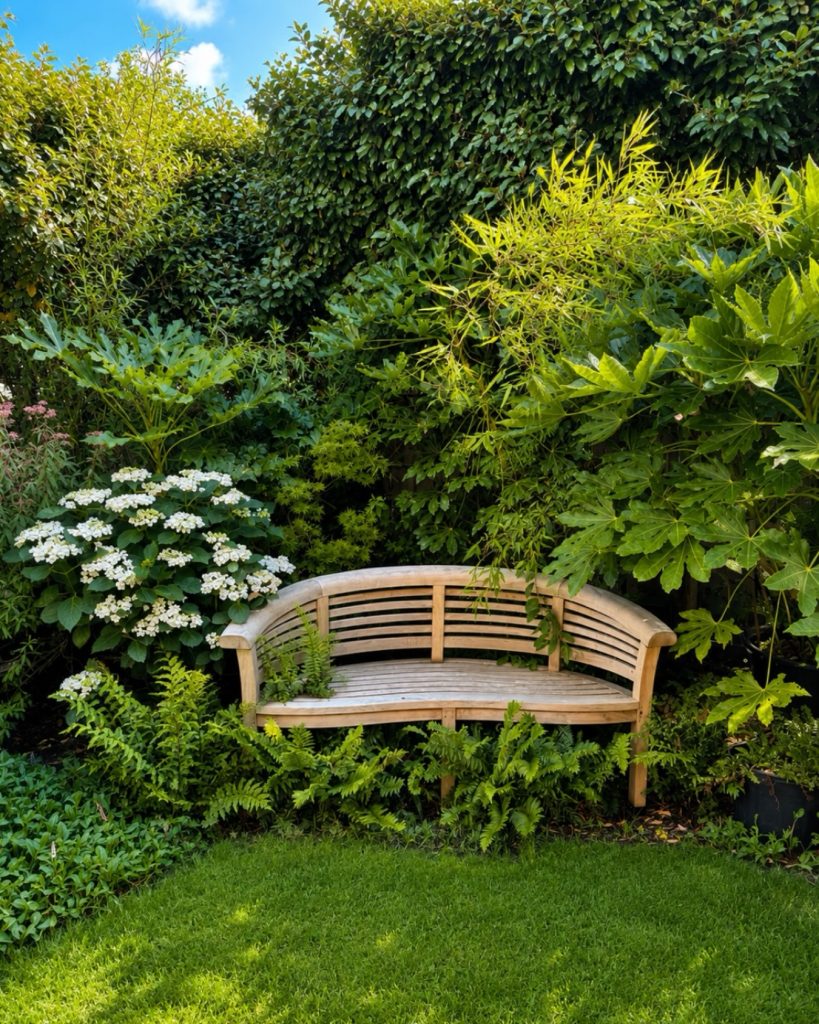
Every yard has one corner that gets skipped because it never seems to get enough light for anything useful. That is exactly the spot for a simple wooden bench tucked among ferns, hydrangeas, and other shade-loving perennials that thrive without direct sun. This is where a shade garden stops being decorative and starts being genuinely useful to the people who live there.
A curved bench nestled into the greenery feels more like a discovery than a planned seating area, which is part of the charm. White hydrangea blooms nearby brighten the shadows without needing full sun to do it, and ferns fill in low gaps that would otherwise look empty. The whole nook becomes a small escape just steps from the back door.
Budget Note: A teak garden bench ranges from $150 to $350, and potted ferns cost $10 to $20 each at Lowe’s, Amazon, or a local nursery.
Layer Hostas and Heuchera for a Shade Bed That Never Looks Bare
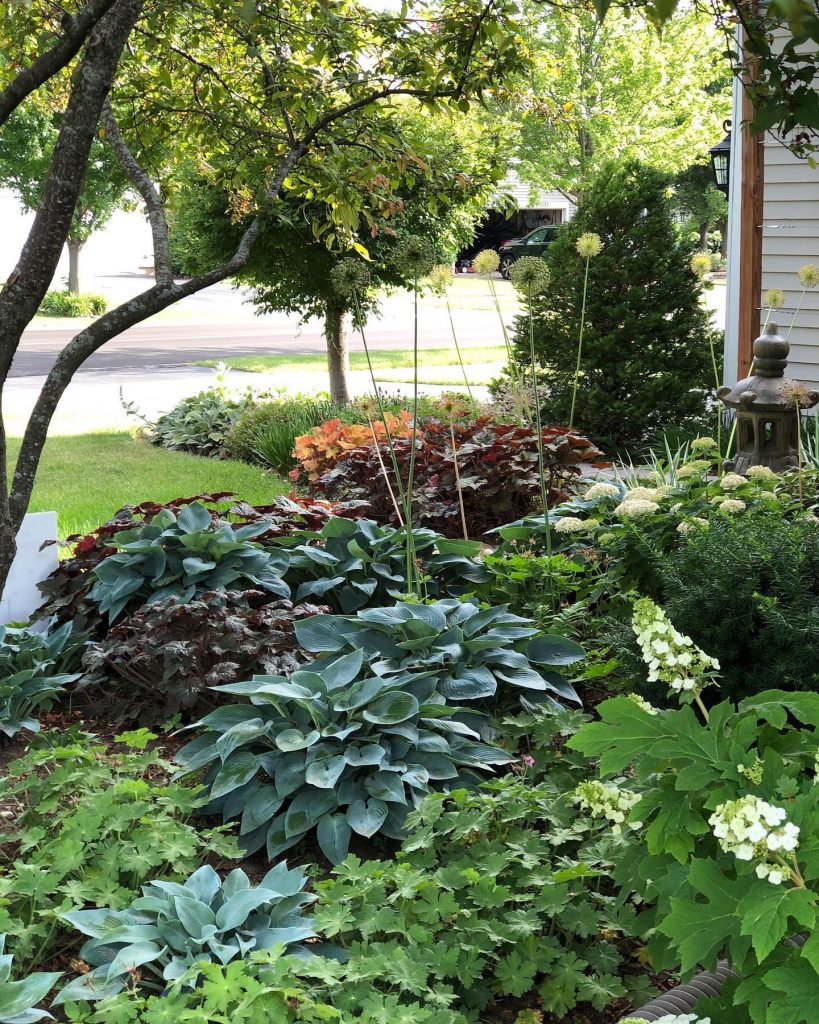
Hostas and heuchera together solve one of the biggest frustrations of gardening in the shade, the feeling that nothing will ever fill in enough to look finished. Their broad blue-green and deep burgundy leaves layer beautifully against each other, creating texture without a single flower needing to bloom. This combination is one of the most reliable ways to build a shade garden bed that looks full from spring through fall.
Tucking allium seed heads and taller grasses behind the low-growing hostas adds height without blocking the layered foliage below. A stone lantern or small garden ornament nestled into the bed gives the eye somewhere to land among all that greenery. Everything here thrives specifically because it is shaded, not in spite of it.
Budget Note: Hosta plants cost $8 to $18 each and heuchera runs $6 to $14 each at a local nursery or garden center.
What a Shaded Corner Can Teach You About the Rest of Your Yard
The longer I worked on that shady side of our yard, the more I realized it had been teaching me patience the entire time. Nothing in a shade garden rushes, and that turned out to be the whole point. Plants there settle in slowly and reward you for waiting instead of forcing anything.
I stopped comparing that corner to the sunny parts of the yard once I understood they were never meant to look the same. A shaded bed has its own rhythm, quieter colors, softer textures, and a different kind of beautiful that took me a full season to actually see. Once I stopped fighting it, the whole yard felt more balanced.
Quick Take
If your yard has one dark, tricky corner, start small. A few hostas, one shade tolerant bench, and a bag of dark mulch can turn that overlooked spot into the beginning of a full shade garden without a single weekend of digging up the whole yard.
Kids tend to gravitate toward these shaded corners naturally, without anyone suggesting it. Mine ended up doing more reading and quiet play under that tree canopy than anywhere else outside, simply because it felt cooler and calmer than the open lawn.
I also noticed how much less maintenance that corner needed once the right plants were finally in the ground. Shade-loving perennials do not demand constant watering the way sun-hungry flowers do, which freed up time I did not realize I was spending.