
Join Our Newsletter for Cozy Home Inspiration, Family Fun, and Delicious Recipes Every Week

Lattice Alternatives Under Decks That Finally Made Ours Look Finished

Disclaimer. Some images featured in this post may originate from third-party sources and are used for illustrative purposes only. Please review our Image Credits Policy for attribution information.
I remember standing in the yard with a paint roller in one hand, staring at the gap under our deck, wondering why it still looked unfinished after everything else was done. The stairs were stained, the railing was solid, and yet that dark open space underneath made the whole thing look incomplete. That was the exact moment I started searching for real lattice alternatives instead of just grabbing the cheapest panel at the hardware store.
I had already tried the standard white plastic lattice years earlier at our old house. It cracked within two summers and never quite matched anything else we owned.
This time I wanted something that actually looked intentional, not like an afterthought bolted on at the last minute. I started saving photos late at night, the same way I do with every other project in this house.
What caught my attention right away was how differently people were solving the exact same problem. Some used simple vertical boards. Others went with dramatic black metal cutouts that looked like art.
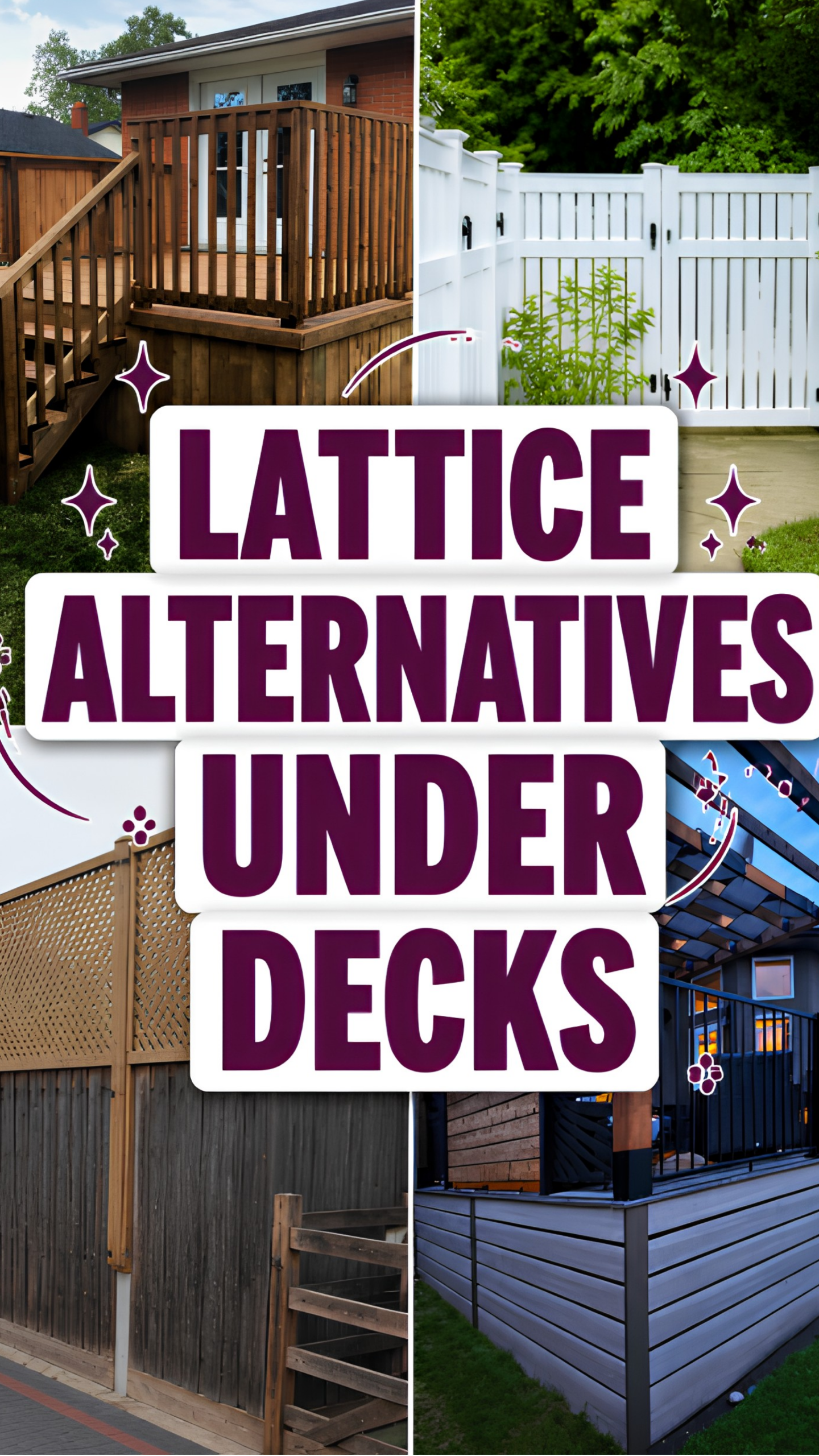
None of them used the flimsy diamond plastic panels I remembered from childhood decks everywhere. That is when I understood there was a whole world of lattice alternatives nobody had ever mentioned to me before.
I kept scrolling, comparing, trying to figure out what would actually survive our winters and still look good after a few seasons. Some ideas needed a contractor. Others looked like something my husband and I could manage on one weekend together.
The pattern that kept showing up was texture. Horizontal boards instead of vertical ones. Diagonal weaves instead of straight diamonds. Small changes that made a huge visual difference once I saw them side by side.
Every single idea below came from that same late-night research habit, the pictures that stopped me cold before I understood exactly why. None of them require ripping out your entire deck structure to achieve.
If you have ever looked underneath your own deck and felt that same unfinished feeling, this list is for you. These are the lattice alternatives that real families have used to close up that gap and make the whole deck finally look done.
What We're Exploring
- 01 Choose Simple Vertical Slats for a Timeless, Classic Look
- 02 Add a Diamond Trellis for a Softer, Traditional Feel
- 03 Try a Diagonal Weave for a Modern Twist on Traditional Lattice
- 04 Choose Decorative Metal Panels for a True Design Statement
- 05 Use Horizontal Slats for a Sleek Contemporary Base
- 06 Install Composite Board Skirting for a Zero Maintenance Finish
- 07 What Closing In That Space Actually Does for a Backyard
- 08 Quick Take
Choose Simple Vertical Slats for a Timeless, Classic Look
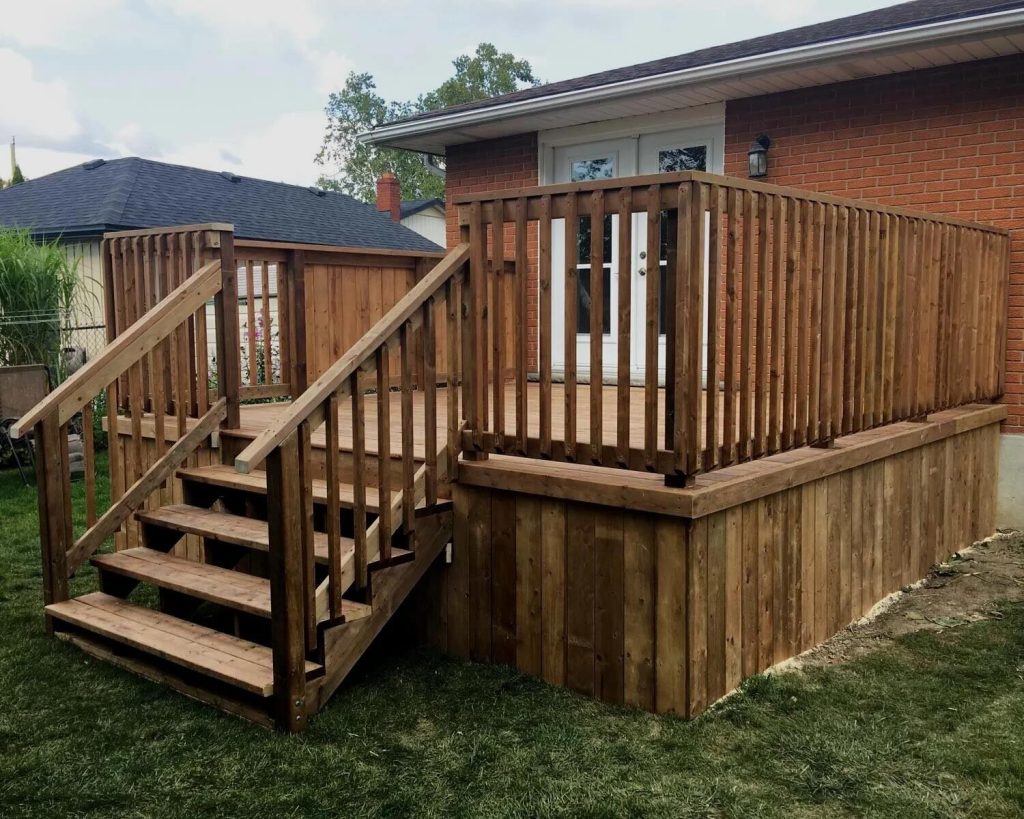
Vertical wood slats spaced evenly apart give a deck a clean, classic look that never feels dated the way old plastic lattice eventually does. The narrow gaps let air circulate underneath the deck, which matters for keeping moisture from building up against the house foundation. This is one of the most reliable lattice alternatives for families who want something sturdy without a complicated build.
This option works especially well for ranch-style homes or classic brick exteriors, where a straightforward wood finish feels most at home. According to This Old House, evenly spaced vertical skirting remains one of the most durable and budget friendly ways to close in the space beneath a raised deck.
Budget Note: Pressure treated fence boards for vertical slats run $2 to $5 per board and are available at Home Depot or Lowe’s.
Add a Diamond Trellis for a Softer, Traditional Feel
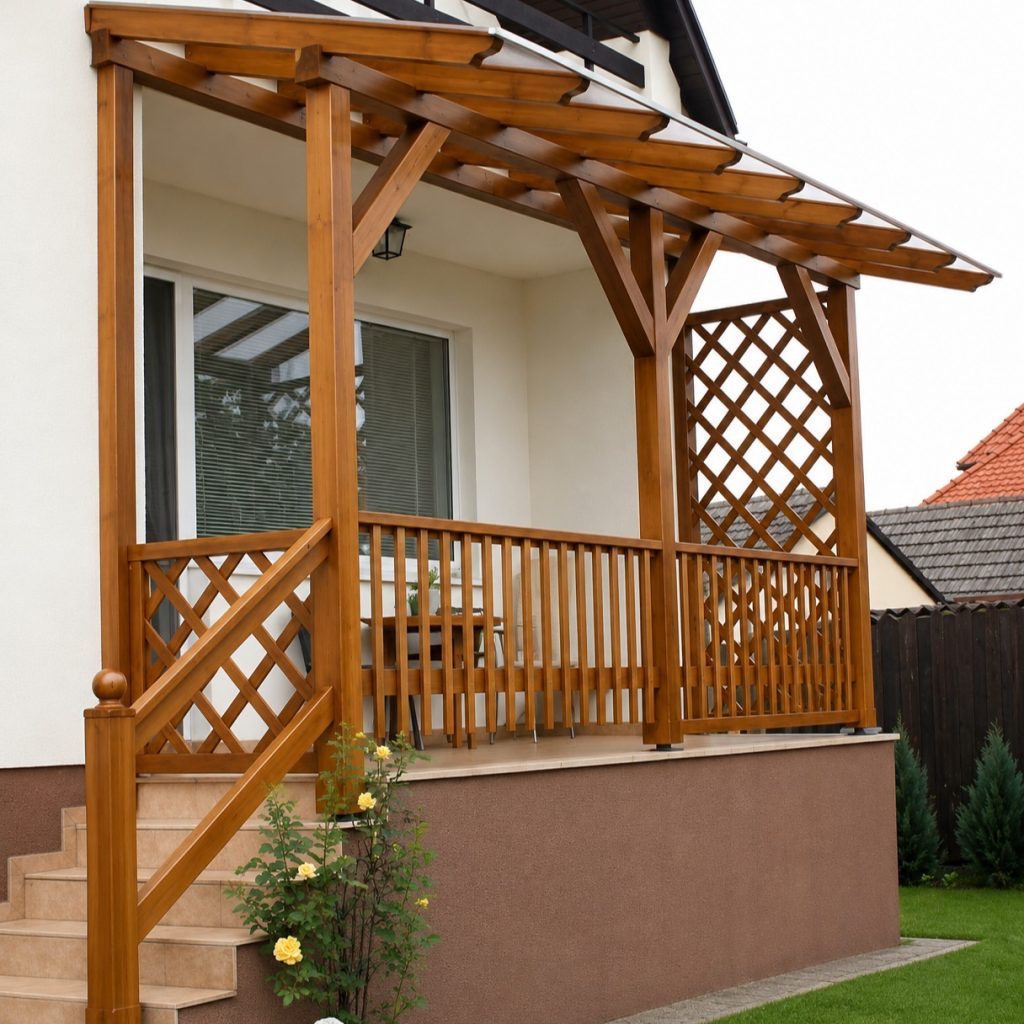
A traditional diamond trellis panel gives a raised porch or deck a softer, more decorative feel than plain straight boards ever could. The crisscross pattern lets light and air move freely underneath while still creating enough visual coverage to hide storage or utility lines. This is one of the prettiest lattice alternatives for homes with a more traditional or cottage-style exterior.
This style works particularly well under covered porches with a roofline overhead, since the trellis pattern echoes the same warm wood tones used in the framing. A well-built trellis panel like this is often mentioned by Better Homes and Gardens as a favorite way to soften the look of a raised porch foundation.
Budget Note: Pre-built diamond trellis panels cost $30 to $70 each at Home Depot or a local lumber yard.
Try a Diagonal Weave for a Modern Twist on Traditional Lattice
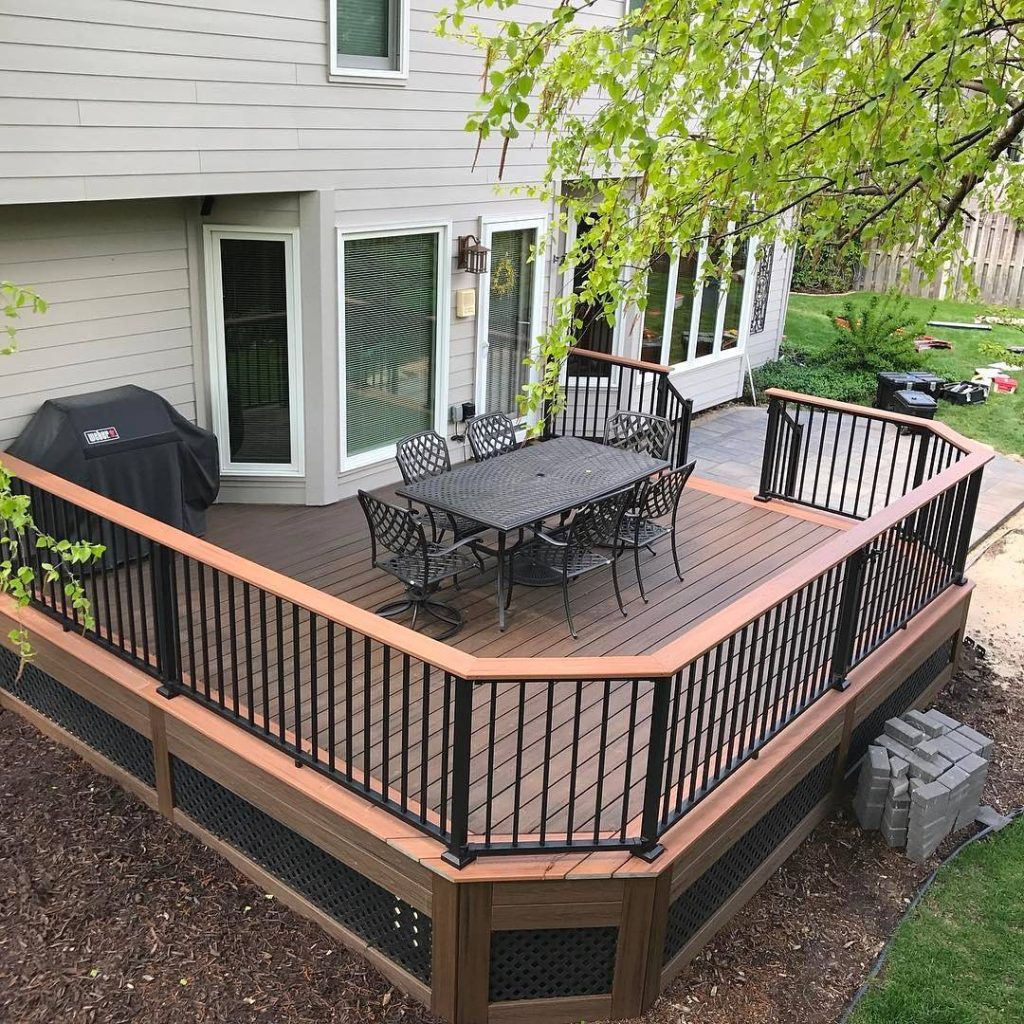
Turning the classic lattice pattern on a diagonal angle instead of a straight grid gives a composite deck a noticeably more modern feel without changing the material at all. The angled weave catches light differently throughout the day, which keeps the skirting from ever looking flat or one-dimensional. This small rotation is one of the most underrated lattice alternatives for anyone who still loves the woven look but wants it updated.
Black composite paired with warm wood-toned decking above creates a sharp, intentional contrast that reads as custom even when it comes from a standard panel. The diagonal pattern also tends to hide dirt and debris better than a straight grid, since the eye naturally follows the angle instead of noticing gaps. It holds up well against fading, which matters for anything installed at ground level.
Budget Note: Diagonal composite lattice panels typically cost $35 to $60 per section through a composite decking supplier.
Choose Decorative Metal Panels for a True Design Statement
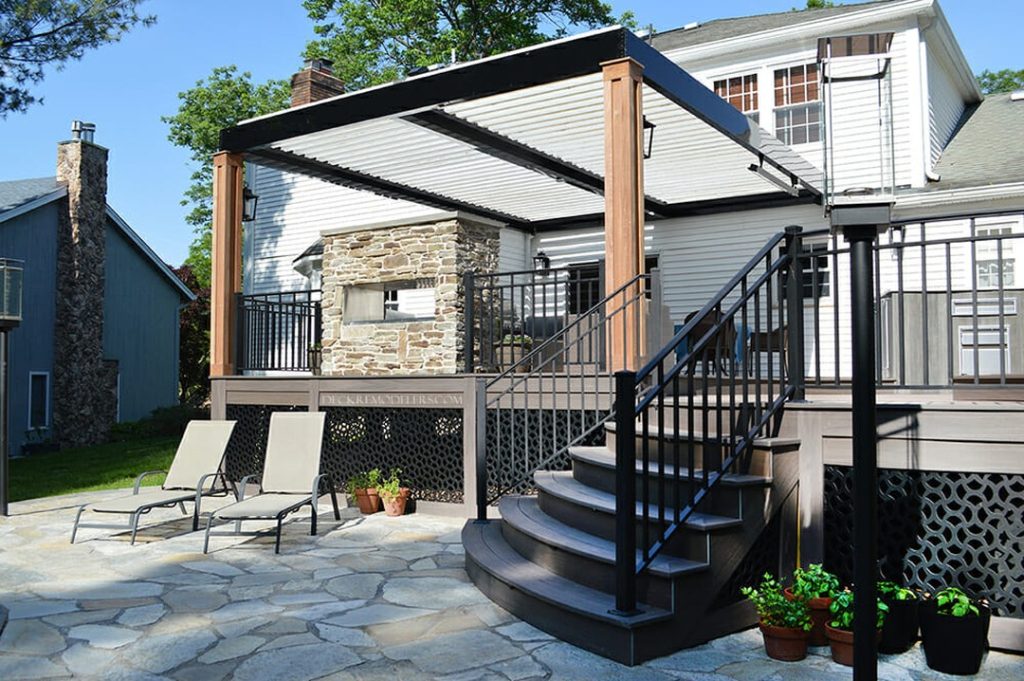
For anyone who wants their deck skirting to double as actual art, decorative metal cutout panels are one of the boldest lattice alternatives available right now. Laser-cut leaf or nature-inspired patterns turn a purely functional gap cover into a genuine focal point, especially once outdoor lighting hits it in the evening. It is the kind of detail that makes guests stop and ask where it came from.
Pairing a rich cedar frame with a black metal insert keeps the panel from feeling too cold or industrial, striking a balance between warmth and modern design. The open cutout pattern still allows airflow underneath the deck, so function is never sacrificed for style. A single statement panel like this can work as one accent point rather than covering the entire skirting run.
Budget Note: Custom laser cut metal panels run $150 to $400 each depending on size, through a local metal fabricator.
Use Horizontal Slats for a Sleek Contemporary Base
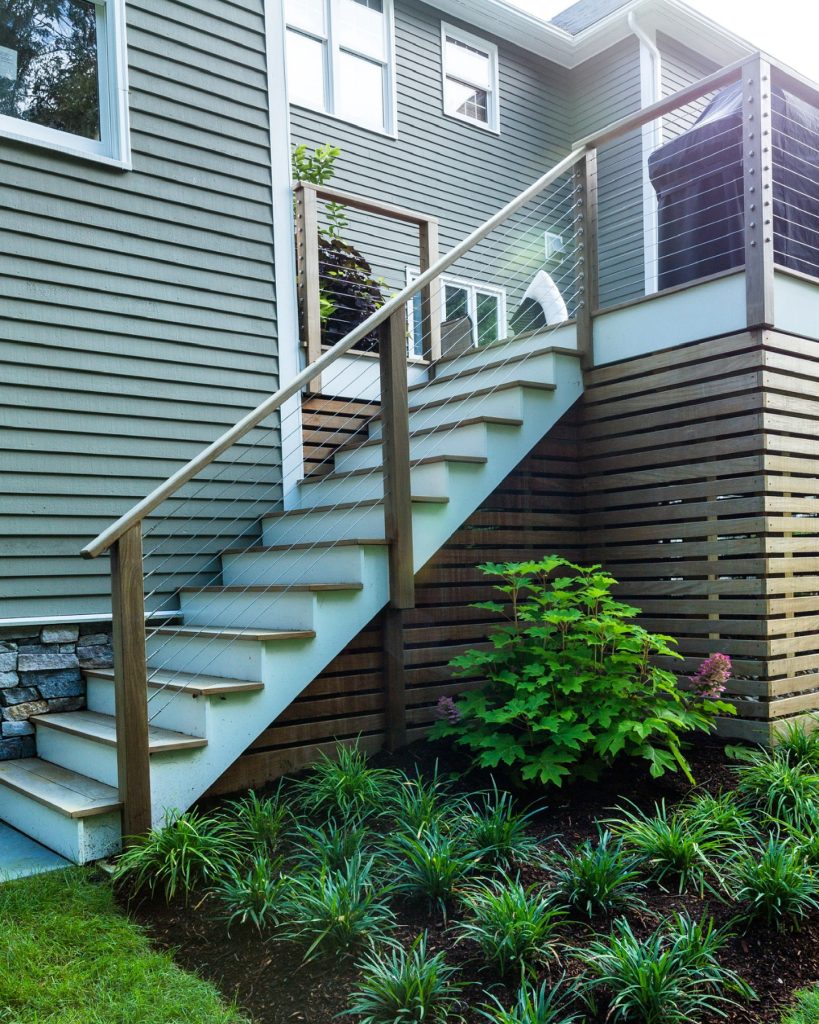
Turning standard boards horizontal instead of vertical instantly shifts a deck skirting from traditional to contemporary without changing the material budget at all. The long horizontal lines make a deck base look wider and more grounded, which works especially well on taller, elevated structures. It is one of the simplest lattice alternatives to install because it uses common lumber in a fresh orientation.
Leaving small gaps between each horizontal board keeps ventilation flowing underneath while still creating real visual coverage from the yard. Pairing this skirting with cable railing above gives the whole structure a clean, unified modern look from top to bottom. Landscaping like ornamental grasses planted along the base softens the straight lines beautifully.
Budget Note: Cedar boards for horizontal skirting run $3 to $6 per linear foot at a local lumber yard or Home Depot.
Install Composite Board Skirting for a Zero Maintenance Finish
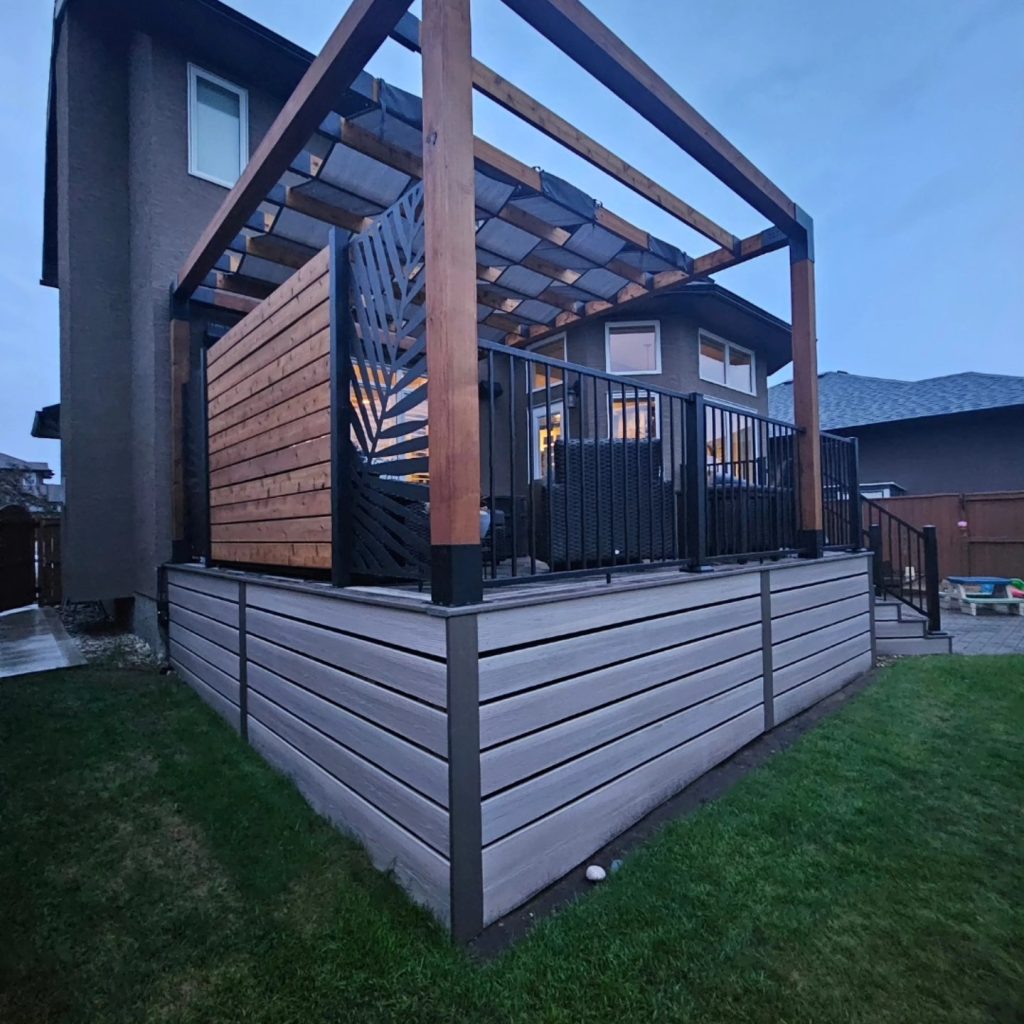
Composite board skirting gives a deck base the same clean horizontal look as real wood without a single season of staining or sealing required. The color stays consistent through sun, rain, and snow, which matters most for the lowest, most exposed part of any deck structure. It is one of the most practical lattice alternatives for families who are already tired of yearly maintenance on the rest of the deck.
A soft grey or driftwood tone pairs beautifully with dark metal posts and pergola framing above, creating a cohesive modern look across the entire structure. The tight horizontal seams give a nearly seamless appearance from a distance, almost like a solid wall rather than individual boards. Cleanup is as easy as a quick hose rinse each season.
Budget Note: Composite skirting boards typically cost $6 to $12 per linear foot, available through a composite decking supplier or Trex dealer.
What Closing In That Space Actually Does for a Backyard
The longer I lived with our finished deck skirting, the more I understood it was never really about hiding storage or blocking a view underneath. Good lattice alternatives change how the entire structure reads from the yard, turning a raised platform into something that looks built on purpose. That shift mattered more than I expected once it was done.
Kids notice this difference too, in their own way. Ours stopped trying to crawl underneath once the gap felt properly closed, which solved a small but constant worry I never mentioned out loud.
Quick Take
If your deck skirting is the one detail you keep putting off, start with simple vertical or horizontal boards in a tone that matches your railing. It is the fastest of all the lattice alternatives here, and it makes the biggest visual difference for the least amount of weekend work.
I also noticed how much tidier the whole backyard felt once that one detail was finished. A deck with proper skirting reads as complete, even if the rest of the yard is still a work in progress around it.
Choosing the right skirting style is really about matching the feeling of your whole exterior, not just filling a functional gap. A modern composite home wants a different finish than a classic brick ranch, and both deserve better than a plain plastic panel.

[…] works for kids after the pool, adults after a run, and dogs after a walk through a muddy yard. The lattice screens used for the upper portion of the enclosure allow airflow and dappled light while maintaining the […]
[…] clean white skirting behind the lower patio furniture creates a backdrop that makes the outdoor furniture pop and gives the seating area a […]