
Join Our Newsletter for Cozy Home Inspiration, Family Fun, and Delicious Recipes Every Week

Plants That Grow Under Trees That Finally Made My Shady Corners Feel Finished

Disclaimer. Some images featured in this post may originate from third-party sources and are used for illustrative purposes only. Please review our Image Credits Policy for attribution information.
I stood under the maple in my backyard for the third summer in a row, staring at the same bare patch of dirt. Nothing grew there. Grass would not take, and every plant I tried looked sad within a month.
I had convinced myself that under tree planting was just not possible in my yard. The shade felt too heavy, the roots felt too greedy, and I had already wasted more money than I wanted to admit on plants that never made it past June.
Then I started really looking at gardens online instead of just scrolling past them. I noticed the shady corners other people had figured out, the ones tucked right under a tree canopy that somehow still looked lush. That was the moment something clicked.
I realized I had been choosing plants for sun instead of shade and layering everything wrong. A garden under-tree branches needs a completely different approach than an open bed, and nobody had ever explained that to me plainly.
I started saving every photo that showed a real, working shade bed. Not the styled magazine kind, the kind with a hose still coiled in the corner and a kid’s ball half buried in the mulch. Those felt honest.
I tried a few ideas that first fall, mostly small and low risk. A few plants died anyway, but the ones that worked completely changed how I saw that corner of the yard. It stopped being the spot I avoided and started being the spot I wanted to sit near.
What I learned is that under-tree gardening is really about layers. Something tall for structure, something mid height for fullness, and something low that spreads to cover bare soil. Once I understood that rhythm, everything else got easier.
I kept a running list of ideas that made me stop scrolling, the kind I would genuinely tell a friend about over coffee. Every idea below came from that list, tested against my own patchy, shady, very real backyard. These are the ones that finally worked.
What We're Exploring
- 01 Layered Evergreens Give A Shady Bed Structure All Year
- 02 Flowering Shrubs Paired With Groundcover Soften A Shady Corner
- 03 A Tropical Canopy Bed Turns Deep Shade Into a Private Escape
- 04 Tall Perennial Drifts Bring Movement To The Base Of A Tree
- 05 A Flowering Tree Underplanted With Cottage Blooms Feels Effortless
- 06 A Layered Paniculata Bed Turns One Tree Into A Full Garden Moment
- 07 Why Shade Beds Become The Most Rewarding Part Of A Yard
- 08 What You Need Box
Layered Evergreens Give A Shady Bed Structure All Year
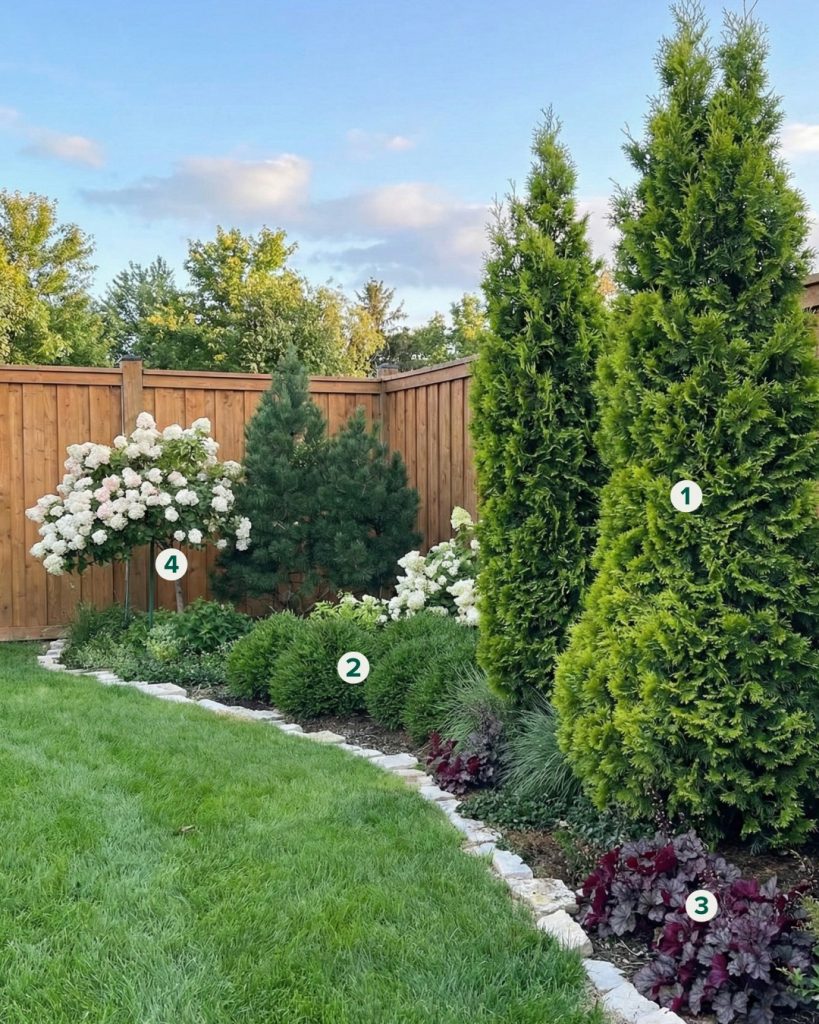
Building a bed with tall, narrow evergreens at the back and softer shrubs in front is one of the most reliable ways to fill space under tree canopies and fence lines alike. The height variation keeps the eye moving instead of settling on one flat wall of green. It is a structure that holds up even in the middle of winter when everything else has gone dormant.
Mixing in a layer of dark leaved perennials like coral bells at the front edge, a combination often highlighted by garden designers on BHG.com, adds color without adding upkeep. Shade-loving perennials like these tuck in beautifully at the base of taller shrubs.
Budget Note: Small arborvitae and boxwood shrubs typically run $20 to $45 each, and coral bells perennials cost about $8 to $15 per pot at a local nursery or Home Depot.
Flowering Shrubs Paired With Groundcover Soften A Shady Corner
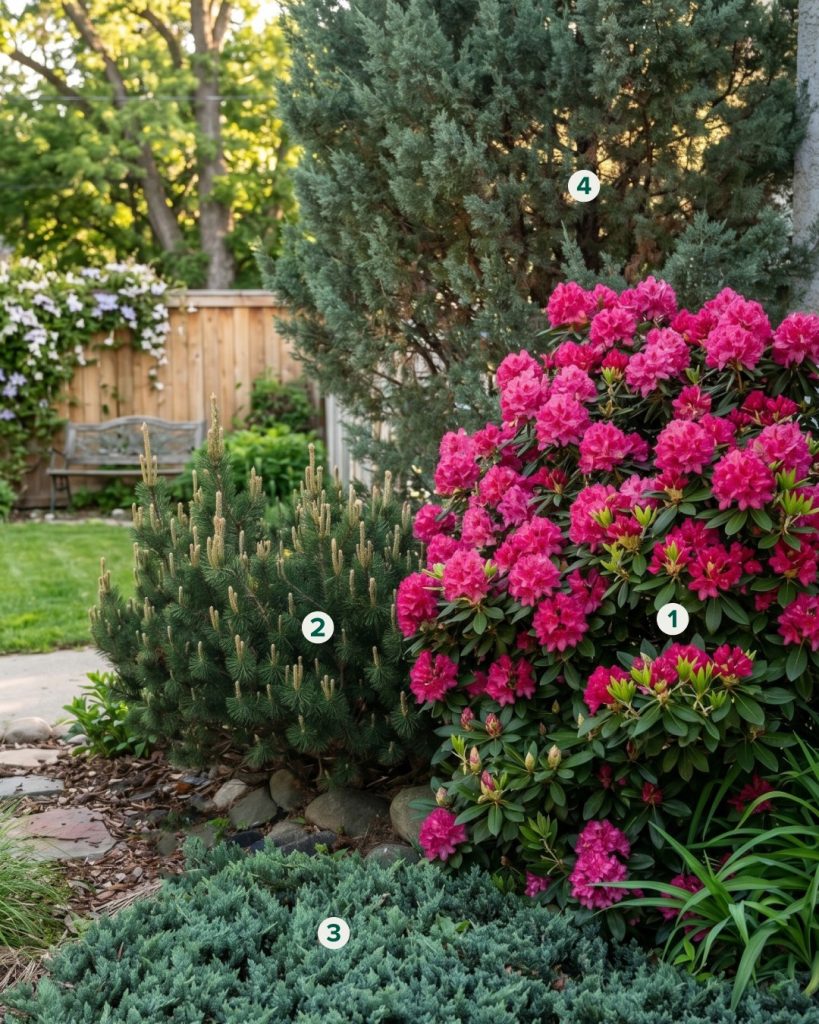
Pairing a bold flowering shrub like rhododendron with a low, spreading groundcover underneath solves two problems at once in a spot under tree shade. The shrub brings color at eye level, while the groundcover fills every gap so no bare dirt shows through. It is a combination that reads as intentional rather than accidental.
Choosing a creeping juniper or a similar low evergreen groundcover, a pairing often recommended by shade garden guides on The Spruce, keeps weeds from taking over the open soil. It also gives the whole bed a finished, tucked-in look by the second season.
Budget Note: A rhododendron shrub typically costs $25 to $50, and creeping juniper groundcover plants run about $6 to $12 each at Lowe’s or a local garden center.
A Tropical Canopy Bed Turns Deep Shade Into a Private Escape
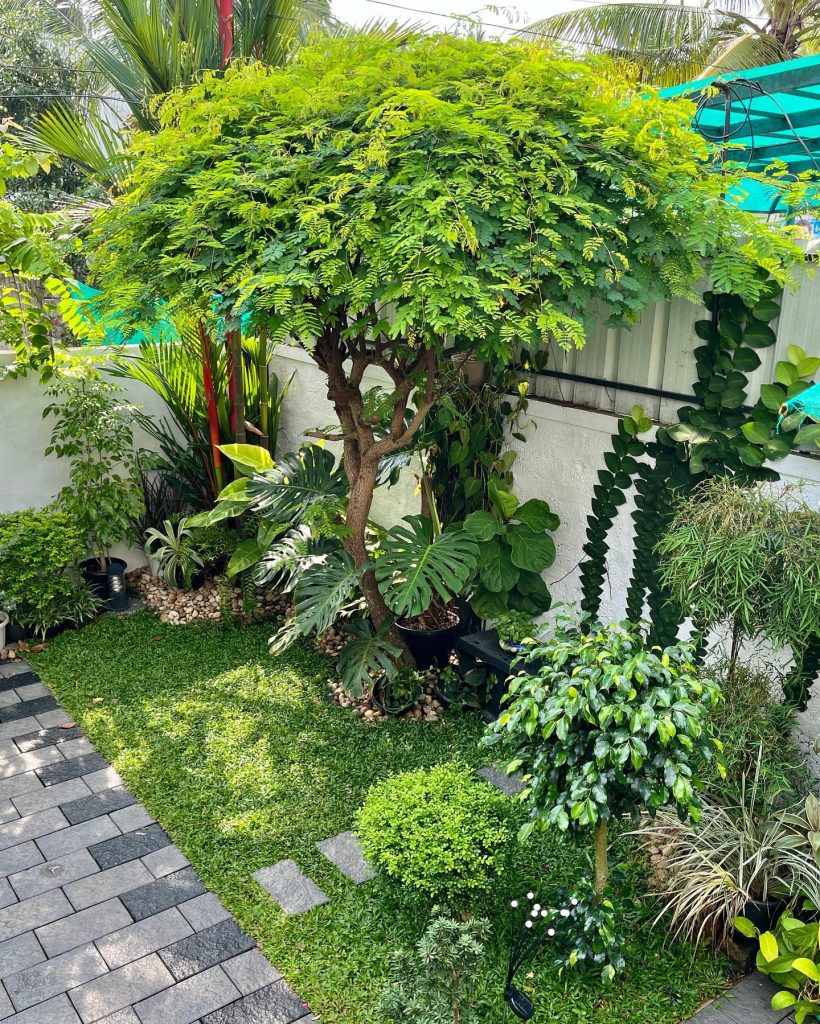
Filling the ground under tree cover with large leafed tropical plants like monstera and philodendron turns a dark, overlooked corner into the most interesting spot in the yard. The oversized leaves catch what little light filters through, which makes the whole space feel lush rather than neglected. It is a completely different approach than the usual shade perennial mix.
Adding a simple pebble or stone border around the base, a detail commonly used in tropical shade designs shared on Apartment Therapy, keeps the planting area defined and easy to maintain. It also helps with drainage in a spot that tends to stay damp.
Budget Note: Established monstera and philodendron plants typically run $20 to $60 each depending on size, and river pebbles for edging cost about $5 to $10 per bag at Home Depot.
Tall Perennial Drifts Bring Movement To The Base Of A Tree
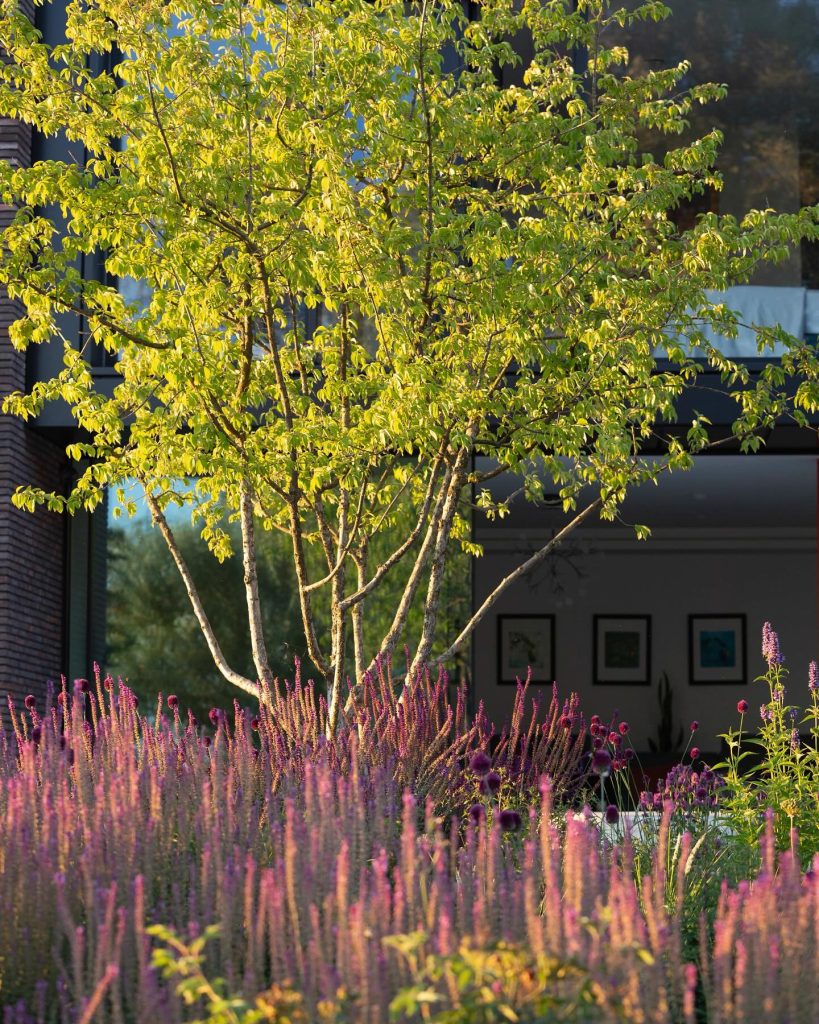
Planting tall, airy perennials like salvia and allium in loose drifts around the base of an ornamental tree gives a bed real movement whenever there is a breeze. The layered heights and soft colors keep a spot under tree branches from feeling flat or overly tidy. It is the kind of planting that looks a little different every time you walk past it.
Grouping plants in odd-numbered clusters rather than straight rows, a layout principle frequently mentioned in garden design coverage on Garden Design, keeps the whole drift looking natural. Repeating the same few plant varieties throughout the bed also ties everything together visually.
Budget Note: Salvia and allium perennials typically cost $8 to $18 per plant, and are widely available at local nurseries, Home Depot, or Amazon in bulk bundles.
A Flowering Tree Underplanted With Cottage Blooms Feels Effortless
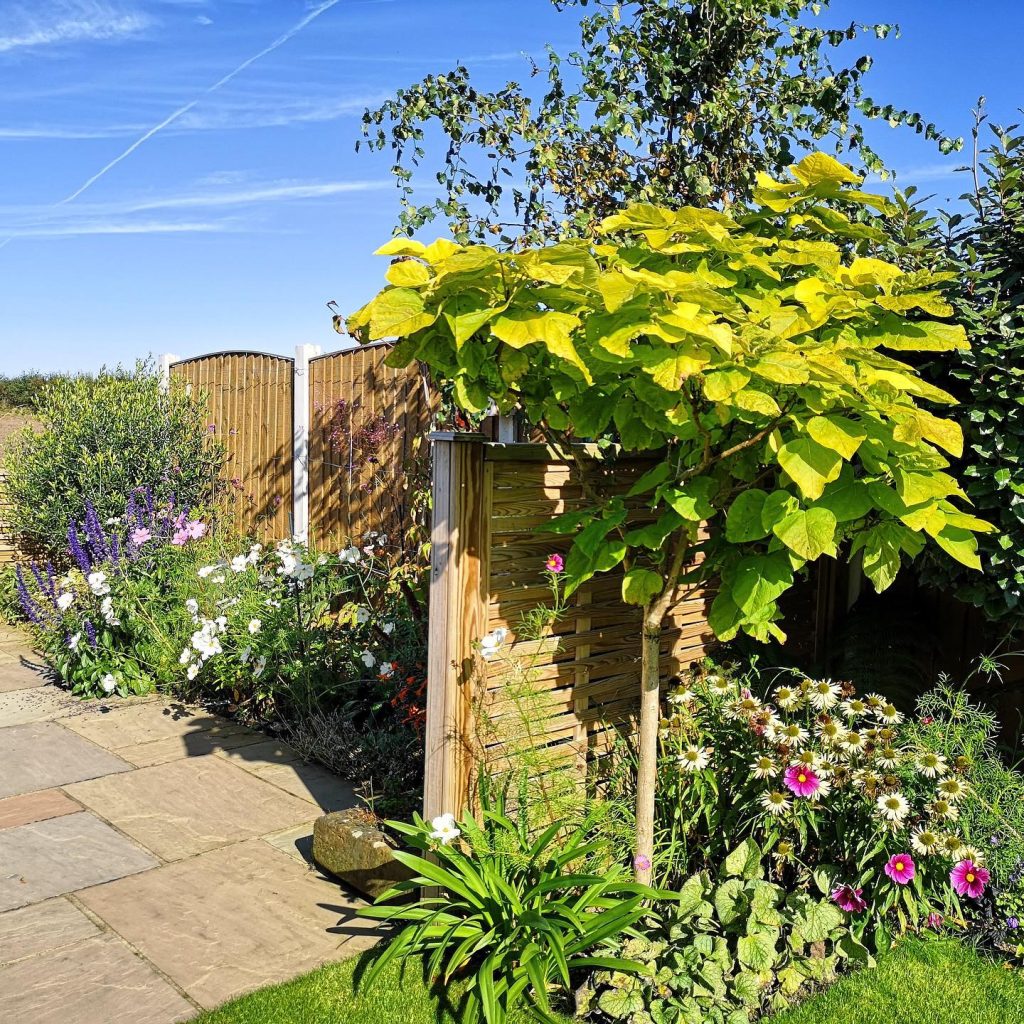
This idea is wonderful for anyone who loves a full, romantic garden but does not want a strict maintenance schedule. A cosmos and zinnia garden style reseeds itself season after season with very little help. That kind of low effort abundance is hard to beat.
Letting the plants spill slightly over a garden path or patio edge, a styling choice often seen in relaxed border designs on Real Simple, keeps the whole bed from feeling too contained. A little overflow is part of what makes cottage style gardens feel so welcoming.
Budget Note: Cosmos and echinacea seed packets typically cost $3 to $6 each, and established starter plants run about $6 to $12 at a local nursery or garden center.
A Layered Paniculata Bed Turns One Tree Into A Full Garden Moment
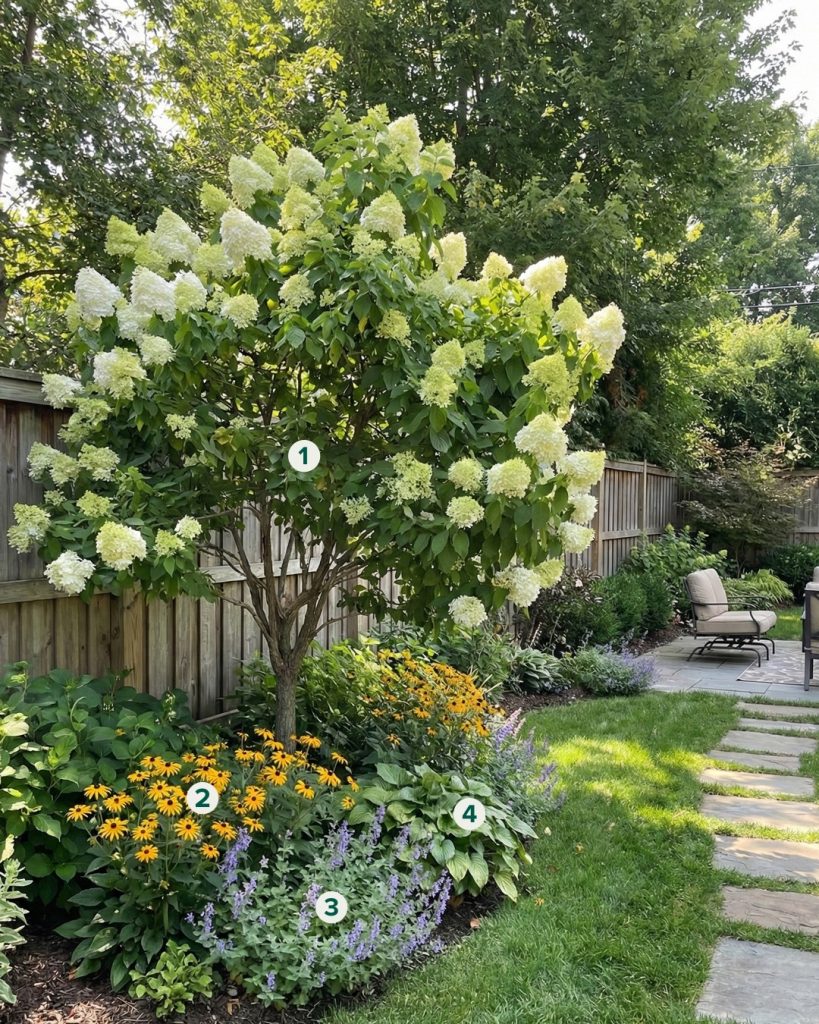
Underplanting a single flowering paniculata tree with layers of rudbeckia, salvia, and hosta turns one tree into an entire garden moment on its own. The bright yellow and purple tones at ground level pull your eye down before it travels back up into the white blooms above. It is one of the most complete under-tree designs you can build around a single specimen.
Repeating the same perennial groupings on both sides of the tree, a balance technique often used in garden bed layouts featured on Gardenista, keeps the whole design feeling cohesive rather than scattered. It also makes the bed far easier to maintain since you already know what belongs where.
Budget Note: Rudbeckia and salvia perennials typically cost $8 to $15 each, and hosta plants run about $10 to $20 depending on size at a local nursery or Amazon.
Why Shade Beds Become The Most Rewarding Part Of A Yard
There is something about a bed under tree cover that ends up meaning more than the sunny parts of the yard ever do. It is usually the spot everyone dismissed first, so watching it finally fill in feels like a real win. That underdog quality is part of why these beds become so satisfying.
Part of what makes shade gardening worth the learning curve is how much cooler and calmer those spots feel in the middle of summer. A bed under tree branches offers real relief on a hot afternoon, both for the plants and for the people sitting nearby. That comfort is easy to underestimate until you actually have it.
What You Need Box
A solid start for any **under tree** bed really only needs a few things. A trowel for planting around shallow roots, a bag of good quality mulch to protect the soil, a mix of **shade loving perennials** suited to your light level, and a slow release fertilizer to help new plants settle in. Everything else, like edging stones or decorative pots, can be added gradually once you see what the space actually needs.
This kind of gardening also teaches patience in a way sunny beds rarely do. Shade plants often take a full season to settle in before they really show what they can do. Learning to wait for that payoff changes how you garden everywhere else too.
For families, a shady corner under tree cover often becomes the default gathering spot without anyone planning it that way. It stays cooler for kids playing outside, and it gives the whole yard a sense of depth instead of one flat sunny lawn. That is worth more than a perfectly matched color palette ever could be.