
Join Our Newsletter for Cozy Home Inspiration, Family Fun, and Delicious Recipes Every Week
Stunning Cheap Basement Flooring Ideas That Actually Hold Up on a Budget

Disclaimer. Some images featured in this post may originate from third-party sources and are used for illustrative purposes only. Please review our Image Credits Policy for attribution information.
I stood at the top of our basement stairs holding a paint chip and a flooring sample, trying to decide if either one was worth the money. Basement flooring had turned into the one decision I could not seem to make quickly.
Every contractor quote we got assumed we wanted the most expensive option available. None of them seemed to understand that our basement just needed to stop looking like a place we avoided.
I started scrolling for real examples instead of showroom photos, curious what other families had actually chosen for a space that floods sometimes and gets cold in winter. Every option I found solved a slightly different problem.
Some families dealt with moisture; others just wanted something that looked finished without a huge budget. I began saving the ones that felt achievable rather than aspirational.
A pattern started forming the more I looked. The best budget-friendly floors never tried to hide that they were budget-friendly; they simply worked with the space instead of fighting it.
I noticed how much color and pattern mattered even on the cheapest materials. A dark, moody floor could make a basement feel intentional, while a plain gray slab often looked unfinished, no matter how new it actually was.
Durability became a real conversation between my husband and me, since a basement floor deals with more moisture and temperature swings than any other room in the house. Not every material we loved online could handle that.
I began testing small samples in our own space, watching how each one looked under our basement’s dim overhead lighting. Some options that looked beautiful online read completely differently once I saw them in person.
My husband finally settled on an option somewhere between what he wanted to spend and what I thought looked right, and neither of us regretted the middle ground once it was installed. That compromise taught me more than any single showroom visit had.
These are the floors that taught me the most about solving a basement without spending a fortune. Each one shows a different way to make a below-ground space feel finished, warm, and worth using.
What We're Exploring
- 01 A Metallic Epoxy Basement Flooring Finish With Real Movement
- 02 A Soft Wall-to-Wall Carpet Basement Flooring Choice
- 03 A Speckled Flake Epoxy Basement Flooring Upgrade
- 04 Mom Notes
- 05 A Modular Carpet Tile Basement Flooring Solution
- 06 A Light Wood Look Vinyl Plank Basement Flooring Option
- 07 A Dark Wood-Look Vinyl Basement Flooring Choice for Busy Spaces
- 08 What Every Family Should Know Before Choosing Basement Flooring
- 09 Basement Flooring Options Compared
A Metallic Epoxy Basement Flooring Finish With Real Movement
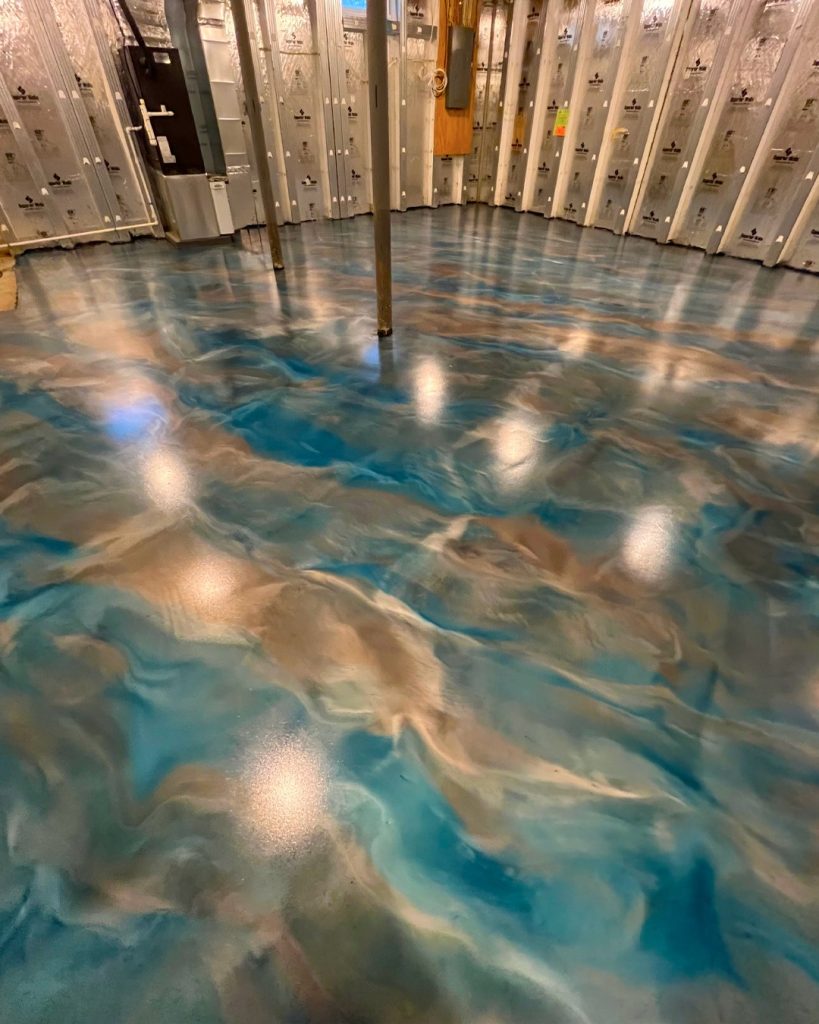
Metallic epoxy is a technique frequently highlighted by HGTV for transforming plain concrete into a genuine design feature. Existing support poles and utility areas blend into the finished look rather than standing out as eyesores.
What makes this idea worth trying is the durability it offers, since a properly sealed epoxy floor resists moisture and stains far better than carpet or laminate ever could in a below-ground space.
Budget Note: DIY metallic epoxy kits typically cost $2 to $4 per square foot in materials, though professional installation runs $5 to $10 per square foot depending on the region.
A Soft Wall-to-Wall Carpet Basement Flooring Choice
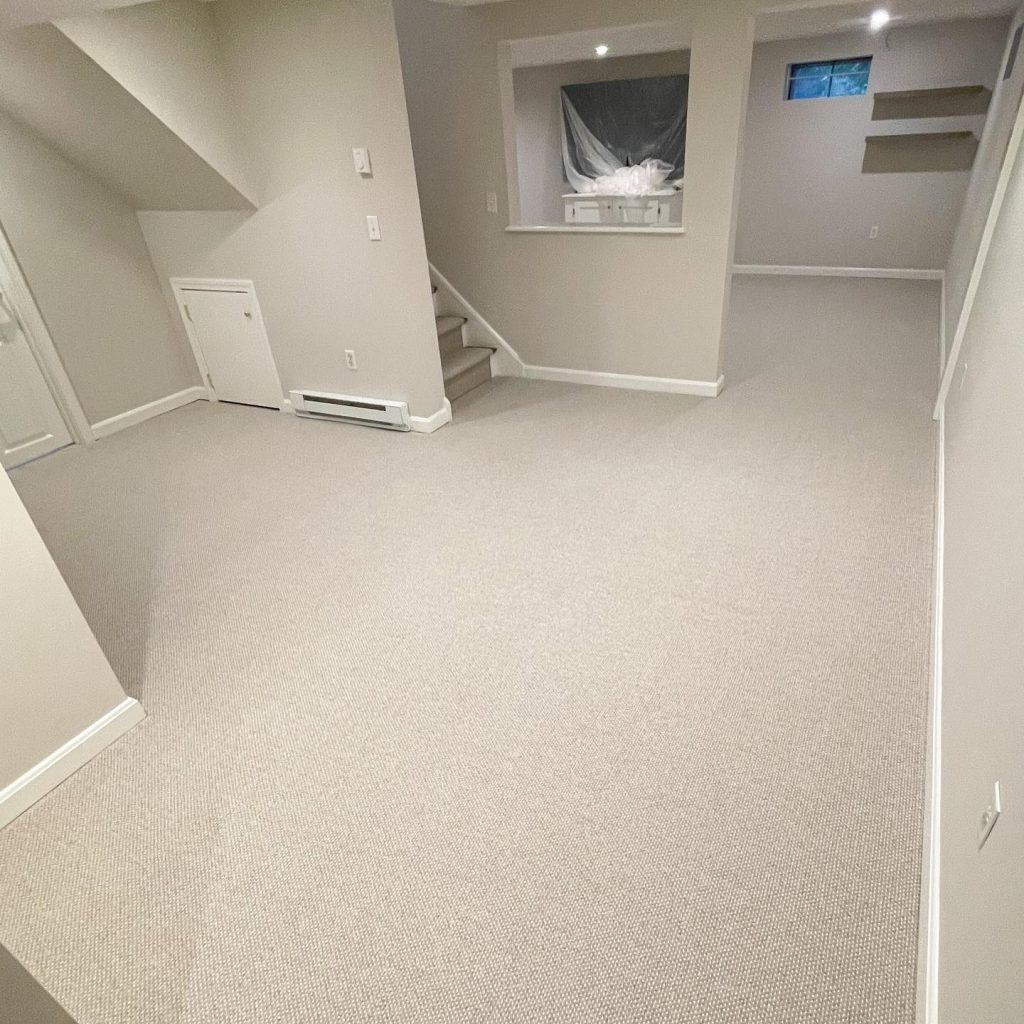
Choosing a low-pile, stain-resistant carpet designed for high-traffic areas is a detail often recommended by Good Housekeeping for busy households. A neutral shade also makes future furniture or decor changes far easier to plan around.
The reason this idea holds up so well is comfort, since carpet remains one of the only basement flooring options that genuinely feels warm underfoot during colder months.
Budget Note: Basement-rated wall-to-wall carpet typically costs $2 to $5 per square foot installed, and moisture-resistant carpet padding runs $0.50 to $1 per square foot at Home Depot or Lowe’s.
A Speckled Flake Epoxy Basement Flooring Upgrade
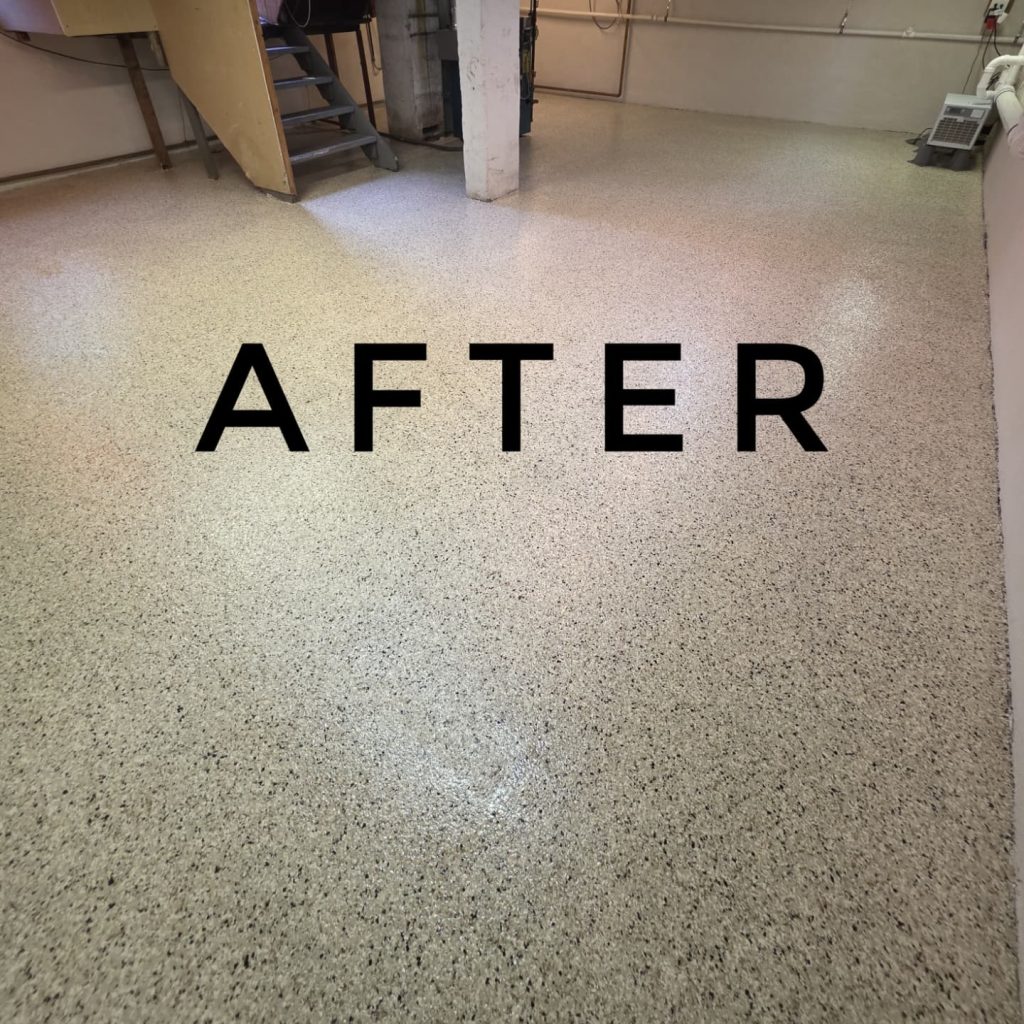
This option works especially well for a basement that doubles as a workshop or storage area, since the flake finish resists scuffs, tire marks, and dropped tools far better than carpet or vinyl.
Flake epoxy systems are a popular choice frequently reviewed by Wirecutter for their balance of durability and appearance. The neutral gray and tan color palette suits nearly any basement decor scheme without requiring a full room redesign.
Budget Note: Flake epoxy flooring kits typically cost $2 to $5 per square foot for materials, and professional application runs $4 to $8 per square foot depending on prep work needed.
Mom Notes
If you take one thing from me, let it be this. Bring your flooring sample downstairs and look at it under your actual basement lighting before deciding anything. What looked perfect under bright store lights read completely differently once I saw it in our dim basement corner.
A Modular Carpet Tile Basement Flooring Solution
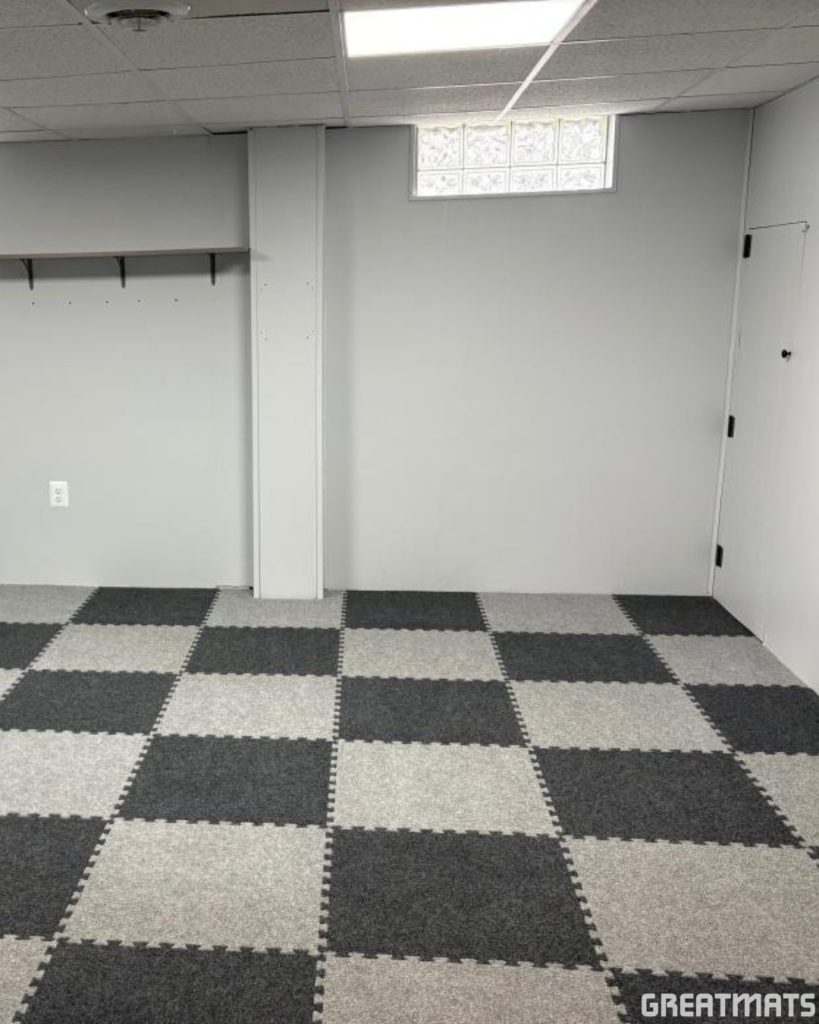
Interlocking carpet tiles in a checkerboard pattern give this basement flooring option flexibility that traditional wall-to-wall carpet simply cannot match. Individual squares can be replaced if one gets stained or damaged, without needing to redo the entire floor. The two-tone pattern adds visual interest to a space that might otherwise feel flat or plain.
Carpet tiles are a practical solution often recommended by The Spruce for DIY basement renovations, since installation requires no special tools or adhesive in most cases. The modular format also makes it easy to work around support posts or awkward room shapes.
Budget Note: Interlocking carpet tiles typically cost $2 to $4 per square foot at Greatmats or Home Depot, and no additional underlayment is usually required for installation.
A Light Wood Look Vinyl Plank Basement Flooring Option
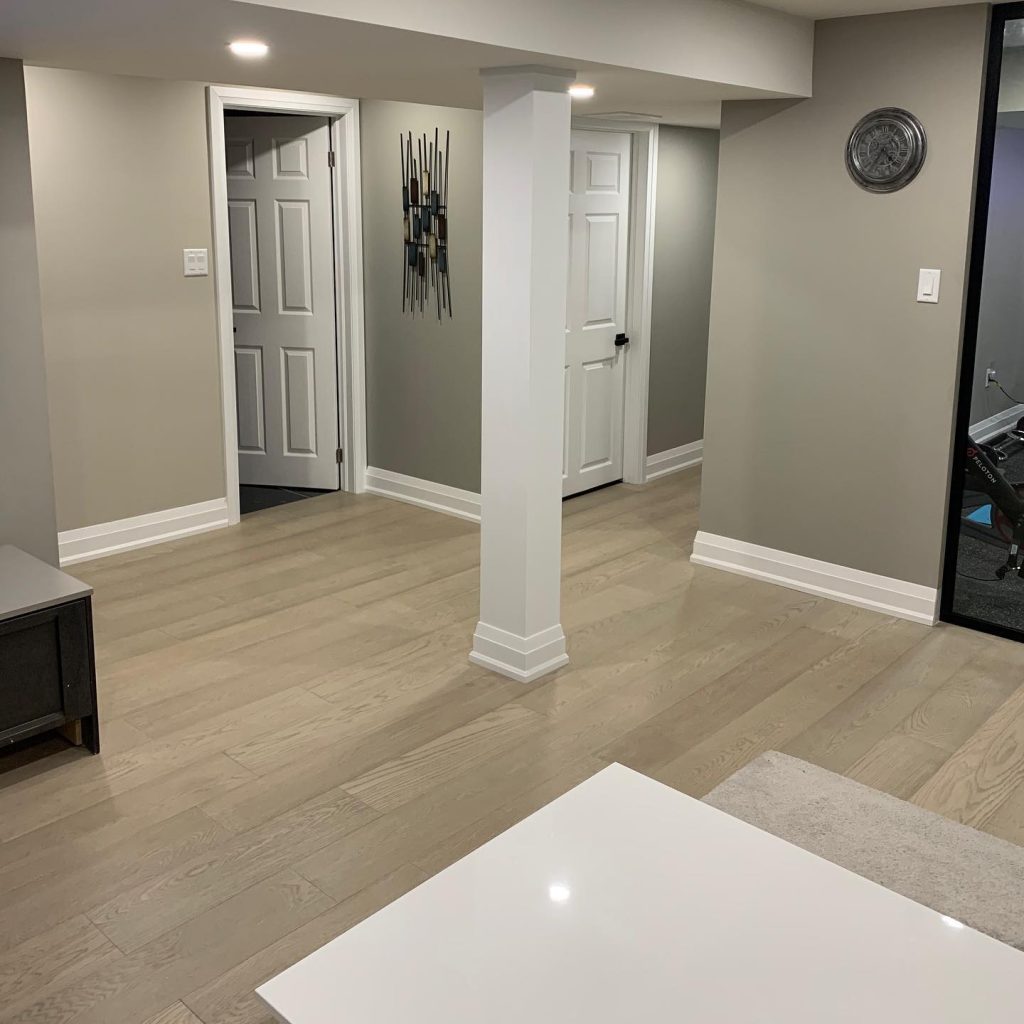
This option works especially well for a finished basement meant to feel like a genuine extension of the main living space since the wood-look flooring creates visual continuity between floors.
Luxury vinyl plank is a material frequently recommended by Apartment Therapy for basements specifically because of its waterproof core and easy installation. Wide plank widths make a smaller basement room feel more spacious than narrow strip flooring would.
Budget Note: Waterproof luxury vinyl plank flooring typically costs $2 to $5 per square foot at Lowe’s or Floor & Decor, and click-lock installation can often be done without professional help.
A Dark Wood-Look Vinyl Basement Flooring Choice for Busy Spaces
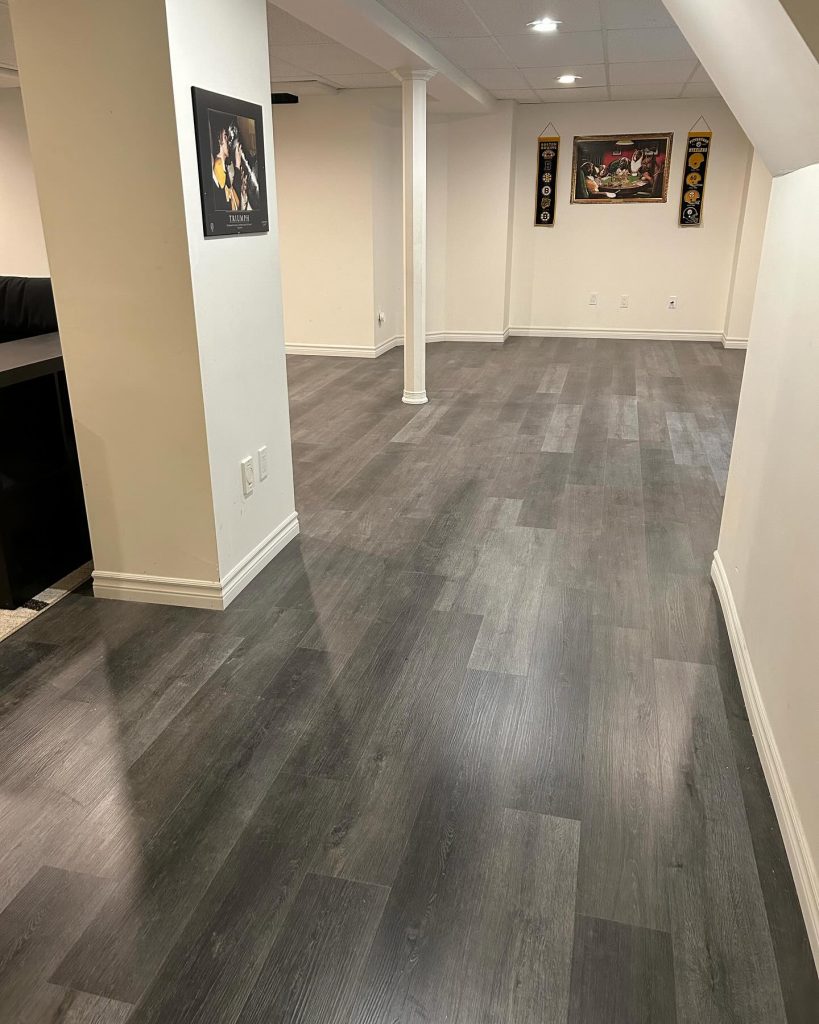
Choosing a deeper charcoal-toned vinyl plank gives this basement flooring option a moody, grounded feeling that hides everyday wear better than a lighter finish would. The rich wood grain texture reads as intentional and current rather than purely practical. Darker flooring also makes a basement feel cozy rather than cold, especially when paired with warm lighting overhead.
This kind of durable, low-maintenance flooring choice is a favorite recommendation from Real Simple for high-traffic family spaces. Support columns and structural elements throughout the room blend naturally against the deeper flooring tone.
Budget Note: Dark-toned waterproof vinyl plank flooring typically costs $2.50 to $5.50 per square foot, and baseboard trim to finish the edges runs $1 to $2 per linear foot at Home Depot.
What Every Family Should Know Before Choosing Basement Flooring
Choosing the right basement flooring always starts with understanding what the space actually deals with, not just what looks good in photos. Moisture, temperature swings, and foot traffic all play a bigger role below ground than they do anywhere else in the house.
Waterproof materials deserve serious consideration even in a basement that has never flooded. A single unexpected leak can ruin traditional carpet or hardwood in a way that vinyl or epoxy simply shrugs off.
Basement Flooring Options Compared
| Material | Cost Per Sq Ft | Best For |
|---|---|---|
| Flake epoxy | $2 to $5 | Workshops or storage areas |
| Wall to wall carpet | $2 to $5 | Family or play rooms |
| Carpet tiles | $2 to $4 | Damp prone basements |
| Vinyl plank | $2 to $5.50 | Whole home continuity |
Color choice changes how a below-ground room feels more than people expect going in. Lighter floors brighten a naturally dim space, while darker floors add coziness and hide everyday wear more effectively.
Budget does not have to mean settling for an unfinished look. Every option on this list proves that a modest price point can still produce a basement that feels genuinely intentional rather than temporary.