
Join Our Newsletter for Cozy Home Inspiration, Family Fun, and Delicious Recipes Every Week
Perfect Craft Room Organization Ideas Any Creative Mom Can Actually Keep Up With

Disclaimer. Some images featured in this post may originate from third-party sources and are used for illustrative purposes only. Please review our Image Credits Policy for attribution information.
I stood in the doorway of our craft closet holding a glue stick I had just bought for the third time that year because I could never find the other two. Craft room organization was not something I thought I needed until that exact moment of frustration.
Ribbon spools, markers, and half-finished projects covered every flat surface in that little room. I kept telling myself I would deal with it eventually, and eventually kept not arriving.
That third glue stick sitting on the counter was the tipping point. I finally admitted the mess was not just annoying, it was costing me actual money and time every single week.
I started searching for ideas that night, mostly out of frustration rather than any real plan. What I found surprised me, since almost none of it looked like the sterile, matchy setups I had always assumed organizing meant.
Pegboards covered in color, clear bins labeled by hand, and shelves that mixed function with a little bit of personality. Every version felt achievable in a way that store displays never had.
I started small, picking one shelf instead of tackling the whole room at once. That first small win was enough to convince me the rest was worth doing too.
Over the following weeks, I worked through drawer by drawer, bin by bin, matching each system to how our family actually used the space. Some ideas worked immediately. Others needed a second try before they clicked.
What surprised me most was how much calmer the whole room felt once everything had a visible, obvious home. It stopped being a space I avoided and became one I actually wanted to spend time in.
My kids noticed the shift too, finding their own supplies without asking me first for once. That alone made the whole project worth the weekends it took.
I am sharing the six ideas that shaped our space the most. Every one of them came from a real craft room I admired online before I ever tried it myself.
What We're Exploring
- 01 A Pegboard Wall Keeps Every Tool Visible and Within Reach
- 02 Clear Bins Turn a Cluttered Shelf Into a Visual System
- 03 Mom Notes
- 04 A Full Wall of Labeled Bins Handles Serious Volume
- 05 A Mixed Storage Wall Blends Function With Style
- 06 A Small Parts Cabinet Solves the Tiny Supply Problem
- 07 A Color Coordinated Studio Turns Organization Into Its Own Reward
- 08 What Getting Our Craft Space Under Control Taught Me About Home
A Pegboard Wall Keeps Every Tool Visible and Within Reach
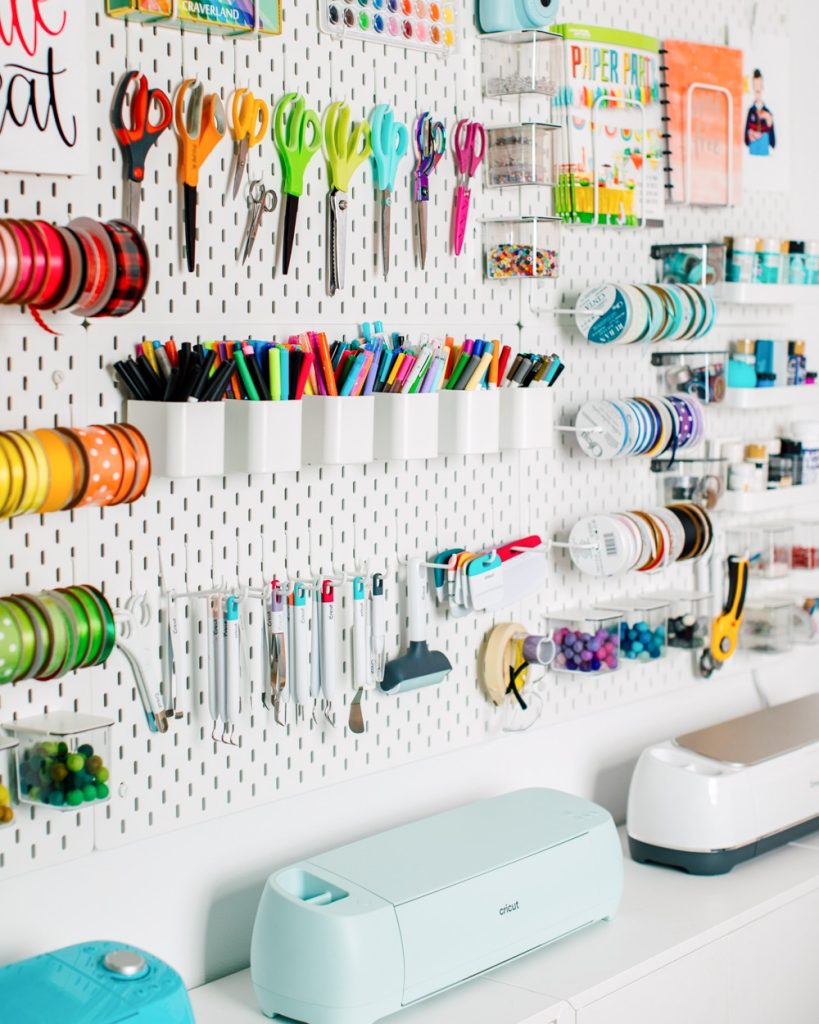
Mounting a full pegboard wall and hanging scissors, ribbon spools, and small bins directly onto it turns a cluttered craft area into something that actually functions like a workshop. Everything stays visible, which means nothing gets buried at the bottom of a drawer for months. This kind of vertical thinking is one of the most efficient forms of craft room organization, especially in a smaller space.
Color coding the ribbon and pen collections by shade adds a visual rhythm that makes the wall feel intentional rather than chaotic. It borrows the same logic behind a well-organized pantry system, where grouping by category speeds up finding what you need. Small clear bins clipped onto the board hold beads and embellishments without ever tipping over.
Budget Note: A pegboard panel with hooks and bins typically runs $40 to $90 at IKEA or The Container Store, depending on size and accessories.
Clear Bins Turn a Cluttered Shelf Into a Visual System
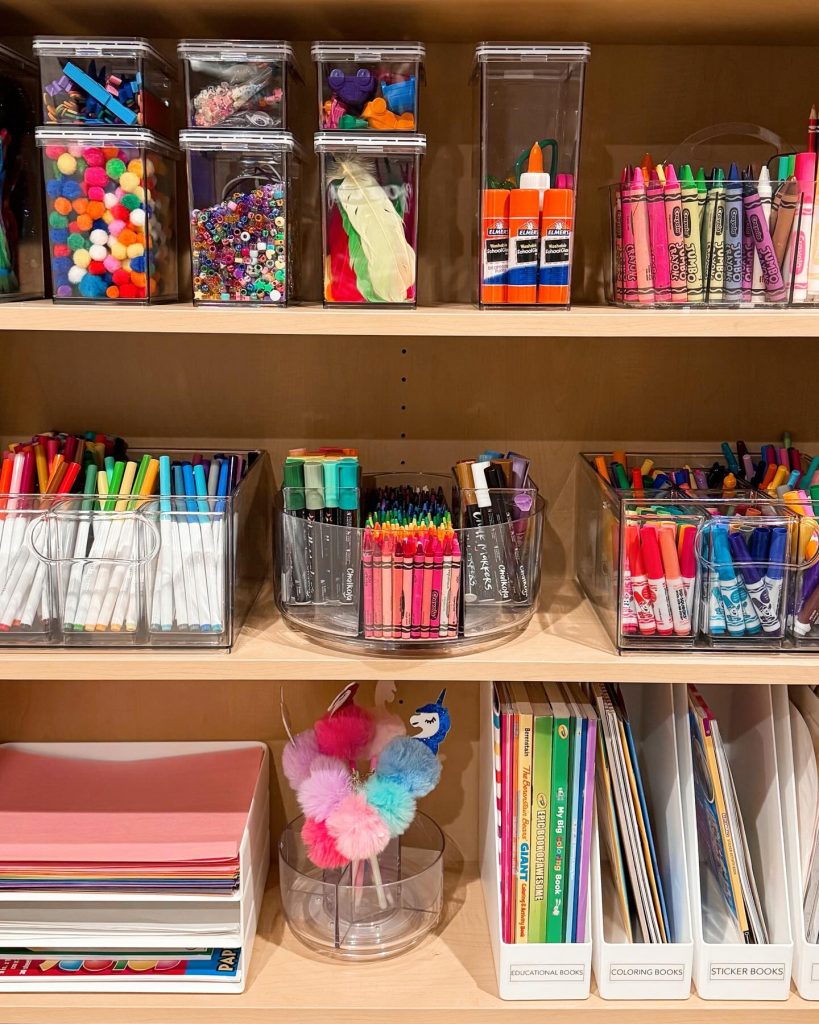
Swapping mismatched containers for a full shelf of clear, uniform bins does more for a craft space than almost any other single change. Everything from pom poms to glue sticks becomes instantly identifiable without opening a single lid. This version of craft room organization works especially well for a shared family space where more than one person needs to find things quickly.
Budget Note: Clear stackable bins typically run $8 to $20 each at The Container Store or Target, depending on size.
Mom Notes
Label everything, even when it feels obvious to you in the moment. Labels are what let kids and other family members put things back correctly without asking, which is really the whole point of organizing in the first place. Clear bins with black labels are worth the extra cost over colored ones since the contents stay visible at a glance.
A Full Wall of Labeled Bins Handles Serious Volume
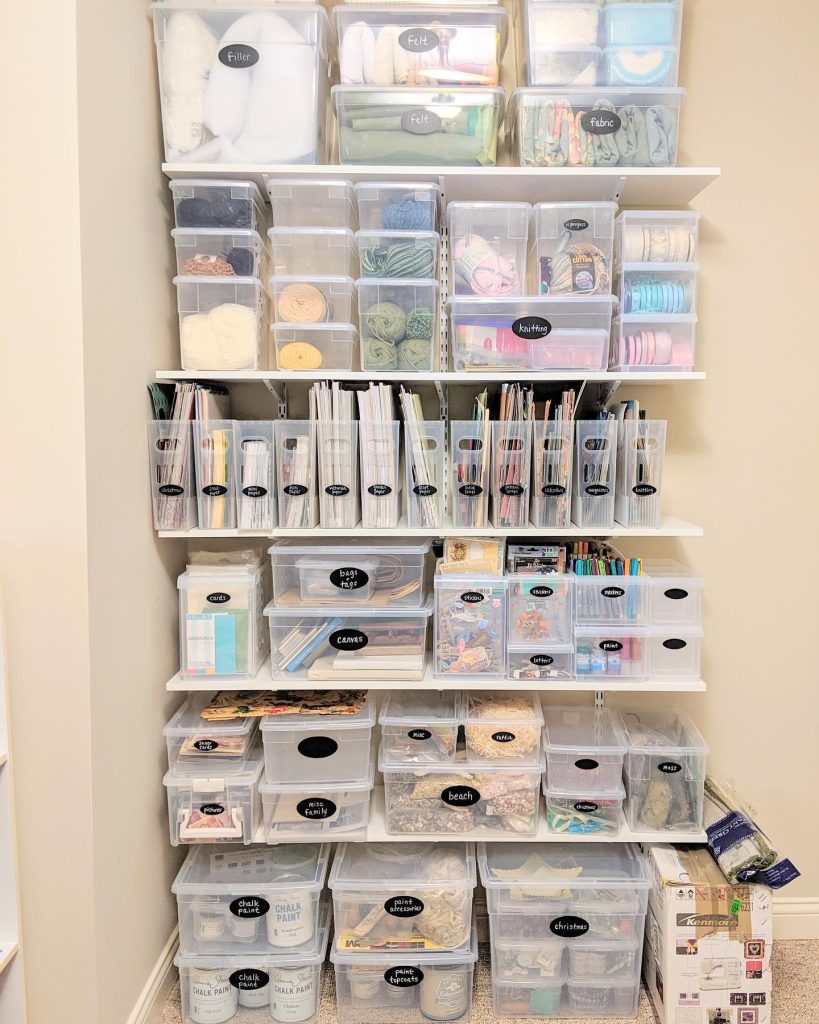
For anyone with a genuinely large collection, a full wall of shelves stacked with labeled clear bins from floor to ceiling is the only version of craft room organization that actually keeps pace. Every category, fabric, felt, knitting, and holiday supplies gets its own dedicated space instead of competing for the same drawer. It looks like a lot of storage because it needs to be.
Using small chalkboard-style labels on each bin makes it easy to relabel as the collection shifts over time without buying new containers. That flexibility matters for a hobby that tends to grow in unexpected directions. Magazine-style file bins holding paper and scrapbook supplies keep flat items upright instead of sliding into a jumbled pile.
Budget Note: A wall of adjustable shelving with matching clear bins typically runs $150 to $400 depending on wall size, sourced from The Container Store or IKEA.
A Mixed Storage Wall Blends Function With Style
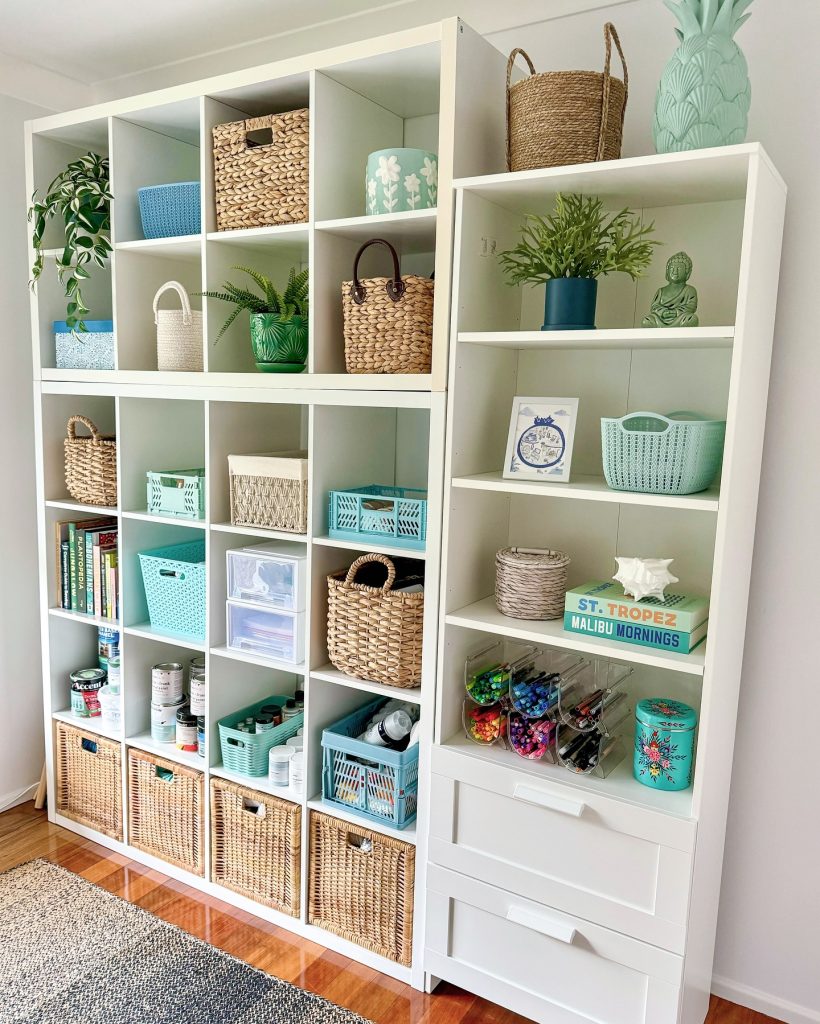
Combining cube shelving with a mix of woven baskets, small drawers, and open display spots gives a craft room the kind of look that feels more like a stylish living space than a utility closet. Not every bin needs to be clear or match for the system to work. This softer approach to craft room organization proves that function and style can share the same wall.
Tucking a small plant or two between the storage baskets keeps the whole wall from feeling purely utilitarian. It borrows a bit of the same thinking behind plant shelf styling, where greenery softens an otherwise practical display. Clear pen organizers on the open shelves keep frequently used tools visible while everything else stays tucked away in baskets.
Budget Note: Cube storage units run $60 to $150 at IKEA, with woven baskets adding $12 to $25 each depending on size.
A Small Parts Cabinet Solves the Tiny Supply Problem
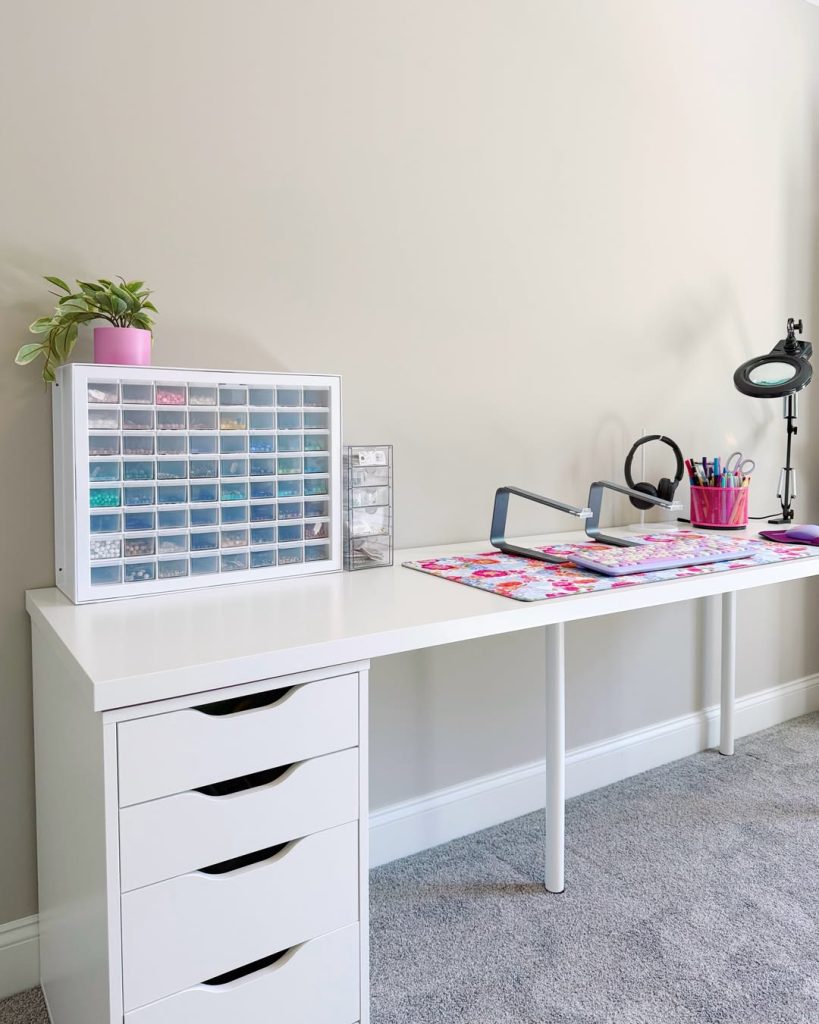
Every craft room eventually runs into the same problem: tiny beads, charms, and findings that never fit neatly into a regular bin. A small parts cabinet with dozens of individual drawers solves that exact headache and keeps every tiny item sorted and visible at a glance. It is one of the most specific but genuinely useful tools for craft room organization involving jewelry or beadwork.
Setting the cabinet right at desk height means supplies are always within arm’s reach while working, rather than stored across the room. A small potted plant on top adds a little life to what is otherwise a purely functional piece of furniture. The uncluttered desk surface next to it keeps the actual workspace focused and calm.
Budget Note: A multi-drawer parts organizer cabinet typically runs $25 to $50 at Amazon or Michaels.
A Color Coordinated Studio Turns Organization Into Its Own Reward
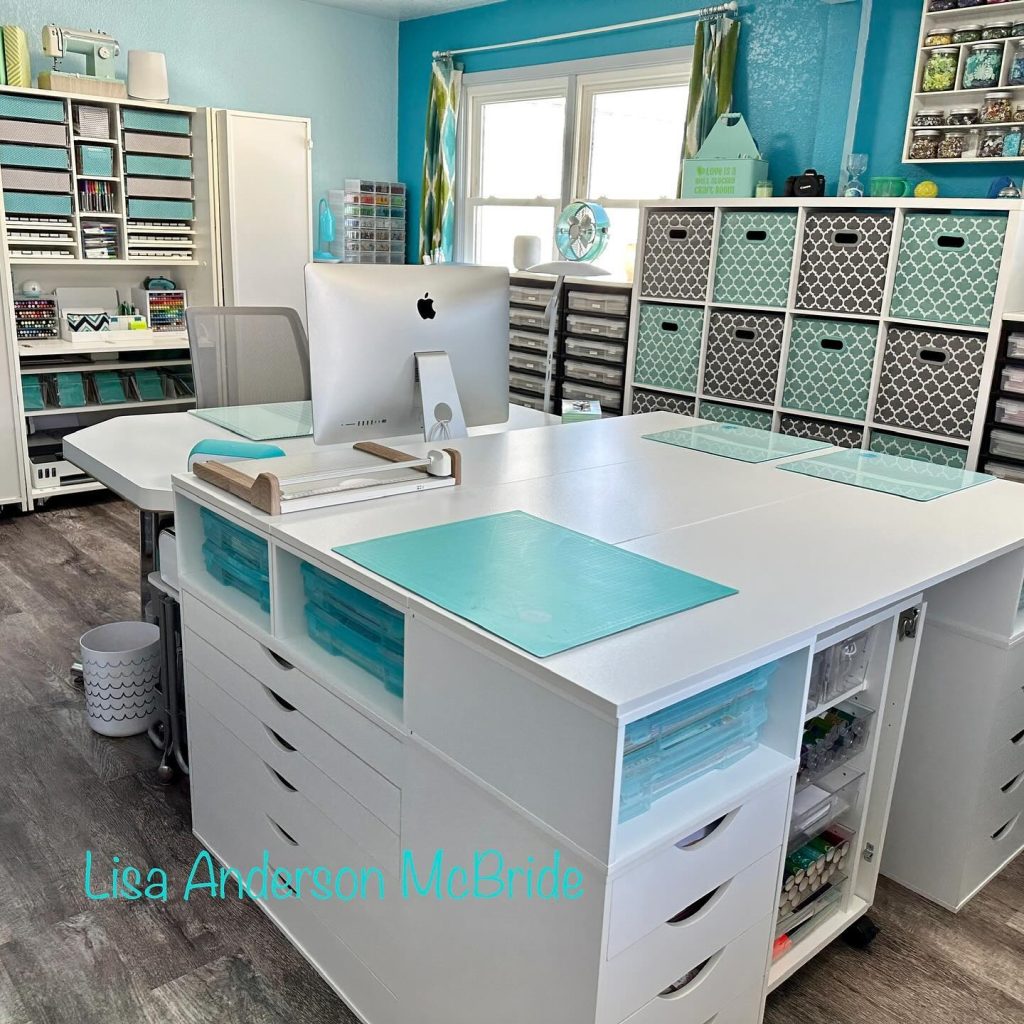
Committing to one cohesive color palette across an entire craft room, down to the storage bins and desk mats, turns organization into something that feels less like a chore and more like decorating. Every fabric bin and tray matches the wall color, creating a space that feels calm despite holding an enormous amount of supplies. This is craft room organization at its most ambitious, built for someone who spends serious hours in the space.
A large central island with built-in drawers and cubbies keeps supplies close to where the actual cutting and assembling happens. That kind of dedicated art studio home setup makes sense once a hobby moves from occasional to daily. Labeled jars along the wall keep small embellishments visible without needing to open a single container.
Budget Note: A coordinated storage system like this can run $500 to $1500 over time, built gradually from IKEA, Target, and specialty craft storage retailers.
What Getting Our Craft Space Under Control Taught Me About Home
A messy craft closet never fixes itself, no matter how many times you tell yourself you will deal with it later. That lesson took me longer to learn than I would like to admit.
I used to think craft room organization meant buying the right containers and calling it finished. It actually meant building a system that matched how our family really used the space, not how a magazine photo suggested we should.
There is a specific kind of relief in opening a drawer and finding exactly what you expected to find. It sounds small, but it removes a tiny daily frustration that adds up over weeks and months.
My kids became more independent with their own projects once they could find supplies without asking for help first. That independence turned out to be worth more than the tidiness itself.