
Join Our Newsletter for Cozy Home Inspiration, Family Fun, and Delicious Recipes Every Week

Homemade Stepping Stones Ideas That Turn an Ordinary Garden Path Into Something Worth Noticing

Disclaimer. Some images featured in this post may originate from third-party sources and are used for illustrative purposes only. Please review our Image Credits Policy for attribution information.
I planted my front garden bed three times before I understood that the path through it was the actual problem. Nothing looked finished. Nothing looked intentional. And every time it rained, I was stepping on plants trying to get to the back gate without ruining my shoes.
Homemade stepping stones were not something I had considered as a serious solution. I had thought of them as a children’s craft project. The kind of thing you do on a Saturday with paint and plastic molds and then leave in the yard until they crack by winter.
What I discovered was something completely different. Real homemade stepping stones, made with proper concrete mix and set into a garden path with care, are one of the most durable and most personal improvements you can make to a yard that needs structure and character at the same time.
I started paying attention to garden paths online. Not the expensive landscaped ones with professional installation. The ones that looked like they had been built gradually by someone who loved their yard and figured it out as they went.
The best paths I found had a combination of materials and personality that no single purchased product could create. Stones with seashells pressed into the surface. Colored concrete rounds in patterns that made the garden feel playful and alive. Flat pavers set into dark river pebbles with tropical plants either side.
I also noticed that the homemade stepping stones that lasted and stayed beautiful were the ones made from real concrete rather than craft plaster. They looked heavier. They looked more serious. And they sank into the ground without cracking or shifting the way the lighter craft versions always eventually do.
My own path went in last spring. My kids helped press shells and pebbles into two of the rounds before the concrete set. Those two stones are the ones everyone notices first and the ones my daughter immediately points out to anyone who visits.
That combination of function and personality is exactly what a well-made homemade stepping stone can bring to any garden, no matter how small the yard or how modest the budget.
What We're Exploring
- 01 Painted Concrete Rounds in Bold Colors That Turn a Plain Path Into a Garden Conversation Piece
- 02 Concrete Rounds With Pressed Seashells That Bring a Coastal Memory Into the Garden
- 03 Mom Notes
- 04 Natural Stone Pavers Set Into River Pebbles That Create a Modern Tropical Garden Path
- 05 Large Square Pavers Flush Into a Lawn That Create a Clean Modern Garden Path
- 06 Cream Pavers Set Into White Gravel With Ornamental Grasses That Look Like a House Magazine Spread
- 07 Why Homemade Stepping Stones Are One of the Most Worthwhile Garden Projects a Family Can Take On
- 08 Quick Takes
Painted Concrete Rounds in Bold Colors That Turn a Plain Path Into a Garden Conversation Piece
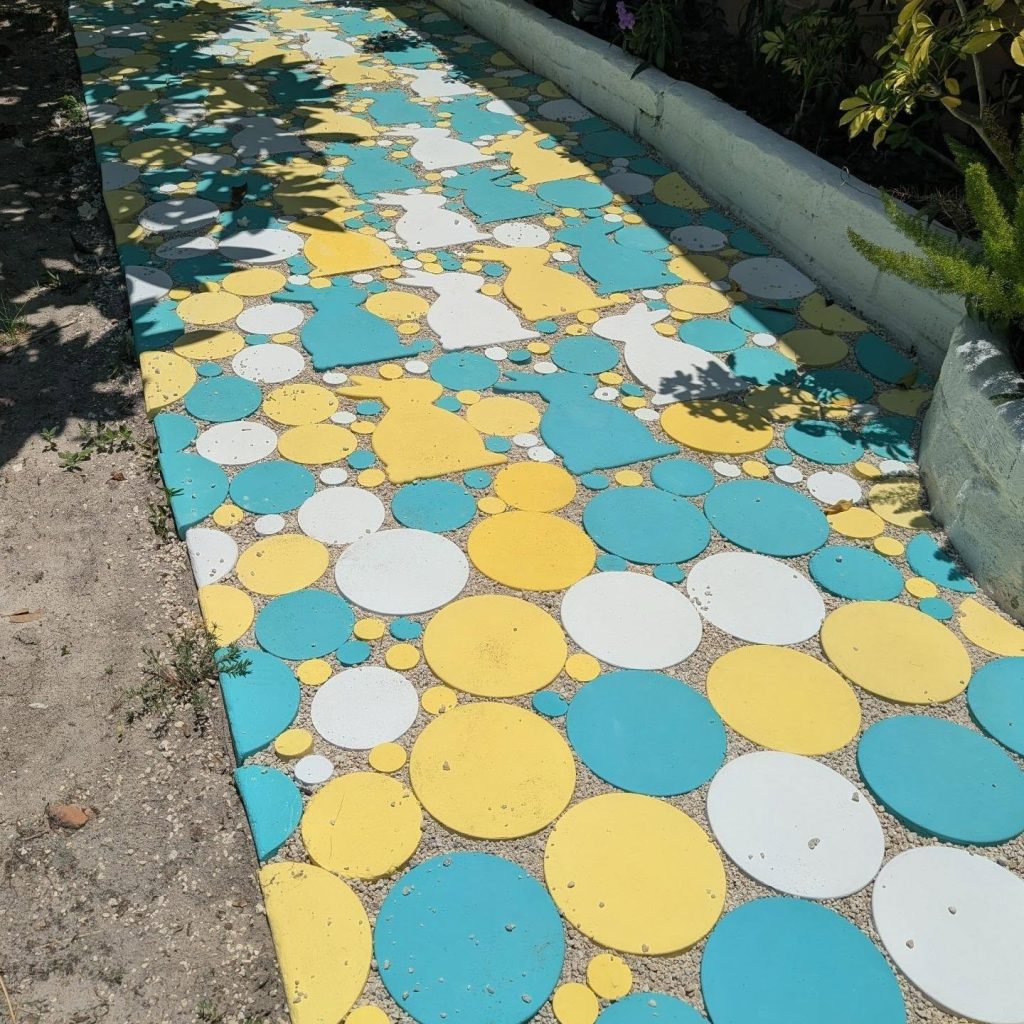
The key to making this work is the palette discipline. Choosing two or three colors that relate to each other and to the plants or exterior of the house keeps the bold approach from reading as random. Teal and yellow against a white wall, or terracotta and cream against a brick exterior, are combinations that feel intentional rather than accidental. BHG.com recommends treating garden pathways as a design element connected to the rest of the exterior rather than an afterthought, which is exactly what a bold painted homemade stepping stone path achieves
Budget Note: Concrete mix for a batch of stepping stones ranges from $8 to $20 per 50-pound bag at Home Depot or Lowe’s. Exterior craft paint in multiple colors ranges from $3 to $6 per bottle at Michaels or Amazon.
Concrete Rounds With Pressed Seashells That Bring a Coastal Memory Into the Garden
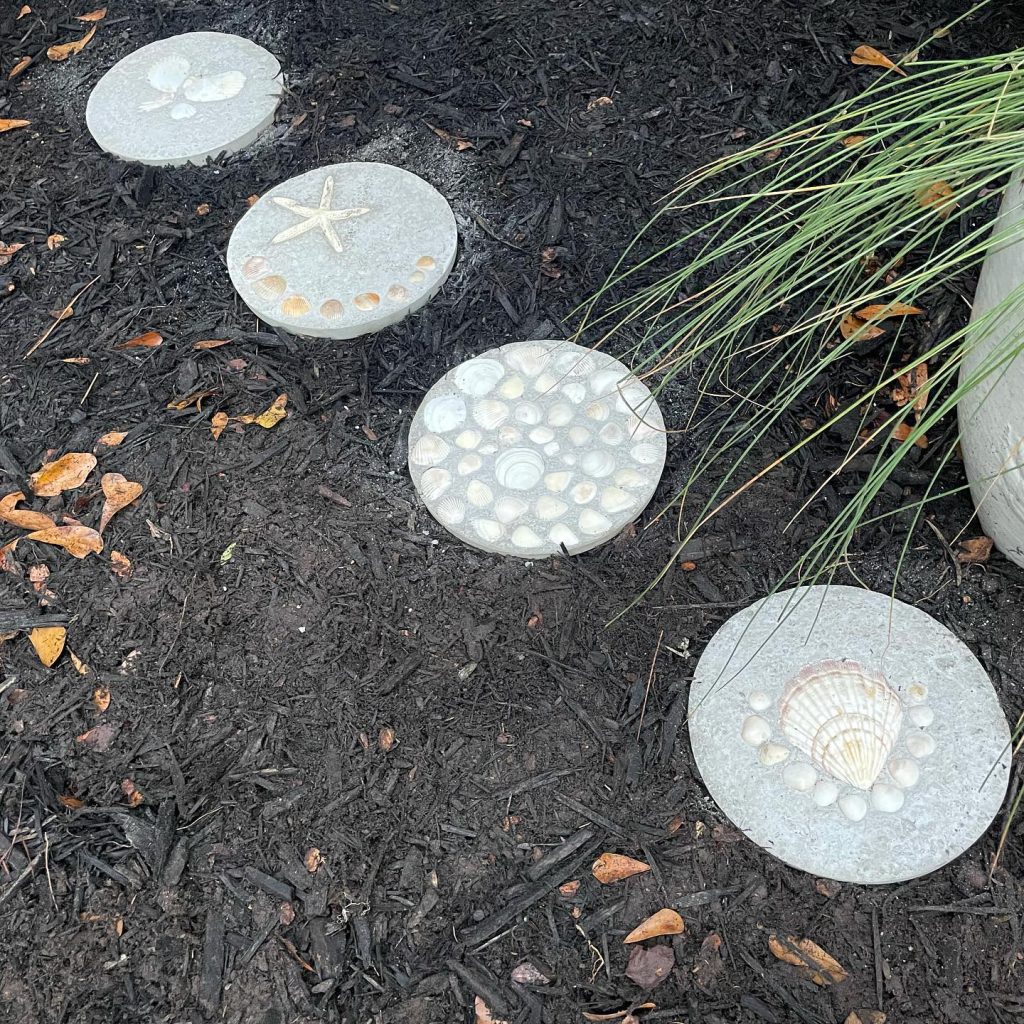
The concrete surface surrounding the shells weathers beautifully over time, developing a soft grey patina that makes the shells read more warmly against it. This kind of natural aging is part of what makes concrete stepping stones so satisfying as a garden material. They look better after a season or two in the ground than they do on installation day.
Apartment Therapy has featured embedded concrete garden objects as one of the most enduring and personal outdoor DIY categories for homeowners who want their garden to feel genuinely owned rather than decorated.
This project works particularly well as a nature suncatcher companion for a gardening afternoon with children. The shells gathered on a summer trip become a permanent part of the garden, and children understand immediately that the thing they helped press into the concrete is now there to stay.
Budget Note: Quick-setting concrete mix ranges from $8 to $15 per bag at Home Depot or Lowe’s. Round plastic stepping stone molds range from $6 to $15 each on Amazon.
Mom Notes
The most important thing nobody tells you about making homemade stepping stones is to let them cure for at least 48 hours before removing them from the mold, and then let them cure for a full week before setting them in the ground. Rushing this step is what causes cracking. Mix the concrete slightly on the drier side rather than the wetter side and your stones will be dense enough to last through every season without chipping. Slow and patient wins every time with concrete.
Natural Stone Pavers Set Into River Pebbles That Create a Modern Tropical Garden Path
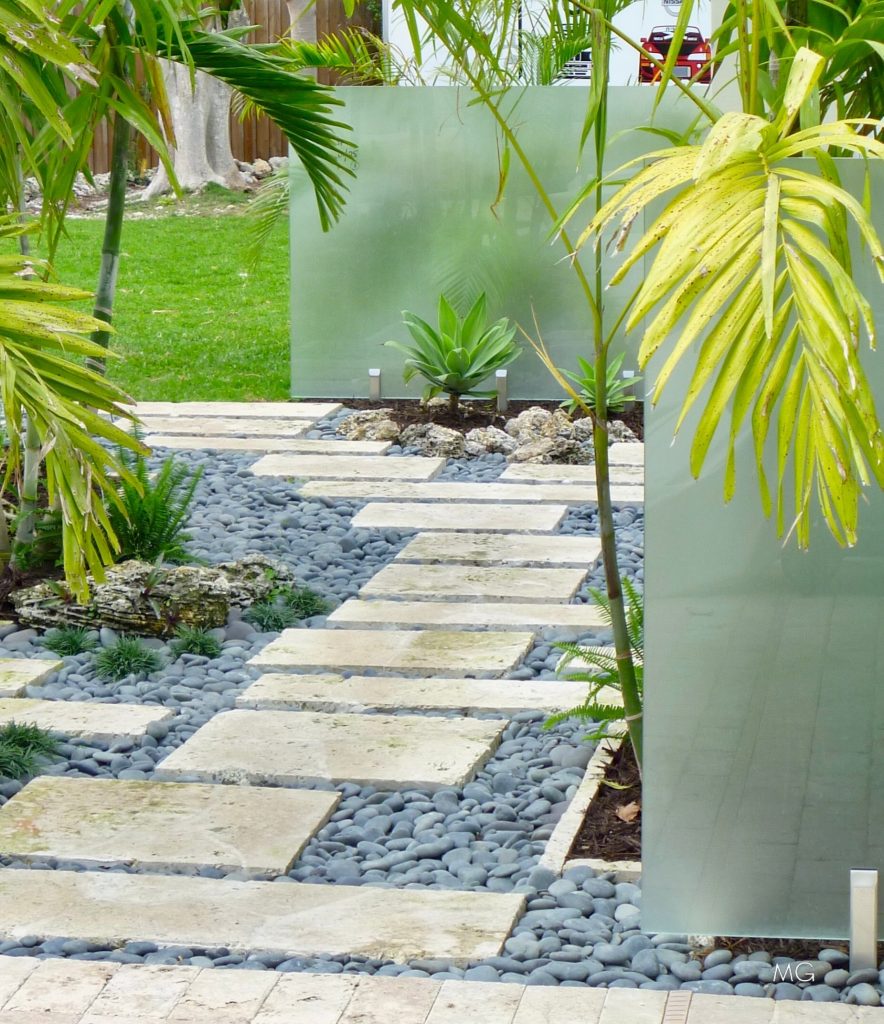
Homemade stepping stones take on a completely different character when the stone itself is a natural travertine or limestone paver rather than a poured concrete round, and the combination of these pale rectangular pavers set into dark gray river pebbles with tropical planting on either side creates one of the most sophisticated garden path looks achievable without a landscape architect. The contrast between the flat cream stone surface and the rounded dark pebbles creates a visual tension that reads as designed rather than assembled, and the tropical plants growing between and beside the path bring the whole composition to life.
HGTV.com notes that combining hard paving materials with natural pebble infill is one of the most versatile and lowest-maintenance garden path approaches available for residential homes.
The vertical green panels in the background create a privacy element that frames the path and makes it feel like a room within the garden. This kind of layering, path, planting, and screening at different heights creates the garden depth that most homeowners are trying to achieve when they search for homemade stepping stone inspiration.
Budget Note: Natural travertine or limestone pavers typically range from $2 to $8 each at garden centers or stone suppliers. Dark river pebbles range from $5 to $15 per 50-pound bag at Home Depot or garden supply stores.
Large Square Pavers Flush Into a Lawn That Create a Clean Modern Garden Path
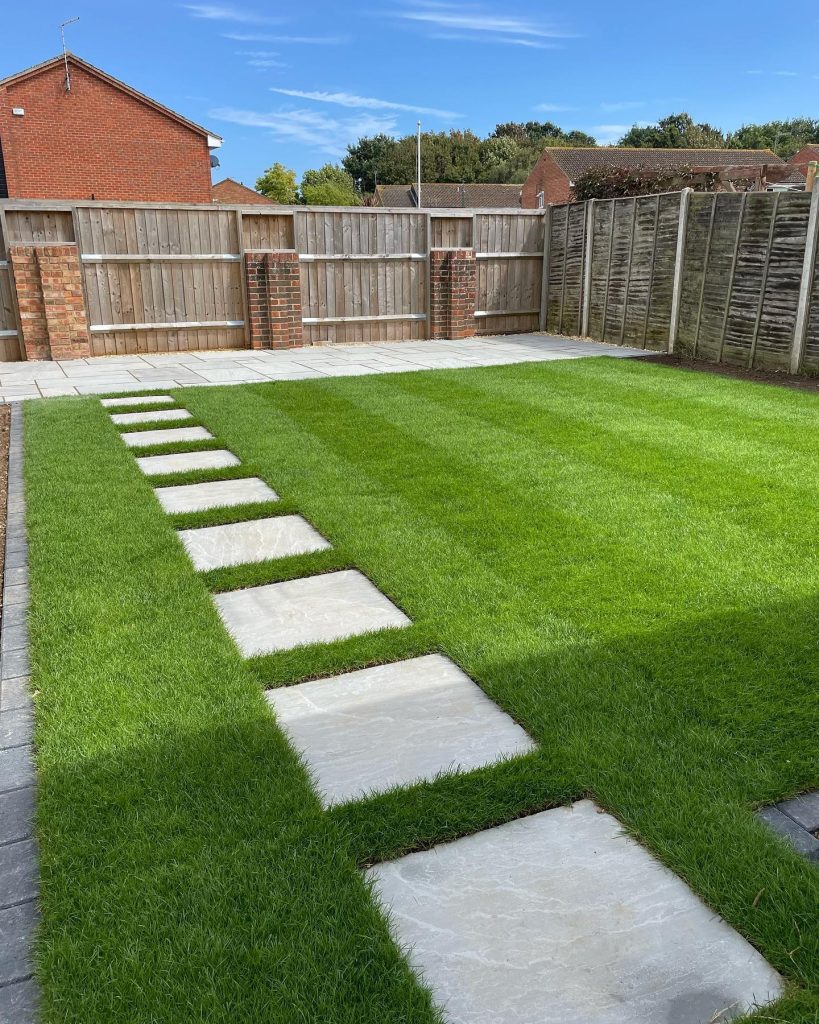
Homemade stepping stones set flush into a lawn in a clean linear arrangement are one of the most satisfying and most visually impactful garden path approaches for a family home because they do not interrupt the open lawn space that children use for play.
Good Housekeeping recommends flush-set garden stepping stones as one of the most practical path solutions for family gardens where children play on the lawn regularly.
Using a larger paver format, roughly 50 to 60 centimeters square, gives the path the weight and presence it needs to read clearly from a distance and to provide a satisfying footfall for adults walking through the garden.
Budget Note: Large square garden pavers in sandstone or porcelain typically range from $8 to $25 each depending on material at garden centers or stone suppliers. Sharp sand for bedding ranges from $5 to $12 per bag at Home Depot.
Cream Pavers Set Into White Gravel With Ornamental Grasses That Look Like a House Magazine Spread
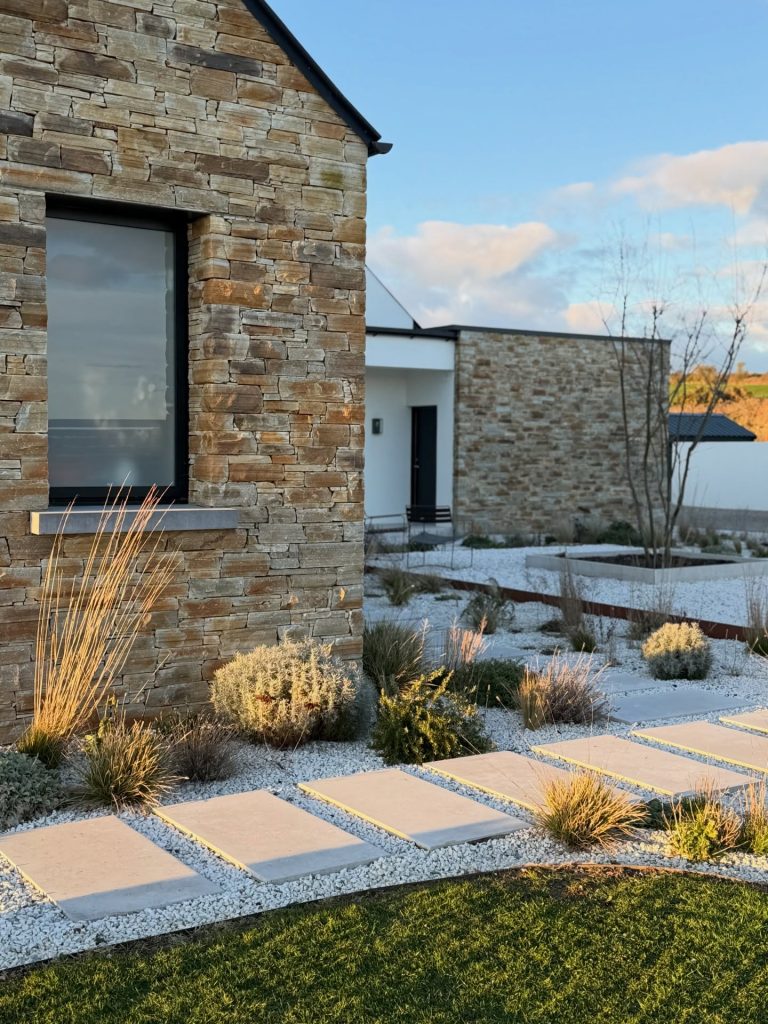
Homemade stepping stones set into a white gravel base with low ornamental grasses planted in the gravel between and beside the path create the most striking and most frequently photographed garden path style in contemporary residential landscaping. The pale cream or buff-colored pavers against bright white gravel with warm-toned ornamental grass planting create a high-contrast composition that looks architectural and intentional in all seasons, including winter when most gardens look their least interesting.
RealSimple.com recommends white or pale gravel as one of the most effective low-maintenance ground cover solutions for residential garden borders and pathways.
The pavers themselves in this style are best set with a slightly wider spacing than the stride distance, so each step lands deliberately on stone rather than accidentally in gravel. That precision of placement is what makes the path feel engineered and purposeful rather than decorative.
Budget Note: White or pale decorative gravel ranges from $8 to $20 per 50-pound bag at garden centers or Home Depot. Cream or buff porcelain pavers range from $10 to $30 each depending on size at stone suppliers or garden retailers.
Why Homemade Stepping Stones Are One of the Most Worthwhile Garden Projects a Family Can Take On
Homemade stepping stones belong to a category of garden project that delivers value across multiple dimensions at once. They solve a practical problem by creating a dry, stable path through a garden. They add visual structure to outdoor spaces that feel unfinished. And when made with embedded objects or personal materials, they carry a meaning that purchased alternatives simply cannot provide.
The practical case for a garden path is often overlooked until the first wet week of autumn when everyone is tracking mud through the back door. A well-placed set of homemade stepping stones between the back door and the garden gate, or through the beds that surround a patio, prevents that problem permanently. The mud stays in the garden because the path keeps feet off the soil.
Quick Takes
Painted concrete rounds in bold colors are the most playful and personality-driven option, perfect for a side garden or front path that needs visual energy and a sense of fun.
Shell-embedded concrete rounds are the most personal option, turning beach memories into a permanent garden feature that children take genuine pride in pointing out.
Natural stone pavers in dark pebbles create the most sophisticated and modern garden path, suited to tropical or contemporary gardens where bold contrasts are part of the design language.
Flush lawn pavers in square format are the most family-practical option, maintaining an open lawn surface while giving the garden clear structure and a polished, professional finish.
Cream pavers in white gravel with ornamental grass deliver the most high-design result, creating a four-season garden path that looks as good photographed in January as it does in June.
Concrete homemade stepping stones also represent one of the rare DIY projects that requires almost no ongoing maintenance after installation. A properly cured and well-set concrete stone in a garden bed or lawn will last decades without attention. The initial investment of time, materials, and patience is genuinely the entire cost.
For families with children, the making of homemade stepping stones is one of those outdoor craft projects that produces an object that actually stays in the yard and serves a real function rather than ending up in a donation bag six months later. A child who pressed their handprint or their shell collection into a stone will point to that stone every spring for years. That kind of permanence is rare and worth protecting.