
Join Our Newsletter for Cozy Home Inspiration, Family Fun, and Delicious Recipes Every Week
Stunning DIY Tire Planter Ideas Worth Trying This Weekend in Your Own Backyard

Disclaimer. Some images featured in this post may originate from third-party sources and are used for illustrative purposes only. Please review our Image Credits Policy for attribution information.
I found an old tire leaning against our shed and almost dragged it to the curb before my daughter asked if we could paint it instead. A tire planter was not something I had ever considered until that exact moment.
My husband thought I was joking when I said I wanted to keep it. He had already scheduled a junk pickup for the following week.
I convinced him to give me one weekend before deciding anything for certain. That weekend turned into an entire summer of collecting more tires than our yard technically needed.
I started scrolling for ideas that first night, curious whether anyone else had done something worthwhile with old rubber. What I found surprised me, color, texture, and shapes I never expected from something meant for a landfill.
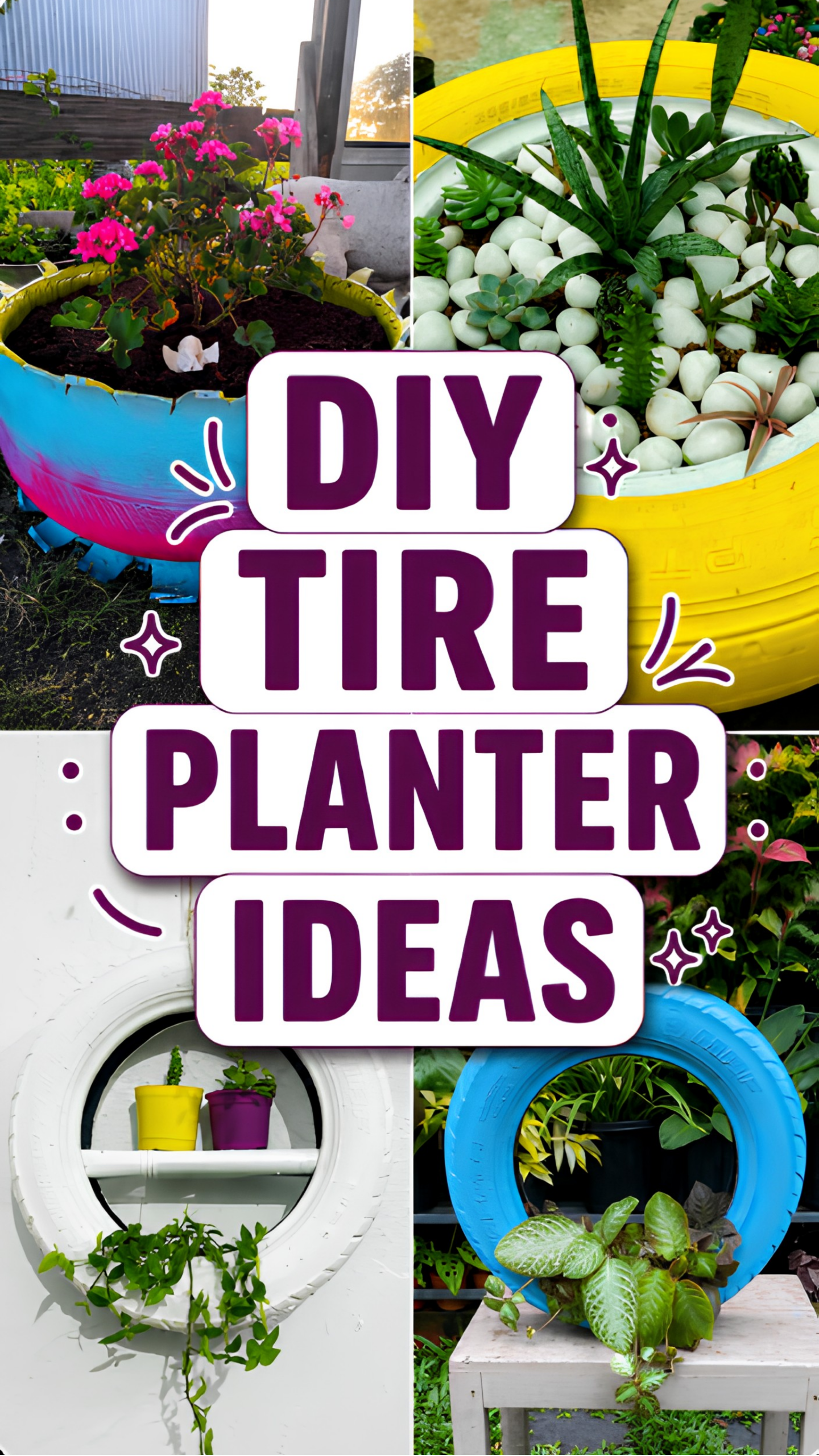
Every version I saved had a different personality depending on the paint and the plants chosen. Some looked playful, some looked almost sculptural, and none of them looked like trash anymore.
I noticed a pattern the more I scrolled. The tires that worked best were never left plain; color and placement did all the real transforming.
Spray paint became my whole obsession for a while, testing shades against different plant colors to see what actually popped. Bright pink against blue turned out to be a combination I could not stop looking at.
I also learned that stacking mattered as much as painting. A single tire looked fine, but tires layered or grouped together suddenly felt like an actual design choice rather than a leftover part.
My daughter helped paint every single one that summer, which turned an entire pile of old tires into a memory instead of a chore. That shift mattered more to me than I expected going into the project.
These are the versions that taught me the most about turning something ordinary into something worth keeping in a real family yard. Each one shows a different way to give an old tire a second purpose that actually looks intentional.
What We're Exploring
- 01 A Two Toned Tire Planter With a Painted Wood Sign
- 02 A Cluster of Purple Tire Planters Around a Young Tree
- 03 A Bright Yellow Tire Planter Filled With Succulents and Stone
- 04 Mom Notes
- 05 A Hanging Tire Planter With a Built In Shelf
- 06 A Stacked Rainbow of Tire Planters Along a Garden Bed
- 07 A Single Statement Tire Planter With Trailing Greenery
- 08 What Makes a Tire Planter Worth the Weekend It Takes
- 09 Quick Take
A Two Toned Tire Planter With a Painted Wood Sign
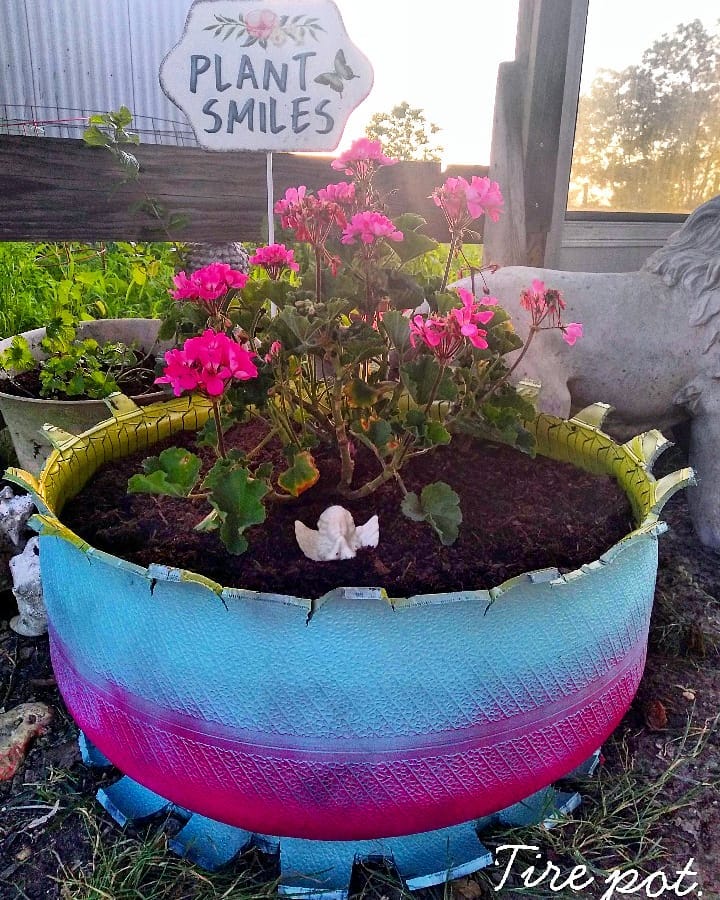
Layering pink and blue spray paint in ombre bands turns a plain tire into a tire planter that looks like it was designed rather than repurposed. The gradient effect catches evening light beautifully, especially when paired with bright pink blooms planted inside. A small painted sign tucked beside it gives the whole setup a personal, welcoming touch.
Cutting decorative notches along the top edge before painting adds texture that a plain rim never could, a detail often featured in upcycled garden projects from Better Homes and Gardens. Geraniums or other bright annuals complete the color story without competing with the paint.
Budget Note: Outdoor spray paint for tires typically costs $6 to $10 per can at Home Depot, and geranium starter plants run $4 to $8 each at most nurseries.
A Cluster of Purple Tire Planters Around a Young Tree
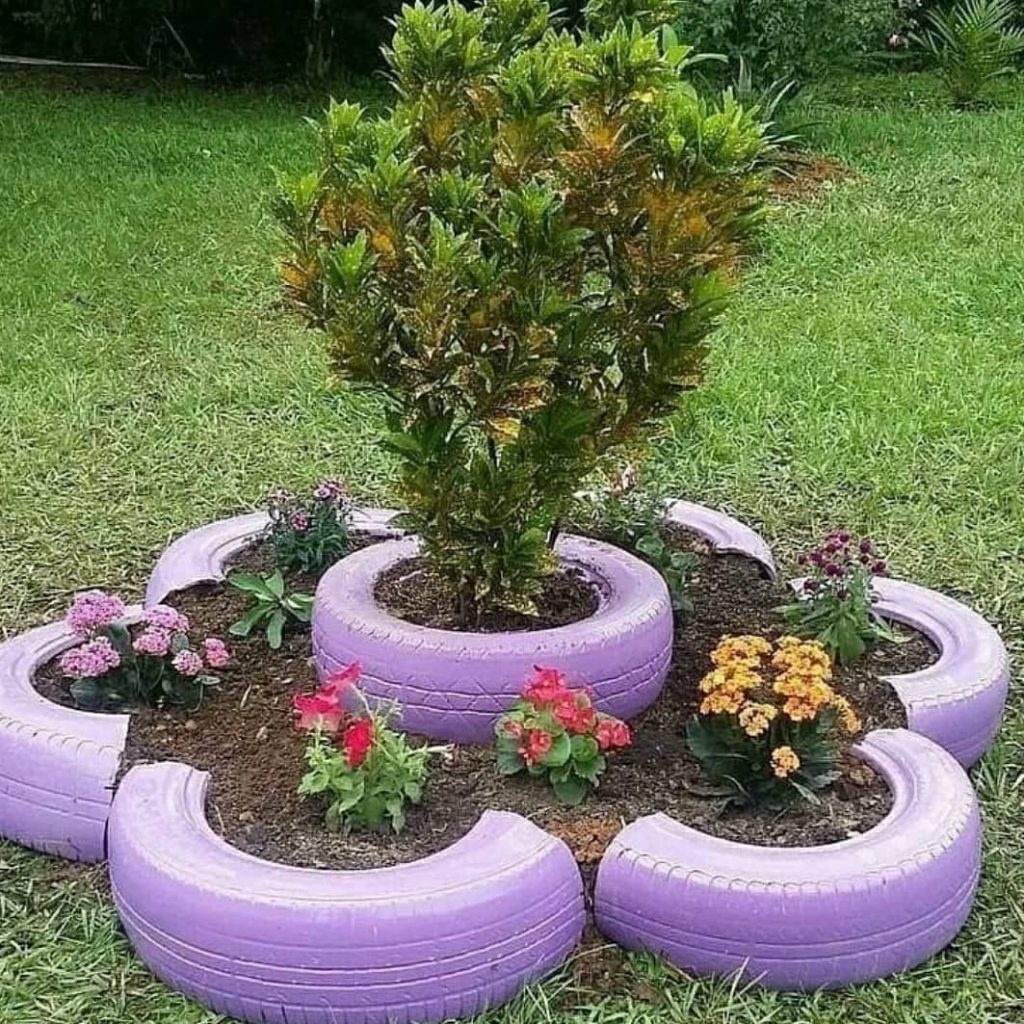
Arranging several painted tires in a ring around a newly planted tree creates one of the most functional versions of a tire planter on this whole list. The tires act as a built-in border, keeping mulch and soil contained while the tree establishes its roots. A single solid color across every tire keeps the grouping feeling cohesive rather than scattered.
Filling the gaps between tires with smaller annuals like petunias or marigolds gives the whole arrangement a fuller, more finished look within a single season. This kind of grouped planter technique is a popular subject in landscaping features on HGTV for budget-friendly yard upgrades. The uniform purple shade also makes the whole grouping easy to spot from across the yard.
Budget Note: A gallon of exterior latex paint suitable for rubber runs $25 to $35 at Sherwin Williams, and annual flower flats cost $15 to $25 at Lowe’s or a local nursery.
A Bright Yellow Tire Planter Filled With Succulents and Stone
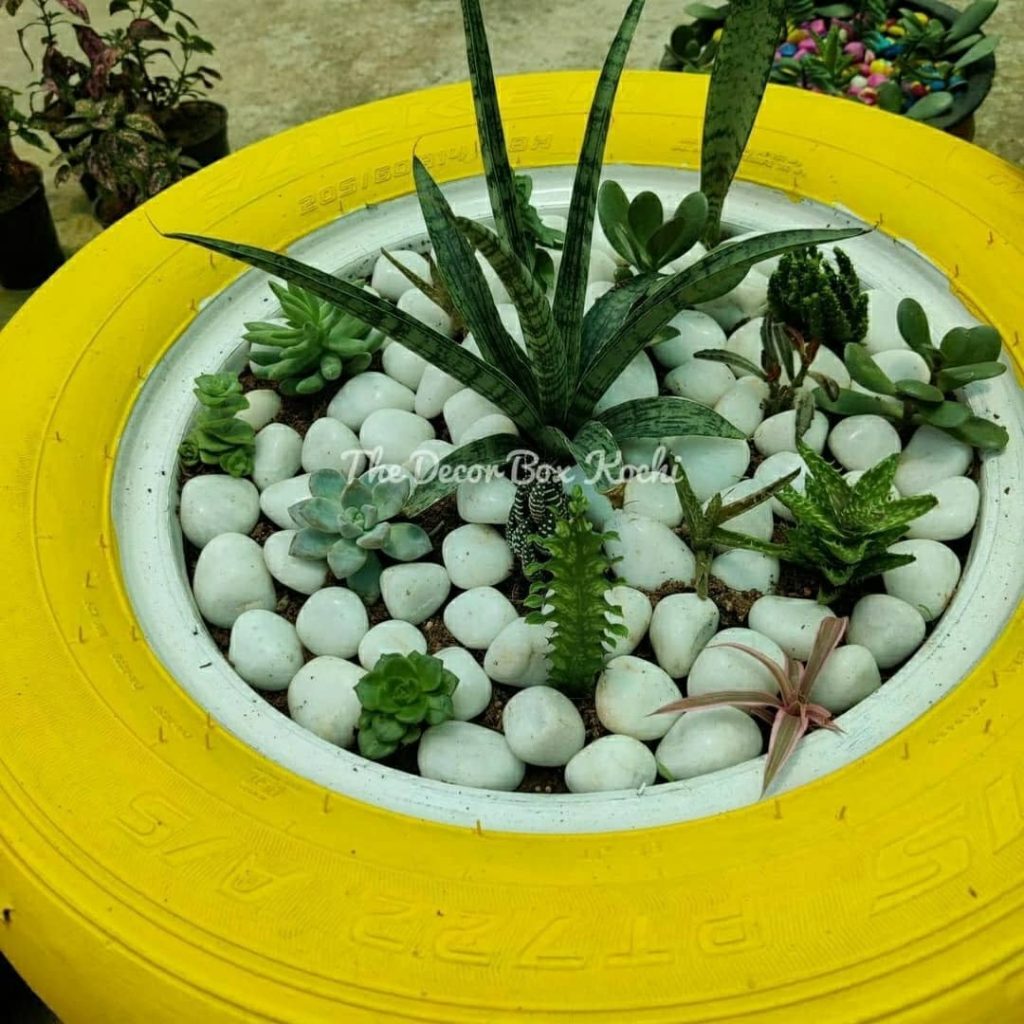
Filling a bright yellow tire with white river stones and a mix of succulents turns a tire planter into something that looks closer to a curated garden display than a repurposed rubber tire. The contrast between the bold yellow rim and the pale stones keeps the whole arrangement feeling clean and intentional. Succulents require little water, which makes this version especially forgiving for a busy household.
This idea works particularly well on a patio or porch where a smaller footprint is needed, since a single tire filled this way becomes a complete miniature garden on its own. Mixing different succulent shapes and heights, like tall snake plants against low rosettes, adds visual interest without requiring much maintenance. This kind of low-water gardening approach is frequently recommended by The Spruce for beginner-friendly outdoor projects.
Budget Note: Decorative white river stones typically cost $8 to $15 per bag at Home Depot, and small succulent starter plants run $3 to $6 each at most garden centers.
Mom Notes
If you take one thing from me, let it be this. Test your paint color on a small hidden section of the tire first, since rubber absorbs color differently than wood or metal surfaces. My first attempt looked completely different once it fully dried compared to how it looked wet.
A Hanging Tire Planter With a Built In Shelf
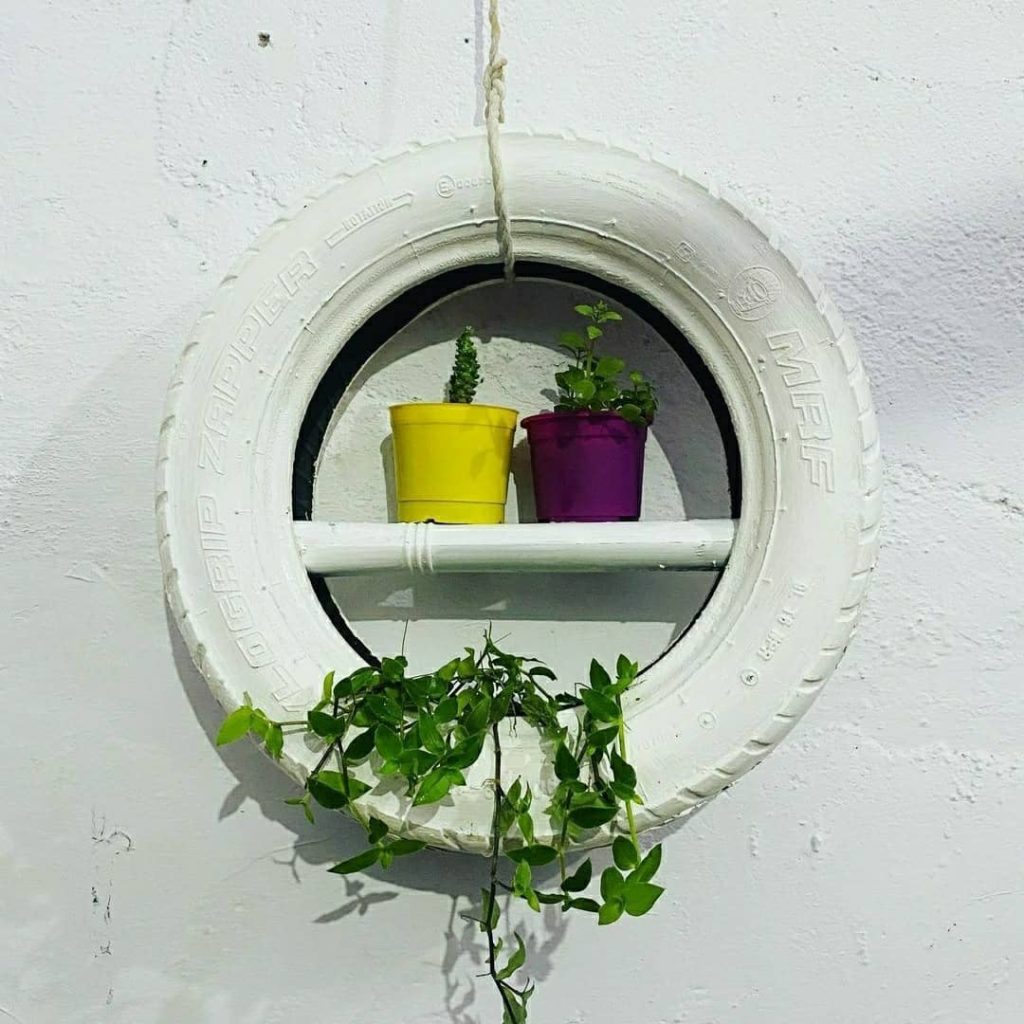
Turning a tire on its side and adding a simple wooden shelf across the center creates one of the more clever versions of a tire planter for anyone short on ground space. Hanging it from a sturdy hook lets trailing vines spill naturally from the bottom while potted plants sit neatly on the shelf above. White paint keeps the whole piece looking clean against most exterior wall colors.
This version works especially well on a small balcony or against a blank exterior wall, since it adds greenery without taking up any floor space at all. Choosing two contrasting pot colors, like yellow and purple, often paired together in garden displays, keeps the display feeling playful rather than plain. This kind of vertical gardening solution is a favorite subject in space-saving features from Apartment Therapy.
Budget Note: A short length of wood dowel for the shelf costs $3 to $6 at Home Depot, and small colored plastic pots run $2 to $5 each at Target or Dollar Tree.
A Stacked Rainbow of Tire Planters Along a Garden Bed
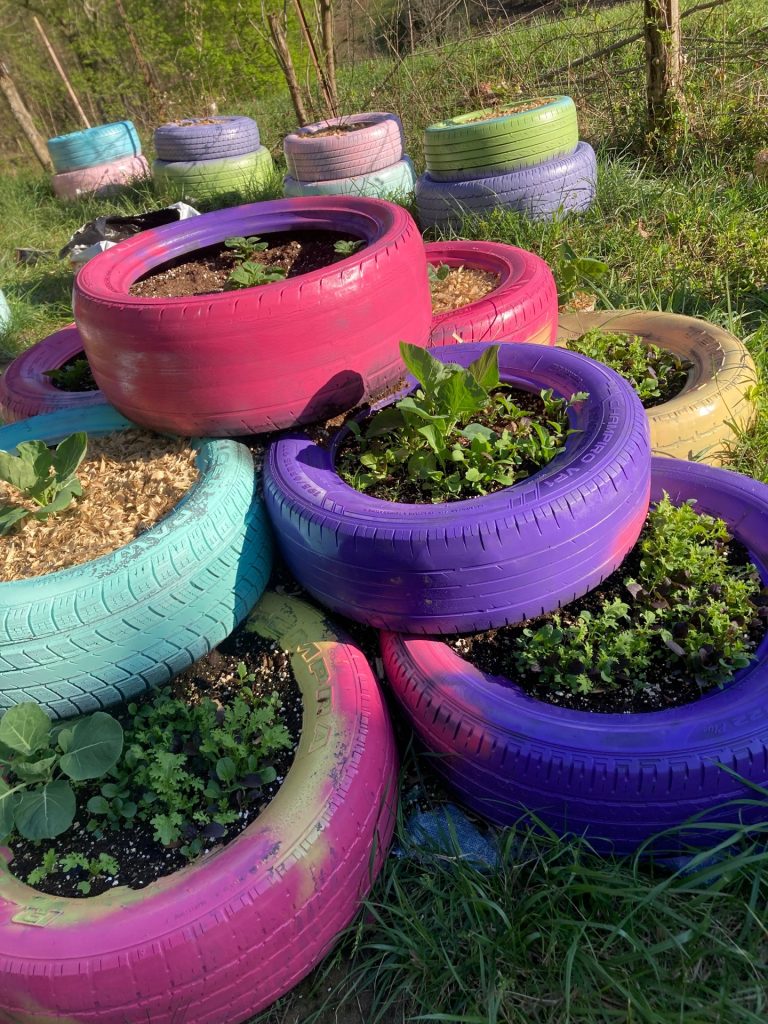
Stacking two tires in different colors and planting seedlings directly on top creates one of the most vibrant versions of a tire planter for anyone wanting a full working garden bed. Each stack becomes its own raised planting area, which makes weeding and harvesting easier on the back than a traditional ground-level bed. Assigning a different color pair to each stack turns a purely practical garden into something genuinely cheerful to look at.
This version works especially well for growing vegetables or leafy greens, since the raised height keeps plants further from ground pests and standing water. Grouping several stacks together along a fence line or garden edge creates a colorful border that doubles as real growing space. This kind of raised, stacked planting method is a technique often covered by Food Network style resources for home vegetable growing.
This idea earns its place because it solves a real gardening problem, giving plants proper drainage and root depth while still looking cheerful and intentional.
Budget Note: Exterior tire-safe spray paint runs $6 to $10 per can, and a bag of raised-bed garden soil typically costs $8 to $12 at Home Depot or Lowe’s.
A Single Statement Tire Planter With Trailing Greenery
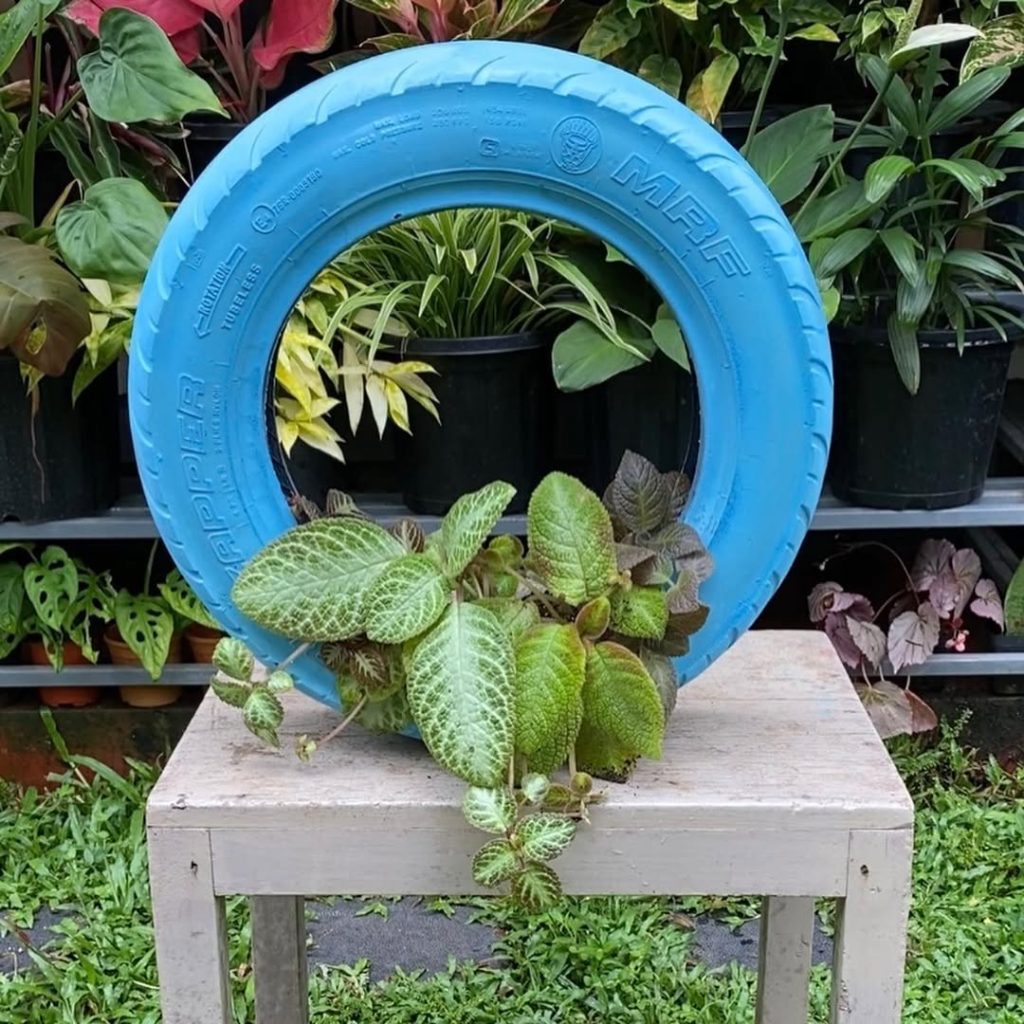
Standing a single painted tire upright on a small table or stool creates a tire planter that works as a standalone accent rather than part of a larger garden arrangement. Trailing greenery spilling from the base softens the bold rubber shape, while the hollow center frames whatever plants sit behind it like a natural picture frame. A single saturated color, like the bright blue shown here, keeps the piece feeling modern rather than rustic.
This version works particularly well on a patio, entryway, or small balcony where space is limited but personality still matters. Choosing a trailing plant with textured leaves, rather than a plain vine, adds visual interest even when the tire itself stays a solid color. This kind of framed, sculptural plant display is a styling technique frequently featured by Real Simple for small space gardening.
Budget Note: Rubber safe exterior spray paint costs $6 to $10 per can, and trailing houseplants like pothos or begonia run $8 to $15 at most garden centers.
What Makes a Tire Planter Worth the Weekend It Takes
A well-made tire planter works because it takes something meant for disposal and gives it a second purpose that actually earns a spot in the yard. Every version on this list succeeds because the paint and plant choices work together rather than existing separately. Color is never an afterthought in the ones that turn out well.
Placement matters just as much as the tire itself. A single statement piece needs breathing room to stand out, while a cluster works best when grouped tightly enough to read as one cohesive feature rather than scattered clutter.
Quick Take
A tire planter works best when the paint color and plant choice are considered together rather than separately, since contrast is what makes the final piece feel intentional. Drill a few drainage holes in the base before adding soil to prevent standing water after rain. Group several tires together for a bigger garden feature, or let one stand alone as a simple accent piece.
Drainage deserves more attention than most people expect going in. Drilling a few holes in the base before planting keeps roots from sitting in standing water after a heavy rain.
Paint choice changes the entire personality of the finished piece. Bright, saturated colors feel playful and modern, while muted or single-tone finishes lean more toward a traditional garden aesthetic.