
Join Our Newsletter for Cozy Home Inspiration, Family Fun, and Delicious Recipes Every Week

Creative Wood Deck Railing Ideas That Finally Made Our Backyard Feel Finished

Disclaimer. Some images featured in this post may originate from third-party sources and are used for illustrative purposes only. Please review our Image Credits Policy for attribution information.
I stood on our half-built deck one evening holding a paint chip in each hand, trying to decide if black metal or classic white would actually look right against our siding. A wood deck railing decision seemed small until I realized how much it would shape the whole backyard.
We had already poured money into the decking boards themselves, and the railing felt like an afterthought we kept putting off. It sat unfinished for weeks while we argued gently over which direction to take it.
I remember standing there one evening, deck boards down but nothing enclosing them yet, feeling like the whole space was still waiting to become something. That incomplete feeling bothered me more than I expected.
I started searching for deck railing ideas that night, mostly to settle the debate once and for all. What I found surprised me with how many different directions a simple railing could take an entire outdoor space.
Some leaned modern with sleek black metal and glass panels. Others stayed classic with white painted wood and detailed lattice patterns. A few kept things simple and natural, just stained wood posts and black balusters.
I started noticing how much the railing style set the tone for everything else on a deck. A pergola, a dining set, a row of potted flowers—all of it looked different depending on what kind of railing surrounded it.
We finally landed on a direction after a full weekend of back and forth. It felt obvious once we saw it finished, even though it had taken weeks to get there.
Over the following months, we added a few more details around the deck, adjusting as we noticed what worked and what did not. Some choices felt right immediately. Others needed a small tweak before they matched the rest of the yard.
What surprised me most was how much a finished railing changed how often we actually used the deck. It stopped feeling like a work in progress and started feeling like an actual room outside.
I am sharing the six ideas that shaped how we think about deck railings now. Everyone came from a real deck I admired online before we ever built a version ourselves.
What We're Exploring
- 01 A Woven Metal Screen Turns Wood Deck Railing Into a Privacy Feature
- 02 Glass Panels Keep Wood Deck Railing Views Completely Unobstructed
- 03 Mom Notes
- 04 A Chippendale Pattern Adds Classic Detail to White Wood Deck Railing
- 05 Natural Wood Deck Railing Lets a New Deck Age Gracefully
- 06 Wire Mesh Panels Keep Wood Deck Railing Pet and Kid Friendly
- 07 A Cabin Style Wood Deck Railing Suits a Rustic Mountain Home
- 08 What Choosing a Deck Railing Taught Me About Finishing What We Start
A Woven Metal Screen Turns Wood Deck Railing Into a Privacy Feature
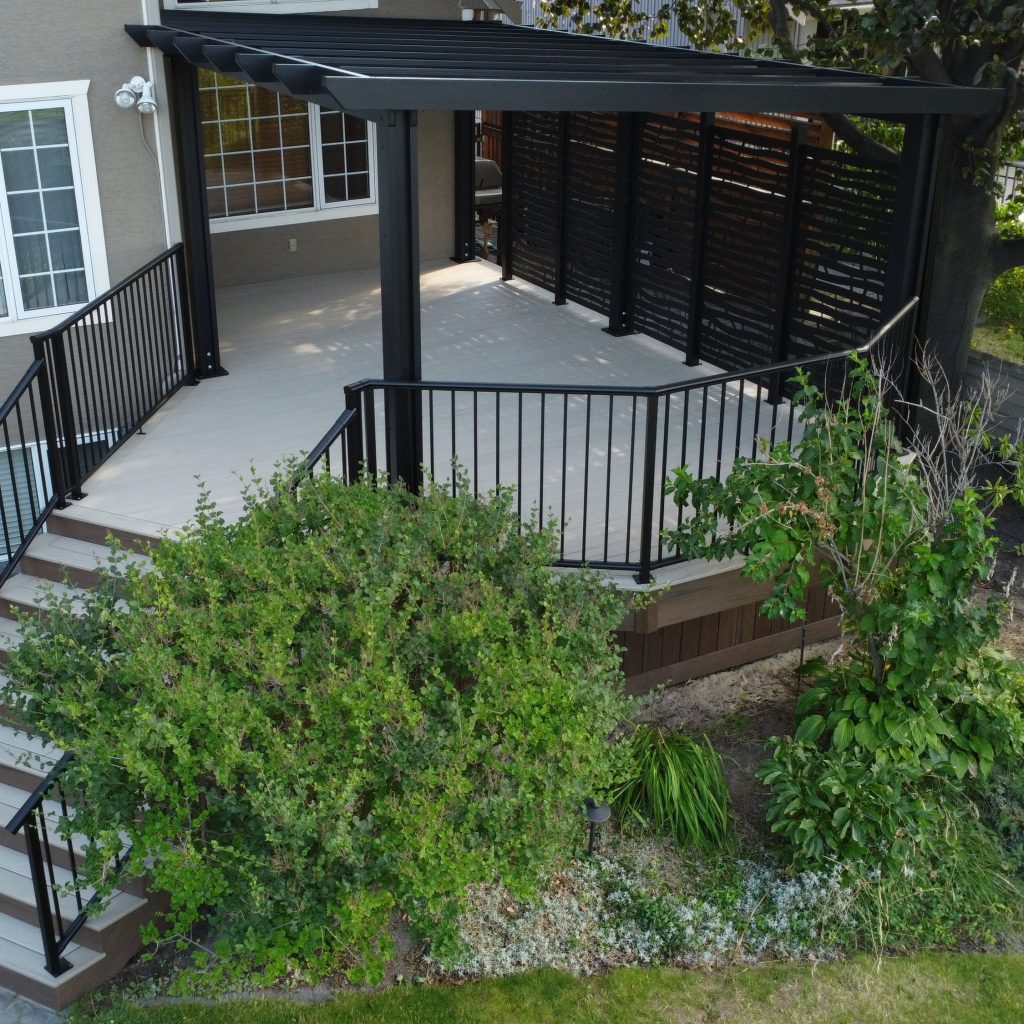
Pairing a black metal privacy screen with wood deck railing along the same section of a raised deck gives one structure two jobs at once. The railing keeps the deck safe at the edge while the woven panels block the exact sightline into a neighbor’s yard. This combination approach solves a privacy problem without needing a full fence around the whole property.
A matching pergola overhead ties the railing and privacy screen together into one cohesive structure rather than two separate additions. That kind of unified black metal palette reads as intentional design rather than a patchwork of fixes. Climbing vines along the base soften the hard lines of the metal over time.
Budget Note: Black aluminum privacy screen panels typically run $80 to $150 each at Home Depot, with matching railing sections adding $60 to $120 per section.
Glass Panels Keep Wood Deck Railing Views Completely Unobstructed
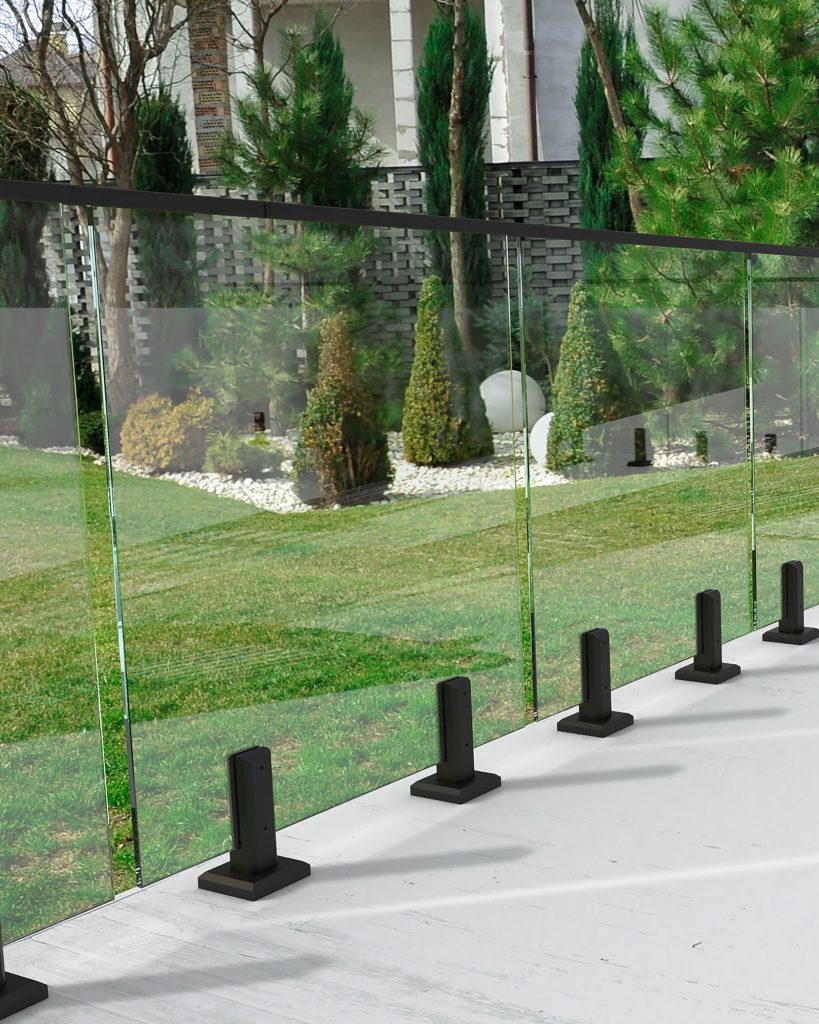
Swapping traditional balusters for full glass panels along a deck edge preserves an entire backyard view instead of breaking it into segments. The black metal posts holding the glass in place add just enough structure without competing with the greenery beyond. This modern take on wood deck railing design pairs beautifully with a wood deck surface for contrast.
Choosing tempered safety glass makes this option just as secure as traditional railing while looking almost invisible from a distance. That seamless view matters most for a deck overlooking landscaping, a garden, or a scenic backyard worth showing off. It works particularly well on a raised deck where the view from above is the whole point.
Budget Note: Frameless glass railing panels typically run $150 to $300 per section at a specialty deck supplier, with black metal posts adding $40 to $80 each.
Mom Notes
Test paint or stain colors on a small hidden section of your railing before committing to the whole deck, since outdoor light changes how a color reads throughout the day. Check your local building code for railing height and baluster spacing before finalizing a design, especially with young kids running around. A little extra planning here saves a costly redo later.
A Chippendale Pattern Adds Classic Detail to White Wood Deck Railing
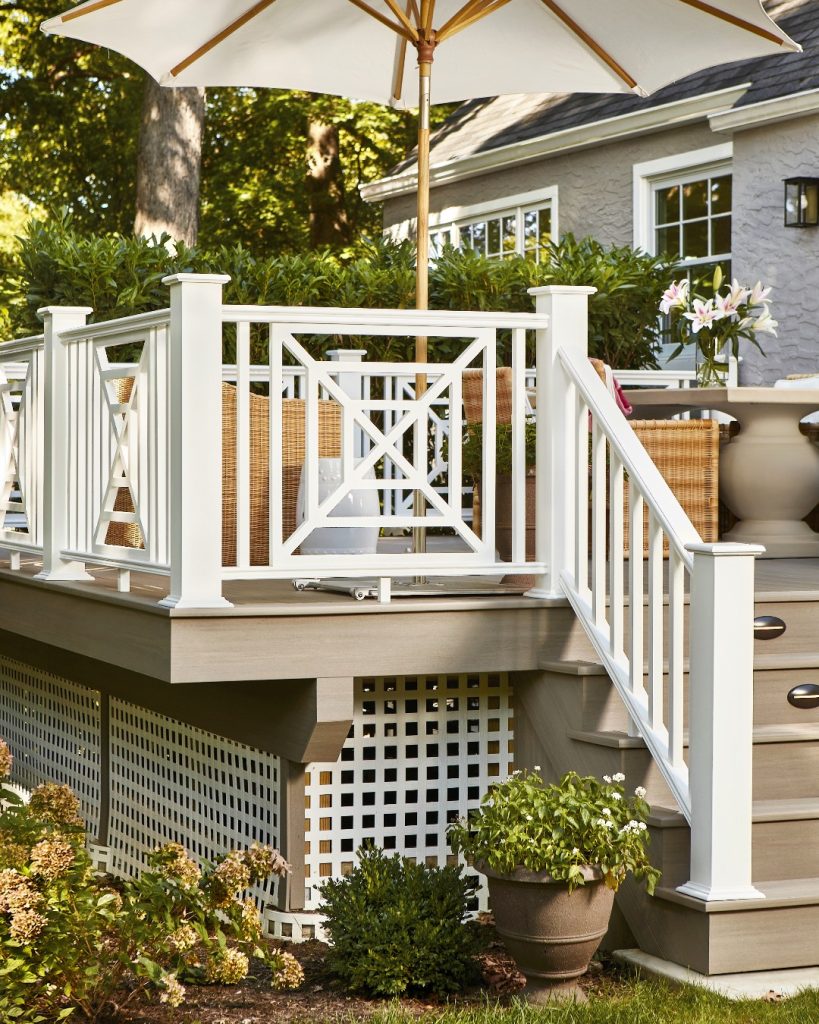
Adding a crisscross Chippendale pattern to a painted white wood deck railing brings a level of architectural detail that plain vertical balusters never achieve on their own. The geometric pattern reads as classic and intentional, the kind of detail found in higher end country house exterior. It elevates a simple deck into something that looks custom-built.
Pairing the white railing with matching lattice skirting underneath ties the whole structure together from top to bottom in one cohesive look. That kind of thoughtful under-deck skirting detail is often the difference between a deck that looks finished and one that looks like it is still missing something. A woven wicker sofa and a market umbrella complete the polished, put-together feel.
This style works especially well for a traditional or colonial-style home where crisp white trim already sets the tone. It is a bigger investment in materials and paint, but the visual payoff lasts for years with minimal touch-ups. That classic look rarely goes out of style.
Budget Note: Custom Chippendale-style railing panels typically run $100 to $200 per section at a specialty lumber supplier, with matching white paint adding $40 to $60 per gallon.
Natural Wood Deck Railing Lets a New Deck Age Gracefully
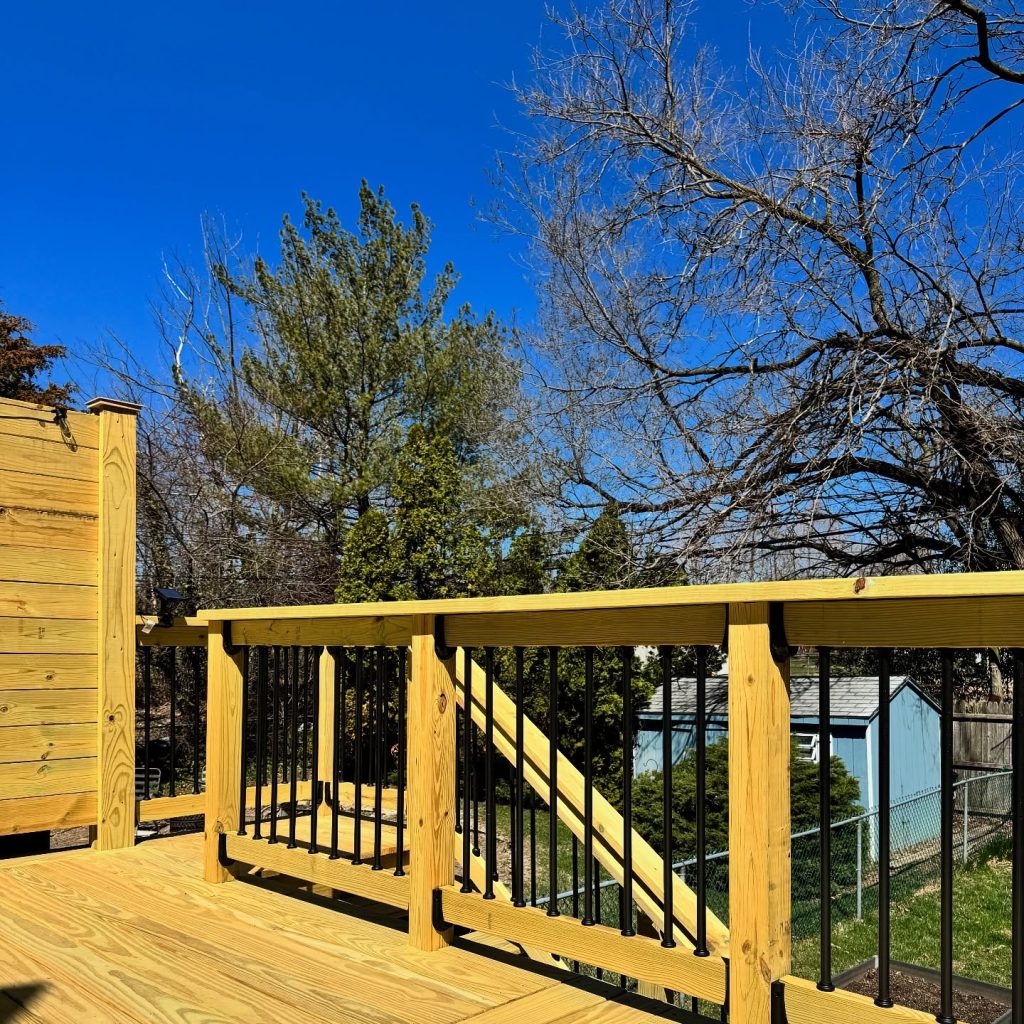
Leaving a brand new deck’s wood tone natural, paired with simple black metal balusters, gives a fresh build room to weather and develop character over its first few seasons. The contrast between warm wood and matte black hardware feels current without trying too hard. This straightforward version of wood deck railing proves that simplicity often photographs just as well as anything elaborate.
Choosing pressure-treated lumber for the railing itself ensures it holds up through weather changes before eventually taking a stain or sealant. That practical choice matters most for anyone building on a budget who wants to add color later rather than all at once. A solar cap light on the corner post adds a small functional detail without extra wiring.
Budget Note: Pressure treated wood railing materials typically run $8 to $15 per linear foot at Home Depot, with black metal balusters adding $3 to $6 each.
Wire Mesh Panels Keep Wood Deck Railing Pet and Kid Friendly
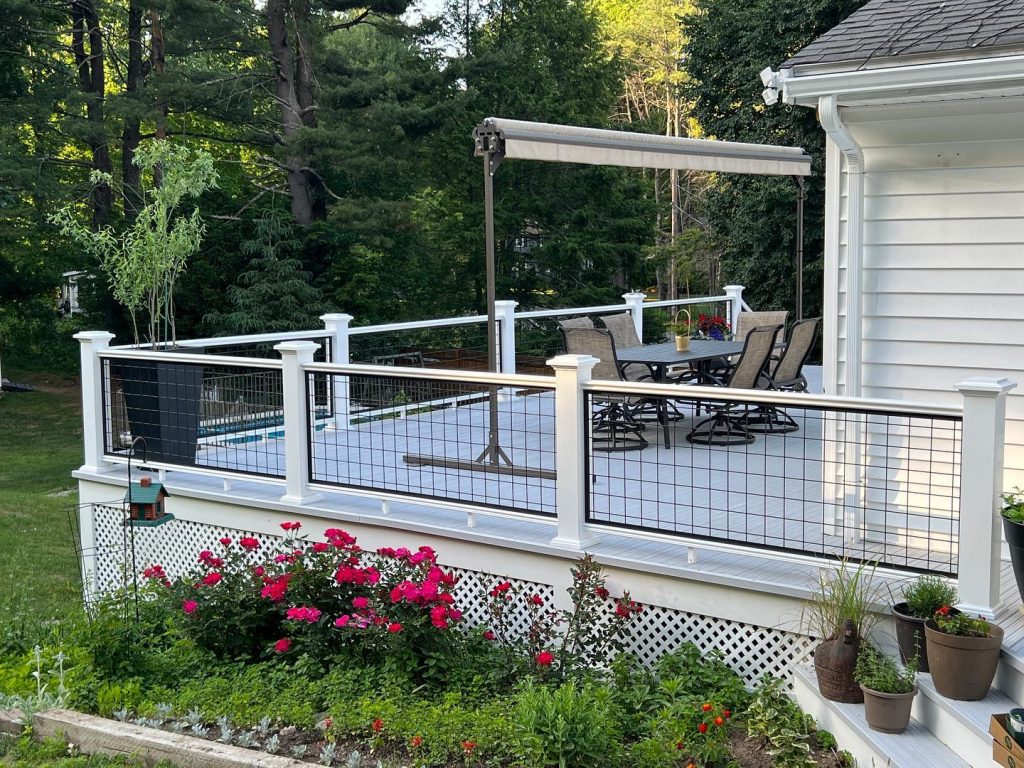
Filling the gaps in a white wood deck railing with fine wire mesh panels solves a real safety problem for families with small dogs, toddlers, or anyone worried about items slipping through wider gaps. The mesh stays nearly invisible from a distance while providing real peace of mind up close. It is a practical upgrade that still looks polished rather than purely functional.
Adding a black metal cap rail along the top edge gives the whole railing a finished, tailored look that plain wire alone would not achieve. Potted flowers and hanging planters along the base soften the practical mesh with a little seasonal color. That mix of function and softness keeps the deck feeling like a real living space rather than a safety fix.
Budget Note: Wire mesh railing infill panels typically run $30 to $60 per section at a specialty deck supplier, with a black metal cap rail adding $5 to $10 per linear foot.
A Cabin Style Wood Deck Railing Suits a Rustic Mountain Home
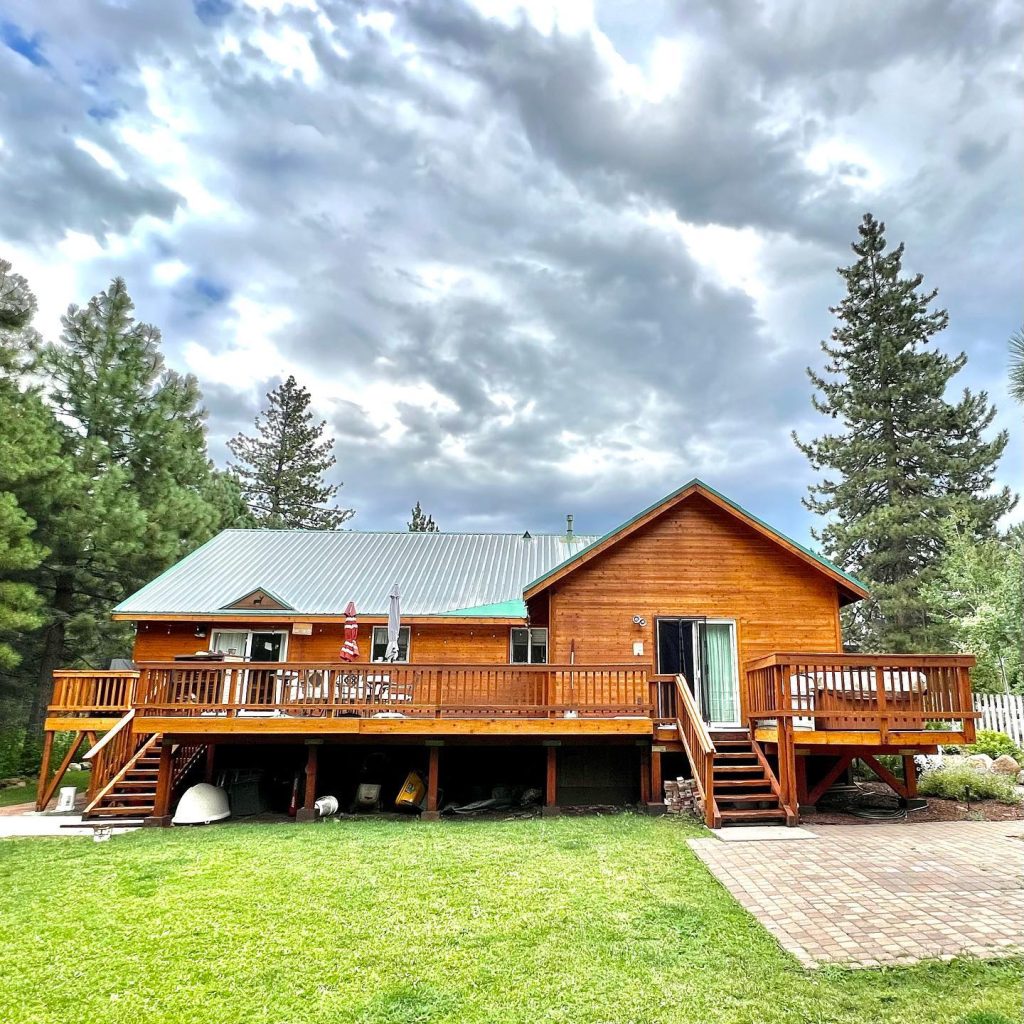
Building a full wraparound deck with simple round wood balusters and horizontal top rails suits a log cabin or mountain home in a way that anything more polished never quite would. The natural, slightly rustic finish matches the exposed wood siding and green metal roofline perfectly. This classic version of wood deck railing proves that matching the home’s existing character matters more than following a trend.
Staggered stair railings leading down from multiple points around the deck keep the whole structure feeling open and easy to move through, even on a large wraparound design. That kind of practical layout matters most for a home used for gathering large groups of family or friends. Simple black balusters against the honey-toned wood keep the look cohesive across every section.
Budget Note: Cedar or pine railing materials for a wraparound deck typically run $10 to $18 per linear foot, with staining and sealant adding $50 to $80 per gallon.
What Choosing a Deck Railing Taught Me About Finishing What We Start
That half-built deck taught me more about decision fatigue than any other project in our backyard. Standing there for weeks with two paint chips in hand felt silly in hindsight, but the choice genuinely mattered more than I expected.
I used to think a railing was just a safety requirement, something to get through quickly before moving on to the fun parts of a deck. Wood deck railing taught me that this one detail actually sets the tone for everything else built around it.
There is something satisfying about finally walking onto a finished deck instead of stepping around an unfinished edge. That completion changes how a whole backyard feels, not just one structure.
My family started using the deck for dinner almost every night once the railing finally went up. That daily use made the weeks of deliberation feel worth it in a way I had not expected.